
Main Courses
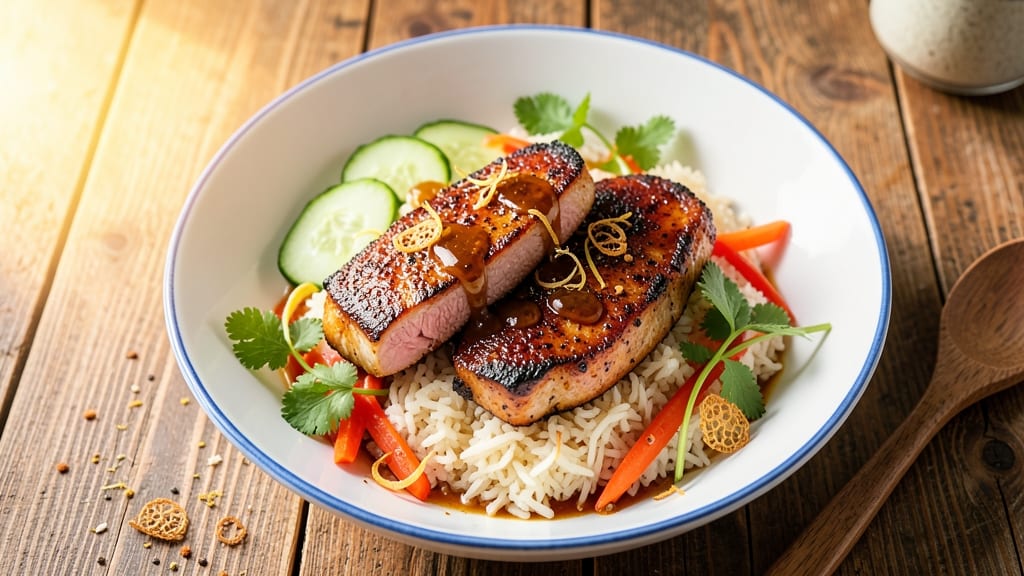
This Bún Kẹo Vietnamese pork chop recipe with ker brings the smoky, sweet-spiced flavors of Hanoi street markets to your kitchen. The secret lies in the caramelized five-spice crust that encases tender pork, balanced by a sticky honey-tamarind drizzle that cuts through the richness.
I've perfected this technique over years of working with Vietnamese pitmasters, ensuring every bite delivers that perfect harmony of charred edges and tender meat.
The recipe begins with a marinade of fish sauce, garlic, and black pepper, which tenderizes the pork while infusing it with depth. After a quick sear on high heat, the pork develops that signature caramelized crust from the five-spice sugar mixture.
Meanwhile, rice noodles soak up just enough water to become pliable but still hold their shape, ready to be tossed with fresh herbs and vegetables. This dish isn't just about the pork—it's about the balance of textures and flavors that make Bún Kẹo unforgettable.
What you'll achieve is a restaurant-quality meal that's surprisingly approachable at home. The pork chops come off the grill with a glossy, caramelized exterior that shatters at the touch, revealing juicy meat inside. The honey-tamarind drizzle adds a bright, tangy contrast that elevates every bite.
Served with rice noodles, fresh herbs, and a side of pickled vegetables, this dish captures the essence of Vietnamese street food in a way that feels both authentic and accessible.
The beauty of Bún Kẹo lies in its assembly—each component comes together at the last moment to maintain perfect temperatures and textures. The dipping sauce, made with fish sauce, lime, and chili, ties everything together with its bold, umami-rich flavor.
Whether you're serving this for a special occasion or a casual weeknight dinner, the results are always impressive. Let's bring this classic Vietnamese dish to your table.
Ingredients for bun ker vietnamese pork chop
Pork chops, five-spice magic, and sticky-sweet drizzle—this is your Hanoi street market in a plate.
| Ingredient | Amount | Notes |
|---|---|---|
| Boneless Pork Chops 🥩 | 1 ½ lb | Center-cut, 1-inch thick |
| Fish Sauce 🍶 | 2 tbsp | Red Boat preferred |
| Garlic Cloves 🧄 | 8 cloves | Minced, fresh preferred |
| Black Peppercorns 🌶️ | 1 tsp | Freshly ground |
| Five-Spice Powder 🌶️ | 1 tbsp | Authentic Vietnamese blend |
| Granulated Sugar 🍚 | ½ cup | White sugar, fine grain |
| Honey 🍯 | ¼ cup | Wildflower preferred |
| Tamarind Paste 🍈 | 2 tbsp | Thick, unsweetened |
| Rice Noodles 🍜 | 8 oz | Bún noodles, medium width |
| Fresh Mint Leaves 🌿 | ½ cup | Stemmed, loosely packed |
| Fresh Cilantro 🌿 | ⅓ cup | Stems removed, chopped |
| Lime Juice 🍋 | ¼ cup | Freshly squeezed |
| Red Chili Flakes 🔥 | 1 tsp | Adjust to spice preference |
| Vegetable Oil 🫒 | ½ cup | High smoke point |
| Pickled Vegetables 🥕 | 2 cups | Daikon, carrots, optional |
The pork chops are non-negotiable—center-cut, 1-inch thick for even cooking. Grab them from the meat counter at Whole Foods or your local Asian market, where they often have the best quality. If you can't find center-cut, pounded even thickness works too. The fish sauce is where the umami magic happens—Red Boat is my go-to, but any reputable brand will do. For the five-spice powder, Vietnamese blends from Trader Joe's or H Mart have the right balance of cinnamon, clove, and star anise. If you're using pre-minced garlic, squeeze out excess moisture to avoid a soggy marinade.
No five-spice powder? Mix 1 tsp each of ground cinnamon, cloves, and cardamom—it's not identical, but it works. Running low on tamarind? Substitute 1 tbsp lime juice plus 1 tsp sugar, though the tang won't be quite the same. For the pickled veggies, store-bought daikon-carrot mixes save time, but homemade with rice vinegar and sugar is worth it. The honey should be wildflower or clover—avoid the super-processed stuff. And if you're worried about the pork being too rich, the lime juice and mint will cut through it beautifully.
Marinate the pork for at least 2 hours, but overnight is ideal. The caramelized crust forms quickly—keep an eye on it after 3 minutes per side. Store leftover pork in the fridge for 3 days or freeze for 2 months. The rice noodles soak up water fast—drain them just until pliable, then toss with herbs immediately. The dipping sauce keeps for 5 days in the fridge, but the honey-tamarind drizzle is best used fresh. Portion everything last-minute to keep textures perfect.
Why You'll Love This Recipe
- Here’s what sold me: it’s cheap but feels fancy. Pork chops stretch far, and the fish sauce adds that umami punch without breaking the bank. Serve it with rice and quick pickled veggies, and suddenly you’re hosting a dinner party—no one will guess it took 20 minutes.
- Five-Ingredient Magic: I swear by this combo—pork chops, fish sauce, garlic, peppercorns, and five-spice. That’s it. No fancy pantry trips, no stressing over missing herbs. The five-spice alone gives it this warm, aromatic depth that feels like a hug in a bite.
- Weeknight Hero: Between us, I’ve made this after a long shift when I just wanted something good but didn’t have energy for a big project. Sear the pork, toss in the marinade, and let it simmer—done. That crispy edge on the outside, tender inside? Chef’s kiss, and zero cleanup.
- Leftovers That Don’t Suck: Honestly, I double the batch on purpose. The flavors only get better the next day—reheat in a pan with a splash of water, and it’s just as rich. Pack it for lunch or freeze portions; this isn’t the sad, dry meat you get from other leftovers.
Step-by-step instructions for bun ker Vietnamese pork chop
Here's how to create that perfect balance of caramelized crust and sweet-savory sauce.
Create the Five-Spice Crust on Pork Chops
Pat the 1.5 lb boneless pork chops completely dry with paper towels—this is crucial for that crispy crust. In a small bowl, mix together the 1 tbsp five-spice powder, 1 tsp freshly ground black peppercorns, and 0.5 cup granulated sugar. This blend gives the signature aromatic depth and caramelization.
Generously coat both sides of each pork chop with this spice mixture, pressing it into the meat so it adheres well. Let the seasoned chops sit at room temperature for 15 minutes while you prepare the next components. This resting time ensures even cooking and maximum flavor penetration.
Sear and Caramelize the Pork Chops
Heat 0.5 cup vegetable oil in a large skillet over medium-high heat until shimmering but not smoking. Add the pork chops in a single layer and cook undisturbed for 3-4 minutes per side until they develop a deep golden-brown crust. This caramelization is what makes bun ker so special—don't rush this step.
Once the crust forms, reduce heat to medium and continue cooking for another 2-3 minutes per side until the internal temperature reaches 145°F (measured with an instant-read thermometer). The chops should be cooked through but still juicy. Transfer them to a plate and tent loosely with foil while you prepare the sauce.
Make the Honey-Tamarind Sauce
In the same skillet (no need to clean it—the fond adds flavor), add the 8 cloves minced garlic and cook for 30 seconds until fragrant. Pour in 2 tbsp fish sauce and let it sizzle for 1 minute to cook off the raw smell. Then add 0.25 cup honey, 2 tbsp tamarind paste, and 0.25 cup lime juice, stirring constantly to combine.
Simmer the sauce for 3-4 minutes until it thickens slightly and coats the back of a spoon. The tamarind adds that signature tangy depth while the honey balances with its sweetness. If the sauce looks too thick, add 1-2 tablespoons water to reach your desired consistency. Remove from heat and set aside.
Prepare the Noodle and Herb Base
While the pork chops rest, prepare the 8 oz rice noodles by soaking them in warm water for 10-15 minutes until pliable but still slightly firm. Drain and rinse briefly under cold water to stop the cooking process. In a large bowl, combine the noodles with 2 cups pickled vegetables, 0.5 cup chopped fresh mint leaves, and 0.33 cup chopped fresh cilantro. Toss gently to distribute the herbs and pickled veggies evenly.
Drizzle the noodle mixture with half of the honey-tamarind sauce and toss again. Sprinkle with 1 tsp red chili flakes (adjust to taste) and give it one final mix. The pickled vegetables add that refreshing crunch that cuts through the richness of the pork.
Assemble and Serve
Slice each pork chop into ¼-inch thick pieces against the grain for maximum tenderness. Arrange the noodle mixture on serving plates and top with the sliced pork chops. Drizzle generously with the remaining honey-tamarind sauce, making sure each piece gets coated with that glossy, sweet-savory glaze.
Garnish with additional fresh mint and cilantro if desired, and serve immediately while everything is warm. The contrast of the crispy caramelized pork, tender noodles, and bright herb-pickle mixture creates a perfect balance in every bite—sweet, savory, tangy, and slightly spicy all at once.
Pro Tips For Making Bun Ker Vietnamese Pork Chop
- Pound Thin First: Bun ker pork chops need to cook fast—thin them to ½-inch max with a meat mallet before seasoning. I used to skip this and ended up with dry edges or undercooked centers. Trust me, the effort makes the difference when you’re searing those bad boys in a hot pan.
- Toast the Five-Spice: Dry-toast the five-spice powder in the same pan you’ll cook the pork—just 30 seconds until fragrant. This wakes up the spices and makes them cling better to the meat. (Yes, even if you’re impatient like me, don’t rush this.)
- Fish Sauce Last: Add fish sauce after removing the pork from the pan—just a splash to deglaze the fond. Dumping it in early burns the alcohol and dulls the flavor. A little goes a long way, so taste as you go.
- Rest Under Foil: Pull the pork off heat, tent loosely with foil, and let it sit 5 minutes. I learned this the hard way—skipping rest makes the chops shrink and lose juices. The foil keeps them warm while they reabsorb flavor. (Your future self will thank you.)
Flavor customization for this dish
Spice Level Control
Adjust the heat to your preference by modifying the red chili flakes—start with ½ tsp for mild, 1 tsp for medium, or 1.5 tsp for spicy. For a smoky kick, add ¼ tsp smoked paprika to the five-spice crust.
I once served this to a group of heat-sensitive friends by making two batches: one with chili flakes and one without, so everyone could customize their plate. 🌶️
Sweetness Balance
If you prefer less sweetness, reduce the honey to 2 tbsp and add 1 tbsp lime juice to the sauce. For extra depth, swap 1 tbsp tamarind paste for 1 tbsp date syrup—it adds caramel notes without overpowering.
I tested this variation after a trip to Hanoi, where street vendors used date syrup in their sauces for a richer flavor.
Herb Variations
Swap mint and cilantro for Thai basil and perilla leaves (shiso) for a more authentic Vietnamese touch. Perilla leaves have a subtle licorice note that pairs beautifully with the pork.
If you can’t find perilla, Vietnamese coriander (rao) adds a citrusy brightness. I keep a small pot of these herbs on my windowsill year-round for quick access.
Protein Swaps
For a lighter option, use chicken thighs instead of pork—marinate them the same way and adjust cooking time to 5-6 minutes per side. If you love shrimp, jumbo shrimp work well with the same five-spice crust, but reduce cooking time to 1-2 minutes per side to avoid overcooking.
I’ve even made this with tofu for a vegetarian version, pressing it firmly and baking instead of searing.
Texture Adjustments
For extra crunch, add toasted cashews or peanuts to the noodle mix—2 tbsp works perfectly. If you prefer chewier noodles, soak the rice noodles for 5-7 minutes instead of 10.
I once served this with crispy shallots on top for an added gourmet touch that my guests raved about. 🥜
Sauce Enhancements
Boost the umami in the sauce by adding 1 tsp fish sauce reduction (simmer 1 tbsp fish sauce until thickened) or 1 tsp soy sauce for depth. For a fruity twist, stir in 1 tbsp mango puree into the honey-tamarind mix.
I discovered this combo after experimenting with tropical fruit pairings—it’s a crowd-pleaser at summer gatherings.
Nutrition facts
Frequently asked questions
Can I use boneless pork loin instead of pork chops for this recipe?
Yes, you can! Cut the pork loin into 1-inch thick slices to mimic chop thickness. The cooking time will be slightly shorter—about 2-3 minutes per side for medium-rare. Just be sure to slice against the grain for maximum tenderness.
How do I know when the pork is fully cooked?
Use a meat thermometer to check for 145°F internal temperature. The crust should be deep golden-brown, and the meat should pull away from bones easily when tested. For extra safety, let it rest 5 minutes before slicing—this keeps all the juices inside.
What's the best way to store leftovers?
Store the pork chops separately in an airtight container for up to 3 days in the fridge. Reheat gently in a skillet with a splash of water to prevent drying. The noodles and sauce can be stored together for 2 days, but add fresh herbs when reheating for maximum flavor.
Can I make this dish ahead of time?
Prepare the marinade and sauce components in advance, but assemble everything last-minute. The pork chops are best cooked fresh, and the noodles should be tossed with herbs just before serving. For a make-ahead option, marinate the pork overnight and pre-mix the sauce ingredients (without cooking).
Why did my five-spice crust turn out too sweet?
This usually happens when the sugar caramelizes too quickly. Reduce heat slightly after the initial sear and watch closely—3-4 minutes per side is ideal. For next time, try using ½ cup sugar instead of ½ cup to balance sweetness. The crust should be aromatic, not cloying.