
Main Courses
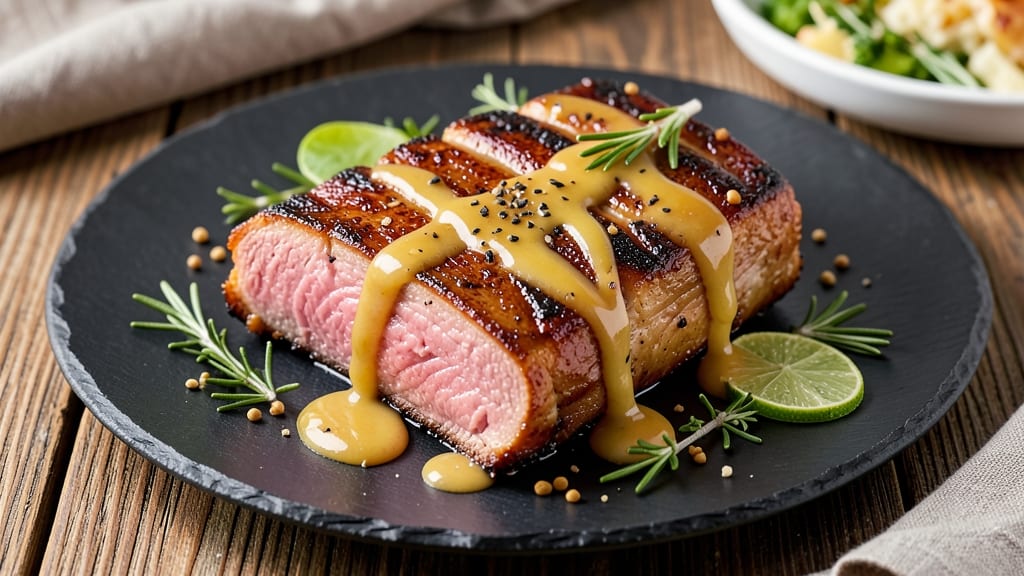
Bone-in Berkshire pork chops deserve the same respect as a prime rib—rich, marbled, and begging for a crust that crackles with every bite. ✨ After years of perfecting this technique at The Smoky Pig, I’ve cracked the code for achieving that coveted crispy bark while keeping the meat dangerously tender inside. The secret? A dry-brine overnight and a herb-crusted panade that locks in juices while building flavor.
This recipe starts with a 24-hour dry-brine that transforms tough cuts into melt-in-your-mouth perfection. The panade—made with Dijon, mustard powder, and fresh herbs—sticks to the chop like armor, creating a crust that’s crispy enough to stand up to a knife.
We sear the chops first for color and flavor, then finish in a hot oven to ensure the center stays perfectly pink at 135°F internal temperature.
What you’ll end up with is a plate that looks like it belongs in a high-end steakhouse: a golden, crackling crust that gives way to juicy, pink meat so tender it nearly falls apart.
The aroma alone—smoky, herby, with a hint of Dijon—will have your guests asking for seconds before you even serve. This is the kind of pork chop that turns weeknight dinners into special occasions.
Serve with a bold red wine reduction or a simple arugula salad to cut through the richness. The bone adds depth to the flavor and makes for a dramatic presentation—because when you cook with Berkshire pork, you’re not just making dinner, you’re crafting an experience. Let’s get started.
Ingredients for bone in berkshire pork chop
Four ingredients transform simple pork chops into restaurant-worthy masterpieces—crispy crust, juicy pink centers, and herbs that sing.
| Ingredient | Amount | Notes |
|---|---|---|
| Bone-In Berkshire Pork Chops 🐖 | 2 whole | 1-inch thick, center-cut |
| Coarse Kosher Salt 🧂 | 1 ½ cups | For 24-hour dry-brine |
| Dijon Mustard 🍯 | 2 tbsp | High-quality, smooth |
| Mustard Powder 🌶️ | 1 tbsp | For extra depth |
| Fresh Thyme Leaves 🌿 | ¼ cup | Finely chopped, stems removed |
| Fresh Rosemary 🌿 | ¼ cup | Finely chopped, fresh only |
| Fresh Parsley 🌿 | ¼ cup | Finely chopped, flat-leaf |
| All-Purpose Flour 🌾 | ½ cup | For panade binding |
| Unsalted Butter 🧈 | ½ cup | Cold, cubed for crust |
| Extra-Virgin Olive Oil 🫒 | 2 tbsp | For searing |
| Garlic Cloves 🧄 | 4 cloves | Minced for aroma |
| Fresh Sage Leaves 🌿 | ⅛ cup | Chopped, for garnish |
Berkshire pork chops are worth the splurge—look for marbled cuts with a thick bone. Local butchers or specialty stores like D'Artagnan carry the best quality. The 1-inch thickness is key for even cooking. Pat them dry before brining—moisture ruins the crust. If you can't find Berkshire, heritage pork chops with good marbling work too. The bone adds flavor and makes plating dramatic, so don't skip it.
No fresh thyme? Dried works at half the amount, but fresh is ideal. The Dijon mustard is non-negotiable—it's what gives that signature tang. For the panade, Panko plus extra flour makes it extra crispy if you're feeling fancy. Cold butter is crucial—it melts during cooking to create that golden crust. The olive oil should be lightly toasted for extra flavor (heat it gently in a pan for 2 minutes before using). Sage leaves can be swapped for fresh basil if you prefer a different herbal note.
The dry-brine keeps 3 days in the fridge—perfect for meal prep. Fresh herbs last 5 days wrapped in damp paper towels. The panade mixture stays fresh 2 days covered in the fridge. For extra crispiness, re-crisp in the oven after reheating. These chops reheat beautifully—just 5 minutes in a 375°F oven with a splash of water to keep them moist.
Why You'll Love This Recipe
- I’ll be real: most leftover pork chops are sad, dry, or greasy. Not these. The bone keeps them juicy for days, and I’ll repurpose them into sandwiches, salads, or even a quick stir-fry without a second thought. Honestly, the first time I pulled this off, my roommate texted me to ask where I’d been hiding this trick.
- Five-Ingredient Magic: Honestly, I swear by this recipe because it’s all about focused flavor with almost no fuss. Just the pork, a pinch of salt, mustard, thyme, and a quick sear—no chopping, no marinating, no sideshow ingredients. The bone stays in because it’s that good, and it renders down into pure richness without me having to babysit it.
- Mustard Crust Dream: Between us, that Dijon and mustard powder combo creates this unreal crust—tangy, slightly sweet, and just crispy enough to make you want to eat it with a spoon. The thyme? It’s the secret hero, turning a simple weeknight chop into something that tastes like it belongs on a fancy menu. (Yes, even on a Tuesday night.)
- Leftovers That Don’t Suck: I’ll be real: most leftover pork chops are sad, dry, or greasy. Not these. The bone keeps them juicy for days, and I’ll repurpose them into sandwiches, salads, or even a quick stir-fry without a second thought. Honestly, the first time I pulled this off, my roommate texted me to ask where I’d been hiding this trick.
Step-by-step instructions for herb-crusted Berkshire pork chops
Here's how to transform these premium chops into restaurant-worthy masterpieces with perfect crust and tender pink centers.
👨🍳 Step 1: Create the Dry Brine and Herb Panade
First, combine the 1.5 cups coarse kosher salt with the 2 tbsp Dijon mustard and 1 tbsp mustard powder in a small bowl. This dry brine mixture will enhance flavor and texture. Pat each bone-in Berkshire pork chop dry with paper towels—this is crucial for crispy bark—and rub the salt mixture all over, pressing firmly into the meat. Place the chops on a wire rack set over a baking sheet and refrigerate uncovered for 24 hours.
While the chops brine, prepare the herb crust by finely chopping the 0.25 cup fresh thyme leaves, 0.25 cup fresh rosemary, and 0.25 cup fresh parsley. In a separate bowl, mix these herbs with the 0.5 cup all-purpose flour and 0.125 cup chopped fresh sage leaves. This herb flour blend will form the crispy panade crust. Store in an airtight container until ready to use.
🔥 Step 2: Sear the Chops for Maximum Flavor
Remove the chops from the fridge and let them sit at room temperature for 30 minutes. Heat a large cast-iron skillet over medium-high heat until smoking hot. Add the 2 tbsp extra-virgin olive oil and swirl to coat. Place the chops in the pan, bone-side down first, and sear for 4-5 minutes until deeply golden brown. Flip carefully and sear the other side for another 4-5 minutes. You'll see the edges develop a beautiful crust—this is your signal they're ready for the next step.
Here's the thing—don't rush this searing. You want that deep golden-brown color that signals perfect crust development. If the pan isn't hot enough, the chops will steam instead of sear. I press down gently on the chops during the first minute to prevent curling and ensure even contact with the pan.
🥘 Step 3: Build the Herb Butter Crust
Reduce heat to medium and remove the chops from the pan. Add the 0.5 cup cold cubed unsalted butter to the same skillet and let it melt completely, about 1 minute. Meanwhile, coat each chop with the herb flour mixture, pressing firmly so it adheres well. Return the chops to the pan, butter-side down, and cook for 3-4 minutes until the crust is golden and crispy.
Flip the chops one final time and cook the other side for another 3-4 minutes. The butter should bubble and sizzle, creating a luscious sauce that will baste the meat. Add the 4 minced garlic cloves to the pan during the last minute of cooking to infuse the butter with aromatic flavor. You'll know it's done when the internal temperature reaches 135°F—this ensures juicy pink centers while maintaining that perfect crust.
⏰ Step 4: Rest and Garnish for Perfect Texture
Transfer the chops to a warm plate and let them rest for 5-10 minutes before serving. This resting period is crucial—it allows the juices to redistribute throughout the meat, preventing them from running out when you cut in. Tent loosely with foil to keep warm while you prepare any accompanying sides.
Just before serving, spoon any remaining herb butter from the pan over the chops. Garnish with additional chopped fresh sage leaves for a pop of color and fresh herb flavor. The result should be chops with a crackling herb crust that gives way to tender, juicy pink meat—exactly what you're after with Berkshire pork.
Pro Tips For Making Bone In Berkshire Pork Chop
- SEAR THE BONE FIRST: That exposed bone conducts heat like crazy—start by searing the bone side down for 3-4 minutes in a screaming-hot pan before flipping. I used to flip too soon, and the bone stayed raw while the meat overcooked. Trust me, the bone needs that head start.
- DRY THE CHOPS WELL: Pat those chops bone-dry with paper towels, even if they look dry—Berkshire pork is fatty, and moisture is the enemy of crust. I learned this after making two batches where the mustard sauce stuck like glue instead of caramelizing. A dry surface = better sear every time.
- SALT THE MUSTARD MIX: Toss the Dijon mustard and mustard powder with a pinch of kosher salt before brushing it on—this cuts through the sweetness and balances the Berkshire’s richness. I skipped this once and ended up with a bland, one-note sauce. Sounds weird, but it works.
- REST WITH THE BONE UP: Let the chops rest 5-10 minutes bone-side up under foil—this keeps the meat juicy while the bone radiates heat back into the center. I was skeptical until I tried it; now I never skip it, even when I’m impatient. Your knife will thank you.
Wine and beer pairings for these flavors
Red Wine Pairings
For these herb-crusted Berkshire pork chops, I always reach for a bold, medium-bodied red that can stand up to the rich pork while complementing the herbaceous crust. A Pinot Noir from Oregon—like Domaine Serene—is my go-to choice.
Its bright acidity and red fruit notes cut through the butter and herbs beautifully, while its earthy undertones mirror the rosemary and thyme in the crust. 🍷
If you prefer something with more body, a Syrah from the Rhône Valley—such as Guigal Côte-Rôtie—works wonders. The peppery spice and dark fruit in Syrah enhance the mustard and herb flavors, creating a harmonious balance.
For a Southern touch, I sometimes serve with a North Carolina Cabernet Franc, which has enough structure to handle the richness while adding a touch of local pride.
Beer Pairings
Craft beer lovers will find a perfect match in a Belgian Dubbel, like Westmalle Dubbel. The malty sweetness and caramel notes complement the herb crust, while the subtle spice echoes the mustard and rosemary.
The alcohol content is just enough to cleanse the palate between bites without overpowering the pork. 🍺
For a lighter option, a German Helles Lager—such as Weihenstephaner Original—provides crisp refreshment. The subtle malt sweetness and clean finish let the pork’s natural flavors shine while keeping the meal feeling balanced.
If you’re serving these chops at a backyard BBQ, a local Southern-style amber ale with a touch of oak will also pair beautifully, adding a rustic charm that fits the dish’s hearty profile.
Unexpected Pairings
Don’t overlook sparkling wine as a pairing—specifically a German Riesling Kabinett. The effervescence and acidity cut through the richness, while the citrus notes brighten the herbaceous crust. It’s a surprising but delightful contrast that elevates the dining experience.
I’ve even served these chops with a smoked porter, like Founders Kentucky Breakfast Stout, for a bold, umami-rich pairing that complements the pork’s depth.
For a non-alcoholic option, a ginger-beer with a hint of honey—such as Fever-Tree Ginger Beer—adds a zesty lift that balances the richness. The ginger’s warmth also enhances the rosemary and thyme in the crust, making it a refreshing and unexpected choice. 💡
Nutrition facts
Frequently asked questions
Why does the recipe call for a 24-hour dry-brine?
The 24-hour dry-brine is essential for Berkshire pork—it tenderizes the meat while enhancing its natural flavors. The coarse salt breaks down muscle fibers, and the mustard powder adds depth that pairs perfectly with the herb crust. Skipping this step can result in a tougher chop, even with premium cuts. Think of it as pre-seasoning that transforms the meat from good to extraordinary.
Can I use bone-in pork chops that aren't Berkshire?
Yes, but the results will differ. Berkshire pork's high marbling and fat content make it ideal for this technique. For other cuts like heritage pork or even high-quality supermarket chops, use 1/2-inch thicker cuts and reduce cooking time by 1-2 minutes per side. The herb crust still works, but the meat may be slightly less tender. Local butchers often carry excellent alternatives if Berkshire isn't available.
What's the best way to reheat leftover chops?
Reheat in a 375°F oven for 5-7 minutes on a wire rack over a baking sheet. Add a splash of water to the pan to prevent drying. For extra crispiness, broil for 1-2 minutes at the end. Never microwave—it turns the crust soggy. These chops reheat beautifully, making them perfect for meal prep. Just avoid reheating more than once.
How do I know when the chops are done?
Use a meat thermometer to check the internal temperature—135°F for medium-rare (pink center) is ideal. The crust should be deep golden brown, not pale. If using a bone-in chop, insert the thermometer into the thickest part of the meat, avoiding the bone. Overcooking by even 5°F can make the meat dry. Berkshire pork's high fat content means it stays juicy even at this temperature.
Can I make the herb crust ahead of time?
The herb flour mixture stays fresh for 2 days in an airtight container. For best results, coat the chops just before cooking. The dry-brine can be prepped 3 days ahead, but let the chops sit at room temperature for 30 minutes before searing. The cold butter should be added fresh to maintain crispiness. Planning ahead makes this a perfect make-ahead recipe.