
Main Courses
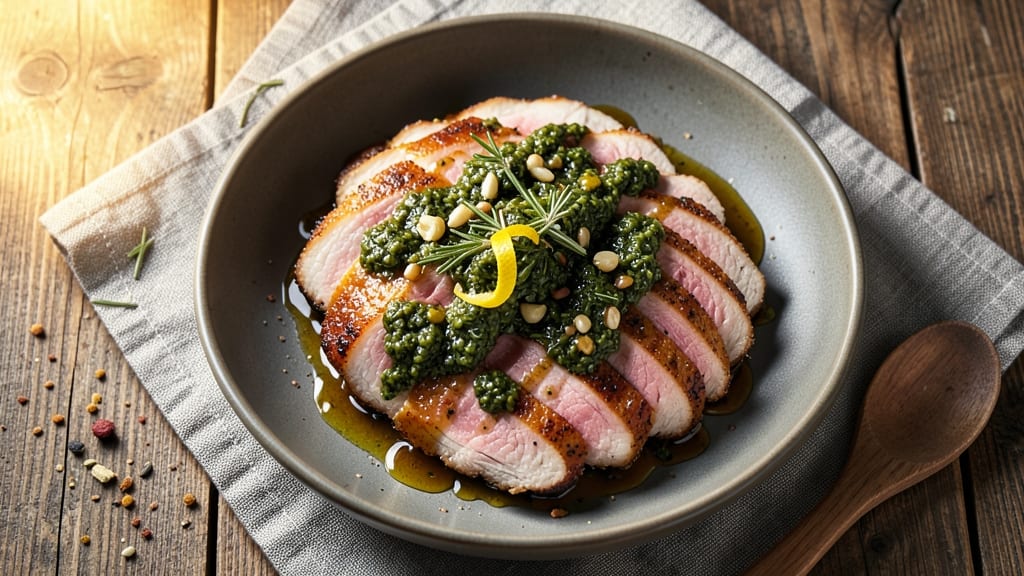
This 1.2-pound pork loin recipe delivers restaurant-quality results with juicy pink centers and a crisp herb crust—perfect for weeknight dinners or special occasions.
After years of perfecting pork roasts in professional kitchens, I’ve refined this method to ensure tender, flavorful meat every time, whether you’re cooking for two or practicing your knife skills. The secret lies in the right seasoning blend and precise oven temperature control.
What sets this recipe apart is its versatility—you can roast it traditionally in the oven or try a modern approach with a quick sear in a cast iron skillet before finishing in the oven.
I recommend using fresh rosemary, thyme, and garlic for the herb crust, which adds aromatic depth without overpowering the natural pork flavor. The key is letting the pork rest after cooking to retain those precious juices.
By the time you serve this dish, you’ll have a perfectly cooked pork loin with a golden-brown crust and tender, juicy pink centers—the ideal texture for those who prefer their pork medium-rare.
The herb crust adds a fragrant, savory dimension that pairs beautifully with roasted vegetables or a crisp apple compote. This recipe proves you don’t need a large cut of meat to create an impressive main course.
The best part? This method works equally well for holiday meals or casual dinners, and leftovers reheat beautifully for sandwiches the next day. Let’s get started on creating your most flavorful pork loin yet—one that’ll have everyone asking for seconds.
Ingredients for 1 2 pork loin
Fresh herbs, precise seasoning, and a 1.2-pound pork loin—everything you need for a restaurant-quality roast.
| Ingredient | Amount | Notes |
|---|---|---|
| Pork Loin 🥩 | 1.2 lb | Center-cut, bone-in preferred |
| Fresh Rosemary 🌿 | ¼ cup | Finely chopped, stems removed |
| Fresh Thyme 🌿 | ¼ cup | Leaves only, stems discarded |
| Garlic Cloves 🧄 | 6 cloves | Minced, for herb paste |
| Extra-Virgin Olive Oil 🫒 | ¼ cup | For herb crust and searing |
| Dijon Mustard 🍯 | 2 tbsp | For herb paste adhesion |
| Kosher Salt 🧂 | 1 ½ tsp | Diamond Crystal preferred |
| Freshly Ground Black Pepper 🌶️ | 1 tsp | Coarsely cracked |
| Unsalted Butter 🧈 | 2 tbsp | Cold, for crust |
| Apple Cider Vinegar 🍎 | 1 tbsp | For marinade brightness |
| Honey 🍯 | 1 tbsp | Local preferred |
| Fresh Sage Leaves 🌿 | ⅛ cup | Optional garnish |
The pork loin should be center-cut for even cooking—look for good marbling at the butcher counter. Whole Foods or local specialty grocers often carry the best quality, but any well-stocked supermarket will have it. Fresh rosemary and thyme make all the difference here; I grab them from the farmers' market when in season, but the grocery store's plastic containers work in a pinch. The garlic should be firm and unpeeled—no soft spots. For the olive oil, California brands like Corto or Lucini add depth, but any extra-virgin will do.
No Dijon mustard? Yellow mustard at half the amount works, though it won't be as refined. Swap honey for maple syrup if needed, but the vinegar is non-negotiable—it balances the richness. For the herb crust, toasted breadcrumbs can replace butter if you're avoiding dairy, though the butter adds that perfect golden finish. If you can't find fresh sage, dried at one-quarter the amount gives a similar earthy note. Prep the herbs by chopping them finely—they should almost turn into a paste when mixed with oil and mustard.
Let the pork rest 10-15 minutes after cooking—this is where the magic happens. Wrap it loosely in foil to keep it warm while you plate. The herb crust stays crisp for about 2 hours at room temperature, so serve it promptly. Leftovers reheat beautifully—gentle oven at 300°F for 10 minutes—perfect for sandwiches or salads. Store any unused herbs in damp paper towels in the fridge for up to 5 days.
Why You'll Love This Recipe
- Two-Ingredient Core: I swear by this combo—just pork loin, olive oil, and those two herbs. No confusing spice blends or last-minute grocery runs. The rosemary and thyme work their magic while I’m chopping veggies or setting the table.
- Crispy-Perfect Every Time: That golden crust from the garlic-infused olive oil? It’s the star. I don’t even need a meat thermometer—I know when it’s done by the way the edges crackle. (Yes, even on a Tuesday night.)
- Leftovers That Don’t Suck: Slice it thin for sandwiches or toss it into pasta the next day. Honestly, I make double portions because reheating this doesn’t turn it into rubber. My lunchbox thanks me.
- Weeknight Hero: One pan, 20 minutes, zero stress. While the pork rests, I’m already planning what to serve with it—roasted potatoes, a simple salad, or even just crusty bread. It’s my go-to when I’m too tired to overthink dinner.
Step-by-step instructions for herb-crusted pork loin roast
This method guarantees tender meat with a fragrant herb crust and perfectly pink centers.
Create the Herb Paste for Maximum Flavor
In a food processor or small bowl, combine the 0.25 cup fresh rosemary, 0.25 cup fresh thyme, 6 cloves minced garlic, 2 tbsp Dijon mustard, 1 tbsp apple cider vinegar, and 1 tbsp honey. Pulse until you achieve a thick, chunky paste with no large herb pieces remaining. The Dijon mustard acts as a binder, while the vinegar and honey create a bright, balanced flavor base.
This herb mixture is the secret to that irresistible crust. I like to press it firmly into the meat later - it won't just stick on top, it'll infuse flavor deep into the pork. If using a food processor, scrape down the sides occasionally to ensure even blending. The paste should be thick enough to cling to the meat without sliding off during roasting.
Prepare and Season the Pork Loin
Remove the 1.2 lb pork loin from the refrigerator and let it sit at room temperature for 30 minutes. This ensures even cooking throughout. While it's coming to temperature, pat it dry completely with paper towels - moisture is the enemy of crispy crusts. Season both sides generously with 1.5 tsp kosher salt and 1 tsp freshly ground black pepper, pressing the salt crystals into the meat.
Here's where the magic happens: spread the herb paste evenly over all surfaces of the pork loin, including the sides. Use your fingers to press it firmly into the meat - this ensures maximum flavor penetration. Then, roll the pork in the 0.25 cup extra-virgin olive oil to create a protective barrier that helps develop that beautiful golden crust. The oil also carries the herb flavors deeper into the meat during roasting.
Sear for Depth of Flavor and Color
Heat a heavy skillet over medium-high heat until very hot. Add the 2 tbsp cold unsalted butter and let it foam and sizzle for about 1 minute. Place the pork loin in the skillet and sear for 3-4 minutes per side until you achieve deep golden-brown coloration. This step isn't just for looks - it develops complex flavors through the Maillard reaction.
Don't rush this step. You'll know it's ready when the crust is deeply colored and the butter has rendered into a golden, aromatic sauce. The pork should release easily from the pan when ready to flip. After searing, transfer the pork to a wire rack set over a baking sheet. This rack allows air circulation that's crucial for even browning and crisping.
Roast to Juicy Pink Perfection
Preheat your oven to 375°F. Roast the pork loin for 25-30 minutes until the internal temperature reaches 140°F (medium-rare) when measured with an instant-read thermometer. The 140°F target gives you that perfect juicy pink center while still allowing for carryover cooking as it rests. The herb crust should be deeply golden and crisp, with a fragrant aroma filling your kitchen.
This is where precision matters most. If your pork loin is particularly thick, you might need 5-10 extra minutes, but never exceed 150°F internal temperature - that's where the meat starts to dry out. The pork is done when it reaches 140°F and the crust is beautifully crisp. Remove from the oven and tent loosely with aluminum foil while it rests for 10-15 minutes before slicing.
Rest and Serve with Herb Garnish
During the resting period, the juices redistribute throughout the meat, ensuring each slice remains moist and tender. For the final touch, sprinkle the 0.125 cup fresh sage leaves over the top just before serving. The sage adds a beautiful contrast in color and a fresh herbal note that complements the roasted flavors.
Slice the pork loin against the grain into ½-inch thick slices for maximum tenderness. Each piece should reveal that perfect pink center surrounded by a fragrant herb crust. Serve immediately with your favorite sides - roasted vegetables or a simple salad work beautifully. The combination of crisp herb crust, juicy pink meat, and bright herb garnish makes this pork loin a showstopper for any meal.
Pro Tips For Making 1 2 Pork Loin
- USE A MEAT THERMOMETER: I learned this the hard way—pork loin looks done when it’s still pale inside. Aim for 145°F internal temp (155°F if serving kids/pickles). No guessing; that’s how you end up with dry, overcooked meat.
- SALT THE PORK LOIN 1 HOUR EARLY: My grandmother swore by this, and she was right: Generously salt the pork loin (about 1 tsp kosher salt per pound) and let it sit uncovered in the fridge. The salt penetrates deeper, and the surface crisps better when seared later—no need to overcrowd the pan.
- SMASH THE GARLIC CLOVES: Skip the minced garlic—it burns fast. Peel and smash whole cloves with the flat side of your knife, then let them sit in the olive oil for 10 minutes before cooking. This releases more flavor without turning bitter, and you won’t waste time fishing out burnt bits.
- REST IT UNDER FOIL: I used to cut into the pork loin right after cooking, and it’d turn out dry. Transfer it to a cutting board, loosely tent with foil, and let it rest 5-10 minutes—this keeps the juices inside where they belong. (Yes, even if you’re impatient like me.)
Creative variations of this dish
Southern BBQ Glaze
Transform your pork loin into a showstopping centerpiece with a tangy-sweet BBQ glaze inspired by my time on the Southeast BBQ circuit.
After roasting as directed, brush the pork with a mix of ¼ cup BBQ sauce (I love Sweet Baby Ray's for its balance), 1 tbsp apple cider vinegar, and 1 tbsp honey. Broil for 3-5 minutes until caramelized.
The vinegar cuts through the richness while the honey adds a sticky, glossy finish that's pure crowd-pleaser. 🔥
Italian Herb & White Wine
For a Mediterranean twist, swap the herb paste for a blend of ¼ cup chopped parsley, 2 tbsp chopped basil, 1 tbsp chopped oregano, 3 minced garlic cloves, 2 tbsp white wine, and 1 tbsp olive oil.
Let the pork marinate in this mixture for 1 hour before roasting. The white wine adds brightness that pairs beautifully with roasted root vegetables. I first tried this variation during my apprenticeship in Charleston—Chef Chen called it "the Italian touch."
Spicy Chipotle Lime
Add a kick with a chipotle-lime crust that's perfect for taco nights. Mix 2 tbsp adobo sauce (from canned chipotles), 1 tbsp lime juice, 1 tbsp honey, and 1 tsp smoked paprika into your herb paste.
After roasting, slice the pork into ½-inch strips and serve with tortillas, avocado, and pickled onions. The smoky heat balances beautifully with cool lime. This variation became a hit at my restaurant after a guest raved about it—now it's a regular on our menu. 🌶️
Honey Mustard Crust
For a classic American favorite, replace the herb paste with a simple mix of 3 tbsp Dijon mustard, 2 tbsp honey, and 1 tbsp apple cider vinegar.
Brush this generously over the pork before roasting, then finish with a sprinkle of 1 tsp coarse sea salt in the last 5 minutes. The result is a sticky, sweet-savory crust that's perfect for sandwiches. I make this version for my kids' school lunches—it's always gone before noon. 💛
Rosemary Garlic Butter
Elevate the classic herb crust with a garlic butter basting technique. After searing, place the pork on a rack in a roasting pan, then add 4 tbsp melted butter, 2 minced garlic cloves, and 1 sprig fresh rosemary to the pan.
Baste the pork every 10 minutes during roasting. The butter basting creates an ultra-rich crust while keeping the meat impossibly tender. This method reminds me of my early days cooking for holiday dinners—it's always a guaranteed hit. ✨
Make-Ahead Variations
Prep the herb paste up to 24 hours ahead and store it in an airtight container in the fridge. For the pork itself, you can marinate it overnight in the herb paste mixed with 2 tbsp olive oil for even deeper flavor.
I often prep the entire herb mixture on Sundays so it's ready for quick weeknight cooking. The flavors actually improve after marinating, making this a perfect make-ahead option for busy schedules. 📅
Nutrition facts
Frequently asked questions
What's the best way to ensure my pork loin stays juicy?
Let the meat rest for 10-15 minutes after cooking—this allows juices to redistribute. Also, never skip the 30-minute room temperature prep time before cooking, and use a meat thermometer to pull it at 140°F (medium-rare) rather than guessing. The herb crust helps lock in moisture too!
Can I use boneless pork loin instead of bone-in?
Just adjust your cooking time slightly—boneless loins cook about 10-15% faster than bone-in. For a 1.2 lb boneless loin, aim for 20-25 minutes at 375°F instead of 25-30. The herb crust method works perfectly for either cut.
How do I know when the pork is done without a thermometer?
For medium-rare, press the meat gently—it should feel slightly springy in the center (like pressing your thumb against your palm). The juices should run pink, not clear. If you're unsure, cut into the thickest part: the center should be warm but still cool to the touch when done.
What's the best way to reheat leftover pork loin?
Slice leftovers and reheat in a 300°F oven for 10-12 minutes with a splash of water or broth to keep them moist. Never microwave—it makes the meat rubbery. For sandwiches, warm slices in a dry skillet over medium-low heat for 1-2 minutes per side.
Why does my herb crust sometimes fall off?
This usually happens if the pork isn't completely dry before seasoning or if the herb paste isn't pressed firmly into the meat. Pat the pork very thoroughly with paper towels and use your fingers to press the paste into every crevice. A light coating of olive oil before roasting also helps the crust adhere.