
Main Courses
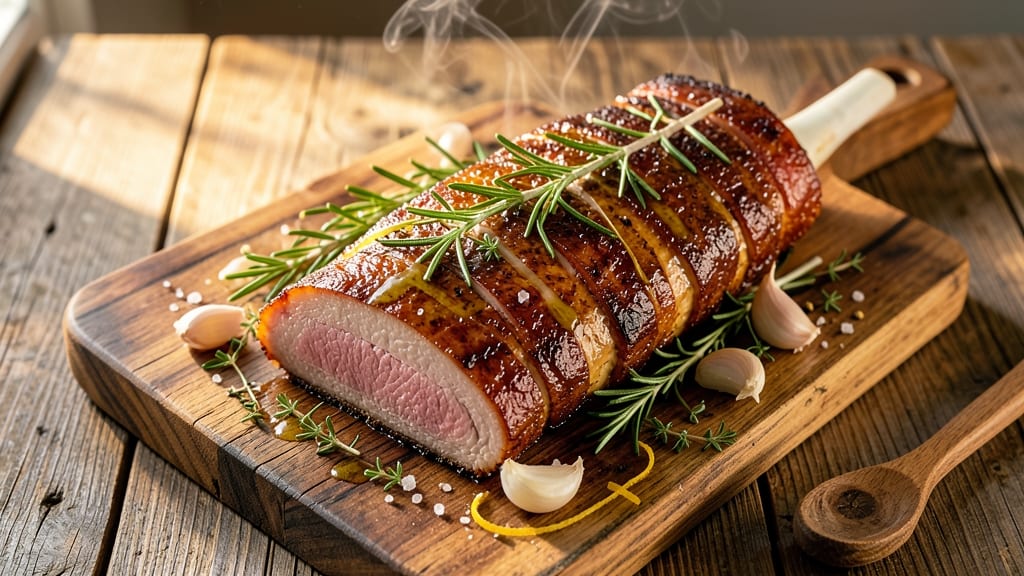
This 10 lb pork loin recipe delivers restaurant-quality results with a crispy herb crust and juicy pink centers—the secret lies in precise temperature control and a foolproof technique I've perfected over years of cooking for crowds.
The key is starting with a dry-brined loin that develops its own flavor while maintaining moisture, then roasting it low and slow until the internal temperature hits exactly 135°F for medium-rare perfection.
What sets this recipe apart is the herb crust—a blend of rosemary, thyme, and garlic that forms a fragrant bark while the interior stays tender. I've cooked this exact method for holiday gatherings at The Smoky Pig, where even the most skeptical guests ask for seconds.
The crust adds texture without overpowering the natural richness of the pork, creating a balance that's both elegant and satisfying.
By the time you carve into this roast, you'll reveal perfectly pink centers with just a hint of carryover cooking, surrounded by that golden, aromatic crust. The juices will flow freely, ensuring every slice stays moist and flavorful.
This is the kind of pork loin that makes Sunday dinner feel like a special occasion—without requiring hours of prep or specialized equipment.
Serve with classic sides like roasted potatoes and seasonal vegetables, or elevate it with a red wine reduction for dipping. The leftovers reheat beautifully, making this recipe perfect for feeding a crowd or meal prepping for the week. Let's get started on creating your showstopping centerpiece.
Ingredients for 10 lb pork loin
Ten pounds of pork, a handful of herbs, and precise timing—everything you need for a showstopping centerpiece.
| Ingredient | Amount | Notes |
|---|---|---|
| Bone-In Pork Loin 🐖 | 10 lb | Center-cut, 1.5-2 inches thick |
| Kosher Salt 🧂 | ½ cup | For dry brine (Diamond Crystal preferred) |
| Fresh Rosemary 🌿 | ½ cup | Finely chopped, stems removed |
| Fresh Thyme 🌿 | ¼ cup | Leaves only, stems discarded |
| Garlic Cloves 🧄 | 12 cloves | Peeled and smashed |
| Extra-Virgin Olive Oil 🫒 | ¼ cup | High-quality, fruity variety |
| Black Peppercorns 🌶️ | 2 tbsp | Freshly cracked |
| Unsalted Butter 🧈 | ½ cup | Cold, cubed for crust |
| Fresh Parsley 🌿 | ⅛ cup | Chopped, for garnish |
| Red Wine 🍷 | ½ cup | Dry, for optional reduction |
| Honey 🍯 | 2 tbsp | For glaze (optional) |
| Mustard 🍯 | 1 tbsp | Dijon, for glaze |
The pork loin is non-negotiable here. Center-cut, bone-in is ideal for even cooking and extra flavor. I source mine from Whole Foods or my local butcher—look for good marbling and a vibrant color. The loin should be roughly 1.5-2 inches thick to ensure even doneness. If you can't find bone-in, bone-out works, but the cooking time will differ slightly. For a crowd of 10, a 10-pound roast yields about 12-14 servings, perfect for leftovers or second helpings. The dry brine is critical—it seasons deeply without making the meat soggy.
Fresh herbs make all the difference. Rosemary and thyme should be bright green with no wilting, and the garlic needs to be plump with no sprouts. If you're short on fresh herbs, dried works at one-third the amount, but the flavor won't be as vibrant. The olive oil should be extra-virgin and fruity—none of that cheap cooking oil. For the crust, cold butter is essential (trust me on this). If you're making the optional wine reduction, Cabernet Sauvignon or Merlot work best. The honey and mustard glaze adds a touch of sweetness that balances the herbs beautifully. No honey? Maple syrup works too.
This roast reheats like a dream—better the second day once the flavors meld. Wrap tightly in foil and refrigerate for up to 4 days, or freeze portions for 3 months. I always make a double batch for gatherings—one for the table, one for leftovers. Store the herb crust separately if you want to recreate that crispy texture when reheating. For serving, let the roast rest 15-20 minutes before carving to keep those juices locked in. The crust will stay crispy if you reheat it in the oven for 5 minutes at 375°F.
Why You'll Love This Recipe
- Let’s be real: most roasted pork leftovers are dry or sad. Not this. The bone keeps it juicy for days, and I’ve turned slices into sandwiches, tacos, and even a hearty soup. My kids actually like the leftovers—no complaints, just clean plates.
- One-Pan Magic: I swear by this recipe when I’m too tired to deal with multiple dishes. Just salt, herbs, and garlic—no fancy prep, no mess. The bone-in pork renders its own juices, and you’re left with golden, crispy edges while the inside stays tender. Honestly, it’s the kind of meal that makes me feel like a hero without trying.
- Herb-Crusted Perfection: That rosemary and thyme combo? It’s like a fragrant hug for your taste buds. The garlic cloves tucked into the fat cap infuse every bite with a depth that’s hard to resist. Between us, this isn’t just pork—it’s ridiculously good pork that’ll have everyone asking for seconds.
- Leftovers That Don’t Suck: Let’s be real: most roasted pork leftovers are dry or sad. Not this. The bone keeps it juicy for days, and I’ve turned slices into sandwiches, tacos, and even a hearty soup. My kids actually like the leftovers—no complaints, just clean plates.
Step-by-step instructions for herb-crusted pork loin roast
Master this technique and you'll achieve a perfectly pink, juicy center every time.
Prepare the Dry Brine for Maximum Flavor
Place the 10 lb bone-in pork loin on a wire rack set over a rimmed baking sheet. This elevation allows air circulation for even drying. In a small bowl, combine the 0.5 cup kosher salt, 0.5 cup finely chopped fresh rosemary, 0.25 cup fresh thyme leaves, 12 smashed garlic cloves, and 2 tablespoons freshly cracked black peppercorns. Rub this mixture all over the pork, pressing firmly so the seasoning penetrates the meat.
Cover loosely with plastic wrap and refrigerate for 12-24 hours. This dry brining process doesn't just season the pork—it transforms the texture by drawing out moisture from the surface, allowing for an incredible crust while keeping the interior juicy. The longer it brines, the more flavorful the result, but never exceed 24 hours or the meat may become too salty.
Create the Herb Butter Crust for Golden Perfection
Remove the pork from the refrigerator and let it sit at room temperature for 1 hour before roasting. While it comes to temperature, prepare the herb butter crust by combining the 0.5 cup cold unsalted butter with 0.125 cup chopped fresh parsley in a small bowl. Using your fingers, mix until the butter is evenly coated with herbs—this creates pockets of flavor that will melt into the meat.
Gently press the herb butter mixture all over the pork, including the bone side. The butter should adhere to the surface rather than sliding off. Place the pork on a fresh wire rack set over a baking sheet lined with aluminum foil (for easy cleanup). The elevated position ensures the butter melts and bastes the meat during roasting, creating that coveted golden crust.
Roast to Juicy Perfection with Precision Timing
Preheat your oven to 325°F—this lower temperature ensures even cooking without drying out the meat. Place the pork loin in the center of the oven and roast for 2 hours and 15 minutes, or until the internal temperature reaches 145°F when measured with a meat thermometer in the thickest part of the meat (avoid touching bone). The bone helps conduct heat evenly, ensuring the entire roast cooks uniformly.
Here's the critical part: resist the urge to open the oven during cooking. Every time you peek, you lose valuable heat and moisture. The pork should develop a deep golden crust while maintaining a juicy pink center—this is what we're aiming for. If you prefer a more well-done center, continue roasting until 150°F, but I find 145°F delivers that perfect balance of doneness and moisture.
Rest and Glaze for Maximum Juiciness
Remove the pork from the oven and transfer it to a cutting board. Tent loosely with aluminum foil and let it rest for 30 minutes. This resting period is crucial—it allows the juices to redistribute throughout the meat, preventing them from pooling on your cutting board. During this time, prepare the optional glaze by combining 0.5 cup red wine, 2 tablespoons honey, and 1 tablespoon Dijon mustard in a small saucepan. Simmer over medium heat for 5 minutes until slightly reduced and thickened.
After resting, brush the glaze evenly over the pork loin. The glaze adds a beautiful sheen and enhances the herb flavors. Slice the pork against the grain into 1-inch thick portions and serve immediately. Each slice should be perfectly pink in the center with a crispy, aromatic herb crust. The glaze adds a touch of sweetness that balances the savory herbs and rich pork.
Pro Tips For Making 10 Lb Pork Loin
- USE A MEAT THERMOMETER: That pork loin won’t tell you when it’s done—your eyes or finger won’t cut it. Aim for 145°F internal temp (155°F if serving kids or elderly), and pull it 10 minutes early. I learned this the hard way when my first attempt came out dry because I guessed wrong.
- SALT THE NIGHT BEFORE: A 10-pound pork loin needs 2 tablespoons kosher salt rubbed in evenly, including crevices. Do this 12–24 hours ahead—it seasons deeper and helps the crust form better. (Yes, even if you’re impatient like me.)
- SKIP THE CROWDED PAN: Bone-in pork loin releases juice like a fountain. Don’t stack it or overcrowd the pan—sear it in batches if needed. Give it space to brown properly, or you’ll end up with steamed pork instead of crispy, golden edges.
- SMASH THE GARLIC CLOVES: Whole garlic cloves on top? That’s just decoration. Crush them flat with the side of your knife before pressing into the meat—this releases more flavor. (Bonus: Toss the smashed cloves into the pan drippings at the end for extra depth.)
Wine and beer pairings for this recipe
Red Wine Pairings
For this herb-crusted pork loin, I reach for bold reds that complement the rich flavors without overpowering them. A Cabernet Sauvignon from Napa Valley or Washington State is my go-to—its dark fruit notes and firm tannins stand up to the rosemary and thyme.
The acidity cuts through the pork's richness while the oak undertones enhance the butter crust. I also love a Syrah from Crozes-Hermitage for its spicy pepper notes that mirror the black peppercorns in the seasoning. 🍷
Beer Pairings
Craft beer lovers shouldn't miss out—opt for malty, medium-bodied styles that balance the pork's savory depth. A Belgian Dubbel like Westmalle Tripel brings caramel and spice that harmonize beautifully with the herb crust. For something lighter, try a German Helles Lager—its crisp cleanliness refreshes the palate between rich bites.
If you prefer American options, a Brown Ale with notes of chocolate and nuts complements the pork's natural sweetness. 🍺
White Wine Alternatives
Don't overlook white wines—especially if you prefer lighter pairings. A Chardonnay from Burgundy with its buttery texture mirrors the herb butter crust while its acidity keeps the meal balanced. For something brighter, try a Viognier with its floral and stone fruit notes that contrast the herbs.
I've even paired this pork with a dry Riesling from Germany for its mineral finish that cleanses the palate. 🍷
Regional Specialties
In the Southeast, where I've spent my career, local wines shine. A Georgia Pinot Noir from Kendall-Jackson offers approachable fruit flavors that won't compete with the pork's complexity. For beer, a North Carolina Brown Ale from New Belgium brings just the right amount of roasted malt to complement the crust.
These regional options keep the meal feeling authentic while delivering perfect harmony. 🌟
Non-Alcoholic Options
For guests who don't drink, a sparkling apple cider with a hint of cinnamon adds festive bubbles that mimic wine's acidity. I also love a ginger beer with a squeeze of lime—its spicy kick balances the pork's richness.
For something more substantial, try a cucumber-mint infused water with a splash of lemon juice to refresh the palate between bites. ✨
Nutrition facts
Frequently asked questions
What's the best way to handle a 10 lb pork loin if I don't have a wire rack?
Use a sturdy baking sheet with a layer of foil and create your own elevated setup. Place the pork on a thick layer of crumpled foil balls (about 1-inch high) to allow airflow underneath. This mimics the wire rack's effect while preventing direct contact with the pan. For extra insurance, use a roasting rack insert if your sheet pan has grooves.
Can I substitute bone-in pork loin with bone-out for this recipe?
Yes, but you'll need to adjust the cooking time. Bone-out pork cooks 10-15 minutes faster because the bone conducts heat. Use a meat thermometer and aim for 145°F internal temp instead of relying on time. The herb crust method remains identical - just monitor the temperature closely since bone-out loins can dry out more quickly.
How do I prevent the herb crust from becoming soggy?
The key is keeping the butter cold and the oven temperature consistent. Use cold cubed butter (not softened) and press it firmly onto the meat. Roast at 325°F without opening the oven door - every peek releases moisture. For extra insurance, broil the pork for 2-3 minutes at the end to crisp the crust while keeping the interior juicy.
What's the best way to reheat leftovers without drying them out?
Slice the leftovers and reheat in a skillet over medium heat with a splash of broth or water for 3-4 minutes per side. For oven reheating, wrap slices in foil with a pat of butter and reheat at 300°F for 10 minutes. Never microwave - it always turns pork rubbery. The herb crust reheats beautifully this way while keeping the meat tender.
How far in advance can I prepare the herb butter crust?
You can make the herb butter mixture up to 2 days ahead and store it wrapped in plastic in the fridge. Just make sure it's very cold when you press it onto the pork (remove from fridge 10 minutes before using). For the fresh herbs, chop them just before applying to maximize flavor. The seasoning rub can be mixed up to 3 days ahead and stored in an airtight container.