
Main Courses
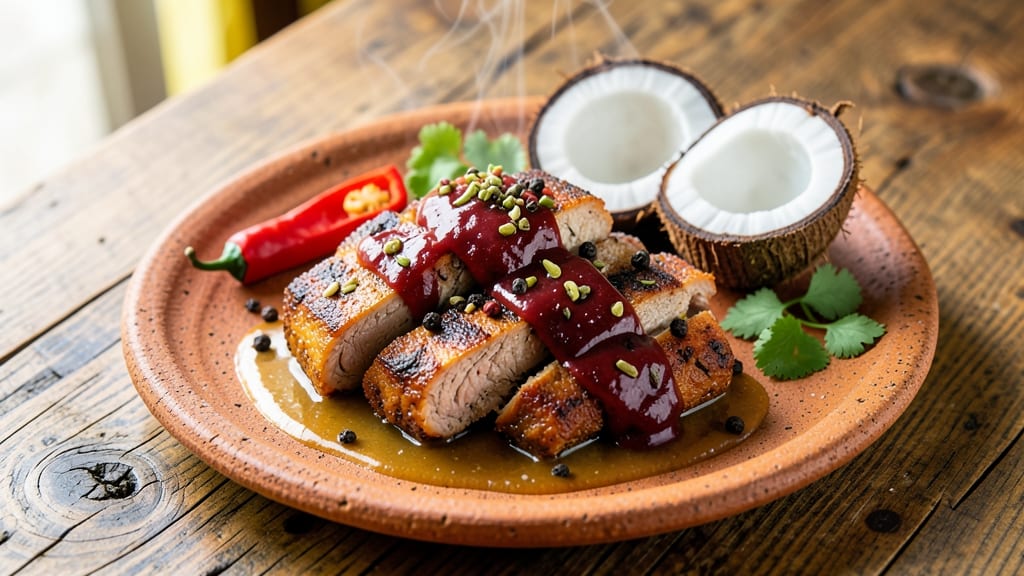
This Angamaly pork recipe transports you to Kerala's coastal heartland with every tender bite—where coconut milk and slow-cooked spices create a symphony of flavors. 🌿 I first encountered this dish during a trip to Angamaly, where the aroma of tamarind and black pepper filled the air, drawing me into its rich tradition.
The secret lies in balancing sweet, sour, and spicy notes through hours of gentle simmering, transforming tough cuts into melt-in-your-mouth perfection.
The dish begins with a fragrant marinade of grated coconut, tamarind, and cardamom, which infuses the pork with its signature depth. Unlike quick-cooked meats, this recipe demands patience—allowing the spices to meld over 3-4 hours until the meat falls apart effortlessly.
The result is a dish that's both comforting and complex, with a velvety sauce that clings to every bite, carrying layers of caramelized coconut and aromatic spices.
What makes this recipe special is its cultural significance—traditionally served at celebrations and family gatherings in Kerala. The combination of coconut milk and tamarind creates a unique tangy-sweet balance that defines Angamaly's culinary identity.
For authenticity, I recommend using freshly grated coconut and whole spices toasted in ghee, as these elevate the dish beyond standard preparations.
The final dish delivers restaurant-quality results at home, with tender pork swimming in a glossy, spiced coconut sauce. Serve it with steamed rice and a side of pickled vegetables for the full experience.
Let's bring the flavors of Angamaly to your table—where every spoonful tells a story of tradition and harmony.
Ingredients for angamaly pork
Sixteen ingredients, four hours of simmering—this Angamaly pork transforms tough cuts into velvety perfection.
| Ingredient | Amount | Notes |
|---|---|---|
| Pork Shoulder 🐖 | 3 lb | Bone-in for maximum flavor |
| Fresh Coconut Milk 🥥 | 2 cans | Full-fat, 13.5 oz each |
| Tamarind Paste 🍈 | ½ cup | Or 1 tbsp tamarind pulp |
| Green Cardamom Pods 🌿 | 10 whole | Lightly crushed, seeds only |
| Black Peppercorns 🌶️ | 1 tbsp | Whole, toasted in ghee |
| Fresh Coconut 🥥 | 1 cup | Grated, unsweetened |
| Ginger Root 🧄 | 2 tbsp | Freshly grated, peeled |
| Garlic Cloves 🧄 | 8 cloves | Peeled, roughly chopped |
| Cumin Seeds 🌿 | 1 tbsp | Toasted until fragrant |
| Cloves 🌶️ | 6 whole | Whole, lightly crushed |
| Bay Leaves 🍃 | 2 whole | Fresh preferred |
| Salt 🧂 | 1 ½ tsp | Kosher or sea salt |
| Ghee 🧈 | 2 tbsp | For toasting spices |
| Lemon Juice 🍋 | ¼ cup | Freshly squeezed |
The pork shoulder is non-negotiable here—bone-in gives the richest flavor, and Costco or Whole Foods carry excellent cuts. Look for well-marbled meat; the fat renders beautifully during cooking. Fresh coconut milk makes all the difference—Thai Kitchen brand is reliable, but if you can find fresh, use that instead. The tamarind paste should be thick and sticky; Trader Joe's carries a great version, or sub with 1 tbsp tamarind pulp if needed. Cardamom and cloves are essential for that authentic Angamaly aroma—Penzeys Spices sells them whole for maximum potency.
No fresh ginger? Powdered works at half the amount, but toasting whole cumin seeds in ghee (instead of pre-ground) adds depth. Short on tamarind? Lime juice plus a pinch of sugar mimics the tang. The bay leaves should be fresh if possible—they add a subtle piney note that dried leaves miss. For the coconut, grated is ideal, but unsweetened desiccated coconut from the baking aisle works in a pinch. The pork can be prepped a day ahead, marinated overnight for even deeper flavor—just store it covered in the fridge.
This dish tastes even better the next day as flavors meld. Store leftovers in an airtight container for up to 5 days in the fridge, or freeze portions for 3 months. I always make extra—it reheats beautifully and makes great lunches. The sauce thickens as it cools, so a splash of warm water revives it if needed. For serving, pair with steamed basmati rice and a simple cucumber raita to balance the richness.
Why You'll Love This Recipe
- One-Pot Magic: I swear by this recipe when I’m too tired to wash pots—just brown the pork, toss in the coconut milk, tamarind, and whole spices, then let it simmer. The cardamom and peppercorns infuse the broth while you’re doing laundry or scrolling through your phone.
- Tangy-Creamy Bliss: That tamarind paste cuts through the richness of the pork and coconut milk like a citrusy hug. The first bite hits with a bright, slightly sour punch, then melts into silky, spiced pork that makes you reach for seconds without thinking.
- Leftovers That Beg for More: Between us, this dish improves the next day—even better than fresh. The flavors meld into this deep, smoky-sweet harmony, and reheating it turns into a quick lunch or dinner. I’ve packed it in bento boxes for work, and no one’s ever complained.
- Budget-Friendly Crowd-Pleaser: Pork shoulder’s the secret weapon here—it’s cheap, forgiving, and turns into tender, shreddable meat that feeds four for under $15. Plus, the spices (especially whole cardamom and peppercorns) stretch a little jar of tamarind paste into multiple meals. My college friends still ask for this one.
Step-by-step instructions for slow-cooked spiced pork
Here's how to transform simple ingredients into rich, aromatic Angamaly-style pork.
🔥 Step 1: Toast Spices in Ghee for Maximum Flavor
Heat the 2 tbsp ghee in a heavy-bottomed pot over medium heat. Add the 1 tbsp cumin seeds and toast for 30 seconds until they release their nutty aroma and begin to sizzle. Immediately add the 6 whole cloves, 10 lightly crushed green cardamom pods, 2 whole bay leaves, and 1 tbsp toasted black peppercorns. Stir constantly for 1 minute until all spices are fragrant and lightly golden.
This toasting step is crucial—it deepens the spice flavors and prevents bitterness. You'll know it's perfect when the spices fill your kitchen with an intense, earthy aroma. Remove the pot from heat and let the spices cool slightly before adding other ingredients.
🍳 Step 2: Sear the Pork Shoulder for Deep Flavor
Pat the 3 lb pork shoulder dry with paper towels and season generously with the 1.5 tsp salt. In the same pot (no need to clean it—the browned spices will add depth), increase heat to medium-high and sear the pork on all sides until it develops a deep golden-brown crust, about 5-7 minutes per side. This creates a flavorful crust called the "fond" that we'll incorporate into the sauce later.
Here's the thing—don't rush this step. You want that pork to develop a rich, caramelized exterior. If it releases easily from the pan, it's ready to move to the next stage. Transfer the seared pork to a plate and set aside.
🥘 Step 3: Build the Spiced Coconut Base
Return the pot to medium heat and add the 2 tbsp freshly grated ginger root and 8 roughly chopped garlic cloves. Sauté for 2 minutes until the garlic becomes golden and fragrant—this prevents raw garlic flavor in the final dish. Stir in the 0.5 cup tamarind paste and cook for 1 minute until it begins to soften and release its tangy sweetness.
Pour in the 2 cans fresh coconut milk and scrape up any browned bits from the bottom of the pot. Add the 1 cup freshly grated coconut and bring the mixture to a gentle simmer. The tamarind and coconut will create a complex sweet-tart base that balances the richness of the pork.
⏰ Step 4: Slow Cook Until Fork-Tender
Return the pork shoulder to the pot, nestling it into the spiced coconut mixture. Cover and transfer to a 300°F oven (or use a slow cooker on low for 8 hours). Cook for 3-4 hours until the pork is fork-tender and easily pulls apart. I check doneness by inserting a meat thermometer—it should reach 203°F in the thickest part of the meat.
Here's where patience pays off. The low and slow cooking method ensures the connective tissue breaks down completely, resulting in melt-in-your-mouth texture. If you're using an oven, tent the pot loosely with foil after the first hour to prevent excessive moisture loss.
🍽️ Step 5: Finish with Lemon and Serve
Remove the pork from the pot and let it rest for 10 minutes before slicing. Strain the cooking liquid through a fine-mesh sieve to remove any large coconut pieces, then return it to the pot. Stir in the 0.25 cup freshly squeezed lemon juice and simmer for 2-3 minutes to brighten the flavors.
Slice the pork against the grain into ¼-inch thick pieces and serve immediately with the spiced coconut sauce ladled generously over the top. The lemon juice cuts through the richness of the coconut milk, creating a perfect balance of flavors. This dish tastes even better the next day as the flavors continue to meld!
Pro Tips For Making Angamaly Pork
- Simmer Slow and Steady: Angamaly pork isn’t a race—start with a rolling boil to drive off the raw pork smell, then drop to a gentle simmer (barely bubbles) once the tamarind and spices hit the pot. I used to rush this, and the meat turned out mushy instead of tender. Trust me, 2-2.5 hours at low heat is worth it.
- Toast Your Spices First: Lightly fry the green cardamom pods and peppercorns in a dry pan for 30 seconds until fragrant—this unlocks their flavor instead of letting them sit bland in the coconut milk. I learned this the hard way when my first batch tasted like nothing but pork and tamarind.
- Strain the Coconut Milk: Unless you’re using ultra-thick, fresh coconut milk, strain it through a fine-mesh sieve to remove any grit or fibrous bits. It’s a pain, but it keeps your sauce silky instead of grainy. (Yes, even if you’re impatient like me.)
- Save the Coconut Water: Don’t toss the water from the canned coconut milk—it’s liquid gold for balancing the tamarind’s acidity. Add a splash back in at the end if the sauce feels too thick or sharp. It’s the little fix that makes all the difference.
Dietary considerations for these flavors
Pork Allergy Alert
This recipe contains pork as the primary ingredient, so it's not suitable for those with pork allergies. The dish includes bone-in pork shoulder and no substitutions are recommended for dietary safety. If pork allergies are a concern, consult with a healthcare provider before attempting any pork-based recipes. 🚨
Vegetarian Substitutes
For vegetarians, I recommend substituting the pork with extra-firm tofu or hearty mushrooms like portobello. Marinate the tofu in the same spiced coconut mixture for at least 4 hours before slow-cooking.
Use 2 blocks (14 oz each) of tofu, pressed and cubed, to mimic the texture and absorb the flavors. The dish will still deliver that rich, aromatic profile without pork. 🌱
Gluten-Free Verification
This recipe is naturally gluten-free as it contains no wheat, barley, or rye ingredients. Always double-check your tamarind paste and coconut milk brands for hidden gluten additives. I use Trader Joe's tamarind paste and Thai Kitchen coconut milk, both certified gluten-free.
For extra caution, choose certified gluten-free versions of all spices and ghee. ✨
Dairy-Free Adaptation
The original recipe uses ghee for toasting spices, but you can easily substitute it with coconut oil or vegetable oil without altering the flavor. Simply heat 2 tbsp coconut oil in the pot instead of ghee, then proceed with the same spice toasting steps.
The dish maintains its rich, aromatic qualities while becoming fully dairy-free. 🥥
Low-Fat Modifications
To reduce fat content, trim excess fat from the pork shoulder before cooking and drain any excess oil during searing. Use low-fat coconut milk (like So Delicious Dairy Free) instead of full-fat versions, though this may slightly dilute the sauce's richness.
For added flavor without fat, increase the fresh coconut to 1.5 cups to compensate for the reduced creaminess. 💪
Spice Sensitivity Tips
If you're sensitive to spices, reduce the black peppercorns to ½ tbsp and omit the whole cloves and cardamom for a milder profile. For extra smoothness, blend the sauce after cooking using an immersion blender to remove any lingering spice particles.
The tamarind and coconut will still deliver that signature Angamaly tang without overwhelming heat. 🌶️
Nutrition facts
Frequently asked questions
What makes Angamaly pork different from other Kerala pork dishes?
The defining feature is its unique balance of tamarind and coconut milk, creating a sweet-tart sauce that's less spicy than many Kerala pork dishes. Unlike fiery vindaloo or coconut-based karis, Angamaly pork relies on cardamom, black pepper, and ginger for depth rather than chili heat. The slow-cooking method transforms tough pork into tender, melt-in-your-mouth pieces with a glossy, aromatic sauce.
Can I make this recipe with a different cut of pork?
While pork shoulder is ideal for its fat content and flavor, you can use pork loin or tenderloin in a pinch. For loin, reduce cooking time to 2-2.5 hours (it's leaner and cooks faster). If using tenderloin, slice it into 1.5-inch chunks before cooking to ensure even tenderness. Bone-in cuts develop more flavor, but boneless works too—just compensate with extra spices.
How do I know when the pork is fully cooked?
Use a meat thermometer to check the thickest part of the pork—it should reach 203°F for perfect tenderness. If you don't have one, cut into the thickest section: the juices should run clear, and the meat should pull apart easily with a fork. For extra assurance, let the pork rest for 10 minutes after cooking—this allows juices to redistribute.
Can I prepare this dish in a pressure cooker?
Yes! Pressure cooking reduces time to 45-60 minutes on high pressure. Sear the pork first, then add all ingredients except lemon juice. Cook for 30 minutes after pressure builds, then quick-release. Finish with lemon juice and strain the sauce. The texture will be slightly different (more tender than slow-cooked), but the flavors remain authentic. Just avoid overcooking—pork can become dry quickly under pressure.
What's the best way to store and reheat leftovers?
Store in an airtight container in the fridge for up to 5 days or freeze for 3 months. Reheat gently in a saucepan with a splash of water over low heat (never microwave directly). For best texture, reheat just until warmed through—165°F internal temperature. The sauce may thicken when chilled, so add a little water or coconut milk when reheating. Leftovers taste even better the next day!