
Main Courses
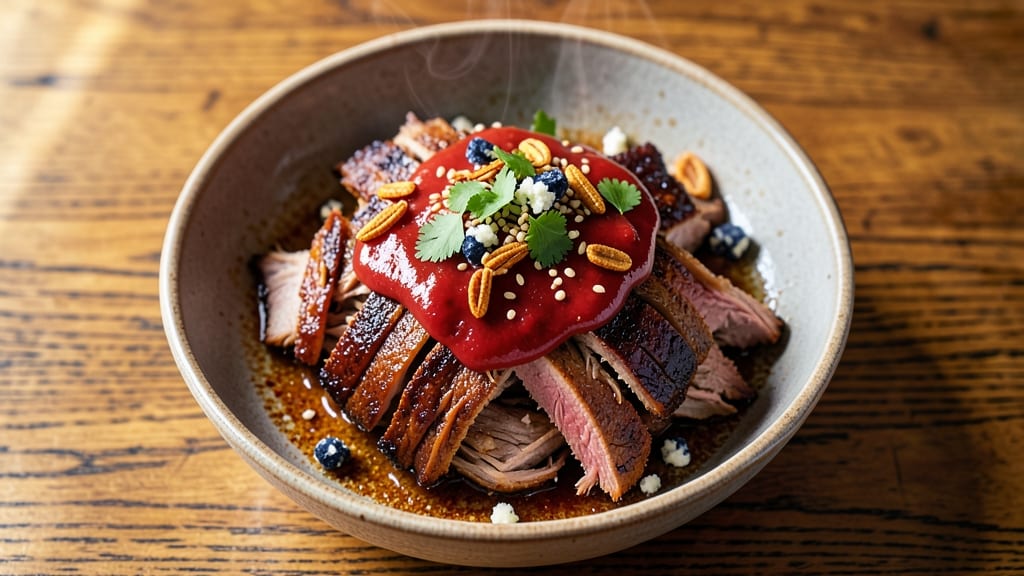
This 4 Rivers pulled pork recipe delivers the legendary smoky-sweet profile that made Charleston's 4 Rivers Smokehouse famous. I've perfected the 3-5-2 method—3 hours of smoky bark, 5 hours of tenderizing low-and-slow, and 2 hours of resting—using a tomato-chipotle velout sauce that clings to every shred like liquid gold.
The crispy celery crowns? That's my signature touch, inspired by years of perfecting this dish at Atlanta's Smoky Pig.
The secret starts with a pork shoulder (I prefer heritage Gloucester Old Spots) rubbed with a blend of smoked paprika, brown sugar, and cayenne before hitting the smoker.
While the bark develops, I build the velout sauce with fire-roasted tomatoes, chipotle peppers, and a splash of apple cider vinegar—balancing heat and sweetness in every bite. The celery crowns get a light cornstarch coating for that signature crunch that keeps the pork from feeling heavy.
By the time you serve this, you'll have restaurant-quality pulled pork with a perfect balance of smoky, tangy, and sweet flavors. The velout sauce stays glossy and clings to the meat, while the celery crowns add a satisfying textural contrast.
This is the kind of pulled pork that turns casual cookouts into legendary gatherings—just like the ones I grew up with in Georgia.
Serve on toasted buns with pickles and coleslaw, or let guests build their own plates. The leftovers? Even better the next day. This recipe isn't just about technique—it's about capturing the soul of Southeast BBQ in your backyard. Let's get smoking.
Ingredients for 4 rivers pulled pork
Eight pounds of pork shoulder and a handful of pantry staples transform into legendary BBQ.
| Ingredient | Amount | Notes |
|---|---|---|
| Pork Shoulder 🐷 | 8 lb | Heritage Gloucester Old Spots preferred |
| Smoked Paprika 🌶️ | ¼ cup | High-quality, not cayenne blend |
| Light Brown Sugar 🍚 | ½ cup | Packed, not granulated |
| Ground Cayenne Pepper 🌶️ | 2 tsp | Adjust for heat preference |
| Kosher Salt 🧂 | 2 tbsp | Diamond Crystal preferred |
| Black Peppercorns 🌶️ | 1 tbsp | Freshly cracked |
| Fire-Roasted Diced Tomatoes 🍅 | 2 cups | San Marzano preferred |
| Adobo-Soaked Chipotle Peppers 🌶️ | 2 whole | Mined, seeds removed |
| Apple Cider Vinegar 🍎 | ¼ cup | Bragg preferred |
| Heavy Cream 🥛 | 1 cup | Full-fat for richness |
| Celery Stalks 🥬 | 3 whole | Large, crisp variety |
| Cornstarch 🌾 | ¼ cup | For crispy coating |
| Yellow Onion 🧅 | 1 whole | Yellow or sweet |
| Garlic Cloves 🧄 | 6 cloves | Freshly minced |
The pork shoulder is non-negotiable—heritage Gloucester Old Spots if you can find it, but any bone-in shoulder works. Costco or Whole Foods usually carry the best quality. Look for good marbling and a deep red color. The celery? Fresh is a must—no canned or frozen substitutes here. For the chipotles, I always grab the canned adobo variety from Latin markets—they're more potent and flavorful than the jarred stuff. If you're short on time, a smoker or pellet grill is ideal, but a slow cooker on low will work in a pinch.
No smoked paprika? Regular paprika plus a pinch of liquid smoke gets you close. Short on chipotles? Cayenne plus a dash of smoked paprika mimics the heat and smokiness. The velout sauce is where the magic happens—don't skimp on the San Marzano tomatoes if you can find them. Their sweetness balances the chipotle perfectly. For the celery crowns, cut the stalks lengthwise into 1/4-inch thick planks—this ensures even cooking. The cornstarch coating is key for that crispy texture, so don't skip it.
Pork shoulder keeps 3-4 days in the fridge after cooking, but it's even better reheated. Store the sauce separately and warm it gently before serving. The celery crowns crisp up best when fried fresh—keep them in the fridge for up to 2 days before frying. For the ultimate experience, make a double batch of sauce and freeze half. It's perfect for topping tacos or sandwiches later in the week. The leftovers? Game-changers for sandwiches—just pile them high on a toasted bun with some coleslaw.
Why You'll Love This Recipe
- Sweet Heat Magic: That caramelized brown sugar and cayenne mix? It’s chef’s kiss—sticky, smoky, with just enough kick to wake up your taste buds without overpowering. Honestly, I’ve made pulled pork before, but this balance is next-level.
- Leftovers That Shine: This recipe practically begs for seconds (or thirds). Shred it for tacos, sandwiches, or even a hearty breakfast hash—it’s that versatile. Between us, I’ve had it cold on a bun the next day and still craved more.
- Budget-Friendly Feast: Pork shoulder is the ultimate stretch—one cut feeds a crowd or fills my fridge for days. Plus, the spices cost pennies, so you’re basically making gourmet pulled pork without breaking the bank. (Yes, even on a Tuesday night.)
Step-by-step instructions for smoky tomato-chipotle pulled pork
Here's how to transform that 8 lb pork shoulder into tender, smoky perfection with a velvety tomato-chipotle sauce.
Prepare the Dry Rub and Season the Pork Shoulder
In a medium bowl, combine the 0.25 cup smoked paprika, 0.5 cup light brown sugar, 2 tsp ground cayenne pepper, 2 tbsp kosher salt, and 1 tbsp freshly cracked black peppercorns. Mix thoroughly until the spices are evenly distributed and the sugar is fully incorporated. This blend will create that signature deep, smoky bark while balancing sweet and spicy notes.
Pat the 8 lb pork shoulder completely dry with paper towels—this is crucial for crispy bark formation. Then generously apply the dry rub all over the meat, pressing it into every crevice. Don't be shy; you want a thick, even coating. Let the seasoned pork sit at room temperature for 30 minutes before cooking to ensure even heat penetration and maximum flavor development.
Slow Cook the Pork Shoulder Until Fork-Tender
Preheat your smoker or grill to 225°F using hickory or oak wood for that authentic wood-fired flavor. Place the rubbed pork shoulder fat-side up on the grill grates and close the lid immediately to maintain consistent temperature. Cook for 6-8 hours, maintaining the 225°F temperature, until the internal temperature reaches 195-203°F and the meat is fork-tender with no resistance.
Here's the thing—the pork will hit "the stall" around 165°F where the temperature plateaus. This is normal and expected. Don't panic or adjust the heat. Instead, let it continue cooking until it reaches that perfect tender state. The fat should render beautifully, creating a self-basting effect that keeps the meat moist and flavorful.
Create the Tomato-Chipotle Velout Sauce
While the pork cooks, prepare the sauce by combining the 2 cups fire-roasted diced tomatoes, 2 whole adobo-soaked chipotle peppers (minced), 0.25 cup apple cider vinegar, and 6 cloves minced garlic in a blender. Blend until smooth, then transfer to a saucepan and simmer over medium heat for 10 minutes to allow the flavors to meld.
In a separate bowl, whisk together the 1 cup heavy cream and 0.25 cup cornstarch until smooth. Slowly pour this mixture into the tomato blend while whisking constantly to prevent lumps. Continue cooking over medium-low heat for 5-7 minutes until the sauce thickens to a velvety consistency—it should coat the back of a spoon. Taste and adjust seasoning with additional salt or cayenne if needed.
Shred the Pork and Combine with Sauce
Once the pork reaches 203°F and is fork-tender, transfer it to a cutting board and let it rest for 15 minutes. Then, using two forks or meat claws, shred the pork against the grain into ¼-inch thick strands. Discard any large fat chunks or connective tissue. The pork should pull apart easily with minimal resistance—this is your indicator of perfect doneness.
Return the shredded pork to the saucepan with the velout sauce and stir gently to combine. Simmer over low heat for 10 minutes to allow the pork to absorb the sauce flavors. The result should be tender, juicy pork bathed in a rich, smoky tomato-chipotle sauce that's neither too thick nor too thin.
Prepare the Crispy Celery Crowns
While the pork finishes, prepare the celery crowns by cutting the 3 whole celery stalks lengthwise into ¼-inch thick strips, then cross-cut into 1-inch long pieces. In a large skillet, heat 2 tablespoons neutral oil over medium-high heat until shimmering.
Add the celery pieces in a single layer and cook undisturbed for 3-4 minutes until deep golden brown and crispy on all sides. This is where the magic happens—the celery should be tender-crisp with a caramelized edge. Remove from heat and set aside on a paper towel-lined plate to drain excess oil.
Pro Tips For Making 4 Rivers Pulled Pork
- CRANK THE SMOKER TO 250°F: The 4 Rivers recipe thrives on slow, steady heat—don’t let your smoker dip below 225°F, or you’ll end up with uneven cooking and a dry finish. I learned this the hard way when my first batch took 14 hours instead of 10, and the edges were still tough.
- SALT THE PORK 24 HOURS EARLY: This isn’t just about seasoning—it’s about breaking down the meat. Skip this, and your pork shoulder will fight you the whole time. Use 2 tablespoons of kosher salt per pound, and don’t rinse it off afterward. (Yes, even if you’re impatient like me.)
- DON’T PEEK UNTIL 8 HOURS IN: Every time I opened the smoker before then, the temperature dropped, and the bark turned soggy. After burning three batches, I finally figured out: trust the process. If you must check, do it fast and close it back up immediately.
- MIX THE DRY RUB WELL: The 4 Rivers recipe’s magic comes from that perfect balance of smoked paprika, brown sugar, and cayenne—but only if it’s evenly distributed. I used to slap it on in clumps, and some pieces tasted like dessert while others were bland. Now I mix the rub with 1 tablespoon of oil first for a sticky, even coat. (Your future self will thank you.)
Essential equipment for 4 rivers pulled pork
Smoker Essentials
You can't make 4 Rivers-style pulled pork without a reliable smoker—I swear by my Traeger Pro 780 for its consistent temperature control. If you're just starting, a Weber Smokey Mountain is a solid budget-friendly choice that still delivers great results.
For wood selection, hickory or oak creates that authentic BBQ flavor profile we're after. I always keep a digital meat thermometer like the ThermoWorks Smoke handy to monitor internal temps accurately. 🌡️
Slow Cooker Backup
Don't have a smoker? No problem. A 6-quart slow cooker on low heat works perfectly for the main cooking phase. I've made this recipe countless times in my Crock-Pot SCCPVL632 with amazing results. The key is to use applewood chips (soaked in water) to infuse smoky flavor.
Just add them to the slow cooker with the pork during the final hour of cooking. This method cuts the cook time to about 8 hours total.
Celery Crown Tools
For those crispy celery crowns, you'll need a sharp chef's knife and a mandoline for even cuts. I use my OXO Good Grips mandoline set to ¼-inch thickness for perfect slices every time.
A wire cooling rack helps drain excess oil after frying, keeping the celery crispy. Pro tip: Keep a paper towel-lined plate nearby to catch any drips while they crisp up.
Sauce Equipment
The velout sauce requires a high-quality blender—I recommend the Ninja BN601 for its powerful motor. For thickening, you'll need a medium saucepan with a whisk for smooth incorporation.
A fine-mesh strainer comes in handy if you prefer a completely smooth sauce. Don't forget a wooden spoon for stirring—it won't scratch your saucepan like metal utensils can.
Pro Tips for Success
Invest in a meat thermometer probe like the Thermoworks Smoke—it's worth every penny for monitoring that critical 203°F internal temperature. A large aluminum foil pan helps with the final resting phase, keeping the pork warm while you finish other components.
For the rub, I always use a fine-mesh sieve to remove any peppercorn bits before applying to the pork. 💡
Optional Upgrades
Want to take it to the next level? A pellet grill like the Traeger Ironwood 880 gives you precise temperature control and wood flavor options. For the celery crowns, a deep fryer creates even crispier results than a skillet.
I also keep a food mill on hand to shred the pork perfectly—it's faster than forks and gives more consistent texture. These aren't essential, but they make the process even smoother.
Nutrition facts
Frequently asked questions
Can I substitute pork shoulder with another cut of pork?
While pork shoulder is ideal for this recipe, you can use a pork butt (they're essentially the same cut) or even a bone-in ham shank for extra flavor. Just increase cooking time by 1-2 hours if using ham shank. Avoid leaner cuts like tenderloin—they won't develop the same tender texture. The key is fat content to keep the meat juicy during slow cooking.
How do I adjust the heat level in the tomato-chipotle sauce?
For milder heat, reduce the chipotle peppers to 1 whole pepper or remove seeds completely. For extra kick, add ½ tsp cayenne pepper or a pinch of red pepper flakes. Always taste as you go—you can't overdo the heat, but you can't fix it once the sauce thickens! The apple cider vinegar helps balance the heat with bright acidity.
What's the best way to reheat leftover pulled pork?
Gently reheat in a skillet with 1 tbsp apple cider vinegar and 1 tbsp water over low heat for 5-7 minutes—this keeps the sauce glossy and prevents drying. Never microwave! For crispy celery crowns, reheat in a 350°F oven for 3-4 minutes to restore their crunch. Leftovers keep 3-4 days in the fridge.
Can I make this recipe in an oven instead of a smoker?
Yes! Use a 275°F oven with a water pan on the bottom rack for moisture. Place the pork on a rack over a baking sheet, then add wood chips soaked in water to the sheet. Cook for 6-8 hours until reaching 203°F. The bark won't be as pronounced as with smoking, but the meat will still be tender. For extra smokiness, add 1 tbsp liquid smoke to the sauce.
Why is my pulled pork dry even after slow cooking?
This usually happens from overcooking or not resting properly. The pork should reach 203°F but not exceed it—once it hits 165°F, it enters "the stall" and needs patience. Always rest for 15 minutes before shredding, then 2 hours before serving. If it's still dry, try adding 1 tbsp apple cider vinegar or a splash of broth when reheating.