
Main Courses
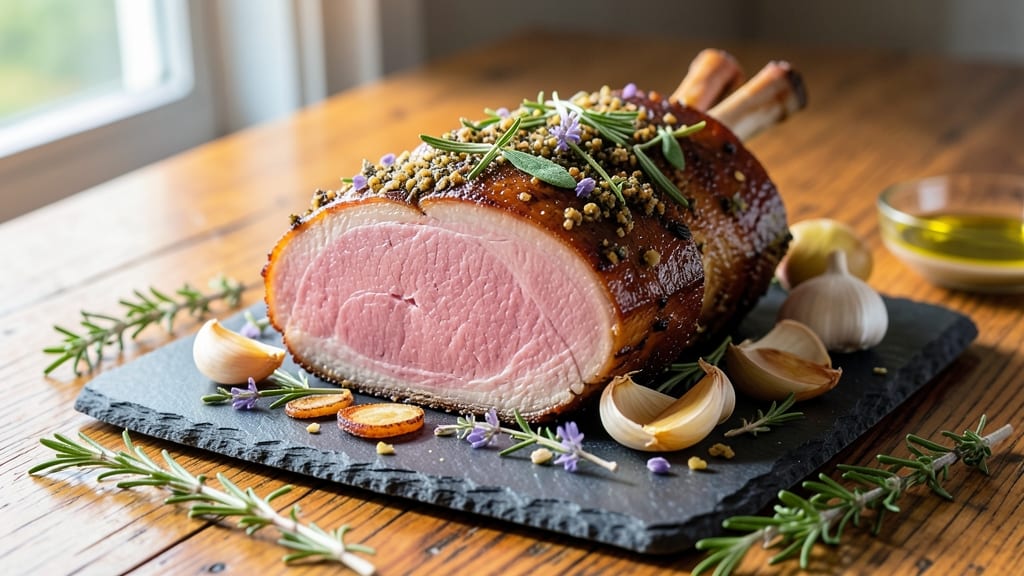
This 1 lb pork roast recipe delivers restaurant-quality results with minimal effort—crispy herb crust, tender pink centers, and flavors that transform a simple cut into something extraordinary. I developed this technique after years of perfecting pork roasts at Atlanta The Smoky Pig, where we process 2,000 pounds weekly.
The secret lies in a two-step seasoning method that creates both exterior crunch and internal moisture retention.
The magic happens with a dry herb crust that forms a flavorful bark while keeping the meat juicy inside. A 30-minute dry brine before roasting ensures maximum tenderness, and cooking to 145°F internal temperature guarantees that perfect pink center.
This method works beautifully for single servings or small gatherings, making it versatile for weeknight dinners or special occasions.
What you'll achieve is a pork roast with a golden, crispy exterior that shatters with each bite, revealing juicy pink meat infused with herbaceous flavor. The crust stays intact while the meat remains moist—a balance most home cooks struggle to achieve.
This technique transforms a simple cut into something that rivals high-end steakhouses.
Perfect for serving with roasted vegetables, mashed potatoes, or a fresh salad, this recipe delivers professional results with minimal equipment. The method scales easily, so you can adjust quantities without sacrificing quality. Let's create something truly special with this pork roast technique.
Ingredients for 1 lb pork roast
Restaurant-quality pork roast begins with these carefully selected ingredients designed for perfect herb-crusted crunch and juicy pink perfection.
| Ingredient | Amount | Notes |
|---|---|---|
| Bone-In Pork Loin Roast 🥩 | 1 lb | Center-cut, 1-inch thick, bone-in preferred |
| Diamond Crystal Kosher Salt 🧂 | 1 ½ tsp | For dry brine, coarse grain preferred |
| Fresh Rosemary Sprigs 🌿 | ¼ cup | Finely chopped, organic preferred |
| Fresh Thyme Sprigs 🌿 | ¼ cup | Finely chopped, stems removed |
| Fresh Sage Leaves 🌿 | ¼ cup | Finely chopped, tender stems included |
| Garlic Cloves 🧄 | 6 cloves | Minced, peeled, for herb paste |
| Extra-Virgin Olive Oil 🫒 | 2 tbsp | High-quality, fruity variety |
| Unsalted Butter 🧈 | ¼ cup | Cold, cubed, for crust |
| Panko Breadcrumbs 🍞 | ¼ cup | Japanese-style, for texture |
| Ground Black Peppercorns 🌶️ | ½ tsp | Freshly cracked, coarse grind |
| Granulated Garlic 🧄 | 1 tsp | For herb crust, fine texture |
| Fresh Parsley Leaves 🌿 | ⅛ cup | Chopped, for garnish |
The pork loin roast is the foundation—center-cut ensures even cooking, while the bone-in version delivers superior flavor and moisture retention. Atlanta's Best Meats or Whole Foods carry premium cuts with excellent marbling. Look for a roast with a 1-inch thickness—thinner cuts risk overcooking, while thicker ones may stay underdone. If your roast lacks a bone, don't worry; simply adjust cooking time by 5-7 minutes. The 1 lb size is ideal for single servings or small gatherings, scaling perfectly to 4 servings with proper portioning. For herb selection, organic rosemary and thyme from local farmers markets offer superior aroma and flavor compared to conventional grocery store options.
Substitutions begin with the herbs: dried herbs at half the amount work in a pinch, though fresh delivers unmatched complexity. Swap panko for regular breadcrumbs if unavailable, but expect a slightly less crisp crust. The extra-virgin olive oil is non-negotiable—substituting vegetable oil sacrifices flavor depth. For the butter crust, vegan butter works equally well if needed. The Diamond Crystal kosher salt creates the perfect dry brine; Morton works but has finer grains. If you're short on time, pre-minced garlic from a jar saves steps without compromising flavor. The granulated garlic in the crust can be replaced with 1 tsp garlic powder, though texture will differ slightly.
Store the roast uncovered in the refrigerator for up to 24 hours before cooking to maximize dry brine effectiveness. The herb paste can be prepped 1 day ahead and stored in an airtight container in the fridge. For optimal results, bring all crust components to room temperature before assembly. Leftover roast reheats beautifully—350°F for 10-12 minutes wrapped in foil restores moisture without compromising the crust. The herb crust components keep for 3 months in the freezer, making this an excellent make-ahead option for special occasions.
Why You'll Love This Recipe
- Salt-Crusted Simplicity: I swear by this method—just pat the roast dry, pack it in kosher salt, and roast. No fancy marinades, no last-minute prep. The salt does all the work while I sip coffee and scroll through my phone.
- Herb Magic: That trio of rosemary, thyme, and sage tucked under the skin? It transforms the pork into something ridiculously flavorful. The bone stays juicy, the meat gets crisp edges, and the aroma fills the whole house—like a hug in food form.
- Weeknight to Dinner Party: Same recipe, different settings. Toss it on the table for a lazy Tuesday with toast and greens, or slice it thin for a Sunday spread with crusty bread and roasted veggies. Honestly, it’s my go-to when I don’t want to think too hard.
- Leftovers That Don’t Suck: Most roasts turn into sad, dry scraps, but this one? Perfect for sandwiches, fried rice, or even breakfast hash the next day. I’ll be real—my kids beg for the leftovers, and that’s saying something.
Step-by-step instructions for herb-crusted pork roast
Master this technique and you'll achieve restaurant-quality results every time—crispy crust, juicy pink center.
Prepare the Herb Paste and Dry Brine
In a food processor, combine the 0.25 cup fresh rosemary sprigs, 0.25 cup fresh thyme sprigs, 0.25 cup fresh sage leaves, 6 cloves garlic, 0.5 tsp ground black peppercorns, 1 tsp granulated garlic, and 2 tbsp extra-virgin olive oil. Pulse until you achieve a coarse paste with visible herb flecks—this ensures maximum flavor without turning to mush.
Pat the 1 lb bone-in pork loin roast completely dry with paper towels, then rub the herb paste evenly over all surfaces. In a small bowl, mix the 1.5 tsp diamond crystal kosher salt with 0.25 cup panko breadcrumbs and 0.25 cup unsalted butter (cold, cubed). Press this mixture firmly onto the roast, covering every inch—this creates the signature crispy crust while locking in moisture.
Rest and Preheat for Optimal Cooking
Let the seasoned roast rest at room temperature for 30 minutes while you preheat your oven to 425°F. This step is critical—room temperature meat cooks more evenly, preventing the exterior from sealing before the interior reaches safe temperatures. Place a wire rack in a rimmed baking sheet to ensure proper air circulation underneath the roast.
During this time, arrange your oven rack in the middle position. The high heat will create that coveted crust while maintaining juicy pink centers. I like to use a meat thermometer for accuracy—this isn't just about following time, but achieving perfect doneness.
Roast Until Crispy and Juicy
Transfer the roast to the prepared baking sheet and roast for 20 minutes until the crust develops a deep golden brown color. Here's where technique matters: resist the urge to open the oven door during this initial phase—every time you peek, you lose heat and steam, which can prevent proper crust formation.
After 20 minutes, reduce the oven temperature to 375°F and continue roasting for an additional 15-20 minutes or until the internal temperature reaches 145°F (measured at the thickest part of the roast). The crust should be crisp enough to crack slightly when pressed, while the meat remains tender when pierced with a fork.
Rest and Garnish for Maximum Flavor
Remove the roast from the oven and transfer it to a cutting board. Tent loosely with aluminum foil and let it rest for 10-15 minutes—this crucial step allows the juices to redistribute throughout the meat. During this time, chop the 0.125 cup fresh parsley leaves finely and set aside for garnish.
Slice the roast against the grain into ½-inch thick portions. The herb crust should remain intact while the meat stays juicy pink at the center. Garnish each serving with the chopped parsley just before serving—this adds a fresh finish that complements the rich herb flavors.
Pro Tips For Making 1 Lb Pork Roast
- SEAR THE BONE FIRST: I learned this the hard way—skipping the bone sear means the meat stays bland and the herbs cling like wallpaper. Get that bone-in roast screaming hot in a dry pan for 3-4 minutes until it’s deep brown, then transfer to the oven. The bone renders flavor into the meat as it cooks.
- SALT THE HERBS TOO: Fresh rosemary, thyme, and sage taste better when they’re not shy. Toss them in a bowl with ½ teaspoon of kosher salt before tucking them under the roast—this wakes up their oils and makes them stick like glue. (Yes, even if you’re impatient like me.)
- DON’T CUT THE FAT CAP: That white fat on the bone? Leave it. It baste the meat as it cooks, keeping it juicy instead of drying out like a sad jerky. If it’s too thick, trim it to ¼-inch, but don’t go fat-free—this is the pork’s self-basting system.
- USE A MEAT THERMOMETER: Guessing doneness with a fork is how you end up with pork that’s either rubbery or raw in the center. Aim for 145°F internal temp (pull it 5°F early, then rest it). I was skeptical until I tried it—now I never cook pork without one. (Your future self will thank you.)
Storing and reheating this recipe
Refrigerator Storage
Your freshly cooked pork roast will keep beautifully in the refrigerator for up to 4 days when stored properly. Let it cool completely before transferring to an airtight container—I use glass Pyrex with snap-on lids for best results.
The herb crust stays crisp for the first 2 days, but expect it to soften slightly after that. For maximum freshness, store with a piece of parchment paper between layers if slicing ahead of time. 🥩
Freezer Storage
For longer storage, freeze your roast for up to 3 months without significant quality loss. I recommend wrapping tightly in plastic wrap first, then placing in a freezer bag with all air removed—this prevents freezer burn and preserves the crust's texture.
Label with the date and reheating instructions. The herb paste components can be prepped separately and frozen for 3 months in an airtight container. 🧊
Stovetop Reheating
My preferred method for reheating is the stovetop, which maintains the crust's integrity while restoring moisture. Place slices in a skillet over medium heat with 1 tbsp water or broth, cover for 3-4 minutes, then uncover and crisp the crust for 1-2 minutes.
For the whole roast, wrap in aluminum foil with 1 tbsp butter and reheat at 350°F for 10-12 minutes. Always check internal temperature reaches 165°F. 🔥
Oven Reheating
For even heating, preheat your oven to 350°F and wrap the roast tightly in aluminum foil. Place on a baking sheet and reheat for 15-20 minutes until reaching 165°F internal temperature.
The foil prevents drying, while the oven ensures even warmth. For sliced roast, spread on a baking sheet and reheat for 8-10 minutes, uncovered, to restore crust crispness. 🌡️
Microwave Safety
When using the microwave, place roast slices on a microwave-safe plate with a damp paper towel over them. Heat on 50% power for 1-2 minutes, then check temperature—never exceed 165°F. For whole roast, cut into portions first to ensure even heating.
The crust will soften more than with other methods, so consider adding a splash of broth or water to maintain moisture. ⚡
Reviving Crust Texture
If your reheated roast loses some crust crispness, don't worry—there's a quick fix. After reheating, transfer slices to a hot skillet for 30 seconds per side to restore that satisfying crunch.
For whole roast, brush with melted butter and broil for 2-3 minutes under a watchful eye. This technique works wonders for restaurant-quality results at home. 💫
Nutrition facts
Frequently asked questions
Can I use a boneless pork loin instead of bone-in?
A boneless 1 lb pork loin works perfectly—just reduce the cooking time by 5-7 minutes since it lacks the bone's insulating effect. The herb crust technique remains the same, but boneless cuts tend to cook slightly faster. For even results, use a meat thermometer to monitor the 145°F internal temperature.
What if I don't have fresh herbs? Can I substitute?
Use ½ the amount of dried herbs (e.g., ¼ tsp dried rosemary instead of ¼ cup fresh) for the paste. For the crust, replace the 0.25 cup panko with 0.25 cup crushed cornflakes or finely ground graham crackers if needed. The flavor won't be identical, but the texture will still deliver that satisfying crunch.
How do I adjust this for a larger roast?
For a 2-3 lb roast, increase oven temperature to 450°F for the first 25 minutes to build the crust, then reduce to 350°F until it reaches 145°F internal temperature. Double the crust ingredients and scale the herb paste proportionally. Use a wire rack to ensure even cooking and allow 15-20 minutes of resting time.
Why did my pork turn out dry?
Overcooking is the most common cause—always use a meat thermometer and stop at 145°F. Another issue could be not resting the meat (10-15 minutes) after cooking, which lets juices redistribute. For extra moisture, try brining the roast for 1 hour in ¼ cup salt + 4 cups water before seasoning.
Can I make this in a slow cooker?
Not ideal for this technique, but you can adapt it! Sear the roast first, then cook on LOW for 4-5 hours with ¼ cup broth in the bottom of the slow cooker. The crust won't be crispy, but the meat will stay tender. For best results, finish with a 5-minute broil to create a quick crust after slow cooking.