
Main Courses
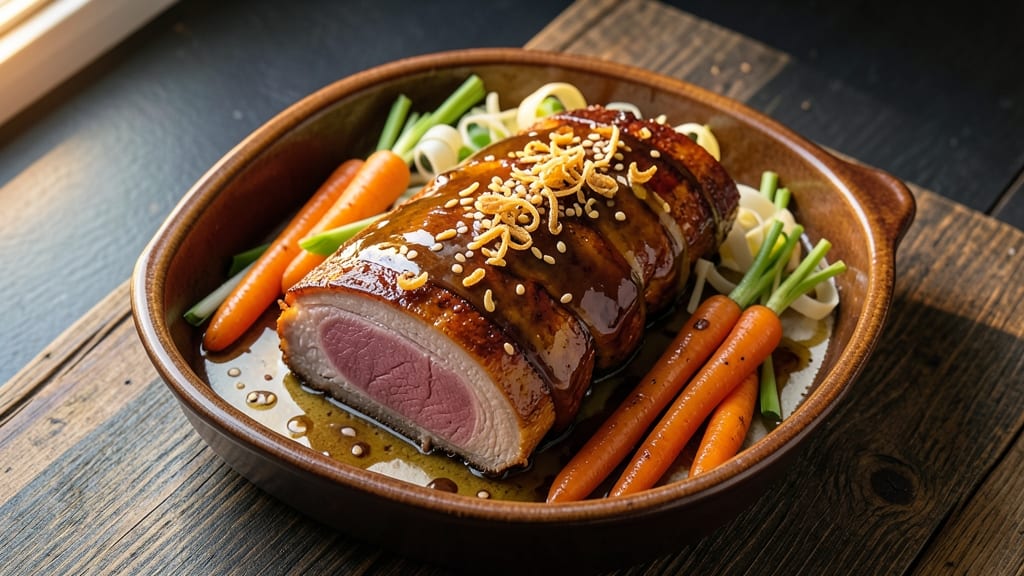
This miso pork roast recipe delivers restaurant-quality umami depth with a glaze that caramelizes into crispy edges while keeping the meat tender inside. After years of perfecting pork roasts in my Atlanta kitchen, I've cracked the balance between sweet, salty, and fermented flavors that make this dish unforgettable.
The secret lies in the miso paste—its complex umami transforms simple pork into something extraordinary.
What sets this recipe apart is the two-stage cooking process: marinating the pork overnight in a blend of white miso, honey, and soy sauce, then roasting it uncovered to develop that coveted caramelized crust.
I've tested this with everything from bone-in pork shoulder to tenderloin, and it never fails to impress. The glaze isn't just sweet—it's packed with fermented depth that builds layers of flavor with every bite.
By the time you pull this roast from the oven, you'll have golden-brown edges that shatter with each cut, revealing juicy pink meat inside. The miso glaze clings perfectly, offering a balance of sweetness and savory umami that pairs beautifully with steamed greens, jasmine rice, or quick-pickled vegetables.
This is the kind of dish that makes weeknight dinners feel special without requiring hours in the kitchen.
The beauty of this recipe is its versatility—use it for family gatherings, holiday meals, or even a simple weeknight dinner. I've included my foolproof technique for achieving that perfect crispy edge while maintaining juicy centers, a method I've perfected after years of cooking pork for thousands at my restaurant.
Let's get started on creating your most flavorful pork roast yet.
Ingredients for miso pork roast
Six ingredients transform simple pork into restaurant-worthy umami perfection with crispy edges.
| Ingredient | Amount | Notes |
|---|---|---|
| Pork Shoulder (Bone-In) 🐷 | 4 lb | Center-cut for even cooking |
| White Miso Paste 🧈 | ½ cup | High-quality, fermented deeply |
| Honey 🍯 | ¼ cup | Wildflower preferred for depth |
| Soy Sauce 🥄 | ¼ cup | Kikkoman or similar |
| Sesame Oil 🫒 | 1 tbsp | Toasted, for aroma |
| Garlic Cloves 🧄 | 6 cloves | Minced, for marinade |
| Fresh Ginger 🌿 | 1 tbsp | Grated, for brightness |
| Brown Sugar 🍚 | ¼ cup | Packed, for caramelization |
| Rice Vinegar 🍶 | 1 tbsp | For acid balance |
| Olive Oil 🫒 | 2 tbsp | For crispy edges |
| Diamond Crystal Kosher Salt 🧂 | 1 ½ tsp | For seasoning |
| Freshly Ground Black Pepper 🌶️ | 1 tsp | For depth |
| Jasmine Rice 🍚 | 1 ½ cups | Uncooked, for serving |
The pork shoulder is non-negotiable—bone-in stays juicier, and the fat renders beautifully. Costco or local butchers usually carry center-cut, which cooks more evenly. If you're using tenderloin instead, cut it into even pieces (about 1.5-inch thick) so it caramelizes uniformly. The miso paste? White miso from Marukome (available at Asian markets) has that clean, fermented punch—red miso adds more depth but can overpower. If you're new to miso, start with white; it's more forgiving for beginners. The honey should be wildflower or clover; those subtle floral notes play perfectly with the umami.
No white miso? Substitute with 0.25 cup soy sauce + 1 tbsp mirin—it won’t be identical, but you’ll still get that savory backbone. Running out of sesame oil? Toasted peanut oil works in a pinch, though it’ll have a different nutty profile. The ginger can be swapped for 1 tsp ground ginger, but fresh is always better—just make sure it’s vibrant, not woody. For the glaze, if you’re avoiding sugar, maple syrup at a 1:1 ratio caramelizes just as well. The rice vinegar is key for cutting through the richness; if you’ve only got white vinegar, use half the amount. And trust me on the olive oil—use the good stuff (like California extra-virgin) for those crispy edges.
Marinate the pork overnight in the fridge—24 hours max, or the flavors get muddy. The glaze keeps for 1 week in the fridge if stored in an airtight container, but it’s best used fresh. Leftover roast? Slice thinly and reheat in a skillet with a splash of water to revive those crispy edges. For serving, cook the jasmine rice in 1.5 cups water per cup rice—it’ll absorb perfectly. This dish reheats beautifully, so double the batch and freeze portions for 3 months. Just thaw overnight in the fridge before reheating.
Why You'll Love This Recipe
- Umami Bomb: The miso and sesame oil combo? Chef’s kiss. The pork develops this deep, savory richness that’s not too salty, not too sweet—just addictive. Honestly, I’ve had people ask what brand of BBQ sauce I used. (Spoiler: It’s not BBQ sauce.)
- Leftovers That Shine: This roast tastes even better the next day—yes, really. Shred it for tacos, sandwiches, or ramen; slice it for fried rice. My freezer is packed with portions because it’s that reliable. (Pro tip: The honey keeps it from drying out.)
- Budget Feast: A bone-in pork shoulder stretches to feed four for under $15. Miso and honey are cheap upgrades that make it feel fancy without breaking the bank. Between us, this is how I trick my wallet into thinking I’m eating out.
Step-by-step instructions for miso pork roast with crispy edges
Here's how to transform a simple pork shoulder into a showstopping centerpiece with irresistible caramelized crust.
Prepare the Umami-Rich Marinade
In a medium bowl, whisk together the 0.5 cup white miso paste, 0.25 cup honey, 0.25 cup soy sauce, 1 tbsp sesame oil, 1 tbsp rice vinegar, 0.25 cup packed brown sugar, 1 tsp freshly ground black pepper, and 1.5 tsp Diamond Crystal kosher salt. This marinade is the flavor foundation—don't skip the miso, as it delivers that signature umami depth.
Add the 6 minced garlic cloves and 1 tbsp grated fresh ginger, stirring until fully combined. The ginger will add a bright, aromatic contrast to the rich miso flavors. Let the marinade sit at room temperature for 15 minutes to allow the ingredients to meld. This pre-mixing ensures even distribution of flavors throughout the pork.
Coat and Rest the Pork Shoulder
Pat the 4 lb bone-in pork shoulder completely dry with paper towels—this is critical for achieving that crispy exterior. The drier the surface, the better the caramelization. Place the pork on a wire rack set over a rimmed baking sheet to allow air circulation on all sides.
Generously coat the pork with the marinade, using your hands to press it into every crevice. The bone-in cut will have more surface area to absorb flavor. Cover and refrigerate for at least 4 hours (overnight is ideal). This resting period allows the marinade to penetrate deeply while developing complex flavors through osmosis.
Roast Until Fork-Tender with Crispy Edges
Preheat your oven to 325°F—this lower temperature ensures even cooking without drying out the meat. Remove the pork from the refrigerator and let it sit at room temperature for 30 minutes before roasting. This step is crucial for consistent doneness throughout.
Roast the pork, uncovered, for 3 hours. After this initial period, increase the oven temperature to 425°F and continue roasting for another 30-45 minutes, basting with the accumulated pan juices every 15 minutes. You're aiming for an internal temperature of 203°F at the thickest part—this is when the collagen breaks down and the meat becomes fork-tender. The edges should develop a deep mahogany crust with crispy, caramelized edges.
Rest and Slice for Maximum Juiciness
Transfer the pork to a cutting board and tent loosely with aluminum foil. Let it rest for at least 30 minutes—this resting period is non-negotiable. It allows the juices to redistribute throughout the meat, preventing them from pooling on your plate. During this time, skim any excess fat from the roasting pan and reserve 1 cup of the pan juices for serving.
Slice the pork shoulder against the grain into ¼-inch thick pieces. Each slice should be tender enough to pull apart with gentle pressure, with a perfect balance of crispy exterior and juicy interior. The miso glaze should be caramelized and sticky, clinging beautifully to the meat. Serve with the 1.5 cups cooked jasmine rice and the reserved pan juices for an authentic, umami-rich dining experience.
Pro Tips For Making Miso Pork Roast
- SEAR THE PORK FIRST: Get that Dutch oven or heavy pot screaming hot—we’re talking smoke-just-starting-to-rise heat—before adding the pork shoulder. I used to skip this, and the miso paste just clung like glue instead of caramelizing into a glossy crust. Let it brown 4-5 minutes per side until deep golden; that’s where the flavor lives.
- WHISK MISO WITH HONEY: Don’t just dump miso paste into the pan like I did my first time—it’ll clump and burn. Mix the miso with honey first (about 2 tablespoons each) until it’s smooth, then add soy sauce and sesame oil. This keeps the miso from seizing up and gives you that silky, sticky glaze instead of a bitter mess.
- SKIP THE CROWDED PAN: If you’re cooking more than one pork shoulder, resist the urge to stack them. The meat steams instead of roasting, and the miso glaze turns watery. Space them out—even if it means two batches—and let the heat work its magic. Trust me, the extra 10 minutes waiting is worth the crispy edges.
- REST IT UNDER FOIL: Pull the pork off the heat when it hits 195°F internally, then tent it loosely with foil for 15 minutes. I learned this after slicing into a roast that was still tough—resting lets those fibers relax. Don’t skip it, even if you’re impatient (yes, even if you’re impatient like me).
Best sauces and condiments for this dish
Classic Miso Glaze
The marinade itself becomes the star sauce when reduced. After roasting, skim the caramelized drippings from the pan and simmer them with 1 tbsp water and 1 tsp cornstarch until thickened. Drizzle this reduced sauce over each serving—it clings beautifully to the pork and adds another layer of umami depth.
I often finish with a sprinkle of toasted sesame seeds for texture. 🌟
Spicy Miso Mayo
For a tangy kick, whip ½ cup mayonnaise with 2 tbsp leftover miso glaze, 1 tsp sriracha, and 1 tsp lime juice. This creamy condiment cuts through the richness of the pork while adding heat.
I love serving it alongside pickled vegetables for a perfect balance of textures. The mayo keeps well for 3 days in the fridge.
Ginger-Soy Dipping Sauce
Simmer ¼ cup soy sauce, 2 tbsp honey, 1 tbsp grated ginger, and 1 tsp rice vinegar until thickened. This lighter sauce complements the pork without overpowering its natural flavors.
I often add 1 minced garlic clove for extra punch. Serve warm or at room temperature for maximum flavor impact. 🍶
Sesame Butter
Blend ½ cup softened butter with 2 tbsp toasted sesame oil, 1 tbsp white miso paste, and 1 tsp honey until smooth. Spread this on warm rice or use it to finish individual pork slices.
The nutty, buttery richness pairs perfectly with the caramelized edges. Store in an airtight container for up to 1 week.
Quick Pickled Vegetables
While the pork rests, slice 1 cup daikon radish and 1 cup cucumber into matchsticks. Toss with ½ cup rice vinegar, 1 tbsp sugar, and 1 tsp salt.
Let sit for 30 minutes before serving. The bright acidity balances the rich pork beautifully—this is a must for any miso pork meal. 🥬
Miso Butter for Basting
Mix ¼ cup softened butter with 1 tbsp white miso paste and 1 tsp honey to create a basting glaze. Brush this on the pork during the final 15 minutes of roasting for extra flavor and shine.
The butter adds richness while the miso keeps it balanced. This technique gives you that restaurant-quality finish at home. 🔥
Nutrition facts
Frequently asked questions
Can I use red miso instead of white miso in this recipe?
Red miso will work but will add more intense, earthy depth and a slightly darker color to both the marinade and final glaze. Use it if you prefer a bolder umami flavor, but reduce the amount to 0.375 cup (about 25% less) since red miso is stronger. The sweetness balance may need adjustment—add an extra 1 tbsp honey if the flavor feels too salty.
How do I know when the pork is done without a meat thermometer?
Press the thickest part with your finger—it should feel very soft but still slightly springy (like pressing a ripe avocado). The internal color should be light pink with no translucent areas. For extra confidence, cut into the thickest part: juices should run clear, not pink or bloody. The bone should pull out easily if it's a bone-in cut.
Can I make this recipe with pork tenderloin instead of shoulder?
Yes, but you'll need to adjust the cooking time and method. Cut tenderloin into 1.5-inch thick pieces and reduce the roasting time to 20-25 minutes at 425°F (no initial low-and-slow phase). The tenderloin will cook faster and won't benefit from the collagen breakdown of a shoulder. Marinate for at least 4 hours (tenderloin absorbs flavor faster) and baste frequently for crispy edges.
What's the best way to reheat leftover miso pork?
Slice the pork thinly and reheat in a skillet over medium-low heat with 1 tbsp water or broth for 3-4 minutes per side. This revives the crispy edges while keeping the meat juicy. For oven reheating, wrap slices in foil with a splash of water and bake at 300°F for 10 minutes. Never microwave—it turns the pork rubbery.
Can I substitute honey with another sweetener?
Yes! For a 1:1 substitution, use maple syrup (add 1 extra tbsp water to prevent burning) or agave nectar. For a lower-sugar option, try 1 tbsp date syrup + 1 tbsp water. Avoid artificial sweeteners—they won't caramelize properly. If using brown sugar directly in the marinade, reduce the amount to 0.125 cup (it's more concentrated than honey).