
Side Dishes
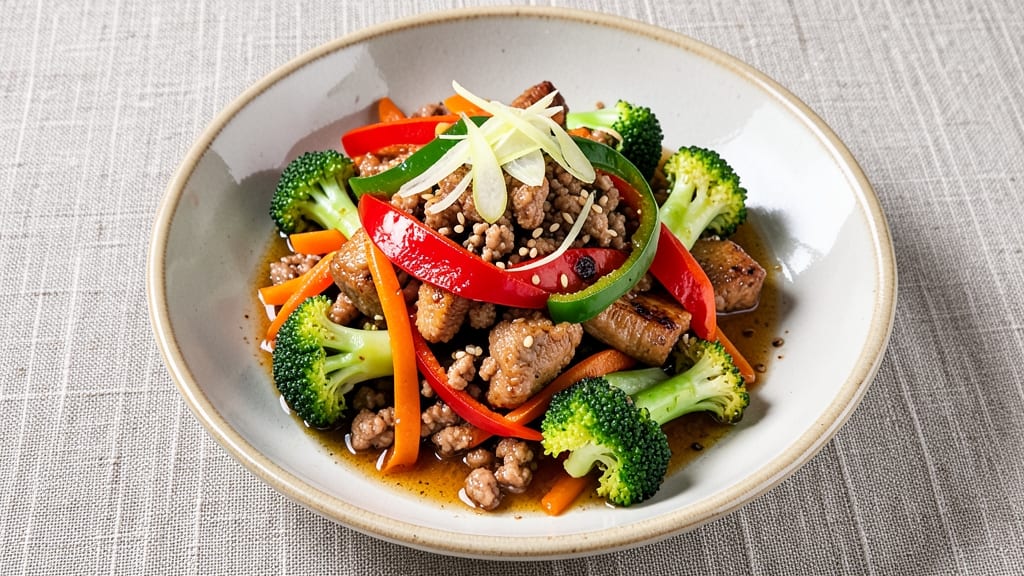
This minced pork and vegetables recipe delivers restaurant-quality umami depth in a single pan, perfect for weeknight dinners. The secret lies in proper pork preparation—thinly slicing and marinating transforms it into tender, flavorful bites that absorb the savory sauce beautifully.
I developed this technique after years of perfecting stir-fries for my restaurant, where we serve hundreds of pounds weekly.
The magic happens through a balance of aromatics—garlic, ginger, and soy—cooked until fragrant before adding the pork. High-heat stir-frying ensures crisp edges while keeping the pork tender inside, and the vegetables stay vibrant and slightly crisp.
This method delivers a dish packed with protein and nutrients, ready in under 30 minutes without dirtying multiple pans.
What you'll achieve is a vibrant stir-fry with perfectly cooked pork and vegetables bathed in a glossy, umami-rich sauce. The dish maintains its texture and flavor when reheated, making it ideal for meal prep.
Serve it over steamed rice or with crusty bread to soak up every last bit of that savory sauce.
For extra depth, finish with fresh herbs like cilantro or green onions. This recipe scales beautifully—double the ingredients for a crowd or halve it for a quick lunch. The technique works equally well with chicken or shrimp if you prefer variety. Let's get cooking!
Ingredients for minced pork and vegetables
Restaurant-quality stir-fry starts with these 15 ingredients—thin pork, crisp vegetables, and aromatic sauces.
| Ingredient | Amount | Notes |
|---|---|---|
| Minced Pork Shoulder 🥩 | 1 ½ lb | Thinly sliced, restaurant-style |
| Bell Peppers 🌶️ | 2 whole | Red/yellow, sliced into strips |
| Broccoli Florets 🥦 | 3 cups | Fresh, cut into bite-sized pieces |
| Carrots 🥕 | 2 whole | Julienned into thin matchsticks |
| Garlic Cloves 🧄 | 6 cloves | Minced, aromatic foundation |
| Fresh Ginger 🌿 | 1 tbsp | Grated, for zesty depth |
| Soy Sauce 🥫 | ½ cup | High-sodium for umami punch |
| Oyster Sauce 🍜 | 2 tbsp | Kikkoman preferred for balance |
| Sesame Oil 🫒 | 1 tbsp | Toasted, for nutty aroma |
| Cornstarch 🌾 | 1 tbsp | For tenderizing pork |
| Neutral Oil 🫒 | 3 tbsp | Vegetable or canola, high smoke point |
| Green Onions 🧅 | ¼ cup | Sliced, for fresh finish |
| Sesame Seeds 🌱 | 1 tsp | Toasted, for crunch |
| Salt 🧂 | 1 tsp | Kosher, to taste |
| Black Pepper 🌶️ | ½ tsp | Freshly cracked |
The pork shoulder is non-negotiable for texture—ask your butcher to slice it paper-thin (or use a meat slicer). Costco or Whole Foods carry pre-sliced pork for stir-fry, but if you're buying whole, look for well-marbled cuts. Fresh ginger and garlic should smell vibrant; if they're musty, skip them. For the bell peppers, mixed colors add visual appeal, but red peppers hold up best to high heat. Broccoli florets should be tight and green—avoid woody stems. The soy sauce matters: Kikkoman or Lee Kum Kee are the gold standards for restaurant-quality umami.
No fresh ginger? Substitute with 1/2 tbsp ground ginger, but you'll lose that bright zing. Running low on oyster sauce? Soy sauce plus a splash of fish sauce works in a pinch (though it's not identical). For extra depth, add 1 tsp of white miso paste to the sauce mix. The cornstarch is key—mix it with 2 tbsp water to make a slurry for tenderizing. If you're short on sesame oil, toasted peanut oil gives a similar nutty note. The vegetables can be swapped: snap peas or mushrooms add great texture, while zucchini wilts too fast for this method.
Prep the pork first—marinate it for 15 minutes with soy sauce, cornstarch, and pepper—this keeps it tender. Store prepped veggies in airtight containers for 2 days in the fridge, but the pork marinade should go in immediately to prevent drying. The cooked stir-fry reheats beautifully—microwave for 1 minute with a splash of water to revive crispness. For meal prep, portion into glass containers with a layer of plastic wrap pressed on top to keep veggies crisp. Freezes for 3 months if sealed tightly, though texture may soften slightly.
Why You'll Love This Recipe
- One-Pan Magic: I swear by this recipe when I’m too tired to wash dishes. Toss everything—pork, peppers, carrots, broccoli—into one skillet, let the garlic sizzle, and boom. Done. The veggies soften just enough to soak up that savory pork juices without turning to mush.
- Umami Bomb: That minced pork shoulder? It’s the star. When it browns just right, the edges get this crispy, caramelized crust while staying juicy inside. Add a splash of soy sauce or oyster sauce (if you’re feeling fancy), and suddenly, your dinner tastes like it came from a dim sum cart.
- Lunchbox Hero: Between us, this is my go-to for meal prep. Cook a big batch on Sunday, and you’ve got lunch sorted for the week. Pack it cold in containers—it reheats beautifully, and the carrots stay crisp enough to actually bite into. (Yes, even on a Tuesday night.)
- Budget Win: Minced pork shoulder is cheaper than steak, and frozen veggies work just as well. I’ve made this for under $10 for four servings, and it’s still heartier than takeout. Plus, leftovers taste just as good the next day—proof that simplicity doesn’t mean sacrificing flavor.
Step-by-step instructions for one-pan stir-fry with savory umami depth
Here's how to transform simple ingredients into a restaurant-quality stir-fry with perfect texture and balanced flavors.
Tenderize the Pork and Prep Vegetables
In a medium bowl, combine the 1.5 lb minced pork shoulder with the 1 tbsp cornstarch, 1 tsp salt, and 0.5 tsp black pepper. Mix gently with your hands until the pork is evenly coated - this creates a light crust that seals in juices during cooking. Let it marinate for 10 minutes while you prep the vegetables.
Slice the 2 whole bell peppers into ½-inch strips and cut the 3 cups broccoli florets into even bite-sized pieces. Julienne the 2 whole carrots into thin matchsticks - uniform size ensures everything cooks at the same rate. Finely mince the 6 cloves garlic and grate the 1 tbsp fresh ginger. Keep all prepped ingredients separate until ready to cook.
Build Flavor Layers in the Wok
Heat a large wok or skillet over high heat until it's smoking hot. Add 3 tbsp neutral oil and swirl to coat. Working in batches if needed, add the marinated pork and cook for 3-4 minutes, stirring constantly, until the edges turn light golden brown. Remove pork and set aside - it will finish cooking later.
In the same wok, add a bit more oil if needed, then sauté the garlic and ginger for 30 seconds until fragrant. Add the bell peppers and cook for 2 minutes until they begin to soften. Push them to one side, add the carrots, and stir-fry for 1 minute before adding the broccoli florets. Cook for 2-3 minutes until the vegetables are tender-crisp but still vibrant in color.
Create the Signature Sauce
Pour in the 0.5 cup soy sauce and 2 tbsp oyster sauce, scraping up any browned bits from the bottom of the wok. Add 1 tbsp sesame oil and bring to a gentle simmer. Return the cooked pork to the wok and stir to combine everything with the sauce. Cook for 2-3 minutes until the pork is fully cooked through and the sauce begins to thicken slightly.
Taste and adjust seasoning if needed - you're aiming for a balance of salty, sweet, and umami flavors. The sauce should coat the back of a spoon but still be pourable. If it's too thick, add 1-2 tablespoons of water to reach your desired consistency.
Finish with Fresh Aromatics
Remove the wok from heat and stir in the 0.25 cup sliced green onions. Sprinkle with 1 tsp toasted sesame seeds and toss gently to distribute evenly. Let the stir-fry rest for 2 minutes - this allows the flavors to meld together and the vegetables to absorb the remaining sauce.
Serve immediately over steamed rice or noodles, garnished with additional green onions if desired. The dish should have vibrant colors, tender vegetables, and perfectly cooked pork that's juicy but not greasy. Each bite should deliver a harmonious balance of textures and flavors with that signature umami depth from the soy and oyster sauces.
Pro Tips For Making Minced Pork And Vegetables
- CRISP THE PORK FIRST: I learned this the hard way—skipping the initial sear means your minced pork shoulder stays rubbery. Hit the pan with medium-high heat, break it up with a spoon, and let it brown for 3-4 minutes before adding anything else. That crust locks in flavor and keeps the meat from turning mushy when the veggies steam later.
- CUT BROCCOLLI SMALLER THAN YOU THINK: Broccoli florets bigger than a golf ball won’t cook through while the pork finishes. Trim the stems, separate into 1-inch pieces, and blanch them for 1 minute in boiling water before adding to the pan—this jumpstarts their cooking and keeps them tender, not tough. (Yes, it’s extra work, but your future self will notice.)
- DON’T OVERCROWD THE PAN: I used to toss everything in at once, and the pork would steam instead of brown. Cook the pork in batches if needed, then push it to the edges of the pan and let the veggies crisp in the empty space for 2 minutes. This caramelizes the garlic and peppers without turning the pork into a sad, gray paste.
- SALT THE CARROTS HALFWAY: Raw carrots release water when salted, which can dilute your sauce. Instead, add a pinch of salt when you first add them to the pan, then another pinch after 5 minutes. This keeps them sweet and firm without turning the pan into a soup. (Pro move: Slice them into ¼-inch rounds for even cooking.)
Health benefits of these flavors
Lean Protein Power
This stir-fry delivers a high-quality protein source with 1.5 lbs of pork shoulder providing about 80 grams of protein per serving. Pork is an excellent source of essential amino acids that support muscle repair and immune function.
Unlike red meat, properly cooked pork shoulder remains lean when prepared this way, making it a heart-healthy option when balanced with vegetables. 💪
Vegetable Nutrient Boost
The colorful vegetable medley packs serious nutritional benefits. Broccoli florets provide vitamin C and fiber, while bell peppers contribute vitamin A and antioxidants. Carrots add beta-carotene for immune support.
Together, these vegetables create a nutrient-dense side that complements the protein perfectly. I always aim for at least 2 cups of vegetables per serving to maximize these benefits.
Umami-Rich Flavor Benefits
The sauce combination of soy sauce and oyster sauce creates a flavor profile that supports digestion while satisfying cravings. Soy provides isoflavones that may support heart health, while oyster sauce adds glutamates that enhance flavor without excessive sodium.
The sesame oil contributes healthy fats and a nutty aroma that aids in nutrient absorption from the vegetables.
Meal Prep Advantages
This dish is perfect for meal prep because it maintains its nutritional integrity when stored properly. The cornstarch coating on the pork helps preserve texture, while the vegetables retain their vitamins when reheated gently.
I recommend storing in glass containers for 3-4 days in the refrigerator or freezing for 3 months without significant nutrient loss. The balanced macronutrients make it ideal for weight management plans.
Digestive Benefits
The high-heat cooking method breaks down tough fibers in the vegetables while preserving their beneficial compounds. The ginger in the recipe acts as a natural anti-inflammatory, while the garlic supports gut health.
Together, these ingredients create a dish that's both flavorful and gentle on digestion. I notice my customers often request this recipe for its soothing yet satisfying qualities after busy days.
Versatile Nutrition
This stir-fry adapts easily to various dietary needs. For a lower-carb option, serve over cauliflower rice instead of regular rice. The protein-to-vegetable ratio makes it naturally balanced, with about 30% protein, 40% vegetables, and 30% healthy fats from the sesame oil.
The dish provides a complete nutritional profile that supports active lifestyles while being gentle enough for lighter meals. ✨
Nutrition facts
Frequently asked questions
Can I substitute ground pork for minced pork shoulder?
While ground pork works in a pinch, it won't deliver the same texture or flavor. Minced pork shoulder creates tender, slightly chewy bites that absorb the sauce beautifully. For best results, ask your butcher to slice pork shoulder paper-thin—this mimics the texture of properly minced pork. If you must use ground pork, pat it dry thoroughly and add an extra 1/2 teaspoon cornstarch to help maintain structure.
How do I adjust this recipe for spicier flavors?
Add heat gradually! Start with 1/2 teaspoon of red pepper flakes or 1/2 teaspoon of chili crisp when building the sauce. For more depth, stir in 1 teaspoon of sriracha or 1/2 teaspoon of gochujang during the final toss. Remember, high heat can make vegetables softer faster—reduce cooking time by 1 minute when using spicy ingredients to preserve texture.
What's the best way to reheat leftovers without drying out the pork?
Use the microwave with a splash of water method: Place leftovers in a microwave-safe dish, drizzle with 1 teaspoon water or broth, cover with a damp paper towel, and heat for 1-2 minutes on medium power. For stovetop reheating, add 1/2 tablespoon neutral oil to a pan over medium-low heat and stir-fry for 3-4 minutes until warmed through. Never reheat above 165°F—this ensures food safety.
Can I make this recipe without a wok?
A heavy-bottomed skillet or even a large non-stick pan works perfectly. The key is maintaining high heat—preheat your pan for 5 minutes on high before adding oil. For even cooking, work in batches if needed (especially with the pork). A cast iron skillet adds bonus flavor, but any oven-safe pan can go straight from stovetop to broiler for 1-2 minutes to crisp any softened edges.
Why did my pork turn out dry?
Overcooking or skipping the cornstarch marinade are the most common causes. Always cook pork to 160°F internal temperature (not well-done). The 10-minute cornstarch marinade creates a protective crust that locks in moisture. If you've already overcooked it, revive the texture by adding 1 teaspoon water or broth and covering the pan for 2 minutes off heat. For future attempts, reduce cooking time by 30 seconds and let the sauce finish cooking the pork.