
Main Courses
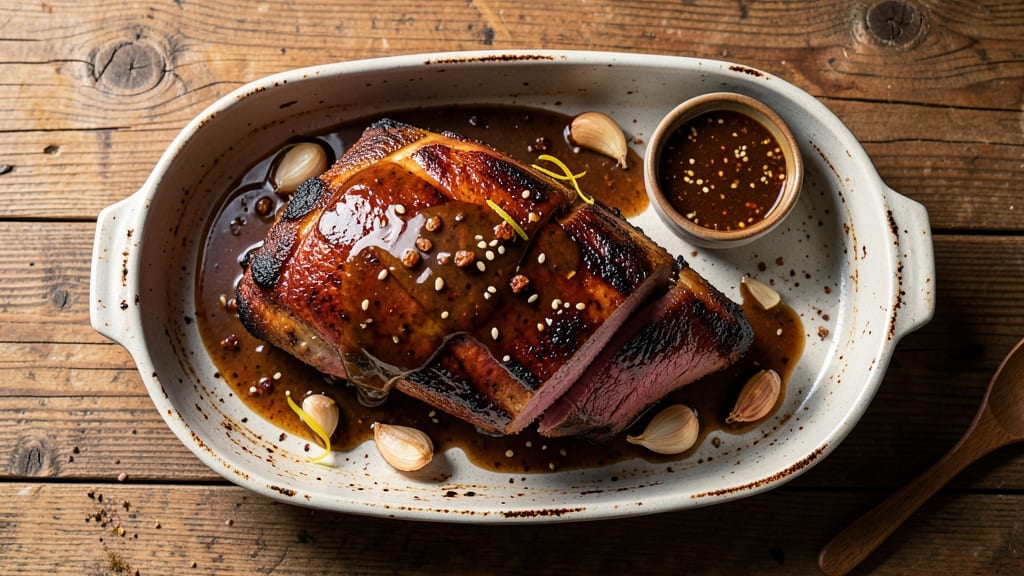
This miso marinated pork roast delivers restaurant-quality tenderness with a caramelized crust that balances sweet, salty, and umami flavors. After years of perfecting pork roasts at The Smoky Pig, I developed this method that transforms tough cuts into melt-in-your-mouth perfection—no fancy equipment required.
The secret lies in the marinade, where miso's deep umami flavor penetrates the meat while brown sugar creates that coveted crust.
The process starts with a 24-hour marinade that breaks down fibers for maximum tenderness, then finishes with a high-heat roast that develops rich caramelization. We're talking golden-brown edges that practically shatter with each bite, revealing juicy pink centers that stay moist even after resting.
This isn't your average pork roast—it's a showstopper that tastes like it came from a high-end butcher shop and a master pitmaster's kitchen.
What makes this recipe truly special is how the miso marinade works its magic: the fermented soybean paste tenderizes while adding layers of complexity, and the honey balances the saltiness for perfect harmony. The result?
A roast so flavorful it becomes the centerpiece of any meal, with enough leftovers to feed the family for days. Trust me, once you try this method, you'll never buy store-bought pork roast again.
Perfect for holiday dinners, family gatherings, or when you want to impress guests without spending hours in the kitchen. The technique scales beautifully too—whether you're cooking for four or twelve, the same principles apply. Let's get started on creating your most impressive pork roast yet.
Ingredients for miso marinated pork roast
Six ingredients transform tough pork into melt-in-your-mouth perfection with umami depth and caramelized crust.
| Ingredient | Amount | Notes |
|---|---|---|
| Pork Shoulder Roast 🐖 | 4 lb | Bone-in preferred for flavor |
| White Miso Paste 🍶 | ½ cup | High-quality, fermented deeply |
| Brown Sugar 🍯 | ½ cup | Light or dark, packed |
| Honey 🍯 | ¼ cup | Wildflower preferred |
| Soy Sauce 🥄 | ¼ cup | Kosher or tamari for gluten-free |
| Garlic Cloves 🧄 | 8 cloves | Peeled, smashed slightly |
| Fresh Ginger 🌿 | ¼ cup | Finely grated, fresh |
| Sesame Oil 🫒 | 1 tbsp | Toasted, for aroma |
| Olive Oil 🫒 | 2 tbsp | Extra-virgin, for coating |
| Diamond Crystal Kosher Salt 🧂 | 1 ½ tsp | For seasoning, not marinade |
| Black Peppercorns 🌶️ | 1 tsp | Freshly cracked |
| Cornstarch 🌾 | 2 tbsp | For crust development |
The pork shoulder is the star—look for well-marbled cuts from your butcher or Costco's pre-cut roasts for consistency. I always ask for the bone-in version at Whole Foods because it stays juicier longer. If you're buying frozen, thaw it in the fridge for 24 hours—never at room temperature. The miso paste? White miso gives that clean umami without overpowering, but red miso works too if you want deeper color. Just don't skimp on quality—Marukome or Hokkaido brands are worth the investment for this recipe.
No white miso? Substitute with 2 tbsp soy sauce plus 1 tbsp honey—it won't be identical, but close. Fresh ginger is ideal, but dried works at half the amount if you're in a pinch. The sesame oil adds aroma without overpowering—toasted sesame oil from Trader Joe's is my go-to. For the crust, cornstarch is key—it creates that perfect caramelized layer. No cornstarch? Arrowroot powder works 1:1. And if you're making this ahead? Marinate the pork for 48 hours for even more tender results—just don't exceed 72 hours or the flavors get funky.
This roast tastes even better the next day—plan ahead. Store leftovers in the fridge for up to 5 days, tightly wrapped with any leftover marinade. For longer storage, freeze portions for up to 3 months—just thaw in the fridge overnight. The crust gets crispier when reheated, so broil for 3-5 minutes to restore that golden crunch. And if you've got extra marinade? Save it for glazing or brush it on during the roast for extra flavor.
Why You'll Love This Recipe
- Minimal Prep Required: I swear by this one—just slather the pork with miso, honey, and soy, then let it sit while you do anything else. No chopping, no peeling, no stress. The marinate does the heavy lifting overnight (or even 30 minutes if you’re in a rush).
- Umami Bomb: That white miso paste? It’s the star. Sweet from the honey, salty from the soy, and that deep, savory punch from the miso—it caramelizes into a sticky, glaze-like crust that’s ridiculously addictive. The pork shoulder stays juicy inside, crispy outside.
- Weeknight Hero: Between us, this is my go-to when I’m too tired to plan. Serve it sliced over rice for dinner, then reheat the leftovers for lunch the next day. Honestly, I’ve even thrown it in sandwiches—yes, really—and no one bats an eye.
- Budget-Friendly Feast: Pork shoulder’s cheap, and this recipe stretches it across multiple meals without feeling repetitive. A single roast feeds my family for days, and the miso-sugar glaze keeps it tasting fresh. Plus, the leftovers reheat like a dream—no dry, sad meat here.
Step-by-step instructions for miso marinated pork roast
Transform your pork shoulder into a deeply flavorful centerpiece with this umami-rich marinade and perfect cooking technique.
Prepare the Miso Marinade
In a large mixing bowl, combine the 0.5 cup white miso paste, 0.5 cup brown sugar, 0.25 cup honey, and 0.25 cup soy sauce. Whisk vigorously until the mixture becomes smooth and fully integrated—this ensures even flavor distribution throughout the pork. The miso will give a deep, savory backbone while the honey and brown sugar create a perfect balance of sweetness and caramelization.
Next, add the 8 smashed garlic cloves and 0.25 cup freshly grated ginger to the marinade. The garlic should be smashed rather than minced to release more flavor without becoming bitter. Stir well to incorporate these aromatics completely. Let the marinade sit at room temperature for 10 minutes—this allows the flavors to meld together before coating the pork.
Coat and Marinate the Pork
Place the 4 lb pork shoulder roast in a large resealable plastic bag or a shallow dish. Pour the marinade over the pork, ensuring it coats all surfaces evenly. Use your hands to massage the marinade into the meat, working it into the crevices and fat cap. This step is crucial for flavor penetration and developing that coveted crust.
Seal the bag tightly (or cover the dish with plastic wrap) and refrigerate for at least 12 hours, but ideally 24 hours. The longer it marinates, the deeper the flavor will be. During this time, the pork will absorb the miso's umami richness while the sugar begins to break down, creating a sticky caramelized crust when roasted.
Create the Crust and Roast the Pork
Remove the pork from the refrigerator 1 hour before roasting to bring it to room temperature. Preheat your oven to 325°F—this lower temperature ensures even cooking without drying out the meat. Line a roasting pan with aluminum foil for easy cleanup.
In a small bowl, mix together the 2 tbsp cornstarch, 1.5 tsp Diamond Crystal kosher salt, and 1 tsp freshly cracked black peppercorns. This mixture will form the crust that locks in juices and creates that irresistible texture. Brush the pork with 1 tbsp sesame oil and 2 tbsp olive oil, then sprinkle the cornstarch mixture evenly over all surfaces, pressing it gently into the meat.
Roast to Juicy Perfection
Place the pork on the prepared roasting pan, fat side up if possible. Roast for 3 hours at 325°F, then increase the oven temperature to 375°F and continue roasting for another 30-45 minutes until the internal temperature reaches 195-203°F. The pork is done when it's fork-tender with a deep golden-brown crust.
Here's the thing—don't cut into the pork immediately. Transfer it to a cutting board and let it rest for 30 minutes under loosely tented aluminum foil. This resting period allows the juices to redistribute throughout the meat, ensuring every slice is moist and flavorful. The crust will stay intact while the interior remains succulent.
Slice and Serve
Once rested, slice the pork against the grain into ½-inch thick slices. The grain direction will be visible as you cut—this is where the meat is most tender. Arrange the slices on a warm platter and drizzle with any accumulated pan juices for extra flavor. Serve immediately with steamed rice, roasted vegetables, or a fresh salad to complement the rich, umami-packed pork.
This method guarantees a juicy, flavorful roast with a caramelized crust that will impress even the most discerning guests. The miso marinade delivers deep umami notes that pair beautifully with the sweet caramelization from the roasting process, creating a harmonious balance in every bite.
Pro Tips For Making Miso Marinated Pork Roast
- MARINATE OVERNIGHT: I learned this the hard way—rushing the marinade means the miso paste just clings to the surface. Let that pork shoulder sit in the mix for at least 12 hours (24 if you can). The salt and umami need time to break down the meat’s fibers and penetrate deep, not just glaze the outside.
- BROWN THE SUGAR: Skip the pre-mixed caramel, and caramelize that brown sugar and honey right in the pan. Cook them together over medium heat until they darken and smell like a bakery—about 3-4 minutes. This adds depth to the miso flavor and prevents a cloyingly sweet finish.
- LOW AND SLOW: After searing, resist the urge to crank the oven high. Set it to 275°F (135°C) and cook the roast until it hits 195°F (90°C) internally. The slow cook transforms the pork into tender, pull-apart perfection—no dry, tough meat here.
- REST UNDER FOIL: Yes, even if you’re impatient like me. After pulling the roast from the oven, tent it with foil and let it rest for 15-20 minutes. This keeps the juices from spilling out when you slice, so every bite stays moist and flavorful—not a sad, dry mess.
Perfect pairings for these flavors
Rice Pairings
Steamed jasmine rice is my go-to pairing—its delicate floral notes complement the miso's umami without competing. Cook 2 cups of rice for 6 servings using a 1:1.25 rice-to-water ratio, and finish with a drizzle of toasted sesame oil and a sprinkle of furikake for extra depth.
For a heartier option, try brown rice—it holds up better to the rich pork flavors and adds a nutty contrast. 💛
Vegetable Sides
Roasted baby bok choy with 1 tbsp honey and 1 tsp soy sauce brings a crisp-tender texture and subtle sweetness that mirrors the roast's caramelized crust.
Toss 4 cups of halved bok choy with 1 tbsp olive oil, roast at 400°F for 15 minutes, then finish with a pinch of red pepper flakes. Alternatively, blistered shishito peppers sautéed in garlic-infused oil add a mild heat that cuts through the richness.
Pickled Accents
Quick-pickled daikon radish or cucumber slices add a bright, tangy contrast to the umami pork. Thinly slice 1 cup daikon and 1 cup cucumber, then soak in a mix of ½ cup rice vinegar, 1 tbsp sugar, and ½ tsp salt for 30 minutes.
The acidity cleanses your palate between bites, making each slice of roast taste even more vibrant. 🌿
Drink Pairings
A dry Riesling from Germany—like Dr. Loosen Blue Slate—balances the miso's saltiness with its crisp acidity and honeyed undertones. For beer lovers, a Japanese lager such as Asahi Super Dry complements the umami without overpowering.
If you prefer cocktails, a whiskey sour with bourbon and lemon brightens the meal's richness. Avoid heavy red wines; they’ll clash with the marinade’s complexity.
Sauce Enhancements
Serve with a spicy miso aioli by blending 2 tbsp white miso, ¼ cup mayonnaise, 1 tsp sriracha, and 1 tsp lime juice. The heat and tang elevate the roast’s flavors.
For a lighter option, a ginger-soy glaze—simmer ¼ cup soy sauce, 2 tbsp honey, and 1 tbsp grated ginger** until thickened—adds a glossy finish. Both sauces work beautifully as dipping sauces or table condiments. ✨
Nutrition facts
Frequently asked questions
Can I use red miso instead of white miso?
Yes, but expect a deeper, more intense flavor. Red miso has a stronger umami profile and will give your roast a richer, darker color. Start with ¼ cup red miso plus ¼ cup white miso to balance the boldness, or use ½ cup red miso alone if you love that fermented depth. The texture will be slightly thicker, so whisk it well with the other ingredients.
How do I know when the pork is fully cooked?
Use a meat thermometer to check the internal temperature—it should reach 195-203°F for perfect doneness. The probe should slide in easily, and the pork will feel tender when pressed. If you don't have a thermometer, cut into the thickest part: juices should run clear, not pink, and the meat should pull apart easily with two forks.
Can I make this recipe in a slow cooker?
Marinate the pork as directed, then place it in your slow cooker on low for 8 hours or high for 5-6 hours. For the crust, transfer the pork to a baking sheet, sprinkle with the cornstarch mixture, and broil for 5-7 minutes until golden. The slow cooker keeps the meat incredibly tender, while the broil step adds that coveted texture.
What's the best way to store leftovers?
Wrap the roast tightly in aluminum foil with any pan juices, then refrigerate for up to 5 days. For longer storage, freeze portions for up to 3 months. To reheat, bake at 300°F until warmed through (10-15 minutes), or use the microwave with a damp paper towel for 2-3 minutes per serving. The crust may lose some crispness but will still be delicious.
Why did my crust turn out dry or crumbly?
This usually happens if the cornstarch wasn't pressed into the meat or if the oven temperature fluctuated. For a better crust, brush the pork with oil after applying the cornstarch mixture to help it adhere. Also, make sure your oven is fully preheated and maintains a steady 375°F during the final stage. If the crust still fails, try using 1 tbsp honey mixed with the cornstarch for extra stickiness.