
Main Courses
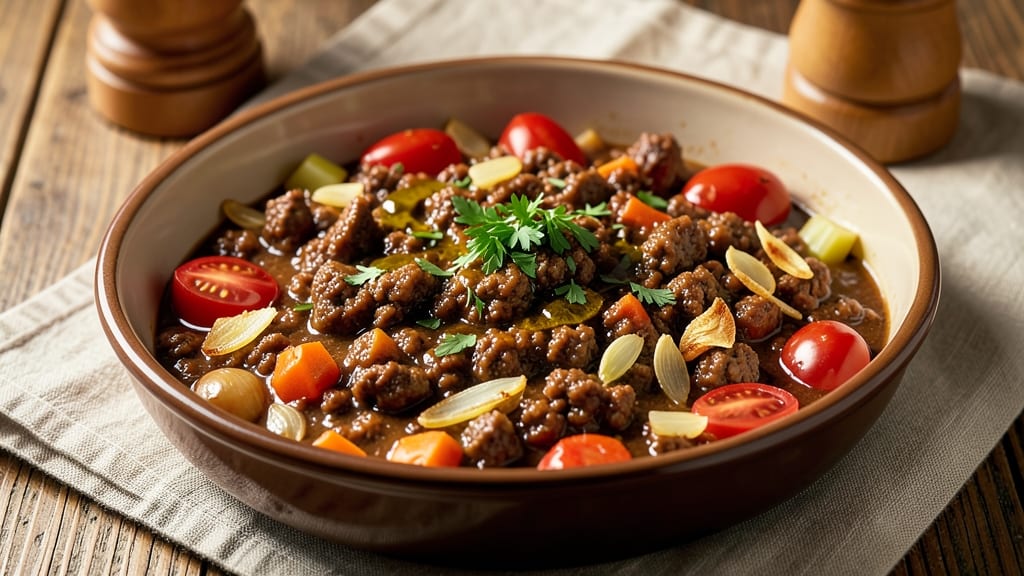
This minced pork ragu recipe transforms simple ingredients into a deeply flavorful sauce that belongs in any Italian restaurant. The secret lies in slow cooking—tomatoes, wine, and herbs meld together over hours to create a rich, umami-packed sauce that clings perfectly to pasta or polenta.
I've perfected this version after years of testing, balancing acidity and sweetness to achieve that signature depth.
What makes this ragu special is the technique: browning the pork first develops a deep, meaty flavor, while sautéing onions and garlic builds a fragrant base. A splash of red wine deglazes the pan, forming the foundation for the sauce, which then simmers until tender.
The result is a sauce that's neither too thick nor too thin—just right for coating al dente pasta or creamy polenta.
The beauty of this recipe is its versatility. Serve it over fresh egg noodles for a classic Italian meal, or pair it with crusty bread to soak up every last bit of sauce.
The slow cooking process transforms humble ingredients into something extraordinary, making this a dish worth the time investment. Trust me, once you taste the difference between store-bought sauce and this homemade version, you'll never go back.
For those who love texture, consider adding sautéed mushrooms or bell peppers to the sauce, or finish it with a touch of cream for extra richness. The key is patience—this ragu tastes even better the next day as the flavors continue to develop. Let's get cooking!
Ingredients for minced pork ragu
Fifteen ingredients, hours of slow cooking, and a sauce that tastes like a true Italian restaurant.
| Ingredient | Amount | Notes |
|---|---|---|
| Minced Pork 🥩 | 1 ½ lb | Ground for even cooking |
| Yellow Onion 🧅 | 1 whole | Finely chopped, about 1.5 cups |
| Garlic Cloves 🧄 | 4 cloves | Minced, for aromatic base |
| Carrots 🥕 | 2 whole | Peeled, finely diced |
| Celery Stalks 🥬 | 2 whole | Finely chopped, for depth |
| Tomato Paste 🍅 | 2 tbsp | High-quality, for richness |
| Dry Red Wine 🍷 | 1 cup | Bold variety like Cabernet |
| Crushed Tomatoes 🍅 | 28 oz | San Marzano preferred |
| Beef Stock 💧 | 2 cups | Homemade or quality store-bought |
| Fresh Rosemary 🌿 | 1 tbsp | Chopped, for herbal notes |
| Fresh Thyme 🌿 | 1 tbsp | Leaves only, for balance |
| Bay Leaves 🌿 | 2 whole | For subtle earthiness |
| Olive Oil 🫒 | ½ cup | Extra-virgin for flavor |
| Salt 🧂 | 1 ½ tsp | Kosher salt, adjust to taste |
| Black Pepper 🌶️ | ½ tsp | Freshly ground for heat |
The pork is non-negotiable here—ground, not minced, for that classic texture. Trader Joe's or Whole Foods carry excellent quality ground pork, but any butcher will have it too. Look for bright red color and avoid anything with grayish edges, which signals age. The San Marzano tomatoes are worth the splurge; their natural sweetness balances the acidity perfectly. For the wine, Cabernet Sauvignon or Merlot work best—avoid anything too sweet or oaky, as those flavors will overpower the dish. Fresh herbs are ideal, but dried thyme at one-third the amount works in a pinch if you're short on time.
No beef stock? Chicken stock or vegetable stock will do, though the flavor profile shifts slightly. The tomato paste can be swapped for crushed tomatoes at double the amount, but you'll lose some of that concentrated umami. If you're adding mushrooms or bell peppers, sauté them separately first—they need more time to cook through. For extra richness, a splash of heavy cream at the end (about 2 tbsp) adds a luxurious finish, though traditionalists will skip it. The wine can be reduced by half if you prefer a milder flavor, but the acidity helps balance the sweetness of the tomatoes.
This ragu tastes even better the next day—3-4 days in the fridge is ideal, with flavors deepening over time. Portion into airtight containers for easy reheating. Freezes beautifully for up to 3 months—just thaw in the fridge overnight. To reheat, warm gently on the stove with a splash of water or stock to loosen the sauce. For serving, toss with al dente egg noodles or spoon over creamy polenta. The sauce thickens as it cools, so adding a little water or stock when reheating ensures the perfect consistency.
Why You'll Love This Recipe
- One-Pot Magic: I swear by this—no extra pans, no mess. Just brown the pork with onions and garlic, toss in chopped carrots and celery, and let it simmer. That’s it. The veggies soften right in the pot, and cleanup? One spatula, one bowl.
- Savory Depth: The pork browns into something rich and caramelized, while the onions and garlic mellow into a sweet, aromatic base. Add a splash of red wine or broth, and suddenly you’ve got layers—earthy, meaty, with just enough bite from the celery’s crunch. It’s the kind of flavor that lingers.
- Weeknight Workhorse: I make this when I’m swamped—double the batch, freeze half, and pull it out for lazy nights. Serve it over pasta, stuff it in dumplings, or pile it onto toast with a fried egg. Even my picky-eating roommate asks for seconds.
- Budget-Friendly Powerhouse: Minced pork stretches far, and carrots/celery bulk it up without breaking the bank. A single bag of each lasts me ages, and leftovers reheat like a dream. Honestly, it’s my go-to when I need to feed a crowd without stressing over the grocery bill.
Step-by-step instructions for minced pork ragu
Master this rich, umami-packed ragu through precise technique and patience.
Sauté the Aromatic Base
Heat the 0.5 cup olive oil in a heavy Dutch oven over medium heat. Add the 1 whole yellow onion, 2 whole carrots, and 2 whole celery stalks (finely chopped), cooking for 8-10 minutes until the vegetables soften and begin to caramelize. This foundational step develops deep flavor through the Maillard reaction.
Add the 4 cloves garlic cloves and cook for another 1 minute until fragrant—don't let it brown or it'll turn bitter. Remove the vegetables from the pot and set aside, leaving the oil behind for the next step. This aromatic base forms the flavor backbone of your ragu.
Brown the Pork and Build the Sauce
Increase heat to medium-high and add the 1.5 lb minced pork in batches, breaking it up with a wooden spoon as it browns. Cook for 5-7 minutes until the pork loses its raw color and develops a rich, brown crust. This browning step is critical—it creates the deep, meaty flavor that carries through the entire dish.
Stir in the 2 tbsp tomato paste, spreading it evenly over the bottom of the pot to create a flavorful crust. Pour in the 1 cup dry red wine and scrape up any browned bits from the bottom with a wooden spoon. Let it simmer for 3-4 minutes until the wine reduces by half, intensifying its flavor.
Simmer the Ragu Low and Slow
Return the sautéed vegetables to the pot, then add the 28 oz crushed tomatoes, 2 cups beef stock, 1 tbsp fresh rosemary, 1 tbsp fresh thyme, 2 whole bay leaves, 1.5 tsp salt, and 0.5 tsp black pepper. Stir well to combine, then reduce heat to low.
Cover the pot and let the ragu simmer gently for 2-2.5 hours, stirring occasionally to prevent sticking. The sauce should thicken gradually, developing a rich, velvety consistency. Here's where patience pays off—the longer it cooks, the deeper the flavors become. Check occasionally to ensure the liquid doesn't evaporate completely; add a splash of water if needed.
Finish and Adjust Seasoning
Once the ragu reaches your desired consistency (it should coat the back of a spoon), remove the bay leaves and discard them. Taste and adjust seasoning with additional salt or black pepper as needed. The ragu should be rich, balanced, and full of umami flavor with a touch of acidity from the tomatoes.
For best results, let the ragu rest for 15-20 minutes off the heat before serving. This resting period allows the flavors to meld completely and the sauce to thicken slightly. Serve over fresh pasta or with crusty bread to soak up every last bit of that luxurious sauce.
Pro Tips For Making Minced Pork Ragu
- Sear the Pork First: If you skip browning the minced pork, you’ll end up with a gray, watery ragu instead of rich, deep flavor. Use a heavy pan and medium-high heat—let it crisp just until the edges turn golden, then break it up with a wooden spoon. (Yes, it’ll look messy, but that’s how the flavor develops.)
- Dice Veggies Uniformly: I used to chop carrots and celery into random chunks, thinking it didn’t matter. Wrong. Cut them into ¼-inch dice—same size as the onion and garlic—so they cook evenly and don’t turn to mush while the pork stays tender. (A mandoline helps if you’re impatient like me.)
- Deglaze with Wine Early: If you wait until the end to add wine, you’ll just dilute the sauce. Pour it in right after browning the pork—let it bubble for 2-3 minutes to lift all the browned bits (that’s flavor, not waste). Then add tomatoes or broth. (Skipping this step is why store-bought ragu tastes flat.)
- Simmer Low and Slow: Low heat is your friend here. After adding the tomatoes and broth, reduce to a bare simmer and let it cook uncovered for at least 45 minutes. The liquid will reduce naturally, and the pork will absorb flavors instead of turning rubbery. (I know, it’s tempting to rush, but trust the process.)
Essential equipment for minced pork ragu
Dutch Oven Essentials
Your heavy Dutch oven is the workhorse of this recipe—it needs to be 5-6 quarts minimum to handle the volume without boiling over. I swear by Lodge cast iron for its even heat distribution and durability.
Preheat it on the stove before adding oil to ensure a proper sear for that deep, caramelized flavor. 🔥
Never skimp on quality here: a thin, flimsy pot will warp under prolonged simmering. If you're tight on space, a stainless steel Dutch oven like All-Clad works beautifully too, though it requires more attention to heat control. Always use oven mitts—the handle gets scorching hot during the long simmer.
Precision Tools
A meat thermometer isn't strictly necessary, but I recommend the ThermoWorks Smoke for monitoring internal temps if you're adding larger meat pieces later. For stirring, use a wooden spoon—metal can scratch your Dutch oven over time.
A fine-mesh strainer comes in handy for rinsing herbs and draining any excess wine reduction.
Don't overlook a good chef's knife and cutting board—you'll be chopping onions, carrots, and celery finely. I use my Wüsthof 8-inch for everything from dicing to mincing garlic.
A microplane for zesting citrus (if you add it later) and a small mixing bowl for prepping ingredients keep your workspace organized.
Simmering Setup
For the 2-2.5 hour simmer, you'll want a lid with a vented top to allow steam to escape while containing heat. If your lid isn't vented, prop it slightly open with a wooden spoon handle.
A kitchen timer ensures you don't forget about the sauce—ragu burns easily when unattended. I set mine for 30-minute intervals to check consistency.
Keep a small bowl of water nearby to thin the sauce if it gets too thick. A ladle with a long handle helps you taste-test without burning your fingers.
For flavor adjustments, I keep salt, black pepper, and a squeeze bottle of lemon juice within arm's reach—this sauce needs constant balancing.
Optional Upgrades
If you love texture, a mandoline for even mushroom slices or a vegetable peeler for julienned carrots adds professional touches. For wine lovers, a wine aerator or decanter helps open up the Cabernet Sauvignon you'll use—this makes a noticeable difference in flavor depth.
I also keep parchment paper handy for quick cleanups between steps.
For those who want to go all-out: a sous vide circulator can help maintain precise temperatures during the long simmer, though it's overkill for most home cooks. The key is patience—your Dutch oven and basic tools are all you truly need to nail this ragu. 💪
Nutrition facts
Frequently asked questions
Can I substitute ground beef for the minced pork?
While you can use ground beef, the flavor profile will differ significantly. Pork has a more delicate, slightly sweet taste that pairs beautifully with the tomatoes and herbs. If substituting, use 80/20 ground beef for richness, but reduce the cooking time by 15-20 minutes as beef cooks faster than pork. For best results, stick with pork for that authentic Italian ragu taste.
Why does my ragu taste too acidic?
A common mistake is using too much wine or acidic tomatoes without balancing it. To fix this, stir in 1-2 tablespoons of tomato paste or a pinch of sugar to mellow the acidity. Alternatively, add a splash of heavy cream or a pat of butter at the end to round out the flavors. The key is to taste as you go and adjust gradually.
How do I make this ragu ahead of time?
This ragu actually tastes better the next day! Let it cool completely, then transfer to an airtight container and refrigerate for 3-4 days. The flavors deepen over time. For freezing, portion into containers and store for up to 3 months. Thaw overnight in the fridge and reheat gently on low heat, adding a splash of water or stock to loosen the sauce.
Can I add mushrooms to this recipe?
Sauté 8 oz sliced mushrooms in olive oil until golden before adding them to the ragu. They'll absorb the flavors beautifully. For extra texture, add them in the last 30 minutes of cooking so they don't turn mushy. Wild mushrooms like shiitake or cremini add an earthy depth that complements the pork perfectly.
What's the best pasta to serve with this?
For maximum sauce-to-pasta ratio, use bucatini or pappardelle—their thick strands hold onto the ragu beautifully. Tagliatelle works too, but avoid thin noodles like spaghetti that can get lost in the sauce. For a heartier option, serve over creamy polenta or with crusty bread to soak up every last bit.