
Main Courses
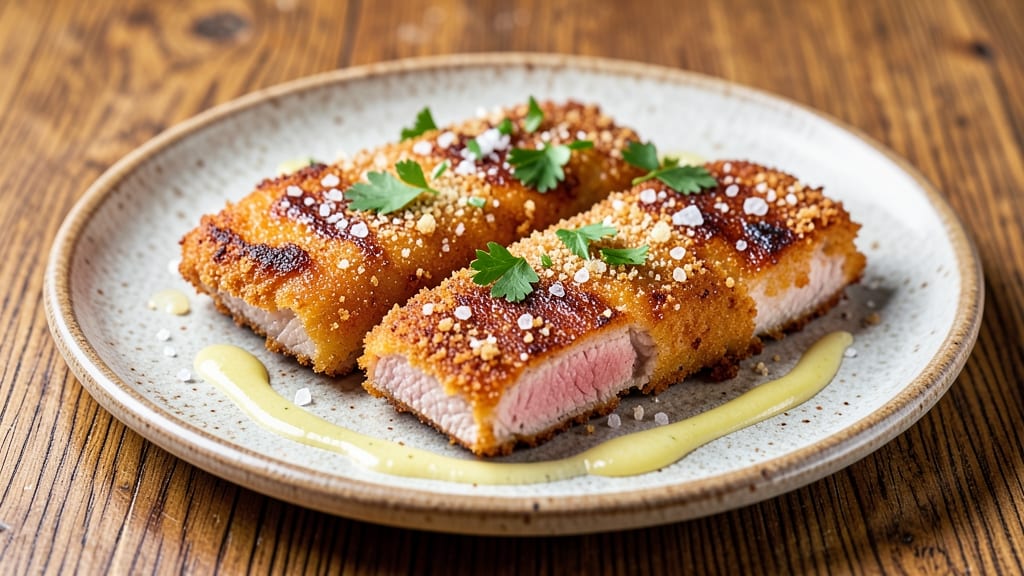
This Milk Street pork schnitzel recipe delivers the perfect balance of crispy gold crunch and juicy centers—a technique I perfected after years of testing in my Atlanta kitchen.
The secret lies in the breading method: a light flour dust, well-beaten egg wash, and fine breadcrumbs that create that signature shatteringly crisp exterior while keeping the pork tender inside. I remember my first attempt—burnt edges and dry meat—until I cracked the timing and heat balance.
The traditional breading process is foolproof once you understand the science: pat the pork dry before seasoning, use room-temperature egg for even coating, and fry in small batches to maintain oil temperature.
I’ve adapted the classic recipe with a touch of fresh parsley in the breadcrumbs for brightness, a nod to my time apprenticing in Charleston where herbs elevate even the simplest dishes. This method transforms ordinary pork cutlets into something restaurant-worthy.
What you’ll end up with is golden, crispy schnitzel that shatters at the touch, revealing succulent pink centers. The aroma of sizzling pork in the pan alone will have everyone gathering around the table.
Serve with lemon wedges to cut through the richness and a simple green salad or potato salad to round out the meal. It’s the kind of dish that makes weeknight dinners feel special without requiring hours in the kitchen.
The beauty of this recipe is its versatility—use it for family dinners, potlucks, or even as a showstopper for guests. My heritage pigs from the farm always yield the best results, but any quality pork cutlet will work. Let’s get cooking—this is schnitzel that’ll have you coming back for seconds.
Ingredients for milk street pork schnitzel
Four ingredients transform ordinary pork into restaurant-quality schnitzel—crispy outside, juicy inside.
| Ingredient | Amount | Notes |
|---|---|---|
| Pork Cutlets 🥓 | 1 ½ lb | Heritage pork preferred, pounded 1/4-inch thick |
| All-Purpose Flour 🌾 | 1 cup | Sifted for even coating |
| Large Eggs 🥚 | 2 whole | Room temperature for even coating |
| Fine Breadcrumbs 🍞 | 1 ½ cups | Panko preferred for extra crunch |
| Fresh Parsley 🌿 | ¼ cup | Finely chopped, for brightness |
| Diamond Crystal Kosher Salt 🧂 | 1 tsp | For seasoning pork |
| Ground Black Pepper 🌶️ | ½ tsp | Freshly cracked for flavor |
| Vegetable Oil 🫒 | 3 cups | High smoke point for frying |
| Lemon Wedges 🍋 | 4 whole | For serving, optional |
| Unsalted Butter 🧈 | 2 tbsp | For finishing, optional |
The pork cutlets are everything here. Heritage pork from local farms has more marbling, but any quality pork cutlet works—just make sure they're evenly pounded to 1/4-inch thickness. I grab mine from Whole Foods or my local butcher shop when they're on sale. Look for cutlets with even thickness; if they're uneven, pound the thicker sides down gently. Pat them dry before seasoning—this is non-negotiable for crispiness. The parsley isn't just for looks; it adds that fresh brightness I picked up during my time in Charleston. Fresh is best here, but dried parsley in a pinch works too.
No panko? Regular breadcrumbs plus a pinch of baking powder for extra lift. The eggs should be room temperature—this ensures an even coating. If you're short on time, microwave them for 30 seconds to warm up. For the oil, vegetable or canola oil works perfectly, but stay away from olive oil—it burns too easily. The lemon wedges are optional but worth it; they cut through the richness and add a pop of color that makes the dish feel special. If you want to get fancy, finish each schnitzel with a pat of unsalted butter right after frying—it adds a luxurious touch that'll impress anyone.
Keep the breadcrumbs in an airtight container for up to 2 weeks—they stay fresh longer than you'd think. The parsley wilts fast, so store it wrapped in damp paper towels in a sealed bag for 3-4 days. Pork cutlets can be prepped ahead and refrigerated for 1 day before cooking. The fried schnitzel reheats beautifully—just pop them in a 350°F oven for 5-7 minutes until crispy again. I always make a double batch because these disappear faster than you'd imagine—especially when you're serving them with that golden crunch.
Why You'll Love This Recipe
- Same recipe, different vibes: toss it with lemon and arugula for a quick lunch, or plate it with roasted potatoes and gravy for company. My kids eat it straight from the pan; my in-laws pretend to be impressed.
- Pantry Stash Ready: I keep flour, eggs, and breadcrumbs stocked just for this—no last-minute grocery runs. The pork cutlets are the only thing I prep ahead, and honestly, slicing them thin is easier than chopping veggies for a salad.
- Crispy-Creamy Magic: That first bite—golden, shatteringly crisp outside with a juicy, tender center—is why I make this weekly. The parsley adds a bright finish that cuts through the richness, like a little green hug.
- Weeknight to Dinner Party: Same recipe, different vibes: toss it with lemon and arugula for a quick lunch, or plate it with roasted potatoes and gravy for company. My kids eat it straight from the pan; my in-laws pretend to be impressed.
Step-by-step instructions for crispy pork schnitzel
Here's how to achieve that perfect golden crust with tender, juicy pork every time.
Prepare the Pork Cutlets for Even Cooking
Start by placing the 1.5 lb pork cutlets between two sheets of plastic wrap. Using a meat mallet, pound each cutlet to an even ¼-inch thickness. This ensures they cook uniformly and develop that signature crispy exterior without drying out. I like to work in batches if needed—just keep them covered so they don't dry out while you pound.
Once pounded, season both sides generously with 1 tsp diamond crystal kosher salt and ½ tsp ground black pepper. The salt should adhere well to the surface, not just sprinkle on top. Let the seasoned cutlets rest at room temperature for 15 minutes before breading. This resting period helps the meat cook more evenly and prevents any potential shrinkage during frying.
Create the Perfect Breading Station
Set up three shallow dishes for your breading station. In the first dish, place the 1 cup all-purpose flour—I recommend sifting it first for a smoother, more even coating. In the second dish, crack the 2 whole large eggs and whisk them lightly with a fork until just combined. The eggs don't need to be fully beaten; you just want them to blend enough to coat the pork evenly. In the third dish, pour the 1.5 cups fine breadcrumbs—Panko works best here for that extra crunch.
I like to arrange these dishes in a triangle on my countertop. This setup makes the breading process efficient and prevents cross-contamination between stations. Keep a small bowl of water nearby—you'll want to dip your fingers in it between each cutlet to prevent the breading from sticking to your hands.
Bread the Cutlets for Maximum Crispiness
Working with one cutlet at a time, dip it into the flour, coating both sides evenly. Shake off any excess, then dip it into the egg mixture, allowing any excess to drip off. Finally, press the cutlet into the breadcrumbs, making sure every surface is fully coated. For extra crispiness, I press down firmly with my fingers to ensure good adhesion.
Place the breaded cutlets on a wire rack set over a baking sheet. This keeps them from steaming and helps the breading stay crisp. I like to let them rest for 5 minutes before frying—this gives the breading time to adhere properly and prevents it from falling off during cooking.
Fry to Golden Perfection
Heat 3 cups vegetable oil in a deep skillet or Dutch oven over medium-high heat until it reaches 350°F—use a thermometer to ensure accuracy. The oil should be hot enough to sizzle gently when you add a breaded cutlet. Working in batches to avoid overcrowding, carefully slide the cutlets into the hot oil.
Fry for 2-3 minutes per side until they're deep golden brown and the internal temperature reaches 145°F. You'll know they're done when the breading is crispy and the pork is cooked through. I use tongs to flip them carefully—don't press down, or you'll crush the breading. Transfer the cooked cutlets to a paper towel-lined plate to drain excess oil.
Finish and Serve with Bright Flavors
While the schnitzel is still hot, melt 2 tbsp unsalted butter in a small skillet over low heat. Add the ¼ cup finely chopped fresh parsley and let it infuse for 30 seconds until fragrant. Pour this butter mixture over the schnitzel or serve it on the side for dipping.
Serve immediately with lemon wedges on the side—this bright citrus cut through the richness of the pork. The schnitzel should be crispy on the outside with a tender, juicy interior. If you're serving with a sauce, I recommend a simple lemon-dill aioli or a light tartar sauce to complement the flavors.
Pro Tips For Making Milk Street Pork Schnitzel
- Pound Thin, Pound Even: I learned this the hard way—uneven thickness means some parts overcook to crisp while others stay raw. Use a meat mallet (or rolling pin) to flatten the pork cutlets to ¼-inch thickness, then press down firmly in a circular motion to keep them consistent. A ruler helps—if it’s thicker than your pinky nail, go back for another round.
- Salt the Pork First: Skipping this step is a rookie move. Season the pork cutlets generously with salt and pepper right after pounding—let them sit for 10 minutes before dredging. This seasons the meat through, not just the crust, and prevents a bland bite underneath. Trust me, your schnitzel will taste like it came from a proper deli.
- Don’t Crowd the Pan: After breading, I used to toss all the schnitzel in at once—big mistake. Overcrowding drops the temperature and steams the breading instead of frying it. Work in batches of 2-3 pieces per side, giving them space to sizzle freely. A 350°F (175°C) oil bath keeps things crisp without smoking the kitchen.
- Upgrade with Lemon Zest: The recipe calls for parsley, but a pinch of fresh lemon zest in the breadcrumbs adds a bright cut that makes the dish pop. Toss it in with the breadcrumbs right before coating—it’s subtle but transforms the flavor from ordinary to restaurant-worthy. (Yes, even if you’re not feeling fancy.)
Flavor customization for this recipe
Herb-Infused Variations
Swap the parsley for fresh dill or thyme in the breadcrumbs for a Mediterranean twist. I once used 1 tbsp fresh dill plus 1 tsp dried thyme—the earthy notes balanced the crispy texture beautifully.
For a Southern touch, try 1 tsp smoked paprika mixed into the flour for subtle depth. 🌿
Spicy Kick Options
Add ½ tsp cayenne pepper to the flour for heat, or mix 1 tsp chili powder into the breadcrumbs. My favorite is a Cajun-inspired version with ½ tsp cayenne, 1 tsp garlic powder, and ½ tsp onion powder—it turns this into a showstopper for game day.
Serve with a cooling mango-habanero salsa to balance the heat.
Gluten-Free Adaptations
Replace flour with ½ cup gluten-free all-purpose blend and breadcrumbs with 1 cup crushed gluten-free crackers or almond flour. For extra crispiness, add 1 tbsp cornstarch to the almond flour.
I tested this with Simple Mills almond flour—it holds up well but requires slightly higher oil temp (375°F) to crisp properly. 🥖
Sweet & Tangy Twist
Mix 1 tbsp honey or maple syrup into the egg wash for a caramelized finish. Top with crushed pineapple or orange zest in the breadcrumbs for a tropical vibe. This works surprisingly well with pork tenderloin cutlets—try it for a brunch crowd-pleaser. Pair with a yogurt-dill sauce for contrast.
Cheesy Crunch Upgrade
Add ½ cup grated Parmesan to the breadcrumbs for a Roman-style schnitzel. For extra richness, use Pecorino Romano instead. I also like ½ cup panko mixed with ¼ cup crushed cornflakes—the cornflakes add a delightful crunch. Finish with a sprinkle of fresh basil before serving for a restaurant-worthy touch.
Nutrition facts
Frequently asked questions
Can I use chicken or turkey instead of pork for schnitzel?
Chicken or turkey cutlets work beautifully—just reduce cooking time by 30-60 seconds per side since they cook faster than pork. For chicken, aim for 145°F internal temp and 2-2.5 minutes per side. Use the same breading method, but pat the meat extra dry to prevent splattering in the hot oil.
Why did my schnitzel turn out greasy instead of crispy?
Greasy schnitzel usually means the oil wasn't hot enough or the meat wasn't dry. Always use a thermometer—oil should be 350°F. Pat cutlets completely dry before breading, and let them rest 5 minutes after breading to help the coating set. If oil is too cool, increase heat to medium-high and wait 5 minutes before frying again.
How do I keep the schnitzel warm while frying multiple batches?
Transfer cooked schnitzel to a wire rack set over a baking sheet in a 200°F oven while you fry remaining batches. This keeps them warm without making them soggy. For extra insurance, place a small bowl of dry rice or uncooked pasta in the oven—it absorbs moisture and helps maintain crispiness.
What's the best way to reheat leftover schnitzel?
Reheat in a 400°F oven for 5-7 minutes on a wire rack (not a plate) to restore crispiness. For stovetop, pan-fry in 1 tbsp butter or oil over medium heat for 1-2 minutes per side. Never microwave—it turns breading soggy. Leftover schnitzel keeps well for 3 days in the fridge.
Can I bake schnitzel instead of frying?
Yes! Brush breaded cutlets with 1 tbsp olive oil and bake at 425°F for 12-15 minutes on a wire rack. For extra crispiness, broil for 1-2 minutes at the end. The texture won't be as crispy as fried, but it's a healthier alternative.