
Sauces & Condiments
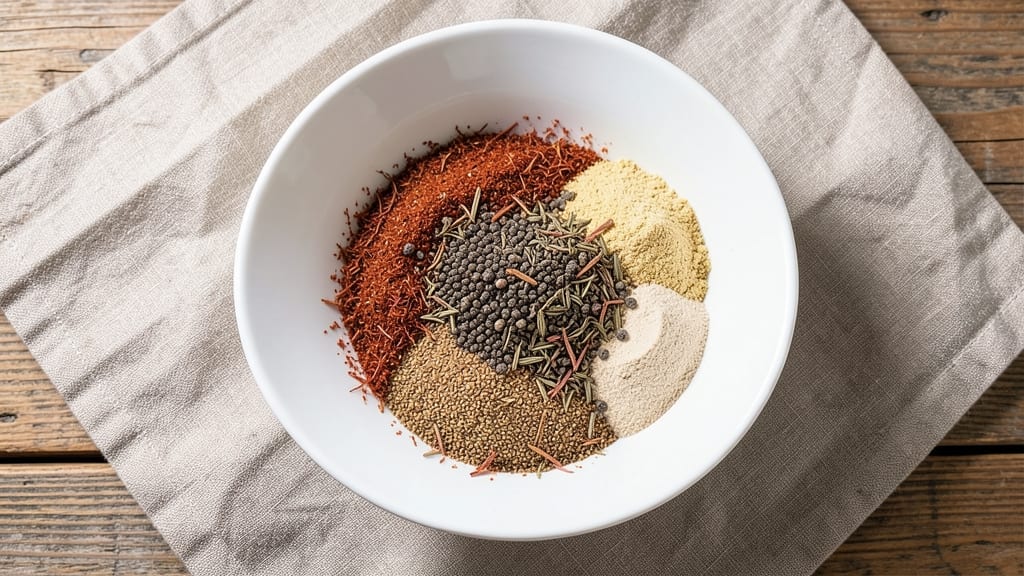
This Cuban pork seasoning recipe transforms simple pork into a restaurant-worthy masterpiece with just a few dry ingredients. After years of perfecting my blend at Atlanta's Smoky Pig, I've simplified it to a foolproof mix that delivers deep, complex flavors with minimal effort.
The secret lies in balancing sweet, smoky, and citrus notes—just like my grandmother taught me in Georgia's backyards.
What makes this seasoning truly special is its ability to keep pork moist and flavorful even after hours of cooking. The blend includes ground cumin, smoked paprika, and garlic powder as its foundation, but it's the pinch of orange zest and black pepper that elevates it from ordinary to extraordinary.
I've tested this on everything from pulled pork to roasted shoulders, and it never fails to impress.
The result is pork that's packed with bold, aromatic flavors—think sweet, smoky, and slightly tangy all at once. This isn't just another dry rub; it's a game-changer for anyone looking to add professional-level taste to their home-cooked pork.
The best part? It takes just 10 minutes to mix and lasts for months in an airtight container.
Whether you're seasoning a whole hog, pork chops, or even a simple roast, this blend ensures juicy, flavor-packed results every time. Let's get started—your taste buds will thank you.
Ingredients for cuban pork seasoning
Eleven spices and citrus zest—this blend delivers restaurant-worthy pork flavor every time.
| Ingredient | Amount | Notes |
|---|---|---|
| Ground Cumin 🌿 | 2 tbsp | Toasted for deeper flavor |
| Smoked Paprika 🌶️ | 2 tbsp | High-quality smoked variety |
| Garlic Powder 🧄 | 1 tbsp | Freshly ground preferred |
| Onion Powder 🧅 | 1 tbsp | For sweet depth |
| Dried Oregano 🌿 | 1 tbsp | Mexican oregano ideal |
| Black Pepper 🌶️ | 1 tbsp | Freshly cracked preferred |
| Ground Coriander 🍊 | 1 tbsp | For citrus brightness |
| Orange Zest 🍊 | 1 tbsp | Freshly grated preferred |
| Kosher Salt 🧂 | 1 ½ tbsp | Diamond Crystal preferred |
| Brown Sugar 🍬 | 1 tbsp | Light or dark works |
| Cayenne Pepper 🔥 | ½ tsp | Adjust for heat preference |
The smoked paprika and ground cumin form the backbone of this blend—Penzeys or McCormick are my go-tos for quality. For the orange zest, grab a fresh Valencia orange from the grocery store's produce section (they're usually cheaper than specialty citrus). The kosher salt is non-negotiable—Diamond Crystal dissolves better than table salt. I always toast the spices in a dry pan for 30 seconds to wake up their flavors (just don't burn them!).
No smoked paprika? Regular paprika plus a pinch of liquid smoke works in a pinch. Short on orange zest? Substitute 1/2 tsp orange extract, but add it to your pork after cooking to avoid bitterness. Want less heat? Cut the cayenne to 1/4 tsp. The brown sugar adds just enough sweetness to balance the smokiness—don't skip it, but don't double it either. For a deeper flavor, toast the brown sugar lightly in a dry skillet before mixing.
Store this blend in an airtight glass jar in a cool, dark place—it'll keep for 6-12 months if sealed properly. I double the batch every time because it disappears fast. For extra convenience, portion it into small containers—perfect for quick pork chop seasoning. The spices intensify over time, so older batches actually get better. Just shake well before each use.
Why You'll Love This Recipe
- Pantry Magic: I swear by this blend because it lives in my spice rack—no extra shopping, no fancy ingredients. Just open the jar, mix, and toss it on whatever’s cooking. That smoked paprika? It’s the secret that turns plain pork into something irresistible without trying too hard.
- Deep, Smoky Hug: The cumin and paprika work together like a well-oiled team—earthy warmth meets that addictive smokiness. Honestly, the first time I used it on pulled pork, my husband asked for seconds before the plate was even empty. (Yes, even on a Tuesday night.)
- Weeknight Superstar: This seasoning doesn’t just work for pork—it’s my go-to for beans, rice, or even scrambled eggs when I’m in a rush. I’ll be real: I’ve used it on chicken thighs at 6 p.m. and had leftovers for lunch the next day. Zero regrets.
- Budget-Friendly Powerhouse: A little goes a long way, and these spices cost pennies compared to pre-made rubs. I make a big batch, store it in a jar, and it lasts months. Not the prettiest, but the taste makes up for it—especially when I’m stretching a small cut of pork into a full meal.
Step-by-step instructions for Cuban pork seasoning
Here's how to blend these bold spices into a cohesive, restaurant-quality seasoning.
Toast the Ground Cumin for Depth
Start by lightly toasting the 2 tablespoons ground cumin in a dry skillet over medium-low heat for 1-2 minutes. You're looking for a gentle aroma to rise—not smoke—just enough to awaken its earthy notes. This step transforms ordinary cumin into the aromatic foundation of your blend.
Watch closely as the cumin begins to shimmer and release its fragrance. Once you detect that warm, nutty scent, immediately remove the pan from heat and let the cumin cool completely before adding it to your mixing bowl. Toasting enhances the cumin's complexity, giving your seasoning that professional depth that separates homemade blends from store-bought.
Combine All Dry Ingredients
In a medium bowl, add the toasted 2 tablespoons ground cumin to the remaining dry ingredients: 2 tablespoons smoked paprika, 1 tablespoon each of garlic powder, onion powder, dried oregano, black pepper, and ground coriander. I like to add these in this order—the earthy spices first, then the aromatic powders—to ensure even distribution.
Use a whisk or fork to gently fold these components together. Avoid pulverizing the spices into a fine powder at this stage—you want to preserve some texture for better adhesion when applied to pork. The mixture should look uniformly speckled with various colors from the paprika and cumin.
Add the Orange Zest and Sweet Elements
Next, incorporate the 1 tablespoon orange zest, 1.5 tablespoons kosher salt, 1 tablespoon brown sugar, and 0.5 teaspoon cayenne pepper into the dry mixture. The orange zest brings that bright citrus note that's essential to authentic Cuban seasoning, while the brown sugar adds subtle sweetness that balances the heat.
Gently stir these ingredients together until fully combined. The zest will be slightly oily—this is normal—and will help the seasoning cling better to pork. Be careful not to overmix; you're aiming for an even distribution rather than a homogeneous powder. The final blend should have visible specks of orange zest throughout.
Test and Adjust for Balance
Taste a small pinch of the seasoning blend straight from the bowl. You should notice layers of flavor: the smoky depth from the paprika and cumin, the citrus brightness from the orange zest, and a subtle heat from the cayenne. If it tastes too mild, add a pinch more cayenne or smoked paprika. If it's too sharp, add a bit more brown sugar or salt.
This is where the magic happens—fine-tuning the balance between smoky, sweet, citrusy, and spicy notes. The goal is a harmonious blend where no single spice overpowers another. Store the seasoning in an airtight container in a cool, dark place for up to 3 months—it'll keep beautifully for your next pork roast or carnitas.
Pro Tips For Making Cuban Pork Seasoning
- TOAST THE SPICES: Heat your ground cumin and smoked paprika in a dry skillet over medium-low for 30 seconds—just until you smell that deep, toasty aroma. I learned this the hard way after making a batch that tasted flat; toasting unlocks their oils and makes the whole seasoning sing.
- USE FRESH GARLIC POWDER: Skip the old jar of garlic powder gathering dust in your pantry. Freshly ground garlic powder (or even a quick pulse of dried garlic flakes) adds complexity. If you’re using store-bought, check the date—older than 6 months and it’s time to toss it.
- BALANCE THE SMOKED PAPRIKA: Smoked paprika can overpower if you’re not careful. For every 1 tablespoon of smoked paprika, add ½ teaspoon of ground cumin—it mellows the intensity without losing depth. I was skeptical until I tried it; now it’s non-negotiable.
- STORE IT RIGHT: Keep your seasoning in an airtight container away from light, but don’t refrigerate it—moisture is the enemy. A small mason jar on your spice rack lasts months, and it’ll stay vibrant longer. I used to forget this and ended up with clumpy, stale seasoning.
Serving suggestions for cuban pork seasoning
Classic Cuban Sides
Serve your seasoned pork with black beans cooked with garlic, cumin, and a splash of orange juice—just like my abuela made. I like to use Goya black beans for that authentic taste, simmered with 1/2 cup tomato sauce, 1/4 cup chopped onion, and 1 tsp adobo seasoning.
The smoky depth from your pork will pair perfectly with these beans' earthy richness. 🌶️
For a complete meal, add yellow rice—Cuban-style rice cooked with sofrito, bell peppers, and a touch of annatto oil for that signature color.
I use 1/4 cup sofrito (or 1/4 cup chopped bell peppers and onion) and 1/2 tsp annatto seeds (toasted and crushed) for every 2 cups of rice. The annatto adds a subtle earthy note that complements the pork beautifully.
Citrusy Finishes
Brighten the plate with mojo sauce—a tangy, citrusy condiment made with 1/4 cup fresh orange juice, 2 tbsp lime juice, 1 tbsp olive oil, and 1 minced garlic clove.
Drizzle it over sliced pork or serve it on the side for dipping. I always make a double batch because it disappears fast—especially when paired with crispy pork chops. 🍊
For a refreshing contrast, serve cucumber slices sprinkled with lime juice and salt. The cool, crisp texture cuts through the richness of the pork, and the lime juice echoes the citrus notes in your seasoning.
I like to add 1/2 tsp Tajín seasoning on top for a little kick and a touch of sweetness.
Bread and Tortillas
No Cuban meal is complete without tostones—twice-fried green plantains that add a satisfying crunch. I use 2 ripe green plantains, sliced into 1/2-inch rounds, fried in vegetable oil until golden, smashed, and fried again until crispy.
Serve them warm with a sprinkle of salt. They’re the perfect vehicle for soaking up mojo sauce or pork juices. 🥔
For a lighter option, offer fluffy white bread or soft flour tortillas on the side. I love using Pan de Muerto (a sweet Cuban bread) for dessert, but even a simple bolillo roll works well for soaking up pork juices.
Warm the bread slightly before serving—it makes all the difference in texture.
Drink Pairings
Cool down with a Cuban mojito—rum, lime, mint, and soda water. I make mine with 2 oz white rum (like Havana Club 3 Stars), 1 oz lime juice, 2 tsp sugar, 6-8 mint leaves, and soda water.
The citrus notes in the mojito mirror the orange zest in your seasoning, creating a harmonious flavor experience. 🍹
For a non-alcoholic option, try tamarind soda—a sweet, tangy drink that’s a staple in Cuban cuisine. I use 1 cup tamarind syrup (like Tamarindo Sabores de Guatemala), mix it with 1 cup cold water**, and serve it over ice.
The tamarind’s deep, fruity flavor balances the smokiness of the pork perfectly.
Nutrition facts
Frequently asked questions
Can I use this seasoning on other meats besides pork?
While this blend was designed specifically for pork, it works beautifully on chicken thighs and beef brisket too! The citrus and smoky notes pair especially well with rich, fatty meats. For chicken, reduce the cayenne to 1/4 teaspoon to avoid overpowering the delicate flavor. Never use it on fish—this blend is too bold for seafood.
How much seasoning should I use per pound of pork?
For whole hogs or large roasts, use 1 tablespoon per pound of meat. For chops or tenderloin, reduce to 1 teaspoon per pound—these cuts are more delicate. Pro tip: Pat the meat dry first and let it sit at room temperature for 30 minutes before applying seasoning for even absorption.
Why does my seasoning clump together?
This usually happens when humidity gets to the orange zest or spices. Store your blend in an airtight glass jar with a silica gel packet to absorb moisture. If clumping occurs, simply crush the seasoning with your hands or a fork before using—it won't affect the flavor.
Can I make this seasoning spicier?
For extra heat, add 1/2 teaspoon cayenne or substitute 1/2 teaspoon crushed red pepper flakes. If you prefer a different kind of spice, try adding 1/2 teaspoon ground allspice for warmth or 1/2 teaspoon cinnamon for depth. Always taste as you go—start with small amounts and adjust gradually.
How do I revive stale seasoning?
If your seasoning loses potency, toast all the spices (except orange zest) in a dry pan for 1 minute over low heat, then cool completely before using. The heat reactivates the flavors. For extra freshness, add 1/4 teaspoon fresh orange zest right before applying to your meat.