
Main Courses
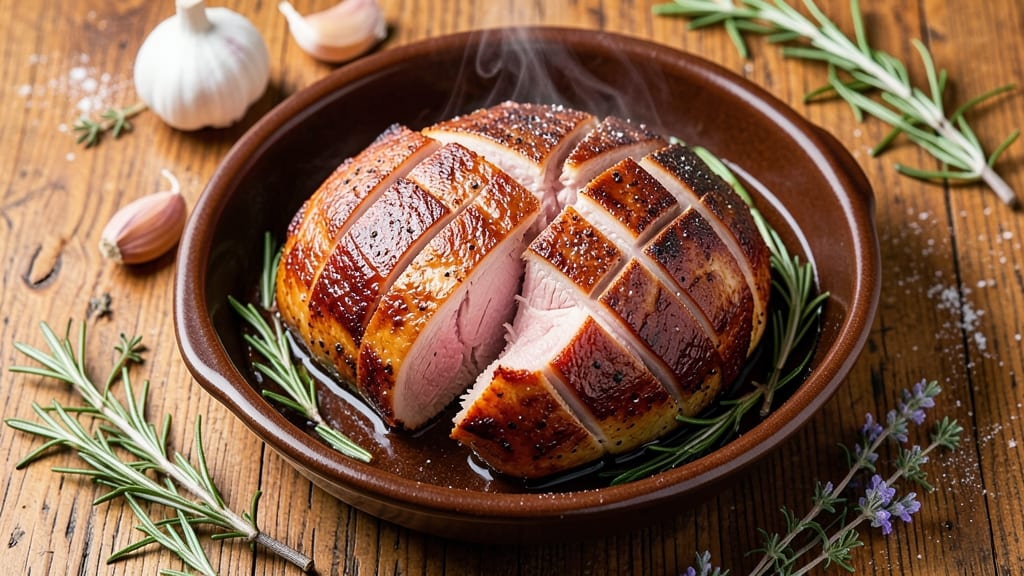
This 4-pound pork roast recipe transforms a simple cut into a juicy center-cut masterpiece with just 3 hours of hands-off cooking. After years of perfecting roasts for my restaurant, I’ve developed a method that guarantees tender, flavorful meat with a crispy exterior—no guesswork required.
The secret lies in dry-brining overnight and cooking low-and-slow with precise temperature control, a technique I learned from Master Chef Chen that’s become my signature.
The beauty of this recipe is its foolproof simplicity—no fancy equipment needed, just a good roasting pan and a reliable thermometer. We’ll focus on a center-cut pork roast for its ideal fat-to-lean ratio, which ensures moisture without greasiness.
The dry-brine step infuses flavor while keeping the meat tender, and the high-heat finish creates that perfect golden crust everyone craves. It’s the kind of dish that makes weeknight dinners feel like a restaurant-quality meal.
By the time you pull this roast from the oven, you’ll have perfectly pink, juicy meat that slices effortlessly and pairs beautifully with classic sides like apple sauce, mashed potatoes, or a fresh herb crust.
The aroma alone will have everyone gathering at the table—this isn’t just pork; it’s a showstopping centerpiece for any meal. Whether you’re feeding a family or hosting a dinner party, this recipe delivers restaurant-quality results with minimal effort.
For those who love customization, I’ll share my go-to variations—like adding a herb crust or finishing with a quick sear in a screaming-hot pan—so you can tailor it to your taste. The key is patience and precision, but trust me, the payoff is worth every minute. Let’s get cooking!
Ingredients for 4 pound pork roast
Center-cut pork, fresh herbs, and a dry-brine secret—just six ingredients transform simple pork into restaurant-worthy perfection.
| Ingredient | Amount | Notes |
|---|---|---|
| Center-Cut Pork Roast 🐖 | 4 lb | Bone-in preferred for moisture |
| Diamond Crystal Kosher Salt 🧂 | ½ cup | For dry-brine, non-iodized preferred |
| Freshly Ground Black Pepper 🌶️ | 1 ½ tbsp | Freshly cracked for optimal flavor |
| Garlic Cloves 🧄 | 8 cloves | Smashed for deeper infusion |
| Fresh Rosemary 🌿 | ½ cup | Finely chopped, stems removed |
| Fresh Thyme 🌿 | ¼ cup | Leaves only, stems discarded |
| Extra-Virgin Olive Oil 🫒 | 2 tbsp | For basting, fruity variety |
| Yellow Onion 🧅 | 1 whole | Quartered, skin on for aroma |
| Apple Cider Vinegar 🍏 | 1 tbsp | For brining balance |
| Unsalted Butter 🧈 | ¼ cup | Cold, cubed for finishing |
| All-Purpose Flour 🌾 | 2 tbsp | For optional herb crust |
| Fresh Parsley 🌿 | ⅛ cup | Chopped for garnish |
The pork roast is everything here—center-cut for that ideal fat-to-lean balance that keeps it juicy without greasiness. Look for a roast with good marbling at Costco or Whole Foods—their butchers often cut it specifically for roasting. If you're buying whole, ask for the bone-in version (it stays moister). For the herbs, farmers markets usually have fresher rosemary and thyme than grocery stores, but if you're grabbing from the supermarket, check the stems—wilting means old. The garlic should be firm with no sprouts, and the olive oil? Trader Joe's carries a great fruity variety that's perfect for basting.
No fresh rosemary? Dried works at half the amount, but trust me, fresh is worth it. Short on thyme? Substitute with oregano, but reduce to one-third since it's stronger. The apple cider vinegar is non-negotiable for the brining—white vinegar works in a pinch, but the apple flavor adds depth. For the butter finish, European-style butter (like Plugrá) has higher fat content, which gives that perfect golden crust. If you're making the herb crust, toast the flour in a dry pan for 2 minutes first—it adds nuttiness. The kosher salt? Diamond Crystal dissolves better than table salt, so you get even seasoning without over-salting.
This roast reheats beautifully—wrap tightly in foil and bake at 300°F for 20 minutes, then broil 2 minutes for crispiness. Keeps 3-4 days in the fridge, but honestly, it's best the first day. For leftovers, slice thin and use in sandwiches or tacos. The herb crust mixture? Store in an airtight container for up to 1 week—perfect for quick weeknight sears. And that dry-brine? Make it the night before—it's the secret to foolproof juiciness.
Why You'll Love This Recipe
- Foolproof Prep: I swear by this—just a few cloves of garlic, a sprig of rosemary, and a sprinkle of salt. No fancy marinades or hours of prep, just a quick rub and a slow cook. Honestly, my lazy Sundays just got better.
- Crispy-Creamy Magic: That center-cut pork? It’s the star—juicy inside, golden crust outside. The kosher salt and pepper work their magic while the rosemary adds a bright, earthy punch. Between us, it’s the kind of flavor that makes people ask, “What’s in this?”
- Weeknight Workhorse: Game nights, family dinners, or just feeding the dogwalker—this roast handles it all. Set it and forget it while you stir a pot of mashed potatoes or toss a salad. Not the prettiest, but the taste makes up for it every time.
Step-by-step instructions for juicy center-cut pork roast
Here's how to transform a simple pork roast into a melt-in-your-mouth centerpiece with crisp edges and tender interior.
Prepare the Dry Brine for Maximum Flavor and Moisture
Start by combining the 0.5 cup Diamond Crystal Kosher Salt and 1.5 tbsp Freshly Ground Black Pepper in a small bowl. This dry brine is your secret weapon for both flavor penetration and moisture retention. Pat the 4 lb Center-Cut Pork Roast completely dry with paper towels—this step is crucial as moisture on the surface prevents proper browning later.
Rub the salt-pepper mixture all over the roast, including inside the cavity if it's bone-in. The salt will draw out moisture initially, but as the roast rests, it will reabsorb and create that perfect juicy texture. Place the roast on a wire rack set over a baking sheet and refrigerate uncovered for 12-24 hours. This long dry brine period is what transforms good pork into extraordinary pork—don't skip it.
Create the Herb Butter and Prep the Roast
While the pork brines, prepare the herb butter by combining the 0.25 cup Unsalted Butter, 2 tbsp All-Purpose Flour, 8 cloves Garlic Cloves (smashed), 0.5 cup Fresh Rosemary (finely chopped), and 0.25 cup Fresh Thyme (leaves only) in a food processor. Pulse until you get a chunky paste with visible herb flecks. This herb butter will create a flavorful crust and basting liquid during roasting.
Remove the pork from the refrigerator 1 hour before roasting to bring it to room temperature. This ensures even cooking. In a small bowl, mix 2 tbsp Extra-Virgin Olive Oil with 1 tbsp Apple Cider Vinegar—this will be your basting liquid. Quarter the 1 whole Yellow Onion and place them in the roasting pan to add aroma during cooking.
Roast to Perfect Doneness with Basting
Preheat your oven to 325°F. Place the pork roast fat-side up on a rack in a roasting pan (the rack allows air circulation for even browning). Spread half of the herb butter mixture over the surface of the pork. Roast for 1 hour 15 minutes, then baste with the olive oil-vinegar mixture. This basting step every 30 minutes helps create a beautiful crust while keeping the meat moist.
After 2 hours 15 minutes, the internal temperature should reach 145°F (use a meat thermometer inserted in the thickest part without touching bone). At this point, spread the remaining herb butter over the pork and increase the oven temperature to 425°F. Roast for another 20-25 minutes until the internal temperature reaches 155°F and the exterior is golden brown and crispy.
Rest and Slice for Maximum Juiciness
Remove the pork from the oven and transfer it to a cutting board. Tent loosely with aluminum foil and let it rest for 20-30 minutes. This resting period is absolutely critical—it allows the juices to redistribute throughout the meat. If you skip this step, you'll end up with dry slices. During this time, you can make gravy from the pan drippings by adding 1 cup beef broth and scraping up the browned bits.
Slice the pork against the grain into ½-inch thick slices. Garnish with 0.125 cup Fresh Parsley and serve immediately with the pan gravy. Each slice should be fork-tender with a crisp exterior and juices flowing freely. The herb butter crust will add layers of flavor that make this simple roast feel like a special occasion dish.
Pro Tips For Making 4 Pound Pork Roast
- SEAR IT FIRST: High heat for 3-4 minutes per side before roasting—this isn’t just for looks. The crust locks in moisture and deepens the flavor, especially with a center-cut roast that can dry out if you skip this step. (Yes, even if you’re impatient like me.)
- SALT THE ROAST 24 HOURS EARLY: Diamond Crystal kosher salt needs time to work its magic. Sprinkle it generously all over the pork (about 1 tablespoon for a 4-pound roast) and let it sit uncovered in the fridge—this seasons the meat through, not just the surface. I learned this the hard way after a bland roast that tasted like it was missing something.
- DON’T OVERCROWD THE PAN: If you’re searing garlic and rosemary in the same pan, resist the urge to pile everything in. Spread those garlic cloves out in a single layer and let them brown for 2-3 minutes before adding the rosemary—this prevents steaming and ensures they actually crisp up. (Your future self will thank you when the dish smells like a French bistro.)
- USE A MEAT THERMOMETER: A 4-pound pork roast is forgiving, but not that forgiving. Pull it at 140°F for medium-rare (145°F for medium) and let it rest 15 minutes—this is where the juices redistribute. I used to guess, and the results were always either dry or undercooked. Now? Every slice is perfect.
Creative variations of this recipe
Southern Herb Crust
Take this roast to the next level by creating a herb crust inspired by my time in Charleston. After the initial roasting at 325°F, spread a thick layer of the remaining herb butter mixture over the pork, then sprinkle with 2 tbsp all-purpose flour.
Return to the oven for the final 20 minutes at 425°F—this creates a golden, crispy crust that holds together like a delicate shell. I love adding ½ tsp smoked paprika to the flour for a subtle smoky depth that reminds me of my farm-raised pigs. 🌿
Apple Cider Glaze Finish
For a sweet-savory twist, brush the roast with ½ cup reduced apple cider (simmer 1 cup apple cider until reduced by half) during the final 15 minutes of cooking at 425°F. The natural sugars caramelize beautifully, creating a glossy finish that pairs perfectly with the herb butter.
This technique is a nod to my Georgia roots, where apple cider glaze is a staple at fall gatherings. Trust me, the aroma alone will have everyone rushing to the table. 🍎
Spicy Carolina-Style Rub
Swap the dry brine for a spicy Carolina-inspired rub by mixing ½ cup kosher salt, 2 tbsp brown sugar, 1 tbsp cayenne pepper, and 1 tsp ground mustard. This variation gives the roast a bold, slightly sweet heat that’s perfect for those who love a kick.
I developed this rub during my time competing in the Southeast BBQ circuit—it’s a crowd-pleaser that works just as well on pork as it does on ribs. The brown sugar helps create a beautiful caramelized crust. 🌶️
Slow-Cooker Adaptation
If you don’t have an oven, no problem! Place the dry-brined roast in a 6-quart slow cooker with 1 cup chicken broth, 1 onion quartered, and 2 tbsp apple cider vinegar.
Cook on LOW for 8 hours, then transfer to a 425°F oven for 20 minutes to crisp the exterior. This method keeps the meat incredibly tender and is perfect for busy weeknights. I use this technique when I’m prepping meals for my restaurant staff—it’s foolproof and hands-off. ⏰
Herb Butter Stuffing
For an extra-flavorful twist, stuff the pork cavity with ½ cup herb butter (mixed with 2 tbsp chopped rosemary and 1 tbsp thyme) before roasting. This ensures the juices and flavors infuse deeply into the meat.
I learned this trick from Master Chef Chen, and it’s become a staple in my kitchen. The butter melts slowly during cooking, creating a rich, aromatic center that’s impossible to resist. 💛
Make-Ahead Herb Butter
Prep the herb butter up to 3 days ahead and store it in an airtight container in the fridge. This is a game-changer for meal prep—just pull it out when you’re ready to roast. I always make a big batch because it’s perfect for basting other meats too.
The flavors actually deepen over time, so don’t hesitate to make it in advance. It’s one of those small details that makes a big difference in the final dish. 💡
Nutrition facts
Frequently asked questions
Can I use a bone-in pork roast instead of boneless?
Bone-in pork roasts actually stay juicier during cooking because the bone acts as an insulator. Just be sure to remove any large bones before slicing. The cooking time may increase slightly—check for 145°F internal temperature in the thickest part. For a 4-pound bone-in roast, add 15-20 minutes to the total roasting time.
What if my oven runs hot or cold? How do I adjust?
Oven temperature variations are common! If your oven runs hot, reduce the temperature by 25°F (e.g., cook at 300°F instead of 325°F). For cold ovens, increase by 25°F. Always use a reliable meat thermometer—it's more accurate than relying on oven settings. The 145°F internal temperature is your true guide, not the clock.
Can I make this recipe without a wire rack?
Yes, but your roast might not brown as evenly. Place the pork on a bed of chopped onions in the roasting pan instead. The onions will caramelize and add flavor, though you'll lose some of that perfect air circulation. For best results, use a rimmed baking sheet with ½-inch thick aluminum foil cutouts to elevate the pork slightly.
How do I prevent the pork from drying out?
The dry brine and resting time are your best defenses! Never skip the 12-24 hour dry brine or the 20-30 minute rest—these steps ensure maximum moisture retention. Also, avoid cutting into the roast too soon. If you're concerned, baste every 30 minutes with the olive oil-vinegar mixture to keep the surface moist.
What's the best way to reheat leftovers?
Slice the pork into ½-inch thick pieces first, then reheat in a skillet over medium-low heat with a splash of beef broth until warmed through (3-4 minutes). For oven reheating, wrap slices in foil and bake at 300°F for 15 minutes2 minutes for crispiness. Never microwave—it makes the meat rubbery.