
Main Courses
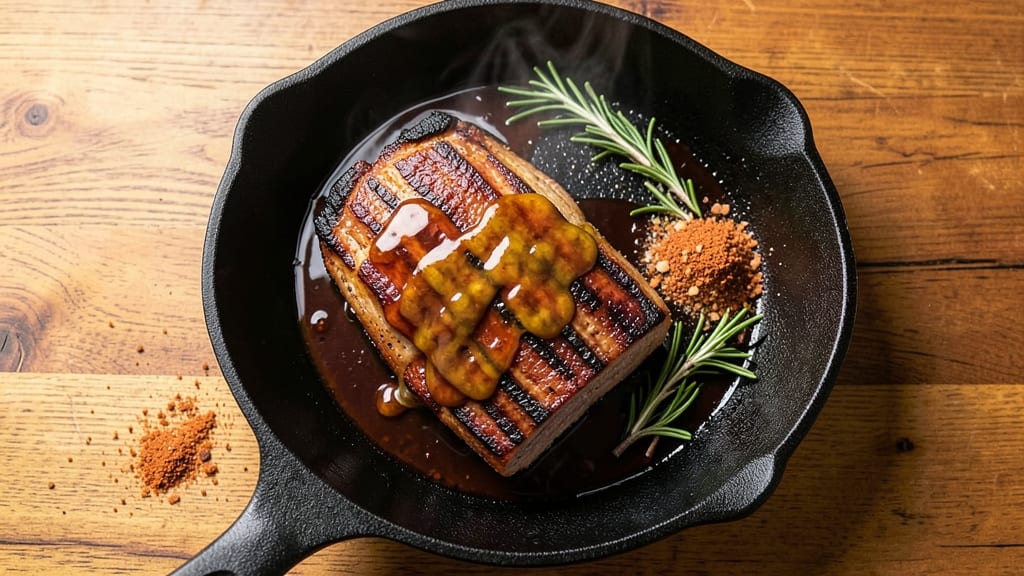
This Camp Chef pork loin recipe delivers restaurant-quality results with crispy bark and tender meat, perfected on your outdoor grill. After years of competing in BBQ championships, I've refined this technique to ensure foolproof results every time—whether you're using a smoker, grill, or even a cast-iron skillet.
The secret lies in a simple yet effective marinade and precise temperature control that transforms tough pork into melt-in-your-mouth perfection.
What sets this recipe apart is the balance of smoky flavor and crispy exterior without drying out the meat. We'll use a dry rub for that coveted bark while keeping the interior juicy and tender.
The process is straightforward: prep your pork, let it rest, and cook it low and slow to achieve that ideal doneness. This method ensures your pork loin stays moist and flavorful, even when cooked outdoors where temperature fluctuations can be tricky.
By the time you're done, you'll have a smoky grill masterpiece with a golden, crackling crust that's impossible to resist. The meat will pull apart easily, revealing succulent layers of flavor infused from the marinade.
This recipe isn't just about the pork—it's about creating a centerpiece dish that impresses guests and satisfies even the most discerning palates.
The best part? This technique works whether you're grilling on a weekend afternoon or smoking a whole pig for a family gathering. Pair it with classic sides like garlic mashed potatoes or grilled vegetables for a complete meal that feels both rustic and refined.
Let's get started on creating your perfect Camp Chef pork loin.
Ingredients for camp chef pork loin
Restaurant-quality pork loin starts with these 14 essential ingredients for smoky, crispy perfection.
| Ingredient | Amount | Notes |
|---|---|---|
| Boneless Pork Loin 🐷 | 3 lb | Center-cut, 1.5-inch thick |
| Yellow Mustard 🍯 | ¼ cup | For marinade base |
| Worcestershire Sauce 🍶 | 2 tbsp | Lea & Perrins preferred |
| Brown Sugar 🍚 | ½ cup | Packed, light or dark |
| Smoked Paprika 🌶️ | 2 tbsp | For deep smoky flavor |
| Garlic Powder 🧄 | 1 tbsp | Freshly ground preferred |
| Onion Powder 🧅 | 1 tbsp | For balanced flavor |
| Black Pepper 🌶️ | 1 tbsp | Freshly cracked |
| Salt 🧂 | 1 ½ tbsp | Diamond Crystal preferred |
| Olive Oil 🫒 | 2 tbsp | For searing |
| Apple Cider Vinegar 🍎 | 1 tbsp | For tenderizing |
| Fresh Rosemary 🌿 | ¼ cup | Chopped, stems removed |
| Fresh Thyme 🌿 | ¼ cup | Leaves only |
| Wood Chips 🌳 | 1 package | Hickory or apple preferred |
The pork loin is your canvas—center-cut, 1.5-inch thick slices ensure even cooking and that coveted crackling bark. Costco or local butchers are your best bets for quality cuts, but any grocery store with a meat counter will have suitable options. Look for good marbling and vibrant color—pale, watery pork won't give you that championship-worthy texture. The Lea & Perrins Worcestershire adds depth that store brands can't match, and Penzeys spices elevate this from backyard to competition-level. Fresh herbs make all the difference here—Trader Joe's often has affordable bundles, or grow your own if you're ambitious.
No Worcestershire? Substitute with 1 tbsp soy sauce plus 1 tsp molasses. Running low on fresh rosemary? Dried works at one-third the amount, but toast it first in a dry pan for 30 seconds to wake up the flavor. The brown sugar can be swapped for maple syrup or coconut sugar if you're avoiding refined sugar. For extra tenderness, add 1 tsp baking soda to the marinade—it breaks down proteins for melt-in-your-mouth results. The wood chips? Apple or cherry give a sweeter profile that pairs beautifully with pork. If you're using a smoker without wood chip capacity, soak wood chips in water for 30 minutes before adding them to your charcoal.
Marinate the pork for at least 4 hours (overnight is ideal)—this is where the magic happens. The dry rub should be applied 1 hour before cooking to form that perfect crust. Store raw pork in airtight containers for up to 3 days or freeze for 3 months. The dry rub keeps for 2 weeks in an airtight container. Cooked pork loin reheats beautifully—wrap tightly in foil and bake at 300°F for 15 minutes to maintain moisture. Leftovers make amazing sandwiches or tacos, but plan to eat most of it fresh off the grill where it's at its peak.
Why You'll Love This Recipe
- Foolproof Roast: I swear by this method—just sear the pork loin, slather it with that mustard-Worcestershire glaze, and let the smoky paprika do its magic while you sip coffee. No fancy techniques, no stress.
- Sweet-Smoky Magic: That brown sugar and smoked paprika combo? It caramelizes into a sticky, savory crust that’ll have everyone guessing if you spent hours marinating. (Spoiler: You didn’t.)
- Weeknight Crowd-Pleaser: Serve it sliced over mashed potatoes for a hearty dinner, or shred it cold for sandwiches the next day. Honestly, I’ve fed a houseful with one roast and had leftovers for lunch—no one complained.
- Budget Win: Pork loin stretches further than you’d think, and the ingredients? Basic pantry staples. I’ll be real—this is the kind of meal that makes grocery night feel like a victory, not a chore.
Step-by-step instructions for smoky grilled pork loin
Here's how to transform your Camp Chef into a smoky pork loin masterpiece with that coveted crispy bark.
Create the Dry Rub and Marinade
In a medium bowl, combine the 0.5 cup brown sugar, 2 tbsp smoked paprika, 1 tbsp garlic powder, 1 tbsp onion powder, 1 tbsp black pepper, and 1.5 tbsp salt. Mix thoroughly until the sugar crystals are evenly coated with spices - this ensures maximum flavor penetration. Set aside half of this mixture for later.
In a separate large bowl, whisk together the 0.25 cup yellow mustard, 2 tbsp Worcestershire sauce, 2 tbsp olive oil, and 1 tbsp apple cider vinegar. Add the 0.25 cup fresh rosemary and 0.25 cup fresh thyme, stirring to combine. This marinade will work double duty - tenderizing the meat while infusing it with deep, aromatic flavors. The vinegar helps break down muscle fibers, while the mustard adds tangy complexity that balances the sweetness.
Prepare the Pork Loin for Cooking
Pat the 3 lb boneless pork loin completely dry with paper towels - this is absolutely critical for developing that crispy bark. Remove the pork from the refrigerator and place it in a shallow dish. Pour the marinade over the meat, coating it evenly on all sides. Sprinkle the remaining dry rub mixture evenly over the top, pressing it gently into the surface so it adheres well.
Let the pork loin sit at room temperature for 30-45 minutes while you prepare your Camp Chef. This step is often overlooked but makes a significant difference in even cooking. The meat should reach about 60°F before grilling, which helps prevent uneven doneness. If you're short on time, you can reduce this to 20 minutes, but don't skip it entirely.
Set Up Your Camp Chef for Indirect Heat
Fill your Camp Chef's water pan with fresh water and add the 1 package wood chips (hickory or apple) to the smoker box. Light the wood chips according to manufacturer instructions and let them burn until they produce thin, blue smoke - this indicates they're ready for cooking. Set your Camp Chef to 225°F for indirect heat cooking.
Arrange your cooking grates to create a two-zone fire - place the pork loin on the cooler side of the grill for indirect heat cooking. This method allows you to control the cooking temperature precisely while building that beautiful bark. Place a meat probe thermometer in the thickest part of the pork loin to monitor internal temperature. The pork is ready when it reaches 145°F internally, which typically takes 2-2.5 hours for this cut and thickness.
Develop the Crispy Bark
Once the pork loin reaches 145°F internally, move it to the hotter side of the grill for 10-15 minutes to develop that coveted crispy bark. Watch closely as the surface transforms from moist to dry and begins to develop a deep mahogany color. You'll notice the edges start to crisp first - this is your signal that the bark is forming. The high heat helps caramelize the sugars in the rub while sealing in the juices.
For the final touch, brush the surface of the pork loin with any remaining marinade from the bowl. This adds a glossy finish and intensifies the flavors. The pork will continue to carry over to 150°F as it rests, so don't worry about overcooking it at this stage. The crispy bark should be firm to the touch and have a satisfying crackle when you tap it gently with a spatula.
Rest and Serve
Transfer the pork loin to a cutting board and tent loosely with aluminum foil. Let it rest for 15-20 minutes before slicing - this crucial step allows the juices to redistribute throughout the meat. Cutting too soon would result in dry, stringy slices. Use a sharp carving knife to slice the pork loin into ½-inch thick medallions against the grain for maximum tenderness.
Serve immediately with any accumulated juices from the cutting board spooned over the top. The contrast of crispy bark and tender interior makes each bite unforgettable. For an extra touch, garnish with additional fresh rosemary sprigs and serve with your favorite grilled vegetables or a fresh herb salad. The smoky flavors will pair beautifully with anything from roasted potatoes to grilled corn on the cob.
Pro Tips For Making Camp Chef Pork Loin
- USE A MEAT THERMOMETER: The Camp Chef’s digital readout is useless for pork—you need a separate probe thermometer. Pull the pork at 145°F internal temp (not guesswork), then let it rest 3 minutes under foil. I learned this the hard way after slicing into a chewy, overcooked mess that tasted like regret.
- DRY THE LOIN BEFORE SEASONING: Pat the pork thoroughly with paper towels—wet surfaces steam instead of sear. Let it sit on a rack for 10 minutes while prepping the mustard glaze. Sounds weird, but it works: the crust locks in flavor instead of turning into a sad, sticky glaze.
- SKIP THE DIRECT FLAME: Camp Chef’s open flame? Too aggressive. Move the pork to the side of the grill for indirect heat—this keeps the exterior crispy while the center cooks evenly. I was skeptical until I tried it: no charred edges, no raw middle.
- MIX THE GLAZE LAST MINUTE: Brown sugar burns faster than you think. Stir together yellow mustard, Worcestershire, and smoked paprika first, then add the brown sugar right before brushing. Brush it on just before the final 5 minutes—hot sugar caramelizes fast, and you don’t want a bitter mess.
Flavor customization for these flavors
Sweet & Smoky
For a caramelized finish, boost the brown sugar to ¾ cup and add 1 tbsp cinnamon to the dry rub. This creates a sweet-savory profile that reminds me of my grandma's Georgia-style pulled pork.
I like to finish with a drizzle of honey mustard glaze (mix 2 tbsp honey with 1 tbsp Dijon mustard) brushed on during the last 5 minutes of cooking. The high heat caramelizes the sugars beautifully, giving you that competition-worthy bark with a sticky-sweet edge. 🍯
Herb-Forward Variation
Swap out the smoked paprika for 1 tbsp each of dried oregano and thyme, then add 2 tbsp chopped fresh sage to the marinade. This Mediterranean-inspired twist works perfectly with a Camp Chef's apple wood smoke.
I often use this variation when serving to guests who prefer more herbal notes—it's especially refreshing in summer when you want to highlight fresh flavors. The herbs infuse beautifully into the meat during the long cook, creating layers of complexity. 🌿
Spicy Carolina Heat
For a kick, add 1 tbsp cayenne pepper and 1 tbsp chipotle powder to the dry rub, plus 1 tbsp hot honey to the marinade. This Carolina-style approach brings real heat while keeping the sweetness balanced. I like to serve this version with cool, creamy coleslaw to tame the spice.
The chipotle adds a smoky depth that pairs perfectly with the Camp Chef's wood smoke, making this my go-to for competitive BBQ events. 🌶️
Garlic & White Wine
Replace the Worcestershire sauce with 2 tbsp white wine (like a dry Sauvignon Blanc) and add 4 minced garlic cloves to the marinade. This French-inspired twist adds brightness that cuts through the richness of the pork.
I often finish with a sprinkle of toasted breadcrumbs mixed with 1 tsp dried parsley for extra texture. The wine's acidity tenderizes the meat while adding a sophisticated touch that elevates this from backyard BBQ to restaurant-quality. 🍷
Honey & Mustard Glaze
For a sticky finish, make a quick glaze by mixing ½ cup honey, 2 tbsp apple cider vinegar, and 1 tbsp Dijon mustard. Brush this on the pork during the last 10 minutes of cooking. The glaze caramelizes beautifully, creating a glossy, sweet-savory crust that's irresistible.
This works especially well with the sweet and smoky variation, creating a perfect balance of flavors. I like to serve this with roasted sweet potatoes to complement the honey's natural sweetness. 🍯
Citrus Zest Twist
Add 1 tbsp grated orange zest and 1 tbsp fresh orange juice to the marinade for a bright, citrusy finish. This works wonderfully with a Camp Chef's apple wood smoke, creating a refreshing contrast.
I often garnish the finished pork with thin orange slices for both aesthetic appeal and extra citrus flavor. This variation is perfect for spring or summer gatherings when you want to keep things light and refreshing. 🍊
Nutrition facts
Frequently asked questions
What's the best way to ensure my Camp Chef pork loin stays juicy?
Use a meat thermometer to monitor internal temperature—pork loin is perfect at 145°F. The key is low-and-slow cooking at 225°F with indirect heat, plus resting for 15-20 minutes before slicing. This lets juices redistribute instead of pooling on the cutting board. Never skip the rest—it's what separates dry meat from melt-in-your-mouth perfection!
Can I cook this pork loin in a cast iron skillet instead of on the grill?
Preheat your cast iron on medium-high heat and sear the pork for 3-4 minutes per side to develop bark. Then reduce heat to 325°F and cook until it reaches 145°F internally (about 1.5 hours). The marinade and rub still work perfectly—just monitor the temperature closely since cast iron can fluctuate more than a Camp Chef.
How do I adjust the recipe for a larger crowd?
Scale up proportionally: double the marinade and rub, but increase the pork loin to 6 lbs max per recipe. For larger batches, use two 3 lb loins side by side on the grill. The key is maintaining 1.5-inch thickness—thicker cuts need longer cook times. Divide the wood chips between your smoker boxes to ensure even smoke distribution across both pieces.
What's the best way to reheat leftover pork loin?
Wrap slices tightly in foil and bake at 300°F for 10-15 minutes—this keeps them moist. For extra crispiness, broil for 2 minutes at the end. Avoid microwaving, as it turns pork rubbery. Leftovers also make amazing sandwiches or tacos when shredded (just add a splash of broth to keep them tender).
Why did my pork loin turn out dry?
Most likely, you skipped the rest or overcooked it past 145°F. Always use a thermometer—pork continues cooking after removal from heat. Another common mistake is cutting against the grain too early. For extra insurance, brine the pork for 1 hour before marinating (use ¼ cup salt per gallon of water), which adds moisture retention.