
Side Dishes
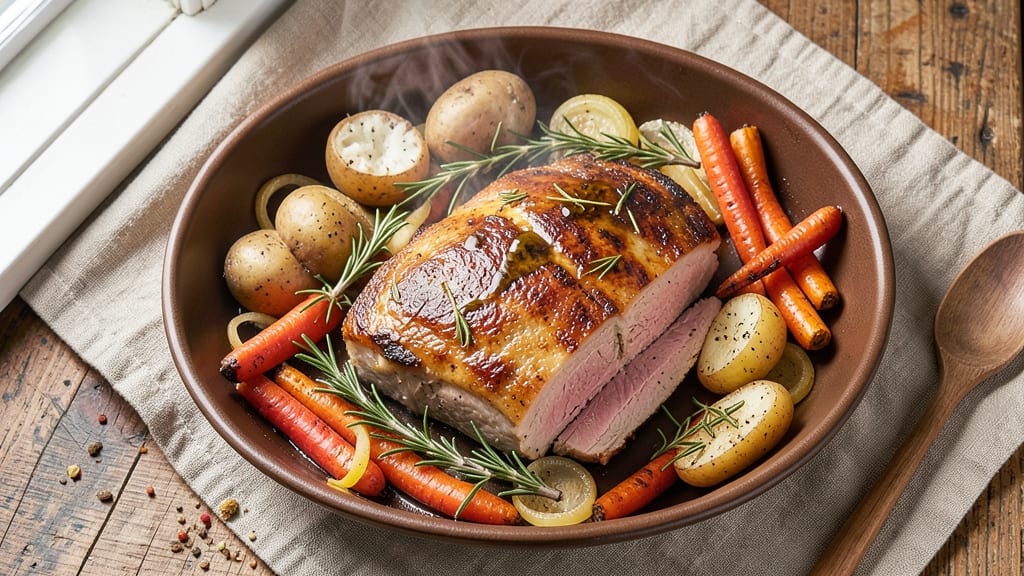
This boneless pork loin roast recipe with vegetables delivers restaurant-quality results with minimal effort—juicy, tender meat paired with perfectly al dente vegetables in one pan.
I developed this recipe after years of testing what makes a pork roast truly exceptional, and the secret lies in the herb blend and precise cooking technique that locks in moisture.
The vegetables roast alongside the meat, absorbing the savory juices for extra flavor without requiring separate pans or extra time.
What sets this recipe apart is the balance of simplicity and sophistication. You'll start with a boneless pork loin, which cooks faster and more evenly than bone-in cuts, while still delivering that satisfying, melt-in-your-mouth texture.
The vegetables—carrots, potatoes, and onions—are prepped in uniform sizes to cook at the same rate, ensuring everything finishes together. A generous sprinkle of fresh herbs and garlic before roasting infuses the meat with bright, aromatic flavors that elevate it from ordinary to extraordinary.
The result is a complete meal that's ready in about 1 hour and 15 minutes, with just 15 minutes of active prep time. The pork emerges golden and tender, while the vegetables are perfectly caramelized with crisp edges and soft centers.
This is the kind of dish that transforms a simple weeknight dinner into a memorable meal—one that feels special without requiring hours in the kitchen or complex techniques.
Whether you're serving this for a family dinner or hosting a small gathering, the recipe scales beautifully. The leftovers reheat well, making it ideal for meal prep, and the method is foolproof—even if you're new to roasting meat.
Here's how to create this harmonious, flavorful meal that brings the table together.
Ingredients for boneless pork loin roast recipe with vegetables
Center-cut pork loin and seasonal vegetables transform into a restaurant-quality roast with minimal effort.
| Ingredient | Amount | Notes |
|---|---|---|
| Boneless Pork Loin Roast 🍖 | 1 ½ lb | Center-cut for even cooking |
| Yellow Onions 🧅 | 1 whole | Cut into 1-inch chunks |
| Carrots 🥕 | 1 lb | Whole, scrubbed, cut into 2-inch pieces |
| Russet Potatoes 🥔 | 1 ½ lb | Cut into 1.5-inch chunks |
| Garlic Cloves 🧄 | 4 cloves | Smashed, skin on |
| Fresh Rosemary 🌿 | ¼ cup | Chopped, stems removed |
| Fresh Thyme 🌿 | ¼ cup | Leaves only, stems removed |
| Fresh Parsley 🌿 | ⅛ cup | Chopped, for garnish |
| Extra-Virgin Olive Oil 🫒 | ¼ cup | High-quality, fruity |
| Dijon Mustard 🍯 | 1 tbsp | For marinade |
| Kosher Salt 🧂 | 1 ½ tsp | Diamond Crystal preferred |
| Freshly Ground Black Pepper 🌶️ | 1 tsp | Cracked, not powdered |
| Dry White Wine 🍷 | ½ cup | Sauvignon Blanc or Pinot Grigio |
The boneless pork loin is the foundation of this dish, and center-cut roasts are non-negotiable—they cook more evenly and deliver that melt-in-your-mouth texture. Costco and Whole Foods carry excellent pre-trimmed options, but if you're buying whole, trim any visible fat to prevent flare-ups in the oven. For the vegetables, uniformity is key—cutting them into similar-sized pieces ensures they cook at the same rate. Organic carrots and potatoes from the grocery store's produce section work beautifully, but avoid anything soft or sprouting. The fresh herbs should be vibrant and fragrant; if they smell dull, they're past their prime. For the wine, any dry white with acidity works—Kim Crawford or La Crema are reliable choices.
No fresh rosemary? Dried rosemary at one-third the amount will work in a pinch, but fresh delivers that bright, piney aroma. Substituting potatoes? Sweet potatoes or Yukon Golds hold up equally well to roasting. The Dijon mustard can be swapped for whole-grain mustard if you prefer a stronger flavor. For the wine, dry vermouth or chicken broth works if you're avoiding alcohol. The olive oil matters here—use something with a fruity, peppery finish. California Olive Ranch or Colavita are excellent choices. If your recipe calls for more moisture, add an extra splash of broth or a pat of butter to the pan during roasting.
This roast reheats beautifully—simply cover with foil and warm in a 350°F oven for 15-20 minutes. Store leftovers in an airtight container for up to 4 days, or freeze for 3 months by wrapping tightly in plastic wrap and aluminum foil. The vegetables can be prepped ahead and stored in the fridge for up to 2 days before roasting. For meal prep, portion the pork and vegetables separately—this keeps the meat juicy and prevents sogginess. The herbs can be chopped and stored in an airtight container in the fridge for 5 days, or frozen for 6 months in ice cube trays.
Why You'll Love This Recipe
- One-Pan Magic: I swear by this recipe because it’s the rare dinner that doesn’t require three pots and a prayer. Toss the pork, potatoes, carrots, and onions on a sheet pan, drizzle with olive oil, and let the oven do the work—no chopping boards left in the sink, no stove clutter.
- Garlic-Pork Bliss: That first bite? The pork stays juicy while the edges get just crispy enough, and the garlic cloves roasted right into the onions add this deep, savory punch. It’s the kind of flavor that makes you pause mid-bite and think, "Why don’t I make this more often?"
- Leftover Goldmine: Between us, this recipe begs for leftovers—and they’re just as good cold. Slice the pork for sandwiches, shred the potatoes into salads, or toss everything into a frittata the next day. I’ve turned this into breakfast, lunch, and dinner without a single complaint.
- Budget-Friendly Feast: A boneless pork loin stretches farther than you’d think, especially when paired with humble veggies like carrots and potatoes. Honestly, it’s my go-to when I need to feed the family without breaking the bank—and the fact that it’s done in 45 minutes? Even better.
Step-by-step instructions for herb-infused oven roast with al dente vegetables
This method delivers a perfectly cooked pork loin with tender vegetables—herb-infused and restaurant-quality.
Prepare the Pork and Vegetables for Even Cooking
Pat the 1.5 lb boneless pork loin roast completely dry with paper towels, removing any surface moisture. This step is crucial for achieving a crispy exterior. In a small bowl, combine 1 tbsp Dijon mustard, 0.25 cup extra-virgin olive oil, 1.5 tsp kosher salt, and 1 tsp freshly ground black pepper. Rub this mixture evenly over the pork, coating all sides thoroughly. Let it sit at room temperature for 30 minutes while you prepare the vegetables.
For the vegetables, peel and cut the 1 lb carrots into 2-inch pieces and the 1.5 lb russet potatoes into 1.5-inch chunks. Peel and cut the 1 whole yellow onion into 1-inch chunks. Remove the skins from the 4 cloves garlic and smash them lightly with the side of a knife. Chop the 0.25 cup fresh rosemary, 0.25 cup fresh thyme, and set aside the 0.125 cup fresh parsley for garnishing later.
Sear the Pork for Maximum Flavor
Preheat your oven to 400°F. Heat a large oven-safe skillet over medium-high heat and add the pork loin. Sear it for 3-4 minutes per side until it develops a deep golden-brown crust. This step locks in juices and creates a flavorful bark. Remove the pork from the skillet and set it aside on a plate.
In the same skillet, add the carrots, potatoes, and onions. Toss them with the rendered pork fat, then sprinkle with the chopped rosemary and thyme. Pour in the 0.5 cup dry white wine and scrape up any browned bits from the bottom of the pan. This deglazing step captures all the caramelized flavors for a richer dish.
Roast Until Pork Reaches Perfect Doneness
Transfer the skillet to the preheated oven and roast for 30 minutes. After 30 minutes, carefully flip the pork loin and vegetables, ensuring the vegetables are evenly coated. Return the skillet to the oven and continue roasting for an additional 25-30 minutes, or until the internal temperature of the pork reaches 145°F when measured with a meat thermometer.
You’ll know the vegetables are perfectly tender when they pierce easily with a fork and the edges are slightly caramelized. The pork should have a golden-brown crust and be juicy when sliced. If the vegetables seem dry before the pork is done, cover them loosely with aluminum foil for the last 10 minutes to retain moisture.
Rest and Garnish for Presentation
Remove the pork loin from the skillet and let it rest on a cutting board for 10-15 minutes. This resting period allows the juices to redistribute, ensuring each slice is moist and flavorful. While the pork rests, transfer the vegetables to a serving platter and garnish with the 0.125 cup chopped fresh parsley. The bright green color will contrast beautifully with the golden-brown vegetables.
Slice the pork loin into ½-inch thick medallions and arrange it alongside the vegetables. The combination of tender pork, caramelized vegetables, and aromatic herbs creates a harmonious dish that’s both elegant and comforting. Serve immediately to enjoy the best texture and flavor.
Pro Tips For Making Boneless Pork Loin Roast Recipe With Vegetables
- USE A MEAT THERMOMETER: I learned this the hard way—pork loin looks done when it’s still pale inside. Aim for 145°F internal temp (155°F if serving kids/pickier eaters), and pull it out before it hits 160°F. That last 5 degrees dries it out faster than you’d think.
- CUT POTATOES UNIFORM: Russets take forever to cook if they’re lumpy. Slice them into 1-inch chunks and soak in cold water for 10 minutes first—this cuts down on starchy mess and guarantees even cooking. (Yes, even if you’re impatient like me.)
- DON’T OVERCROWD THE PAN: I used to pack the veggies in like sardines, and they’d steam instead of brown. Give onions, carrots, and potatoes space—think "tight but not touching"—so they crisp up. If you’re short on pan real estate, roast them in batches.
- SEAR THE PORK FIRST: Skip the direct roast if your oven’s not preheated. Sear the pork loin in a hot pan for 3-4 minutes per side first—it locks in flavor and gives the outside a head start on color. (Your future self will thank you.)
Serving suggestions for leftovers
Herb-Garnish Plating
Fresh herbs make all the difference in presentation. After roasting, arrange the vegetables in a circular pattern on a platter, then place the sliced pork medallions in the center. Sprinkle the remaining 0.125 cup chopped parsley evenly over everything for a pop of color.
A few thinly sliced lemon wedges on the side add brightness and a zesty contrast to the rich pork. 🌿
Sauce Pairings
This roast pairs beautifully with light, tangy sauces. A simple white wine reduction made with 0.5 cup dry white wine, 1 tbsp butter, and a splash of lemon juice drizzled over the meat elevates the dish.
For a quicker option, mix 2 tbsp Dijon mustard with 0.25 cup sour cream and a pinch of salt—it’s creamy but not heavy.
Bread Service
Serve with warm, crusty bread to soak up the juices. A baguette or ciabatta works perfectly. For extra flair, brush the bread with garlic-infused olive oil and sprinkle with sea salt before serving. I like to slice the bread into thick pieces so guests can tear off chunks easily.
Wine and Beverage
A crisp Sauvignon Blanc or Pinot Grigio complements the herbaceous flavors of the pork and vegetables. For non-alcoholic options, a sparkling lemonade with mint or an iced hibiscus tea provides refreshing contrast. The acidity in these drinks cuts through the richness of the roast beautifully. 🍷
Seasonal Additions
In summer, swap potatoes for zucchini or bell peppers—they roast quickly and add vibrant color. For fall, add butternut squash cubes and a sprinkle of cinnamon to the vegetables.
In winter, roast brussels sprouts with the carrots and onions for a heartier side. These tweaks keep the dish exciting year-round.
Make-Ahead Garnishes
Prep garnishes ahead to save time. Chop the parsley and store it in an airtight container in the fridge for up to 3 days. Keep lemon wedges in a sealed container to maintain freshness.
For extra convenience, make a small batch of the white wine reduction and store it in the fridge—just reheat gently before serving. 💡
Nutrition facts
Frequently asked questions
Can I use a bone-in pork loin instead of boneless?
Yes, but you'll need to adjust the cooking time. Bone-in cuts take longer to reach the same internal temperature. For a 2 lb bone-in pork loin, increase the roasting time by 15-20 minutes and check the temperature in the thickest part away from the bone. The bone doesn't affect flavor but does change the cooking dynamics.
What if my pork loin is thicker or thinner than 1.5 lbs?
Use a meat thermometer to guide cooking time. For every ½-inch difference in thickness, adjust by 5-7 minutes per side. A 2-inch thick loin needs 4-5 minutes per side searing, while a 1-inch thick one only needs 2-3 minutes. Always aim for 145°F internal temperature.
How do I prevent the vegetables from burning before the pork is done?
Start with the vegetables in the oven first for 10 minutes before adding the pork. This gives them a head start while the pork sears. If they brown too quickly, tent them loosely with foil for the last 10 minutes of cooking. The pork's residual heat will finish cooking them gently.
Can I make this recipe in a regular oven instead of a skillet?
Use a roasting pan or baking sheet with a rack. Sear the pork in a separate skillet first, then transfer everything to the oven. For even cooking, place the pork on a wire rack over a baking sheet with the vegetables below. This allows heat to circulate better around the meat.
What's the best way to reheat leftovers?
Reheat pork and vegetables separately to maintain texture. Place pork slices in an oven-safe dish with a splash of broth, cover with foil, and warm at 325°F for 10-15 minutes. For vegetables, use 30 seconds in the microwave with a damp paper towel over them, or 10 minutes at 350°F in the oven. Never microwave pork uncovered.