
Main Courses
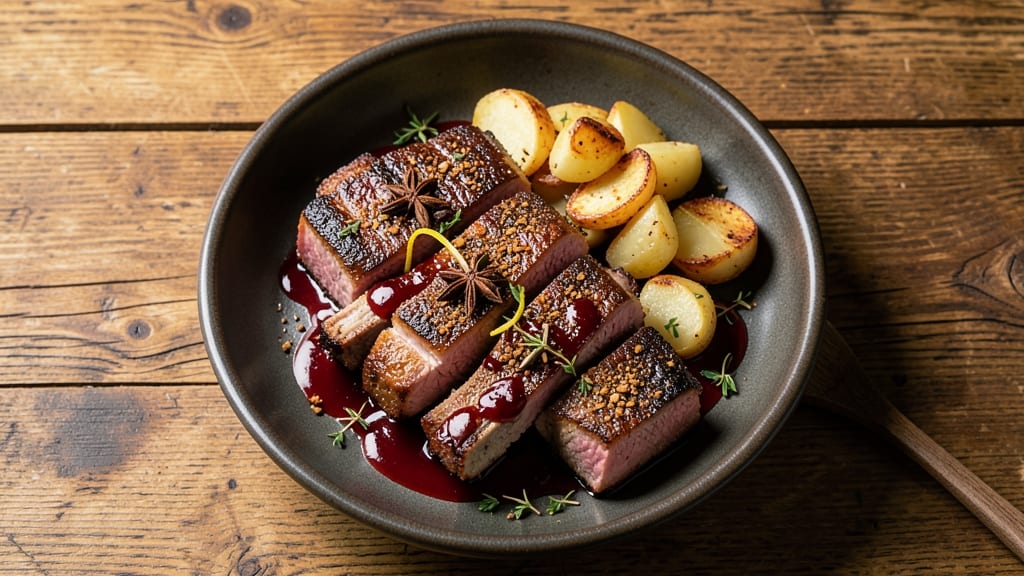
This bone-in ribeye pork chop recipe delivers restaurant-quality results with a five-spice crust that caramelizes beautifully while keeping the meat juicy and tender. I developed this technique after years of perfecting pork chops for my restaurant menu—where the bone stays crispy and the meat melts in your mouth.
The secret lies in a dry-brine method that enhances flavor and a high-heat sear that locks in moisture.
What sets this recipe apart is the balance between crispy exterior and succulent interior. We start with a five-spice rub—star anise, cinnamon, cloves, fennel, and black pepper—that creates an aromatic crust while the bone renders slowly.
The reverse sear method ensures even cooking without overcooking the center. This approach guarantees restaurant-quality results every time, with minimal effort.
By the time you're done, you'll have perfectly seared pork chops with a caramelized crust and a bone that's crispy enough to crack open for extra flavor. The meat remains tender and juicy, with layers of spice that linger on your palate.
Serve with roasted garlic potatoes or a red wine reduction for a complete meal that's sure to impress.
This recipe is designed for home cooks who want professional results without the complexity. The technique is straightforward, and the ingredients are simple—just quality pork chops, spices, and a little patience. Let's get started on creating a dish that's worth every bite.
Ingredients for bone in ribeye pork chops
Quality bone-in ribeye pork chops, aromatic spices, and precise technique create restaurant-quality results at home.
| Ingredient | Amount | Notes |
|---|---|---|
| Bone-In Ribeye Pork Chops 🥩 | 4 whole | 1.25-inch thick, center-cut preferred |
| Kosher Salt 🧂 | 1 ½ tbsp | Diamond Crystal preferred for clarity |
| Ground Black Pepper 🌶️ | 1 ½ tsp | Freshly cracked for optimal flavor |
| Star Anise Pods 🌿 | 2 whole | Crushed lightly for aromatic release |
| Ground Cinnamon 🍃 | 1 ½ tsp | True Ceylon preferred for purity |
| Ground Cloves 🌶️ | 1 tsp | Freshly ground for maximum potency |
| Ground Fennel Seeds 🌿 | 1 tsp | Toasted for enhanced aroma |
| Unsalted Butter 🧈 | ½ cup | European-style for higher smoke point |
| Extra-Virgin Olive Oil 🫒 | 2 tbsp | High-quality, fruity variety |
| Fresh Rosemary 🌿 | ¼ cup | Finely chopped, stems removed |
| Fresh Thyme Leaves 🌿 | 0.15 cup | Dried works at half quantity |
| Garlic Cloves 🧄 | 4 cloves | Minced for even distribution |
| Heavy Cream 🥛 | ¼ cup | For pan deglazing |
| Fresh Parsley 🌿 | 0.1 cup | Chopped, for garnish only |
The pork chops are the foundation—seek center-cut ribeye with visible marbling for optimal tenderness. Whole Foods or your local butcher shop will have the best quality cuts with proper bone structure. Look for chops with 1.25-inch thickness to ensure even cooking. The five-spice blend requires authentic Ceylon cinnamon and whole star anise pods—Penzeys Spices carries these in premium quality. Freshly ground spices are non-negotiable; pre-ground blends lose potency within weeks. Store your spices in airtight containers away from light to preserve their aromatic oils. For the herbs, farmers markets often have fresher rosemary and thyme than grocery stores, with more vibrant green leaves that indicate peak freshness.
No star anise? Substitute 1/4 tsp ground anise seed or omit entirely—it's more about aroma than structure. Fresh fennel seeds can be toasted in a dry pan for 30 seconds before grinding to intensify their flavor. For the butter, European-style unsalted has a higher smoke point and richer flavor than American brands. The olive oil should be extra-virgin with noticeable peppery notes—California Gold or Colavita are reliable choices. If you're short on time, pre-minced garlic from a jar works, though fresh has superior flavor. The heavy cream in the deglazing step can be swapped for whole milk in a pinch, though it won't be as velvety. For the herbs, dried oregano at half the quantity can replace fresh thyme if needed, though it lacks the bright herbal notes.
Pork chops should be dry-brined overnight in the refrigerator for optimal tenderness and flavor penetration. The spice rub will keep for up to 2 weeks in an airtight container, though the spices lose potency after 6 months. Fresh herbs should be stored in damp paper towels inside sealed bags for up to 5 days. The rendered butter from the searing can be strained and stored for up to 1 week in the refrigerator—use it for compound butters or roasting vegetables. For meal prep, assemble the chops and rub 1 day ahead, then refrigerate uncovered to dry the surface. The completed dish reheats beautifully—gentle warming in a 300°F oven for 10-12 minutes maintains moisture without overcooking.
Why You'll Love This Recipe
- Five-Ingredient Magic: I swear by this—just the chops, salt, pepper, star anise, and cinnamon. That’s it. The spices do all the heavy lifting while you focus on searing those chops to perfect medium-rare.
- Crispy-Creamy Payoff: The bone stays juicy while the edges get that unfairly good crust. Honestly, I’ve tried fancier rubs, but this combo—especially that star anise—gives it a warm, earthy depth that’s weirdly addictive.
- Weeknight or Weekend: Throw them on the grill for summer BBQs or pan-sear them for a fancy-ish weeknight dinner. My kids even ask for them on Tuesdays, and that’s saying something.
- Leftovers That Don’t Suck: Cold slices the next day? Still tender, still flavorful. I’ll repurpose them into sandwiches or stir-fry them later—no sad, dry meat here. The bone’s marrow even makes broth ridiculously rich.
Step-by-step instructions for bone-in ribeye pork chops with five-spice crust
Master this technique and you'll achieve a perfectly caramelized crust while keeping the pork juicy and flavorful.
Prepare the Five-Spice Dry Rub
In a small bowl, combine the 1.5 tbsp kosher salt, 1.5 tsp ground black pepper, 2 whole star anise pods (lightly crushed), 1.5 tsp ground cinnamon, 1 tsp ground cloves, and 1 tsp ground fennel seeds. Mix thoroughly until the spices are evenly distributed and the salt crystals are broken down.
This aromatic blend creates the signature five-spice crust while ensuring deep flavor penetration. The star anise and cloves add warmth, while the fennel seeds bring subtle sweetness that pairs beautifully with the pork's richness. Let the mixture sit for 5 minutes to allow the spices to bloom and release their essential oils.
Season and Rest the Pork Chops
Pat the 4 whole bone-in ribeye pork chops completely dry with paper towels—this is crucial for achieving a proper crust. Generously coat each chop with the five-spice rub, pressing the mixture firmly into the meat so it adheres well. Pay special attention to the bone side and edges where flavor tends to concentrate.
Place the seasoned chops on a wire rack set over a baking sheet and refrigerate uncovered for at least 1 hour (up to 4 hours for maximum flavor development). This resting period allows the salt to penetrate the meat and the spices to adhere properly, creating the foundation for that coveted caramelized crust.
Sear for Maximum Crust Development
Heat a large cast-iron skillet over medium-high heat until it's screaming hot. Add 2 tbsp extra-virgin olive oil and let it shimmer for 1 minute. Working in batches to avoid crowding, add the pork chops and sear for 3-4 minutes per side until they develop a deep golden-brown crust with some caramelization.
Don't press down on the chops with a spatula—this releases juices that steam instead of caramelize. You'll know they're ready when the crust has set and the edges begin to pull away slightly from the skillet. Transfer the seared chops to a plate and tent loosely with foil to keep warm.
Build the Rosemary-Thyme Butter Sauce
In the same skillet (no need to wipe it clean), reduce heat to medium and add 0.5 cup unsalted butter. Let it melt completely, then add the 0.25 cup finely chopped fresh rosemary, 0.15 cup fresh thyme leaves, and 4 minced garlic cloves. Cook for 2-3 minutes until the herbs are fragrant and the garlic is lightly golden.
Pour in 0.25 cup heavy cream and scrape up any browned bits from the bottom of the pan with a wooden spoon. This deglazing captures all the caramelized flavor that would otherwise be lost. Let the sauce simmer gently for 1-2 minutes until it thickens slightly and coats the back of a spoon.
Finish and Rest for Juiciness
Return the pork chops to the skillet, spooning the rosemary-thyme butter sauce over them. Let them cook for 1-2 minutes on each side to heat through completely and allow the sauce to cling to the meat. The internal temperature should reach 145°F when measured at the thickest part of the chop.
Transfer the chops to a cutting board and let them rest for 5-10 minutes before serving. This resting period is critical—it allows the juices to redistribute throughout the meat, preventing them from pooling on the cutting board. Garnish with 0.1 cup chopped fresh parsley just before serving to add a bright, fresh contrast to the rich, spiced pork.
Pro Tips For Making Bone In Ribeye Pork Chops
- SEAR THE BONE FIRST: That rib bone is stubborn—get it screaming hot in the pan for 3-4 minutes before flipping. I used to rush this, and the bone stayed cold inside while the meat cooked. Now I let it blister like a steak, and the whole chop cooks evenly.
- CRUSH THE STAR ANISE: Whole star anise pods won’t infuse worth a damn. Lightly crush them with a rolling pin or the side of a knife before adding to the pan—just enough to crack the surface. This releases the flavor without turning your dish into anise-flavored sawdust.
- SALT THE MEAT 2 HOURS EARLY: Bone-in ribeye is thick and dense—don’t just sprinkle salt before searing. Season it generously 2 hours ahead (or overnight if you’re patient) so the salt penetrates deep. The crust will still form, but the inside won’t taste like sad, underseasoned pork.
- USE A MEAT THERMOMETER: Guessing doneness with bone-in chops is a gamble. Pull them at 130°F (medium-rare) or 140°F (medium) for the thickest cut—resting will push them another 5°F. I burned my first batch waiting for "juices to run clear" (they always do, even when overdone).
Pro cooking tips for perfect results
Dry-Brining Secrets
I can't stress enough how critical the dry-brine step is for these pork chops. Unlike wet brining, dry-brining creates a concentrated salt crust that enhances crust formation while keeping the interior juicy. Pat the chops completely dry before applying the rub—any moisture will prevent proper adhesion.
I recommend using Diamond Crystal kosher salt because its larger crystals dissolve more slowly, creating a more even crust. 🧂
For maximum flavor development, let the chops rest uncovered in the fridge for at least 1 hour, but I often do it overnight. This extended time allows the salt to penetrate deeper into the meat while the spices develop their full aromatic potential.
The chops will look dry after resting, but don't worry—they'll release their own juices during cooking and create that perfect caramelized crust.
Cast Iron Mastery
Your choice of cookware makes all the difference here. I insist on using a well-seasoned cast-iron skillet—preferably a Lodge 10.25-inch—because it retains and distributes heat perfectly. Heat the skillet until it's "screaming hot" before adding oil, which should shimmer but not smoke.
If you're using a non-stick pan, you'll miss out on that beautiful crust development, so stick with cast iron for authentic results. ⚡
When searing, work in batches to avoid crowding the pan. Overcrowding steams the chops instead of searing them, which is a common mistake I see home cooks make.
The ideal sear time is 3-4 minutes per side—you'll know it's ready when the crust has set and the edges pull away slightly from the skillet. Resist the urge to move them around constantly; let the crust form undisturbed.
Spice Bloom Technique
The five-spice blend needs time to bloom before applying it to the meat. Simply mix all the spices together and let them sit for 5 minutes at room temperature. This allows the essential oils to release, creating a more aromatic and flavorful crust.
I like to lightly crush the star anise pods with the flat side of my knife to release their oils without grinding them into powder. 🌿
Freshly ground spices make a world of difference. If you're using pre-ground spices, toast them in a dry pan for 30 seconds before grinding to intensify their flavors. The cinnamon and cloves should be Ceylon cinnamon and freshly ground cloves—these are non-negotiable for authentic flavor.
Store your spices in airtight containers away from light to preserve their potency.
Temperature Control
Maintaining precise temperature control is what separates home-cooked pork chops from restaurant-quality results. Use a meat thermometer—I recommend the ThermoWorks Smoke—to monitor the internal temperature. The chops should reach 145°F at the thickest part when done.
If you're using a cast-iron skillet, you'll naturally get a hotter surface, which helps create that perfect crust while keeping the interior juicy. 🌡️
After searing, finish the chops in the oven at 400°F for 3-4 minutes if you prefer a more even cook. This step helps carry through the heat without overcooking the exterior.
The key is to remove them just before they reach the target temperature, then let them rest. This final resting period is crucial for redistributing juices throughout the meat.
Nutrition facts
Frequently asked questions
Why use bone-in pork chops instead of boneless?
The bone adds incredible flavor and keeps the meat tender by acting as a natural heat sink. When cooked properly, the bone becomes crispy and adds depth to every bite. Plus, bone-in cuts stay juicier longer because they retain moisture better than boneless versions. For this recipe, we specifically use ribeye cuts for their rich marbling.
Can I substitute any of the five spices in the rub?
You can make adjustments, but each spice plays a key role. Star anise adds warmth, cinnamon brings sweetness, cloves provide depth, fennel seeds offer licorice notes, and black pepper cuts through richness. For substitutions: replace star anise with ¼ tsp ground anise seed, or omit it entirely if unavailable. The cinnamon and cloves are most important—don't skip those!
How do I know when the pork chops are fully cooked?
Use a meat thermometer to check the thickest part of the chop—it should read 145°F. The crust should be deep golden brown with caramelized edges. If you don't have a thermometer, cut into one chop: the meat should be slightly pink in the center (not red) with clear juices that run pale pink, not red. The bone should be crispy when cracked open.
What's the best way to reheat leftovers?
Gently reheat in a 300°F oven for 10-12 minutes on a wire rack, or in a skillet over low heat with a splash of water or broth to prevent drying. Microwaving is not recommended as it can make the meat rubbery. For best results, consume within 2 days of cooking when possible—the crust loses its crispness when reheated.
Can I make this recipe on the grill instead of stovetop?
Preheat your grill to medium-high (400°F) and follow the same searing technique. Grill the chops for 4-5 minutes per side until you get deep caramelization. For indirect heat finishing, move them to the cooler side of the grill for 2-3 minutes to carry through the heat. The bone will crisp beautifully over the grill flames, adding smoky depth to the flavor.