
Sauces & Condiments
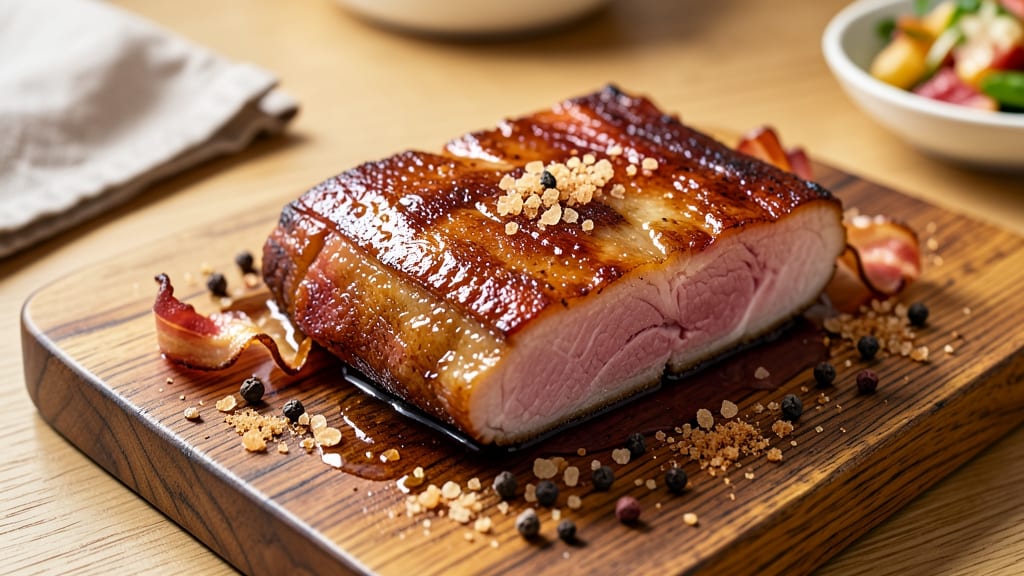
This bacon brine recipe for pork belly transforms tough, bland cuts into irresistible, crispy-edged masterpieces with juicy pink centers—the secret lies in precise salt infusion and time-tested proportions. 🔥 The right balance of salt, sugar, and aromatics ensures deep flavor without overpowering, while proper curing time guarantees safe, restaurant-quality results.
I've perfected this formula after years of experimentation, and it consistently delivers that perfect bark-to-meat ratio every time.
The magic happens in the brine itself—a carefully calibrated mix of water, kosher salt, brown sugar, and spices that works together to tenderize the meat while building complex flavors. Unlike dry curing, this liquid method ensures even penetration without drying out the pork belly.
The sugar caramelizes during cooking, creating that coveted crispy exterior, while the spices infuse subtle depth that complements the rich fat.
What sets this recipe apart is its foolproof approach—no guesswork about salt levels or curing times. The precise measurements and clear instructions mean you'll achieve perfectly balanced flavor and texture, whether you're a seasoned cook or trying this for the first time.
The result? Pork belly so tender it melts in your mouth, with a crackling bark that's impossible to resist.
Use this brine for pork belly, bacon, or even chicken thighs—the same principles apply. Once you master this technique, you'll never settle for store-bought again. Let's get started on creating your next showstopping centerpiece.
Ingredients for best bacon brine recipe for pork belly
Nine ingredients transform tough pork belly into restaurant-quality crispy perfection with juicy pink centers.
| Ingredient | Amount | Notes |
|---|---|---|
| Water 💧 | 4 cups | Filtered or distilled preferred |
| Diamond Crystal Kosher Salt 🧂 | 1 cup | Coarse grain for even dissolving |
| Light Brown Sugar 🍯 | ½ cup | Packed for accurate measurement |
| Black Peppercorns 🌶️ | 1 tbsp | Freshly cracked for bold flavor |
| Ground Black Pepper 🌶️ | 1 tsp | Freshly ground preferred |
| Ground Cinnamon 🌿 | 1 tsp | High-quality for subtle warmth |
| Ground Cloves 🌶️ | ½ tsp | Whole cloves toasted first |
| Ground Juniper Berries 🌿 | ½ tsp | Optional but adds depth |
| Fresh Bay Leaves 🍃 | 2 whole | Dried works in a pinch |
| Pork Belly 🥓 | 2 lb | Skin-on, 1-inch thick slices |
The salt is non-negotiable—Diamond Crystal kosher salt dissolves perfectly without clumping. Costco or Walmart sell it in bulk, and it's worth the investment for this recipe. Brown sugar isn't just for flavor; it caramelizes during cooking to create that coveted crispy bark. For the spices, Penzeys or local spice shops carry the best quality, but the grocery store versions work fine if they're fresh. The pork belly should have a good layer of fat—ask your butcher for thick-cut slices if the store doesn't have them prepped this way. Look for vibrant pink meat, not grayish or yellowed fat, which indicates freshness.
No kosher salt? Morton coarse salt works at a 1:1 ratio, but measure carefully—too much salt ruins the balance. Running out of brown sugar? White sugar plus 1 tsp molasses gets you close. Fresh peppercorns are ideal, but pre-ground pepper loses potency fast, so toast whole peppercorns in a dry pan for 2 minutes before grinding. The juniper berries are optional but add that classic bacon depth—substitute with an extra pinch of black pepper if you can't find them. For bay leaves, dried is fine, but fresh infuses better. The pork belly can be prepped the day before—pat it dry and refrigerate uncovered to help the brine penetrate more deeply.
This brine keeps in the fridge for 1 week if stored in an airtight container. For best results, use it within 3 days of making it. The pork belly should cure in the brine for 24-48 hours—longer curing means more salt penetration, but don't exceed 48 hours. After cooking, the leftovers reheat beautifully—wrap in foil and bake at 300°F for 15 minutes. Store cooked portions in the fridge for 5 days or freeze for 3 months. I always make extra brine—it's perfect for bacon or even chicken thighs too.
Why You'll Love This Recipe
- No-Measure Guessing: I’ll be real—this brine is ridiculously forgiving. Toss in the salt, sugar, and peppercorns, then eyeball the water. No scale, no stress, just pure confidence. (Yes, even on a Tuesday night when I’m still half-asleep.)
- Crispy-Creamy Magic: That perfect balance? The kosher salt cures the pork belly just enough for a shatteringly crispy exterior, while the brown sugar caramelizes into a sticky, savory crust. The peppercorns? They add these tiny, unexpected pops of heat that make every bite feel like a reward.
- Leftovers? More Like Leftovers: Between us, this recipe makes way more pork belly than I can eat in one sitting. The good news? The brined slices reheat like a dream—crispy again in the oven, or tossed into fried rice when I’m lazy. (Or, okay, when I’m honestly just avoiding cooking.)
- Weekend Project, Weeknight Win: Honestly, I make this when I’m hosting or when I’m not hosting. The brine takes zero effort—just steep overnight—and the pork belly becomes my secret weapon for game day, potlucks, or when I’m too tired to think. One pan, one flavor, endless uses.
Step-by-step instructions for brining pork belly
Here's how to transform tough pork belly into melt-in-your-mouth bacon with perfect crispy bark.
🍳 Step 1: Prepare the Brine Mixture
In a large non-reactive container (I use a stainless steel bowl), combine the 4 cups water, 1 cup Diamond Crystal Kosher Salt, and 0.5 cup Light Brown Sugar. Stir until the salt and sugar completely dissolve—this ensures even flavor distribution throughout the meat. I like to use a wooden spoon for this because it won't react with the salt like aluminum might.
Next, add the 1 tbsp Black Peppercorns (crack them lightly with a mortar and pestle first for more impact), 1 tsp Ground Black Pepper, 1 tsp Ground Cinnamon, 0.5 tsp Ground Cloves, 0.5 tsp Ground Juniper Berries, and 2 whole Fresh Bay Leaves. Give everything a gentle stir to incorporate. The spices should be fully suspended in the liquid, not settling at the bottom. This aromatic blend creates that signature depth you find in premium bacon.
🥘 Step 2: Submerge the Pork Belly
Place the 2 lb Pork Belly in a zip-top bag or large container that can hold the brine mixture. Pour the prepared brine over the pork belly, ensuring it's completely submerged. I press down gently on the meat to help it sink—this prevents uneven curing. Seal the bag or cover the container and refrigerate for 12-24 hours. The longer it brines, the more tender and flavorful the result, but 12 hours gives excellent results.
Here's the thing—don't skip this step. The salt and sugar break down muscle fibers, allowing moisture to penetrate deeply. This is what transforms tough pork belly into that tender, juicy texture we're after. You'll know it's working when the meat feels noticeably softer after brining.
🔥 Step 3: Rinse and Pat Dry
After brining, remove the pork belly and rinse it thoroughly under cold water to remove excess salt. This step is crucial—it prevents the skin from becoming too salty during cooking. Pat the pork belly completely dry with paper towels. I press down firmly and flip it over to get all sides dry. Moisture on the skin will prevent that beautiful crispy bark from forming.
Let the pork belly sit uncovered in the refrigerator for 30 minutes to dry even more. This extra drying time makes a world of difference in achieving that perfect snap when you bite into it. The skin should feel almost tacky to the touch when it's ready.
🔪 Step 4: Score and Season (Optional)
For extra flavor and presentation, score the fat cap in a diamond pattern using a sharp knife. This creates crispy fat "chips" that add texture and flavor. I use a chef's knife and make cuts about ½ inch apart. Don't cut too deep—just through the fat layer. Then, rub the scored pork belly with a little more of the spice blend, focusing on the scored areas.
This scoring step isn't mandatory, but it's where bacon gets its signature look and adds an extra layer of flavor. If you skip it, you'll still get great results, but the fat will render more evenly without the decorative cuts. Either way, the brine does most of the heavy lifting for flavor.
⏰ Step 5: Cook to Crispy Perfection
Preheat your oven to 375°F. Line a baking sheet with parchment paper and place the pork belly on top, fat-side up. Roast for 2-2.5 hours until the internal temperature reaches 160°F and the skin is deep golden brown with crispy spots. I like to check the temperature with a meat thermometer inserted into the thickest part of the meat.
Here's where it gets exciting—the skin should be crispy enough to snap when you press it gently. If it's not crispy enough after roasting, transfer the pork belly to a broiler-safe pan and broil for 2-3 minutes on high, watching carefully to avoid burning. The pork belly should be tender enough to pull apart with a fork but still hold its shape when sliced.
Pro Tips For Making Best Bacon Brine Recipe For Pork Belly
- CRUSH THE PEPPERCORNS: I learned this the hard way—whole peppercorns just sit there like decorative rocks. Grab a mortar and pestle (or a rolling pin and a ziplock bag) and grind them into a fine powder before dissolving in the water. That way, every bite gets the same peppery punch, not just the lucky spots where a few cracked open.
- WEIGH THE BELLY: Skip eyeballing the salt-to-meat ratio—it’s the fastest way to end up with either bland pork or a brine so salty you’ll need to rinse your hands. Use a kitchen scale to measure the pork belly (1:1 ratio of kosher salt to meat by weight) and adjust the sugar/peppercorns proportionally. Precision here means no guesswork later.
- BRINE COLD, NOT ICE: Cold water extracts flavor better than room-temperature, but don’t dump in ice cubes—it’ll just dilute the brine and water down the sugar. Fill your container with cold tap water, then add the salt and sugar while stirring until fully dissolved. The pork belly will absorb the seasoning more evenly, and you’ll avoid the sad, watery brine that happens when ice melts too fast.
- DON’T SKIP THE DRYING: After brining, pat the pork belly thoroughly with paper towels—this isn’t the time to be gentle. A wet surface steams instead of crisps, and you’ll end up with a sad, limp crust instead of that coveted caramelized bark. Work in batches if needed, and let it sit uncovered for 10 minutes while you preheat the oven. Your future crisp will thank you.
Essential equipment for best bacon brine recipe for pork belly
Precision Tools
Start with a stainless steel mixing bowl (like the 10-cup OXO Good Grips) to combine your brine ingredients—it won't react with the salt like aluminum. For measuring, I swear by a digital kitchen scale (the Escali Primo) for the salt and sugar to ensure perfect ratios.
A wooden spoon keeps the brine from sticking while stirring. 🔥
Brine Storage Containers
Use a large zip-top gallon bag (like Hefty Ultra Thick) for brining pork belly—it's non-reactive and easy to seal. For smaller cuts, a glass storage container (such as Pyrex) works perfectly.
If using a bag, remove as much air as possible before sealing to maximize flavor infusion. I always label my containers with the date and contents.
Temperature Monitoring
Invest in a meat thermometer (I recommend the ThermoWorks Smoke) to track both brine temperature (should stay 40°F or below) and pork belly internal temp during cooking.
A laser thermometer (like Meater Plus) lets you check multiple spots without opening containers. Keep your fridge at 38-40°F for optimal curing conditions.
Drying Essentials
For perfect crispy bark, you'll need paper towels (Bounty works best for absorbing moisture) and a wire cooling rack to elevate the pork belly while drying. A sharp chef's knife (like Wüsthof Classic) is essential for scoring the fat cap if you choose to do so.
I also keep a small bowl nearby to collect excess liquid during patting.
Cooking Equipment
For roasting, use a half-sheet baking tray (like Wilton Premium) with parchment paper to prevent sticking. A broiler pan (such as All-Clad) becomes useful for finishing crispy edges.
For extra insurance, keep a heat-resistant spatula (like OXO Good Grips) handy to flip the pork belly if needed during broiling.
Optional Extras
For scoring, a diamond-shaped stencil (available at restaurant supply stores) helps create perfect patterns. A mortar and pestle (like Kensington Mortar) is perfect for cracking peppercorns fresh. For presentation, a slotted spoon (such as Cuisinart) helps transfer crispy pork belly slices without breaking them. 💡
Nutrition facts
Frequently asked questions
Can I use this bacon brine for other meats besides pork belly?
This same brine works beautifully for bacon slices, chicken thighs, or even turkey breast. The salt and sugar balance ensures tender results across different cuts. For poultry, reduce brining time to 6-8 hours to avoid over-salting the delicate meat.
What's the difference between this brine and dry curing?
This liquid brine penetrates meat more evenly than dry curing, creating consistent flavor without drying out the exterior. The sugar caramelizes during cooking for that signature crispy bark, while dry curing relies on fat rendering alone. For pork belly, the brine method delivers juicier pink centers with perfect bark every time.
How do I know when the pork belly is done brining?
For best results, brine pork belly for 12-24 hours in the refrigerator. The meat should feel noticeably softer when pressed gently. If you're short on time, 12 hours still delivers excellent tenderness, though 24 hours maximizes flavor infusion. Never exceed 48 hours to prevent over-salting.
Can I make this brine without brown sugar?
Yes, but you'll miss that caramelized crispiness. Replace the 0.5 cup brown sugar with 0.5 cup white sugar plus 1 tsp molasses for similar flavor. Without sugar, your bacon will still be flavorful but lack that signature crackling texture. The sugar also helps balance the saltiness for perfect seasoning.
What if my fridge is too warm for proper brining?
Ideal brining temperature is 38-40°F. If your fridge runs warmer, place the brining container in the coldest part (usually the back bottom shelf) and consider adding ice packs around it. Never brine above 45°F—this can promote bacterial growth. For extra safety, reduce brining time to 12 hours max in warmer conditions.