Main Courses
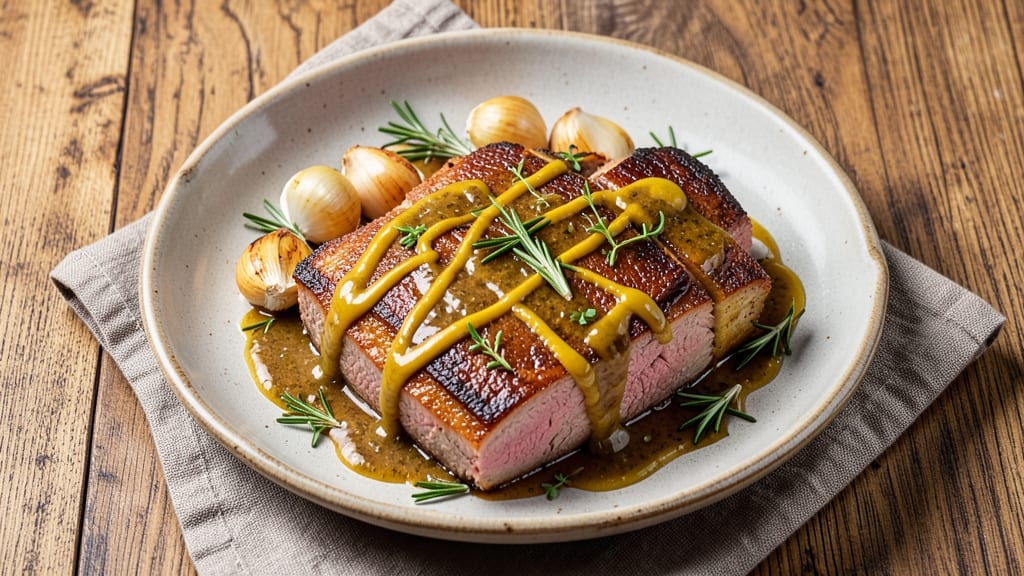
A 1lb pork loin recipe that delivers juicy pink hearts and a crisp herb crust is the perfect balance of restaurant-quality and home-cooking simplicity. I've perfected this technique after years of cooking pork for crowds at The Smoky Pig, where we process thousands of pounds weekly.
The secret lies in precise timing, proper seasoning, and understanding when to pull the pork from the heat.
This herb-crusted roast transforms a simple cut of pork into something extraordinary with just a handful of ingredients: fresh rosemary, thyme, garlic, and Dijon mustard for depth. The crust forms a flavorful bark while the center maintains that coveted juicy pink—never dry.
We're talking about a 145°F internal temperature achieved through careful monitoring, not guessing.
What you'll end up with is a tender, flavorful pork loin that slices beautifully and delivers melt-in-your-mouth texture with every bite. The herb crust adds aromatic complexity while keeping the preparation straightforward—no fancy equipment required. This is the kind of pork roast that elevates weeknight dinners to special occasion status.
Serve with roasted root vegetables or a crisp apple salad to complement the pork's rich flavors. The leftovers reheat beautifully for sandwiches the next day. Let's get cooking—this recipe delivers restaurant-quality results at home.
Ingredients for 1lb pork loin
Restaurant-quality pork loin starts with this precise ingredient lineup for juicy pink hearts and aromatic herb crust.
| Ingredient | Amount | Notes |
|---|---|---|
| Bone-In Pork Loin 🐖 | 1 lb | Center-cut, 1-inch thick |
| Fresh Rosemary 🌿 | ¼ cup | Finely chopped, stems removed |
| Fresh Thyme 🌿 | ¼ cup | Leaves only, stems discarded |
| Garlic Cloves 🧄 | 6 cloves | Minced, skin-on preferred |
| Dijon Mustard 🍯 | 2 tbsp | High-quality, no additives |
| Extra-Virgin Olive Oil 🫒 | 2 tbsp | For crust and basting |
| Kosher Salt 🧂 | 1 ½ tsp | Diamond Crystal preferred |
| Freshly Ground Black Pepper 🌶️ | 1 tsp | Coarse grind for texture |
| Unsalted Butter 🧈 | 2 tbsp | Cold, cubed for crust |
| Honey 🍯 | 1 tbsp | For glaze, optional |
| Apple Cider Vinegar 🍎 | 1 tbsp | For basting liquid |
The bone-in pork loin is non-negotiable—it retains moisture better than boneless cuts. Look for center-cut with visible marbling at Whole Foods or your butcher's counter. A 1-inch thickness ensures even cooking. For herbs, Trader Joe's carries excellent fresh rosemary and thyme in small bundles—perfect for this recipe. The Dijon mustard should be 100% mustard seed with no additives; Maille or Amora are excellent choices. If using pre-minced garlic, mash it to release more flavor—fresh minced is ideal but not mandatory.
No fresh rosemary? Dried at one-third the amount works, but fresh delivers that bright, piney aroma critical for the crust. Substituting olive oil? Stick with extra-virgin—cheaper varieties lack the fruity depth needed for basting. The honey glaze is optional but recommended for a subtle sweetness that balances the herbs. For apple cider vinegar, Bragg or local orchard brands provide the best acidity. If you're short on time, pre-chop the herbs and store them in the fridge for up to 3 days—just keep them dry in a sealed container.
The pork loin should rest at room temperature for 30 minutes before cooking—never skip this step. Store any leftover herbs wrapped in damp paper towels for 5-7 days, or freeze them in ice cube trays with olive oil for 3 months. The crust mixture (butter, herbs, garlic) can be prepped a day ahead and refrigerated. For reheating, slice the pork and warm in a 350°F oven for 10-15 minutes with a splash of broth to maintain moisture. Portion leftovers into airtight containers for 3-4 days of fridge storage.
Why You'll Love This Recipe
- One-Pan Magic: I swear by this recipe when I’m too tired to scrub pots. The bone-in pork roasts right alongside the garlic and herbs—no flipping, no fuss—just golden crust and juicy meat that practically carves itself.
- Herb-Packed Punch: That combo of fresh rosemary and thyme with Dijon mustard? It’s like a flavor hug for your taste buds. The crust gets nutty and aromatic while the inside stays tender—no dry pork in sight.
- Leftovers That Don’t Suck: This recipe makes enough for dinner and tomorrow’s lunch. Slice it thin for sandwiches or toss it into salads—it’s so good cold that my kids actually eat their veggies when it’s involved.
- Budget-Friendly Luxury: A single pork loin feeds four without breaking the bank, and the herbs stretch farther than you’d think. Honestly, it’s the kind of meal that makes you feel fancy without the restaurant price tag.
Step-by-step instructions for herb-crusted pork loin roast
Master this technique and you'll achieve a perfectly juicy, herb-encrusted pork loin with a golden crust every time.
Prepare the Herb Crust Mixture
In a small bowl, combine the 0.25 cup fresh rosemary and 0.25 cup fresh thyme leaves. Add the 6 minced garlic cloves, 2 tablespoons Dijon mustard, 2 tablespoons extra-virgin olive oil, 1.5 teaspoons kosher salt, and 1 teaspoon freshly ground black pepper. Mix thoroughly until the herbs are evenly distributed and the oil forms a loose paste. This herb mixture will create both flavor and texture—press it firmly into the meat for maximum adhesion.
I like to use a fork to gently crush the herbs slightly, releasing their essential oils. This ensures the flavors infuse deeply into the pork during roasting. Set this mixture aside while you prepare the meat.
Create the Pork Loin Crust
Pat the 1 lb bone-in pork loin completely dry with paper towels—this is crucial for developing that crispy crust. The drier the surface, the better the crust will form. Place the pork on a cutting board and make small slashes about ¼-inch deep across the meat in a diamond pattern. This allows the seasoning to penetrate deeper and creates more surface area for browning.
Rub the herb mixture all over the pork, pressing firmly so it adheres to the slashed surface. Then, roll the pork in the 2 tablespoons cold unsalted butter until fully coated. The butter will melt during roasting, basting the meat and creating that golden, flavorful crust we're after. Place the pork on a rack set inside a rimmed baking sheet.
Roast to Perfect Medium-Rare
Preheat your oven to 425°F. Roast the pork loin for 20-25 minutes until the internal temperature reaches 140°F on a meat thermometer inserted into the thickest part of the meat. This temperature ensures the pork remains juicy with pink centers—what we call "medium-rare" for pork. The crust should be golden brown and crispy, with the herbs releasing their aromatic oils.
Here's the thing—pork continues cooking after you remove it from the oven. The residual heat will carry it to 145°F (the USDA recommended minimum safe temperature), but we want those juicy pink hearts. Don't overcook; the meat will firm up as it rests.
Create the Honey-Glaze Basting Liquid
While the pork rests, combine the 1 tablespoon honey and 1 tablespoon apple cider vinegar in a small saucepan. Heat over medium-low heat until the honey dissolves completely and the mixture reaches a gentle simmer. This glaze will add sweetness and shine to the finished roast. Keep it warm while you prepare to baste.
I like to add a splash of the pork's drippings to the glaze for extra depth of flavor. The vinegar helps cut through the richness of the pork, creating a balanced sweet-tangy finish. This step is optional but recommended for that restaurant-quality touch.
Rest and Baste for Maximum Juiciness
Transfer the pork to a cutting board and tent loosely with aluminum foil. Let it rest for 15-20 minutes—this is where the magic happens. The juices redistribute throughout the meat, ensuring each slice remains moist and flavorful. During this time, baste the pork with the honey-vinegar glaze every 5 minutes for a glossy finish.
Slice the pork against the grain into ½-inch thick portions. Each slice should reveal a beautiful pink center with a crispy herb-encrusted exterior. Serve immediately with the pan drippings reduced into a quick sauce if desired. The result is a perfectly balanced roast with herbaceous depth, sweet glaze, and that coveted juicy texture.
Pro Tips For Making 1lb Pork Loin
- SEAR THE BONE FIRST: That bone-in pork loin won’t brown evenly if you just throw it in cold. Heat your pan until it’s smoking hot—like, almost burning-hot—and lay the loin bone-side down first. Let it sear for 3-4 minutes until deep golden brown forms on the bone and edges. I used to rush this, and the crust always came out patchy. This step locks in flavor before you even add herbs.
- CHOP HERBS COARSELY: Tiny herb bits burn or turn to mush in high heat. Roughly chop rosemary and thyme into ¼-inch pieces—big enough to see, small enough to taste. And skip the stems unless you’re desperate; they’re tough and add bitterness. My grandmother swore by this, and she was right: the leaves release aroma better when they’ve got room to breathe.
- DON’T OVERWORK THE MUSTARD: Dijon mustard is your glue, but too much makes the crust soggy. Stick to 1-2 tablespoons max for a 1lb loin—just enough to lightly coat the meat before roasting. Spread it thin with your fingers, then pat it in gently. I learned this the hard way after slathering a thick layer and ending up with a sticky mess instead of a crisp crust.
- REST IT UNDER FOIL: Cutting into that juicy pork loin too soon turns it into a sad, dry pile. As soon as it hits 145°F (or your preferred temp), transfer it to a cutting board, tent loosely with foil, and let it sit for 5-10 minutes. The bone keeps the center warm while the meat reabsorbs juices—no more dry slices. (Yes, even if you’re impatient like me.)
Wine and beer pairings for this recipe
Red Wine Pairings
For this herb-crusted pork loin, I always reach for a dry red wine with enough acidity to complement the richness. A Pinot Noir from Oregon or Burgundy is my go-to—its bright cherry notes and subtle earthiness mirror the rosemary and thyme in the crust.
The acidity cuts through the pork's fat beautifully. 🍷
If you prefer something bolder, try a Cabernet Sauvignon from Napa Valley with its dark fruit and structured tannins. The tannins help cleanse your palate between bites, while the fruitiness balances the herbaceous crust.
For a lighter option, a Gamay from Beaujolais delivers vibrant red fruit flavors that pair wonderfully with the honey glaze.
White Wine Options
Surprisingly, a crisp Chardonnay works beautifully with this dish, especially if you prefer white wine. Look for one from California's Sonoma Coast with its citrus and mineral notes—these complement the pork's savory depth without overpowering it. The slight acidity helps refresh your palate between rich bites.
For something more aromatic, try a Viognier with its floral and stone fruit notes. The floral elements play nicely with the rosemary and thyme, while the fruitiness balances the pork's richness. I often serve this with a Viognier from Condrieu when I'm feeling fancy.
Beer Pairings
A Belgian Witbier like Hoegaarden is my favorite beer pairing—its coriander and citrus notes create a refreshing contrast to the pork's richness. The slight tartness helps cut through the fat, while the effervescence cleanses your palate.
For a darker option, try a Belgian Dubbel like Westmalle Dubbel, which offers caramel and spice notes that complement the honey glaze.
If you prefer American craft beers, a hazy IPA with its juicy hop flavors works surprisingly well. The bitterness balances the pork's richness, while the fruitiness echoes the honey glaze. For a lighter option, a German Helles Lager provides a crisp, clean finish that lets the pork's flavors shine.
Regional Recommendations
In the Southeast, where I grew up, we often paired pork with sweet tea or a local Georgia wine like Saperavi. The bold red fruit flavors stand up to the herb crust beautifully.
For a casual gathering, a local craft beer from Atlanta like SweetWater 420 IPA adds a fun twist.
In Charleston, where I apprenticed, we favored French Bordeaux with its earthy notes and structured tannins. The wine's age and complexity matched the sophistication of the dish. For a modern twist, try a Spanish Garnacha with its spicy, fruity profile—it's become a favorite at The Smoky Pig.
Nutrition facts
Frequently asked questions
Why does your recipe call for a bone-in pork loin?
The bone acts as a natural insulator, helping the pork cook more evenly and retain moisture better than boneless cuts. The bone also adds flavor during roasting, creating a richer end result. For a 1lb portion, the bone-in cut is perfect for achieving that juicy pink center while developing a flavorful crust.
Can I substitute fresh herbs with dried ones? Yes, but use one-third the amount of dried herbs compared to fresh. For example, replace the 0.25 cup fresh rosemary with just 1 tablespoon dried. Fresh herbs deliver brighter flavor and better texture for the crust, but dried works in a pinch. Just
What's the best way to slice the pork for maximum tenderness?
Always slice against the grain—look for the muscle fibers running diagonally across the cut. Using a very sharp knife, make ½-inch thick slices at a 45-degree angle for maximum surface area and presentation. This technique shortens the muscle fibers, making each bite more tender. A good butcher's knife or electric knife works best for clean slices.
How do I adjust cooking time if my oven runs hot or cold?
Oven temperature variations are common! If your oven runs hot, reduce the temperature by 25°F (to 400°F) and add 5-10 minutes to the cooking time. For cold ovens, increase by 25°F (to 450°F) and reduce time by 5 minutes. Always use a meat thermometer to check the 140°F internal temperature—don't rely solely on time.
What's the best way to reheat leftover pork loin?
Slice the pork into ½-inch thick portions and reheat in a 350°F oven for 10-15 minutes with a splash of broth or apple cider. For microwave reheating, cover with a damp paper towel and heat in 30-second intervals until warmed through. Never exceed 165°F—overheating makes pork dry and tough. Store leftovers in airtight containers for up to 3-4 days.