
Main Courses
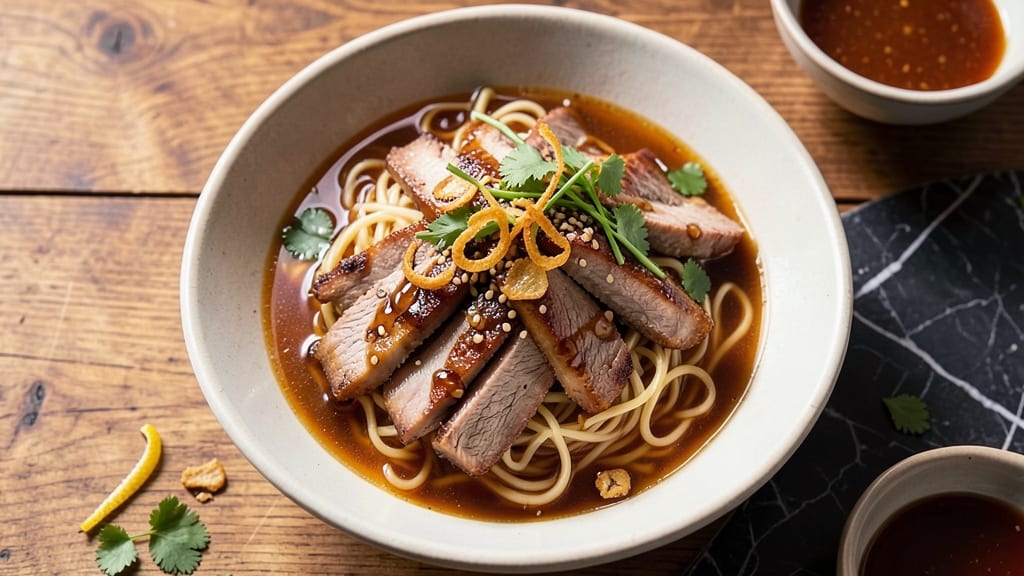
This BBQ pork ramen recipe transforms a classic comfort dish into a smoky, spice-crusted masterpiece that balances rich pork with bright tamarind glaze. 🔥 As a pitmaster trained in French techniques, I've perfected the art of marrying tender, caramelized pork with ramen's umami depth—creating a dish that's both restaurant-worthy and deeply satisfying.
The secret lies in slow-cooking the pork until it practically melts, then finishing it with a sticky tamarind glaze that cuts through the richness while adding a tangy sweetness that lingers on the palate.
The magic begins with the pork—whether you choose to braise it overnight or sear it quickly over hardwood coals, the goal is the same: tender meat with a crust that crackles with every bite.
While the pork develops its deep flavor, we build a ramen broth that's rich yet balanced, using a combination of miso, chicken stock, and aromatics that complement rather than overpower the pork's smoky profile.
The tamarind glaze, made with just a few pantry staples, is the final touch that transforms this into something truly special.
When everything comes together, you'll have a bowl that's impossible to resist: silky ramen noodles cradling tender pork slices, all enveloped in a glossy glaze that glistens under the light.
The contrast of textures—crispy pork crust against tender noodles, the slight bite of tamarind against the pork's richness—makes every spoonful a revelation. This isn't just ramen; it's a full sensory experience that brings the smoky warmth of a BBQ pit to your dinner table.
Perfect for weeknight dinners or weekend gatherings, this recipe scales beautifully while maintaining its depth of flavor. Whether you're serving it to a crowd or treating yourself to a solo indulgence, the combination of techniques ensures that each bite delivers that perfect balance of smoky, spicy, and sweet.
Let's get cooking—your taste buds will thank you.
Ingredients for bbq pork ramen
Pork shoulder, miso, tamarind, and smoky spices—this is your smoky ramen game-changer.
| Ingredient | Amount | Notes |
|---|---|---|
| Boneless Pork Shoulder 🥓 | 2 lb | Cut into 1-inch cubes, bone-in preferred |
| Ramen Noodles 🍜 | 2 packages | Fresh or dried, 8 oz each |
| Chicken Stock 💧 | 4 cups | Homemade or high-quality low-sodium |
| White Miso Paste 🧂 | 2 tbsp | For umami depth, don't substitute |
| Tamarind Paste 🍯 | ½ cup | Or tamarind concentrate, not tamarind blocks |
| Brown Sugar 🍚 | ¼ cup | Light or dark, packed |
| Apple Cider Vinegar 🍎 | 2 tbsp | For tangy brightness |
| Garlic Cloves 🧄 | 6 cloves | Minced, fresh for best flavor |
| Fresh Ginger 🌿 | 2 tbsp | Grated, aromatic and zesty |
| Sesame Oil 🫒 | 1 tbsp | Toasted, for finishing |
| Green Onions 🧅 | 3 whole | Sliced, for garnish |
| Sesame Seeds 🌰 | 1 tbsp | Toasted, for crunch |
| Smoked Paprika 🌶️ | 1 tbsp | For smoky depth, not sweet |
| Ground Black Pepper 🌶️ | 1 tsp | Freshly cracked |
| Vegetable Oil 🫒 | 2 tbsp | For searing pork |
The pork shoulder is your flavor anchor. Look for bone-in cuts at Whole Foods or your local butcher—the bones add depth to the broth. If you're short on time, Costco's pre-cut pork shoulder works perfectly. For that signature smoky crust, don't skip the smoked paprika—it's what bridges the BBQ and ramen worlds. Fresh ginger and garlic are non-negotiable here; frozen just won't cut it. I always buy extra ginger because it keeps for weeks in the freezer, and you'll want it for future projects too.
No tamarind paste? Substitute 3 tbsp lime juice plus 1 tbsp brown sugar—it won't be identical, but it'll work in a pinch. Miso paste can be tricky; White Diamond or Hikari brands are reliable. The ramen noodles? Fresh is ideal, but dried works fine if you cook them separately. For the glaze, if you can't find tamarind paste, Trader Joe's tamarind concentrate is a solid backup. The brown sugar can be swapped for coconut sugar if you're avoiding refined sugar, but it'll have a slightly different caramelization. And if you're feeling adventurous, swap half the chicken stock for pork bone broth for even more depth.
This dish tastes even better the next day—honestly, the flavors meld overnight like magic. Store the broth and pork separately in airtight containers for up to 5 days. The tamarind glaze keeps for 2 weeks in the fridge, so make extra. For the noodles, cook them fresh when serving or store them separately in the fridge for 3 days. Pro tip: Assemble the bowls just before eating so the noodles stay al dente. The pork? It reheats beautifully—just warm it gently with a splash of broth.
Why You'll Love This Recipe
- One-Pot Magic: I swear by this recipe when I’m too tired to dirty multiple pans. Toss the pork shoulder in the same pot where you’ll simmer the broth—no extra dishes, just rich, smoky flavors melting together.
- Sweet-Savory Bomb: That tamarind paste and miso combo? It’s the secret weapon here. The pork gets sticky and caramelized, while the broth balances smoky-sweet with a deep umami punch—like a hug in a bowl.
- Weeknight or Party: Make a double batch on Sunday and freeze half. It’s my go-to for lazy nights (microwave-friendly!) or when friends drop by unexpectedly—just reheat and serve with a sprinkle of green onions.
- Budget Stretch: Pork shoulder is cheap, and this recipe feeds four for under $15. The miso and tamarind might sound fancy, but a little goes a long way—plus, the leftovers taste even better the next day, cold or reheated.
Step-by-step instructions for BBQ pork ramen with tamarind glow
Here's how to transform simple ingredients into a smoky, sticky ramen masterpiece.
🔥 Step 1: Build the Smoky Pork Base
Heat the 2 tablespoons vegetable oil in a large Dutch oven over medium-high heat until shimmering. Add the 2 lb boneless pork shoulder cut into 1-inch cubes, working in batches if needed to avoid crowding. Let the pork sear undisturbed for 3-4 minutes per side until it develops a deep golden crust.
Once browned, sprinkle with 1 tablespoon smoked paprika and 1 teaspoon ground black pepper, stirring just to coat. Remove the pork and set aside. In the same pot, add 6 cloves minced garlic and 2 tablespoons grated fresh ginger, cooking for 30 seconds until fragrant but not browned.
🍳 Step 2: Create the Tamarind-Brown Sugar Glaze
Reduce heat to medium-low and stir in the 0.5 cup tamarind paste and 0.25 cup brown sugar until dissolved, about 2 minutes. Pour in the 4 cups chicken stock and 2 tablespoons apple cider vinegar, scraping up any browned bits from the bottom of the pot.
Return the pork to the pot, add the 2 tablespoons white miso paste, and bring to a gentle simmer. Cover partially and cook for 1.5 hours, stirring occasionally, until the pork is fork-tender and the sauce has thickened to a glossy consistency. You're aiming for a sauce that coats the back of a spoon with a perfect balance of sweet, tangy, and smoky flavors.
🥘 Step 3: Prepare the Ramen Noodles
While the pork simmers, cook the 2 packages ramen noodles according to package instructions until al dente. Drain and rinse briefly under cold water to stop the cooking process, then toss with 1 tablespoon toasted sesame oil to prevent sticking.
Divide the cooked noodles among four bowls. Ladle the pork and sauce over the noodles, ensuring each serving gets generous portions of both. The pork should be falling apart slightly, and the sauce should be thick enough to cling to every strand of noodle.
🍽️ Step 4: Finish with Crunchy Toppings
Garnish each bowl with 3 whole sliced green onions and 1 tablespoon toasted sesame seeds. Drizzle with an additional ½ teaspoon toasted sesame oil per bowl to enhance the nutty aroma. The contrast of crispy toppings against the creamy, smoky ramen creates the perfect textural experience.
Serve immediately while the pork is still warm and the noodles maintain their satisfying bite. The tamarind glaze should be slightly sticky, clinging beautifully to both the pork and noodles, while the smoky paprika adds depth to every flavorful bite. This ramen delivers comfort food perfection with restaurant-quality depth.
Pro Tips For Making Bbq Pork Ramen
- Render Fat First: Trim the pork shoulder before seasoning and sear it fat-side down in a cold pan—this renders the fat slowly and keeps it from splattering everywhere. I used to skip this, and my broth always turned greasy instead of rich.
- Miso Paste Control: White miso burns fast, so mix it into the hot broth last—just 30 seconds before serving. Stir it in while the broth is still simmering, then immediately turn off the heat. I learned this after a batch of bitter, overcooked miso ruined my ramen.
- Tamarind Paste Trick: Tamarind paste clumps like glue, so dissolve it in a splash of warm water first, then whisk it into the broth. This keeps it smooth and prevents weird stringy bits in your soup—no one wants to fish out tamarind gunk.
- Noodle Timing Hack: Cook the ramen noodles just until al dente, then shock them in ice water for 30 seconds—this stops them from turning mushy when they hit the hot broth. I used to overcook them, and they’d turn to paste in the soup.
Storing and reheating your leftovers
Broth Storage Secrets
The pork broth is the heart of this dish, so store it properly in an airtight glass container—I love Le Parfait jars for their tight seals.
Let it cool to room temperature first (about 1 hour), then refrigerate for up to 5 days or freeze for 3 months. The flavors actually deepen overnight, so I often make extra for leftovers.
Just reheat gently on the stove with a splash of water if it thickens too much. 💧
Pork Reheating Mastery
Reheat pork in the same Dutch oven you cooked it in—place it in a single layer and cover with broth or water. Warm over medium-low heat for 10-15 minutes, stirring occasionally, until it reaches 165°F internal temperature.
Avoid microwaving; it turns the pork rubbery. For extra richness, add 1-2 tbsp of the tamarind glaze while reheating. The glaze will melt beautifully into the pork juices. 🔥
Noodle Preservation
Cooked ramen noodles last 3 days in the fridge if stored in airtight containers with a splash of water to prevent drying. For longer storage, freeze them for 2 months—just thaw in cold water before reheating.
To maintain texture, undercook by 1 minute when boiling fresh. When reheating frozen noodles, simmer in hot broth (not cold water) for 3-4 minutes until heated through. 🥗
Glaze Make-Ahead
Make the tamarind glaze 2 days ahead—it tastes even better after flavors meld. Store in a small jar in the fridge. When reheating, warm it gently in a saucepan over low heat for 3-4 minutes, stirring constantly.
If it thickens too much, thin with 1 tsp water. The glaze adds that perfect sticky contrast to the pork, so don't skip it! 🍯
Complete Bowl Assembly
Assemble bowls just before serving to keep noodles al dente. Reheat noodles separately in hot broth for 1 minute, then top with warmed pork and glaze. The contrast of crispy sesame seeds and cool green onions against warm pork is what makes this dish sing.
For extra convenience, store all components separately and assemble when ready to eat. 🍽️
Freezer-Friendly Packing
For ultimate convenience, freeze individual portions in ziplock bags with noodles, pork, and sauce separated by parchment paper. Thaw overnight in the fridge, then reheat all components together in a pot for 5-7 minutes.
This method keeps textures perfect—no soggy noodles or dry pork. Just add fresh toppings before serving. ❄️
Nutrition facts
Frequently asked questions
Can I use pre-cooked BBQ pork instead of making it from scratch?
Store-bought BBQ pork works perfectly—just slice it thinly and reheat it with 1-2 tablespoons of the tamarind glaze to refresh the flavors. For best results, choose pork with a smoky, slightly sticky sauce. If it's too dry, add a splash of broth while reheating to restore moisture.
How do I adjust this recipe for a gluten-free diet?
Swap the regular ramen noodles for gluten-free ramen or rice noodles, and ensure your miso paste is certified gluten-free. The tamarind glaze and pork remain safe as-is. Double-check all seasonings (like soy sauce in BBQ sauces) for hidden gluten.
What's the best way to make this recipe spicier?
Add ½ teaspoon red pepper flakes to the pork while searing, or stir 1 tablespoon sriracha into the tamarind glaze. For heat lovers, top each bowl with chopped jalapeños or a dash of gochujang before serving.
Can I make this recipe in an Instant Pot?
Yes! Sear the pork first in a skillet, then transfer to the Instant Pot with all broth ingredients. Cook on high pressure for 30 minutes, then release pressure naturally. Finish with the tamarind glaze on the stovetop. The pork will be tender but slightly less caramelized than oven-braised.
Why is my tamarind glaze too thick?
Simmer the glaze longer to reduce it further, or thin it with 1 teaspoon water at a time while stirring constantly. If it's too sweet, balance it with ½ teaspoon apple cider vinegar. The glaze should coat the back of a spoon but remain pourable.