
Main Courses
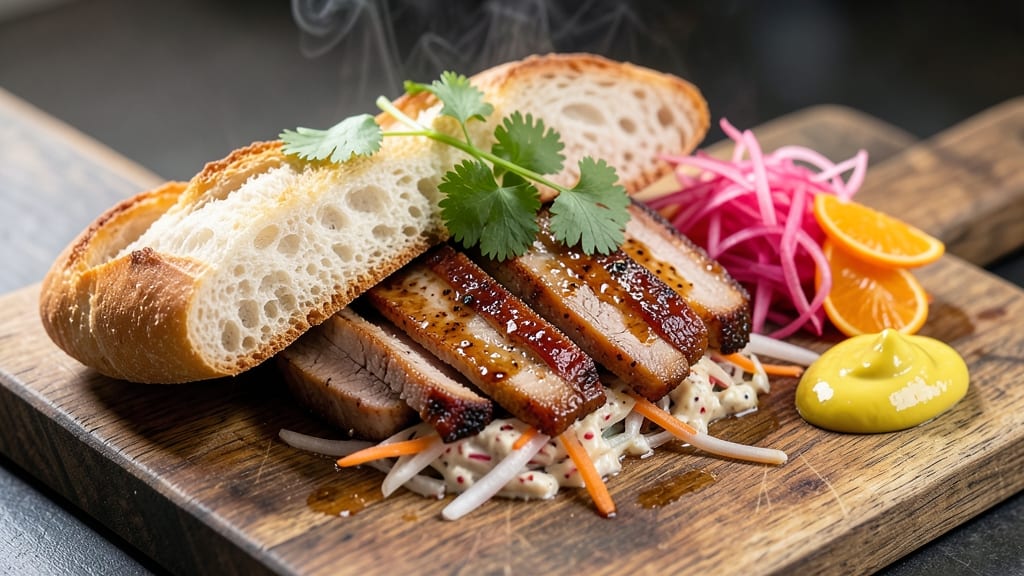
This authentic pork belly banh mi brings Vietnam's bold flavors straight to your kitchen table. 🔥 The secret lies in a crispy five-spice crust that crackles with every bite, paired with tangy pickled daikon-carrot and fresh cilantro.
I've perfected this recipe after years of studying Vietnamese street food, balancing sweet, salty, and umami in each sandwich.
The process starts with marinating pork belly in five-spice powder and fish sauce, then slow-roasting until the skin becomes golden and shatteringly crisp. Meanwhile, traditional baguettes toast to achieve that perfect crunch, while homemade pickles add the signature tang.
Every element comes together to create a sandwich that's as visually stunning as it is delicious.
What makes this recipe special is the attention to authenticity—from the crispy pork belly that falls apart at the touch to the fresh herbs and jalapeños that add brightness. The result is a sandwich that tastes like a trip to Saigon, with layers of flavor in every bite.
This is the banh mi I've been dreaming of making at home.
Perfect for lunch gatherings or a satisfying solo meal, this recipe delivers restaurant-quality results with simple techniques. Let's get started on creating your own Vietnamese masterpiece.
Ingredients for authentic pork belly banh mi
Pork belly, five-spice magic, and crispy baguettes—this is your Vietnamese street food dream list.
| Ingredient | Amount | Notes |
|---|---|---|
| Pork Belly 🥓 | 1 ½ lb | Skin-on, fatty cut for crispiness |
| Five-Spice Powder 🌶️ | 2 tbsp | Authentic Vietnamese blend |
| Fish Sauce 🍶 | 3 tbsp | Red Boat brand preferred |
| Daikon Radish 🥕 | 1 whole | Julienned for pickles |
| Carrots 🥕 | 1 whole | Julienned for pickles |
| White Vinegar 💧 | ½ cup | For tangy pickled daikon |
| Granulated Sugar 🍚 | ¼ cup | For pickle balance |
| Fresh Cilantro 🌿 | ½ cup | Chopped for garnish |
| Fresh Jalapeños 🌶️ | 2 whole | Thinly sliced for heat |
| Baguette Rolls 🍞 | 4 whole | Traditional French baguettes |
| Mayonnaise 🥛 | ½ cup | For spread consistency |
| Yellow Mustard 🟡 | ¼ cup | For tangy balance |
| Lime Juice 🍋 | ¼ cup | Freshly squeezed |
| Olive Oil 🫒 | 2 tbsp | For pork belly roasting |
| Salt 🧂 | 1 tsp | Kosher or sea salt |
The pork belly is non-negotiable for that signature crisp. Grab a thick-cut piece from Whole Foods or your local butcher—look for good marbling. Red Boat fish sauce is the gold standard, but any quality brand works. Five-spice powder should say 'Vietnamese' on the label if you're hunting for authenticity. I've used Penzeys for years, but the bulk bins at Asian markets often have better blends. Don't skip the skin—it's what gets beautifully crispy when roasted. If you can't find pork belly, pork shoulder with extra fat is a decent backup, but it won't be as crisp.
No daikon radish? Extra carrots or jicama work in a pinch, but the texture won't be identical. The pickled daikon needs to sit for at least 4 hours—overnight is ideal. For the baguettes, Trader Joe's has excellent frozen ones that toast perfectly. Fresh baguettes from a bakery are better, but frozen saves time. The mayo-mustard spread can be made ahead—it keeps for 3 days in the fridge. Want more heat? Add 1 tbsp sriracha to the spread. The jalapeños should be fresh, not jarred—they add brightness that canned peppers can't match.
Pork belly keeps 3 days in the fridge once roasted—store it wrapped tightly in foil. The pickled daikon lasts 1 week> in the fridge, though it gets tangier over time. Baguettes? Toast them fresh the morning you serve. The spread keeps 5 days refrigerated. For a crowd, double the pork belly and pickles—this sandwich builds fast, so prep components ahead. The crispy pork stays best at room temperature for 1 hour after roasting, so plan accordingly.
Why You'll Love This Recipe
- One-Pan Magic: The pork belly crisps up while the pickled daikon and carrots soften—no flipping, no fuss. I swear by the five-spice powder here; it’s the secret that turns simple pork into something irresistible without extra effort.
- Crispy-Creamy Obsession: That first bite of caramelized pork belly—crunchy on the outside, tender inside—paired with the bright tang of fish sauce and daikon? It’s the kind of combo that makes you close your eyes and take a second helping.
- Lunchbox Legend: Pack the leftovers for days—no soggy sandwiches here. The pork stays juicy, the pickles hold their crunch, and honestly? My kids would rather eat this than any sad cafeteria lunch.
- Budget Powerhouse: Pork belly stretches further than you’d think, and a little fish sauce goes a long way. I’ve fed a crowd for under $15, and everyone leaves happy—no takeout regrets.
Step-by-step instructions for authentic pork belly banh mi
Here's how to transform fatty pork belly into crispy, aromatic slices that steal the show.
🔥 Step 1: Render the Pork Belly Until Crispy
Preheat your oven to 425°F. Line a baking sheet with heavy-duty foil and place a wire rack on top. Score the 1.5 lb pork belly in a diamond pattern with a sharp knife, cutting through the fat but not the meat. Rub all over with 2 tbsp five-spice powder and 1 tsp salt, pressing it into the crevices.
Place the pork belly fat-side down on the rack and roast for 45 minutes. Flip it over and reduce heat to 375°F. Continue roasting for another 45 minutes until the skin is deep golden brown and crispy enough to crackle when touched. The internal temperature should reach 145°F—this ensures tender meat while keeping the fat perfectly rendered.
Let it rest for 30 minutes before slicing. This resting period allows the fat to set, making it easier to slice cleanly. Use a sharp knife to cut against the grain into ¼-inch thick slices—you should get about 16 slices total. The crispy skin will shatter slightly, releasing that intoxicating five-spice aroma.
👨🍳 Step 2: Prepare the Tangy Pickled Daikon
While the pork belly rests, julienne the 1 whole daikon radish and 1 whole carrot into thin matchsticks. In a small bowl, whisk together 0.5 cup white vinegar, 0.25 cup granulated sugar, and 1 tbsp fish sauce. The sugar should dissolve completely—if not, gently warm the mixture until clear.
Add the julienned vegetables to the vinegar mixture and toss to coat evenly. Let it marinate for at least 30 minutes at room temperature. The pickles should soften slightly and develop a beautiful pinkish hue from the carrot. For best flavor, make this up to 2 hours ahead—it only gets better with time.
Drain before using, reserving the pickling liquid. You'll have about 2 cups of pickled vegetables. The tangy-sweet balance is what makes banh mi irresistible—don't skip this step!
🥘 Step 3: Assemble the Perfect Sandwich
Toast the 4 whole baguette rolls lightly until they're warm and slightly crisp. In a small bowl, whisk together 0.5 cup mayonnaise, 0.25 cup yellow mustard, and 0.25 cup lime juice until smooth. This spread should be creamy with a bright, tangy kick.
Spread about 1 tbsp of the mayo mixture on each baguette roll. Layer with 4 slices of crispy pork belly per sandwich. Add about ½ cup of the pickled daikon mixture and 2 thin slices of fresh jalapeños to each roll. The jalapeños should be seeded if you prefer less heat.
Top with 2 tbsp of chopped fresh cilantro per sandwich. The cilantro adds freshness that cuts through the richness of the pork belly. Press gently to compress the sandwich—this helps all the flavors meld together beautifully.
🍽️ Step 4: Serve with Confidence
Cut each sandwich diagonally in half and serve immediately. The contrast of textures is what makes this banh mi extraordinary: crispy pork belly skin, tender meat, crunchy pickled vegetables, and soft baguette all come together in every bite.
For an authentic experience, serve with extra pickled daikon on the side and a small bowl of the reserved pickling liquid for dipping. The five-spice powder on the pork belly should still be visible and aromatic—this is your quality marker. Each bite should deliver a perfect harmony of sweet, tangy, spicy, and umami flavors that define Vietnamese street food.
Pro Tips For Making Authentic Pork Belly Banh Mi
- CRISP THE BELLY FIRST: I learned this the hard way—skipping the initial sear means your pork belly stays greasy and underwhelming. Pat it bone-dry with paper towels, then hit it with a screaming-hot pan (no oil needed) until the fat renders and the skin turns deep golden. That’s your flavor foundation.
- CURE THE DAIKON RIGHT: Daikon’s texture makes or breaks a banh mi. Use a mandoline for even slices (no, a knife won’t cut it), then soak them in ice water for 10 minutes—this stops them from turning mealy. Drain well and pat dry; soggy radish = sad sandwich.
- DON’T OVERMIX THE MARINADE: Five-spice powder and fish sauce need love, but too much tossing turns the pork belly into mush. Rub the marinade into the skin in one direction—like you’re polishing a car—then let it sit uncovered in the fridge for at least 4 hours. The skin should be sticky but not swimming.
- REST THE PORK TWICE: First, rest it after roasting (20 minutes, foil tented). Then, before slicing, let it sit another 10 minutes at room temp. I know, it’s annoying, but cold pork belly fights the knife like a stubborn toddler. Warm slices stay juicy and slice cleanly—no tugging or tearing.
Common mistakes when making perfect results
Overcooking Pork Belly
One of the biggest mistakes is roasting the pork belly too long, which turns the fat greasy instead of crispy. I've seen this happen when people don't monitor the internal temperature closely. The pork belly should reach 145°F—any hotter and the fat becomes rubbery.
Use a meat thermometer to check the thickest part of the meat, not the fat. If you're unsure, err on the side of slightly underdone—you can always finish it in a hot pan later. 🌡️
Skipping the Resting Time
Rushing to slice the pork belly immediately after roasting is a recipe for disaster. The fat needs 30 minutes to firm up so it slices cleanly and stays crisp. I learned this the hard way when I tried to slice it right away—it turned into a greasy mess.
Trust me, the extra waiting time is worth it for that perfect shatteringly crisp skin.
Using the Wrong Baguette
Not all baguettes are created equal for banh mi. Store-bought soft rolls won't give you that authentic crunch. Look for traditional French baguettes with a crisp crust—Trader Joe's frozen ones work in a pinch, but fresh is always better.
If you can't find the right bread, toast your regular baguette until it's extra crispy before assembling the sandwiches.
Over-Pickling the Vegetables
Leaving the pickled daikon and carrots too long in the vinegar solution makes them too soft and mushy. The ideal time is 30 minutes to 2 hours—any longer and they lose their crunch.
I usually make mine the night before and let it sit overnight, but I drain them well before using. The sweet-tangy balance is what makes banh mi special, so don't overdo the acidity.
Uneven Pork Belly Slicing
Cutting the pork belly against the grain is crucial, but many people don't score it properly before roasting. Use a sharp knife to make a diamond pattern through the fat, not the meat. This helps render the fat evenly and creates those beautiful crispy slices.
If you skip this step, you'll end up with uneven cooking and less crispiness. A sharp chef's knife makes all the difference here.
Ignoring the Five-Spice Powder
The five-spice powder is the soul of this dish—don't use just any blend! Look for a Vietnamese-specific mix that includes star anise, clove, cinnamon, fennel, and Szechuan peppercorn. I've tried generic blends, and they just don't deliver the same aromatic punch.
Rub it generously into the pork belly and press it into the crevices so every bite is flavorful. 🌶️
Nutrition facts
Frequently asked questions
Why does the pork belly need to rest after roasting?
The 30-minute rest lets the fat firm up so it slices cleanly and stays crispy, not greasy. Skipping this step means your pork belly will turn into a messy, oily pile instead of those perfect shatteringly crisp slices you want in every banh mi.
Can I make the pickled daikon ahead of time?
Make the pickled daikon up to 2 days ahead—it actually gets better as the flavors develop. Store it in the fridge in its pickling liquid, and drain well before using. The longer it sits, the more tangy and flavorful it becomes, but don't let it sit too long or it'll get mushy.
What if I can't find traditional baguettes?
Use the next best thing: a crusty French baguette or even a hoagie roll if that's what you have. Toast it until it's crispy, or even lightly char the outside for extra authenticity. The key is getting that perfect crunch—no soft rolls here!
How do I make the pork belly extra crispy?
Roast it fat-side down first on a wire rack to render the fat properly. Flip it halfway through cooking, and don't overcrowd the pan. For even more crispiness, finish it under a broiler for 2-3 minutes at the end to get that deep golden color.
Can I substitute pork belly with something else?
For a similar texture, try pork shoulder with extra fat or even duck breast (skin-on). If using duck, reduce the roasting time to 20-25 minutes at 375°F and watch closely—duck cooks faster than pork belly. The crispy skin is key, so don't skip it!