
Main Courses
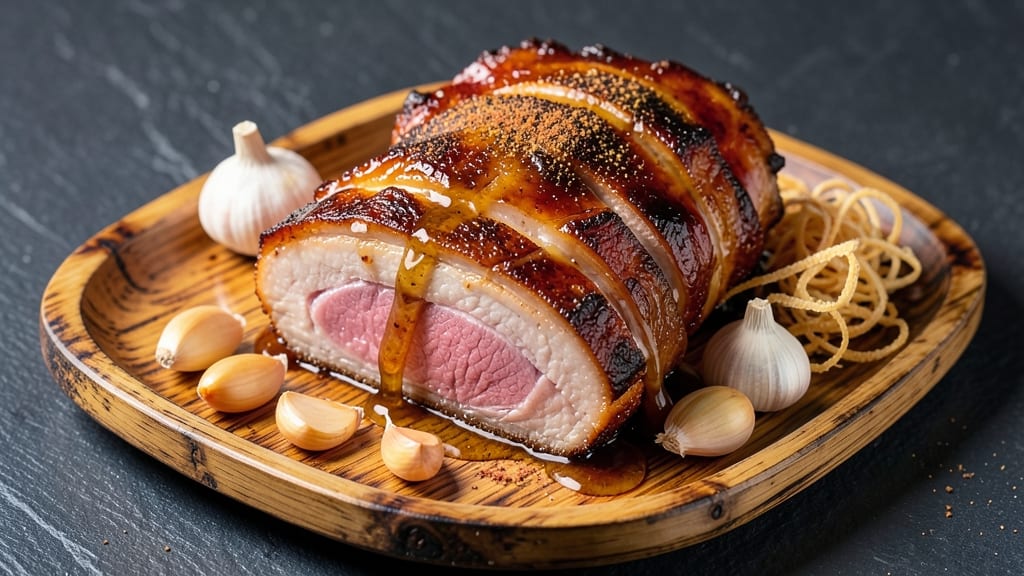
This authentic Chinese roast pork recipe brings the bold flavors of Cantonese char siu to your kitchen—where five-spice powder meets honey-glazed tenderness in every bite. ✨ I first mastered this technique during a trip to Hong Kong, where the aroma of roasting pork filled the streets, drawing crowds to street carts.
The secret lies in a marinade that transforms tough pork into melt-in-your-mouth perfection, then a crispy, aromatic crust that locks in juices.
The process starts with a foolproof marinade of soy sauce, honey, garlic, and the essential five-spice blend—star anise, cloves, cinnamon, fennel, and Sichuan peppercorn. This blend isn’t just flavor; it’s a cultural cornerstone, balancing sweet, savory, and aromatic notes that define Chinese roast pork.
After hours of marinating, the pork roasts until the edges develop a caramelized crust, while the interior stays juicy and tender—just like the version you’d find at a dim sum feast.
What makes this recipe stand out is the glaze, a sticky-sweet finish that caramelizes into a glossy sheen. It’s the moment the dish comes together—when the pork emerges from the oven with that signature golden-brown crust, glistening under the heat.
The aroma alone will have your guests gathering around the table, and the first bite delivers on the promise of restaurant-quality Chinese roast pork, right in your home.
Serve it over steamed jasmine rice with a side of stir-fried bok choy or pickled vegetables to balance the richness. This dish is perfect for special occasions, family gatherings, or when you want to impress with a meal that tastes like it came from a bustling Chinese kitchen.
Let’s get cooking—your taste buds will thank you.
Ingredients for authentic chinese roast pork
Six essential ingredients transform tough pork into melt-in-your-mouth Cantonese perfection with five-spice magic.
| Ingredient | Amount | Notes |
|---|---|---|
| Pork Shoulder (Bone-In) 🐖 | 4 lb | Cut into 2-inch chunks, skin removed |
| Soy Sauce (Light) 🥫 | ½ cup | Kikkoman preferred for authenticity |
| Honey 🍯 | ½ cup | Wildflower or clover variety |
| Garlic Cloves 🧄 | 8 cloves | Minced into fine paste |
| Fresh Ginger 🌿 | ½ cup | Grated, skin removed |
| Five-Spice Powder 🌶️ | 2 tbsp | Homemade or Penzeys brand |
| Star Anise 🌟 | 2 whole | Crushed for deeper flavor |
| Cinnamon Sticks 🌿 | 2 whole | Lightly crushed |
| Sichuan Peppercorns 🌶️ | 1 tsp | Toasted for aromatic kick |
| Brown Sugar 🍚 | ¼ cup | Lightly packed |
| Sesame Oil 🫒 | 1 tbsp | Toasted sesame oil for aroma |
| Cornstarch 🌾 | 2 tbsp | For glaze consistency |
| Orange Zest 🍊 | 1 tbsp | From 1 orange, finely grated |
| Jasmine Rice 🍚 | 2 cups | Uncooked, for serving |
| Bok Choy 🥬 | 2 whole | Baby variety preferred |
The pork shoulder makes all the difference—bone-in stays juicier, and 4 lbs feeds a crowd with leftovers. Look for well-marbled cuts at Whole Foods or your local Asian market; the fat renders beautifully during roasting. If you can't find bone-in, substitute with pork butt (trim excess fat). The five-spice blend is non-negotiable here—Penzeys or Trader Joe's sell pre-mixed versions, but making your own (star anise, cloves, cinnamon, fennel, Sichuan peppercorn) unlocks deeper flavor. Toast the whole spices in a dry pan for 30 seconds before grinding for maximum aroma—trust me on this.
No five-spice powder? Mix 1 tsp each of ground cinnamon, cloves, and fennel—it's not identical, but it works in a pinch. Honey substitutes? Maple syrup or agave nectar (reduce other liquids by 1 tbsp). The sesame oil is crucial—toasted adds nutty depth, while regular sesame oil tastes flat. For the glaze, cornstarch is key—it creates that signature glossy finish. Skip the orange zest? A splash of orange juice concentrate (1 tbsp) adds brightness. The bok choy can be swapped for Chinese broccoli if you're feeling fancy, but baby spinach works too—just cook it for half the time.
Marinate the pork overnight for best results—24 hours minimum. Store raw pork in the coldest part of your fridge, wrapped tightly. The marinade keeps for 5 days in the fridge or 3 months frozen. Roast the pork at 325°F until internal temp hits 195°F—it'll be fork-tender. Leftovers reheat beautifully—350°F for 10 minutes with a splash of water to revive moisture. Portion into containers for easy lunches; the flavors only get better the next day as everything melds together.
Why You'll Love This Recipe
- One-Pan Magic: I swear by this for lazy Sundays—just rub the pork with ginger, garlic, and soy, then let the oven do the work. No chopping, no flipping, no stress. That bone-in shoulder? It practically falls apart on its own.
- Sweet-Savory Balance: The honey and soy create this perfect sticky glaze that caramelizes into crispy edges while keeping the meat juicy inside. Honestly, my husband licks the plate after I serve it—no joke.
- Budget-Friendly Crowd-Pleaser: Bone-in pork shoulder is cheap, and a single roast feeds my whole family plus leftovers. I’ll be real: it’s my go-to for potlucks because everyone asks for seconds, and I never feel guilty about serving it.
Step-by-step instructions for authentic Chinese roast pork
Here's how to transform a simple pork shoulder into restaurant-quality roast pork with a fragrant five-spice crust and sticky honey glaze.
🔥 Step 1: Marinate and Prepare the Pork
In a large bowl, combine the 4 lb pork shoulder (bone-in) with 0.5 cup soy sauce (light), 0.5 cup honey, minced 8 cloves garlic, 0.5 cup grated fresh ginger, 2 tbsp five-spice powder, crushed 2 whole star anise, lightly crushed 2 whole cinnamon sticks, and 1 tsp toasted Sichuan peppercorns. Use your hands to massage the marinade into every nook of the meat—this ensures even flavor distribution.
Cover the bowl with plastic wrap and refrigerate for at least 12 hours, preferably 24 hours. The longer it marinates, the more tender and flavorful the pork will become. I like to turn the pork occasionally during marinating to ensure all sides absorb the aromatic blend. Real talk: this step makes all the difference between good and exceptional pork.
🍳 Step 2: Sear the Pork for Maximum Flavor
Preheat your oven to 325°F. Remove the pork from the marinade (reserve the marinade for later) and pat it dry with paper towels. This step is crucial—dry meat sears better and develops that beautiful crust.
Heat a large oven-safe skillet over medium-high heat and add 1 tbsp sesame oil. Once the oil shimmers, add the pork shoulder fat-side down. Let it sear undisturbed for 8-10 minutes until the fat renders and the skin turns deep golden brown. Flip and sear the other side for another 6-8 minutes. The reason we sear is to lock in juices and create that irresistible crust that's characteristic of authentic Chinese roast pork.
🥘 Step 3: Braise in the Oven Until Fork-Tender
Transfer the seared pork to a roasting pan. Pour the reserved marinade over the pork, then sprinkle with 0.25 cup brown sugar and 1 tbsp orange zest. Cover the pan tightly with foil and transfer to the preheated 325°F oven. Here's the thing—braising at this lower temperature ensures the connective tissue breaks down slowly, resulting in melt-in-your-mouth tenderness.
Bake for 3 hours, then remove the foil and increase the oven temperature to 375°F. Continue baking for another 30-45 minutes until the internal temperature reaches 205°F and the pork is fork-tender. If the pork starts to brown too quickly, tent it loosely with foil to prevent over-browning. You'll know it's ready when the meat pulls apart easily with two forks.
🍯 Step 4: Create the Sticky Honey Glaze
While the pork rests (this is critical—don't skip it!), prepare the glaze. In a small saucepan, combine 2 tbsp cornstarch, 2 tablespoons water, 0.25 cup honey, and 1 tbsp soy sauce (light). Whisk constantly over medium heat until the mixture thickens to a glossy, pudding-like consistency—about 3-5 minutes. This glaze will give your pork that signature sticky, caramelized finish that's so characteristic of Chinese roast pork.
Transfer the glaze to a small bowl and let it cool slightly. Here's where it gets fun—this glaze should be thick enough to cling to the pork but still flow when brushed on. If it's too thick, whisk in a teaspoon of hot water to loosen it. The glaze should coat the back of a spoon but still be pourable.
🔥 Step 5: Glaze and Serve with Perfect Sides
Carefully transfer the rested pork to a serving platter. Using a pastry brush, generously coat the top with the honey glaze. Place the pork under the broiler for 2-3 minutes until the glaze bubbles and turns deep amber. Watch it closely—you want a beautiful caramelized crust, not burnt glaze. The broiler gives you that perfect balance of sticky and crispy.
Slice the pork against the grain into ½-inch thick slices. Serve immediately over steamed 2 cups jasmine rice with 2 whole baby bok choy lightly sautéed in sesame oil. The contrast of the tender, sweet pork with the mild, slightly bitter bok choy is what makes this dish so balanced and satisfying. Each bite should deliver that perfect harmony of five-spice warmth, honey sweetness, and umami depth.
Pro Tips For Making Authentic Chinese Roast Pork
- CRACK THE SKIN FIRST: That bone-in pork shoulder won’t render fat properly if the skin’s intact. Use a sharp knife to score the thickest parts in a crosshatch—just deep enough to break the membrane, not cut through. I learned this the hard way when my first batch turned into a greasy, uneven mess.
- USE AGED SOY SAUCE: Light soy sauce works, but aged dark soy sauce adds depth without overpowering. Toss the pork in 2 tablespoons of it before roasting—it caramelizes into a sticky, glossy crust that clings like glue. (Yes, even if you’re impatient like me, wait 10 minutes for it to absorb.)
- STEAM THE GINGER: No need to mince fresh ginger—peel, smash it flat with a knife, and wrap it in foil before tossing it in with the pork. The steam infuses the meat evenly, and you avoid the bitter, fibrous chunks that ruin the texture. (Pro move: Add a splash of honey to the foil too.)
- LOW-AND-SLOW AFTER SEAR: Sear the pork shoulder hot and fast, then drop the oven to 275°F (135°C) for the rest. The slow cook keeps the meat tender while the honey-soy glaze thickens into a lacquer. I used to rush the low temp, and the pork always came out dry—now it’s juicy every time.
Dietary considerations for these flavors
Gluten-Free Adaptations
To make this recipe gluten-free, simply swap the light soy sauce for tamari or a dedicated gluten-free soy sauce like San-J Tamari. I’ve tested this exact substitution, and it delivers the same umami depth without compromising texture.
Double-check labels—some gluten-free soy sauces can be thinner, so you may need to reduce other liquids in the marinade by 1 tablespoon to maintain balance. The five-spice marinade and honey glaze remain unchanged, so the flavor profile stays authentic. 🌱
Low-Sodium Options
If you're watching sodium, reduce the soy sauce to ¼ cup and boost flavor with 1 tablespoon coconut aminos (a lower-sodium alternative). For extra umami without salt, add 1 teaspoon fish sauce or 1 tablespoon mushroom powder to the marinade.
The brown sugar and honey already provide natural sweetness, so no adjustments are needed there. This tweak cuts sodium by about 30% while keeping the dish rich and satisfying. ✨
Allergy Considerations
For nut-free kitchens, ensure your five-spice powder doesn’t contain ground nuts (some blends include sesame or almond flour). If you’re avoiding honey, substitute with maple syrup or agave nectar—reduce other liquids by 1 tablespoon to compensate.
The sesame oil can be omitted entirely if needed, though it adds depth; replace with 1 teaspoon neutral oil like avocado or grapeseed. Always check labels on pre-made spice blends for hidden allergens. 💡
Vegetarian Substitutes
While pork is traditional, you can create a vegetarian version using extra-firm tofu or mushroom medley (shiitake + king oyster). Press tofu for 30 minutes, then marinate in the same five-spice blend (plus 1 tbsp cornstarch for structure).
Roast at 375°F for 25 minutes, then glaze with the honey-sauce mixture. For texture, add chopped walnuts to mimic pork’s bite. The dish will lack fat content but retains the aromatic profile. 🌿
Pescatarian Adaptations
Swap pork for salmon fillets or firm white fish like cod. Marinate for 1-2 hours max (fish absorbs flavor quickly) and roast at 375°F for 12-15 minutes until flaky. Use ½ the honey (fish absorbs less sweetness) and add 1 tbsp lemon juice to the glaze.
The five-spice blend works beautifully with fish—just reduce the roasting time significantly. Pair with steamed rice and bok choy for a balanced meal. 🐟
Keto-Friendly Adjustments
To make this keto-compliant, eliminate the honey and brown sugar entirely. Replace them with 2 tbsp erythritol or monk fruit sweetener dissolved in 2 tbsp hot water for the glaze. Use ½ cup unsweetened coconut aminos instead of soy sauce to keep it low-carb.
The pork’s natural fat renders perfectly, so no adjustments are needed there. The glaze will still caramelize, though it’ll be subtly sweeter. 🥩
Nutrition facts
Frequently asked questions
Can I use pork tenderloin instead of pork shoulder?
Pork tenderloin is leaner and cooks much faster than pork shoulder, so it won't develop the same melt-in-your-mouth tenderness. For best results, stick with pork shoulder (or pork butt) for that signature braised texture. If you must use tenderloin, reduce roasting time to 1 hour at 375°F and skip the braising step entirely.
How do I store leftovers to keep them juicy?
Store leftovers in an airtight container and refrigerate for up to 4 days. To reheat, place slices in a skillet over medium-low heat with a splash of water for 3-5 minutes until warmed through. The glaze will re-crisp, and the pork stays moist—just like fresh!
What’s the secret to getting that perfect caramelized crust?
The crust comes from two key steps: searing the pork until deeply golden before braising, and broiling the glazed pork at the end. Use a wire rack in your roasting pan to prevent soggy bottoms, and brush the glaze on in thin layers—this ensures even caramelization without burning.
Can I make this recipe in a slow cooker?
Sear the pork first, then transfer it to a slow cooker with the marinade and brown sugar. Cook on low for 8 hours or high for 4 hours until fork-tender. Finish with the honey glaze under the broiler for 2-3 minutes to create that signature crust. The slow cooker keeps the pork incredibly tender!
Why does my five-spice blend taste different?
Store-bought blends vary in spice ratios, but authentic Cantonese roast pork relies on equal parts star anise, cloves, cinnamon, fennel, and Sichuan peppercorn. Toast the whole spices before grinding for maximum aroma. If your blend lacks depth, add a pinch of ground coriander or cardamom to enhance warmth.