
Sauces & Condiments
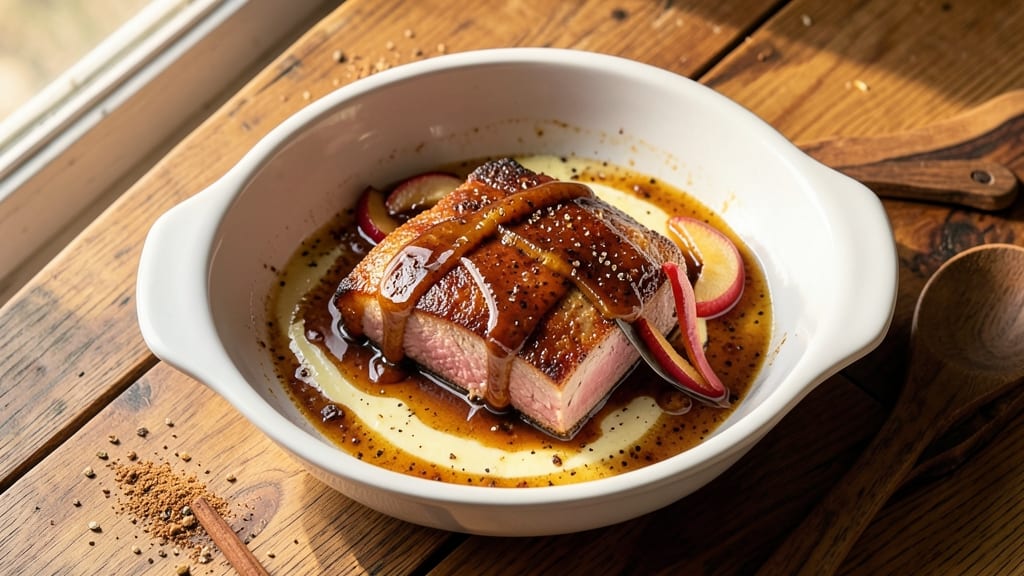
This apple glazed pork loin recipe delivers the perfect balance of caramelized sweetness and crispy bark that transforms a simple roast into a showstopper.
After years of perfecting this technique in my kitchen and on the pit, I've developed a method that ensures tender, juicy meat with a glaze so rich it'll have your guests asking for seconds.
The secret lies in the slow reduction of apple cider and spices, creating a glossy, sticky finish that clings beautifully to every bite.
What sets this recipe apart is the combination of traditional apple cider glazing with modern precision cooking techniques. You'll start with a bone-in pork loin for maximum flavor, then build layers of depth through a dry rub and slow oven roast before finishing with that signature glaze.
The result is a dish that's elegant enough for holiday tables but simple enough for weeknight dinners. I've cooked this for everything from family gatherings to restaurant menus, and it consistently delivers restaurant-quality results at home.
The glaze itself is where the magic happens—a perfect harmony of sweet apple cider, warm cinnamon, and a touch of mustard for balance. As it reduces on the stovetop, it transforms from a simple sauce into a thick, caramelized coating that develops a beautiful amber color and intense flavor.
When brushed onto the pork during the final minutes of cooking, it creates that coveted crispy bark while keeping the interior perfectly tender at 145°F internal temperature.
Serve this pork loin with classic sides like roasted apples, mashed sweet potatoes, or a simple green salad to let the star of the show shine. The glaze is so flavorful it works beautifully as a sauce for other dishes too, making this recipe even more versatile.
Whether you're cooking for a special occasion or just treating yourself to a weekend dinner, this apple glazed pork loin will impress every time.
Ingredients for apple glazed pork loin
Pork loin, apple cider, and spices—simple ingredients that transform into restaurant-quality perfection.
| Ingredient | Amount | Notes |
|---|---|---|
| Bone-In Pork Loin 🐖 | 2 lb | Center-cut, about 1.5 inches thick |
| Unsalted Butter 🧈 | ½ cup | Cold, cubed for dry rub |
| Apple Cider 🍎 | 1 cup | 100% pure, not juice blend |
| Granulated Sugar 🍚 | ¼ cup | Light brown preferred |
| Dijon Mustard 🥬 | 1 tbsp | Mild or regular, not spicy |
| Ground Cinnamon 🌿 | 1 tsp | Freshly ground preferred |
| Ground Cloves 🌶️ | ¼ tsp | Freshly ground for depth |
| Kosher Salt 🧂 | 1 ½ tsp | Diamond Crystal preferred |
| Freshly Ground Black Pepper 🌶️ | ½ tsp | Coarsely ground |
| Garlic Cloves 🧄 | 4 cloves | Peeled, rough chopped |
| Fresh Thyme Leaves 🌿 | ¼ cup | Chopped, stems removed |
| Extra-Virgin Olive Oil 🫒 | 1 tbsp | For finishing glaze |
| Apple Cider Vinegar 🍋 | 1 tbsp | For glaze balance |
The pork loin is non-negotiable here—bone-in adds flavor and keeps it juicy. Grab the thickest cut you can find (about 1.5 inches), and if it's not already trimmed, ask the butcher to remove the silver skin. Costco or Whole Foods usually have great center-cut options. For the dry rub, cold butter is key—it melts into the meat during cooking, creating a flavorful crust. I always double-check the apple cider label for 100% purity; those 'juice blend' bottles with added sugar won't give you that authentic caramelized depth.
No Dijon mustard? Yellow mustard at half the amount works in a pinch, but you'll lose some complexity. The sugar can be swapped for maple syrup at equal measure, though it adds moisture. Fresh thyme is ideal, but dried thyme at one-third the amount gets you close. If you're short on cloves, allspice berries (crushed) work beautifully. For the glaze, if you can't find apple cider vinegar, white vinegar with a pinch of sugar mimics the tang. And trust me on the fresh garlic—jarred minced loses its punch fast.
This glaze keeps beautifully—make extra for sandwiches or roasted veggies. Store any leftover glaze in a sealed jar in the fridge for up to 2 weeks. The pork loin reheats well too—just warm in a skillet with a splash of apple cider. I always slice it against the grain for those perfect tender bites. For a crowd, double the recipe—just increase cooking time by 15 minutes. Leftovers? They're even better the next day, honestly.
Why You'll Love This Recipe
- Foolproof Timing: I swear by this—sear the pork, toss in the apple cider and sugar, then let the oven do the work. Twenty minutes later, you’ve got dinner without the stress of babysitting a pan.
- Sweet-Savory Magic: That sticky apple glaze? It’s where the butter, Dijon, and caramelized sugar meet—rich, tangy, and just a little crisp at the edges. My kids fight over the last bite.
- Weeknight to Holiday: Same recipe for Tuesday dinners or Thanksgiving leftovers. Serve it sliced over mashed potatoes, with roasted carrots, or even on a sandwich. It’s the chameleon of pork dishes.
- Leftovers That Don’t Suck: Cold pork loin? Still delicious. Pack it for lunches or reheat it for breakfast—crispy bits and all. Honestly, I make extra just for this reason.
Step-by-step instructions for apple glazed pork loin
Here's how to get that perfect balance of sweet caramelized glaze and crackling crispy bark.
Create the Dry Rub and Season the Pork
In a small bowl, combine the 0.5 cup unsalted butter, 0.25 cup granulated sugar, 1 tablespoon Dijon mustard, 1 teaspoon ground cinnamon, 0.25 teaspoon ground cloves, 1.5 teaspoons kosher salt, and 0.5 teaspoon freshly ground black pepper. Mix until the butter is fully incorporated and the mixture looks like a coarse paste.
Pat the 2 lb bone-in pork loin dry with paper towels—this is crucial for crispy bark. Rub the mixture all over the pork, pressing firmly so it adheres well. Let it sit at room temperature for 30 minutes while you prep the oven. This resting time helps the rub penetrate the meat and develop deeper flavor.
Sear the Pork for Maximum Crisp
Preheat your oven to 400°F. Heat a large oven-safe skillet over medium-high heat until very hot. Place the pork loin in the skillet, fat-side down, and sear for 3-4 minutes until the fat begins to render and the skin turns golden brown. Flip the pork and sear the other side for another 3-4 minutes.
Here's the thing—don't move the pork around while searing. Let it develop that golden crust undisturbed. You'll see the edges start to crisp—that's your signal to flip. Once both sides are golden and the pork releases easily from the pan, transfer the skillet to the preheated oven.
Roast Until Internal Temperature Reaches 145°F
Roast the pork for 30-35 minutes until the internal temperature reaches 145°F when measured with a meat thermometer in the thickest part of the meat. The pork should be slightly pink in the center—it will continue cooking as it rests.
I check the temperature at the 25-minute mark because ovens vary. If it's running hot, pull it out earlier. If it needs more time, give it another 5 minutes. The goal is tender, juicy pork with that perfect crispy exterior. Don't cut into it yet—resting is key.
Prepare and Apply the Apple Glaze
While the pork rests, make the glaze by combining 1 cup apple cider, 1 tablespoon apple cider vinegar, 4 cloves rough chopped garlic, and 0.25 cup chopped fresh thyme leaves in a small saucepan. Bring to a simmer over medium heat and cook for 5-6 minutes until reduced by about half and slightly syrupy.
Strain the mixture through a fine-mesh sieve to remove the garlic and thyme. Stir in 1 tablespoon extra-virgin olive oil to help the glaze cling better. The glaze should coat the back of a spoon—if it's too thick, add a splash of water to loosen it.
Glaze and Finish Under the Broiler
Carefully transfer the pork to a broiler-safe dish. Brush the reduced apple glaze all over the pork, including the cut sides. Place under the broiler for 2-3 minutes until the glaze bubbles and turns a deep amber color. Watch closely—you want it caramelized but not burned.
Let the pork rest for 10 minutes before slicing. This resting period ensures the juices redistribute, giving you perfectly moist slices with that glossy, caramelized glaze. Serve with roasted vegetables or mashed potatoes to soak up all that delicious sauce.
Pro Tips For Making Apple Glazed Pork Loin
- SEAR THE LOIN FIRST: Get that pan screaming hot before adding the pork—no need to rush, but don’t let it sit there cold. A good crust from the butter and mustard mix locks in flavor and keeps the meat juicy, and skipping this step means you’re missing half the depth of the dish.
- USE THICK APPLE CIDER: Thin cider reduces to nothing in minutes. Grab the cloudy, unfiltered kind from the refrigerated section—it’s got body and natural sweetness that won’t turn your glaze into syrup. If you’re in a pinch, mix 1 part apple juice with 2 parts water, but it won’t taste the same.
- DON’T SKIP THE MUSTARD: That Dijon isn’t just for tang—it’s the bridge between the richness of the butter and the sharpness of the apples. Whisk it into the butter first, then coat the pork evenly. I used to leave it out, and the flavor felt flat until I realized how much it ties everything together.
- REST IT UNDER FOIL: The moment that pork hits the cutting board, tent it with foil and let it sit for 5-10 minutes. I learned this the hard way—slicing too soon sends all the juices pooling on the plate instead of staying in the meat. Trust me, your first slice will be noticeably better.
Make-ahead tips for this apple glazed pork loin
Glaze Prep Ahead
Make the apple glaze up to 3 days in advance and store it in an airtight container in the fridge. I often prep this the night before—it actually tastes better after the flavors meld overnight.
When reheating, warm it gently on the stovetop over low heat for 3-4 minutes, stirring occasionally. The glaze should be syrupy but not scorched. 🍎
Pork Prep Timeline
Pat and season your pork loin 12 hours ahead if possible, then refrigerate uncovered on a wire rack. This dries the surface for better bark formation.
Bring it to room temperature 1 hour before cooking—I always do this by taking it out of the fridge while I prep other components. Room-temperature pork cooks more evenly and develops that coveted crispy exterior.
Slow Cooker Option
For a hands-off approach, sear the pork as directed, then transfer it to a slow cooker with ½ cup apple cider and 1 tbsp apple cider vinegar. Cook on low for 6-8 hours until tender.
Finish with the prepared glaze under the broiler for 2-3 minutes to caramelize. This method works beautifully for large gatherings—I've made 10 lbs at once for family events.
Make-Ahead Serving
Slice the cooked pork loin and store it in an airtight container with the leftover glaze spooned on top. The glaze will keep the meat moist and add extra flavor. Reheat slices in a skillet over medium heat for 2-3 minutes per side until warmed through.
For a quick assembly, I often reheat the pork and serve it with pre-cooked sides like roasted apples or mashed sweet potatoes.
Freezer Strategy
This pork loin freezes exceptionally well for up to 3 months. After cooking, let it cool completely, then wrap each slice individually in plastic wrap before storing in a freezer bag. To reheat, thaw overnight in the fridge, then warm in a skillet with a splash of apple cider.
The texture remains tender, and the glaze stays glossy—it's almost like you're eating fresh-cooked pork. 💫
Nutrition facts
Frequently asked questions
Can I use regular apple juice instead of apple cider for the glaze?
Regular apple juice won't give you the same depth of flavor or caramelization. Apple cider contains natural sugars and acids that develop that rich, amber glaze when reduced. For a similar effect, use 100% pure apple juice and add 1 tablespoon apple cider vinegar to mimic the acidity. The glaze will be lighter but still delicious.
How do I prevent the pork from drying out?
Start with a bone-in pork loin—it stays juicier than boneless cuts. Don't overcook! Remove the pork from the oven when it hits 145°F internal temperature, then let it rest for 10 minutes before slicing. This resting time lets the juices redistribute. Also, avoid cutting into it too soon, or you'll lose all that precious moisture.
Can I make this recipe with boneless pork loin?
Yes, but you'll need to adjust the cooking time slightly—boneless pork cooks faster. Use the same temperature (400°F) but reduce the roasting time by about 5-10 minutes. Monitor the internal temperature closely with a meat thermometer to avoid overcooking. The texture will be slightly less robust, but it'll still be delicious.
What's the best way to reheat leftovers?
Slice the pork and store it in an airtight container with some leftover glaze. Reheat in a skillet over medium heat for 2-3 minutes per side until warmed through. For extra moisture, add a splash of apple cider to the pan. Microwaving works too, but the texture won't be as crispy—cover with a damp paper towel and heat in 30-second bursts until hot.
How can I make this dish spicier?
Add ½ teaspoon cayenne pepper or 1 teaspoon smoked paprika to the dry rub for heat. For extra kick, stir 1 teaspoon hot sauce into the glaze before applying it to the pork. If you love bold flavors, try adding 1 teaspoon chipotle powder to the glaze mixture—it adds smoky depth while keeping the sweetness balanced.