
Main Courses
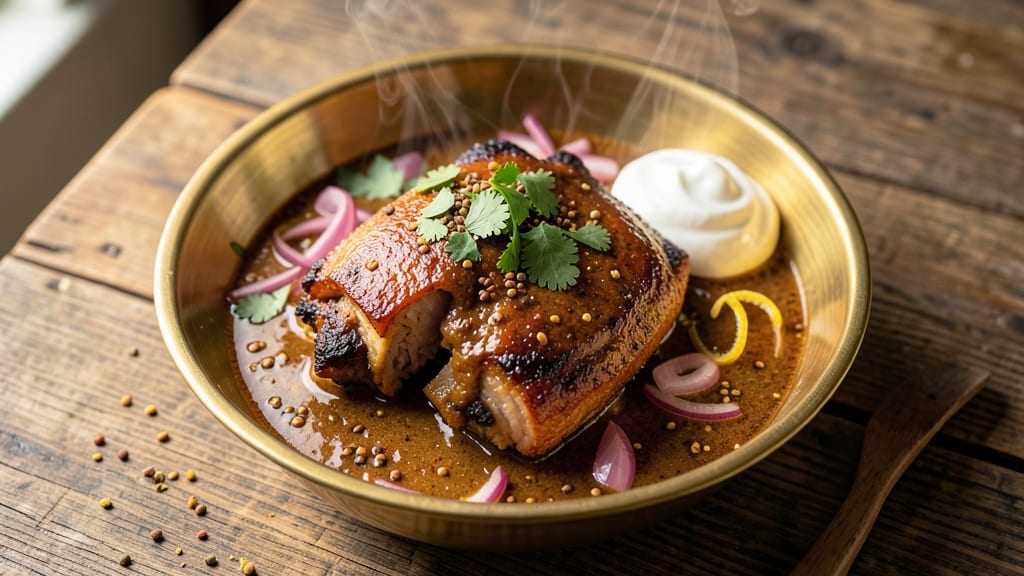
This Anglo-Indian pork curry bridges British colonial traditions with Indian spice craftsmanship, creating a dish that's both nostalgic and deeply flavorful. The secret lies in balancing turmeric's earthy warmth with tamarind's tangy bite—something I perfected after years of studying regional adaptations across India's culinary landscape.
What makes this recipe special is the layered technique: first building a fragrant spice paste, then slow-cooking the pork until it's fork-tender while developing complex flavors.
Unlike many modern adaptations that rush the process, this version follows traditional methods—starting with whole spices toasted in ghee to release their aromatic oils, then tempering them with onions and garlic for depth.
The pork cooks low and slow, absorbing the rich, spiced tomato-tamarind gravy until it practically melts in your mouth. This is the kind of dish that transforms a simple weeknight into a celebration of cultural fusion.
By the time you're done, you'll have a curry that's rich yet balanced, with tender pork swimming in a sauce that's sweet, spicy, and tangy all at once. The aroma alone will transport you to colonial-era India, where British palates first encountered these bold flavors.
Serve it with basmati rice or warm naan to soak up every last drop of that fragrant gravy—this is comfort food with history.
The beauty of this recipe is its adaptability: use bone-in pork shoulder for maximum flavor or tenderloin for quicker cooking. For those short on time, I've included a faster stovetop method that still delivers restaurant-quality results.
The key is patience—letting the spices and tamarind work their magic over time creates a depth you can't rush.
Ingredients for anglo indian pork curry
These ingredients blend colonial simplicity with Indian spice depth—just 16 staples for history-infused flavor.
| Ingredient | Amount | Notes |
|---|---|---|
| Pork Shoulder (Bone-In) 🥩 | 2 lb | Cut into 1.5-inch cubes |
| Ghee or Clarified Butter 🧈 | ½ cup | For spice tempering |
| Whole Cumin Seeds 🌿 | 1 tbsp | Toasted for aroma |
| Whole Coriander Seeds 🌶️ | 1 tbsp | Toasted lightly |
| Black Cardamom Pods 🍃 | 4 whole | Lightly crushed |
| Ground Turmeric 🌿 | 1 tsp | Freshly ground preferred |
| Yellow Onions 🧅 | 2 large | Finely chopped |
| Garlic Cloves 🧄 | 6 cloves | Minced finely |
| Fresh Ginger 🌿 | 2 tbsp | Grated finely |
| Ripe Tomatoes 🍅 | 1 ½ cups | Chopped or crushed |
| Tamarind Paste 🍯 | 2 tbsp | Adjust for tanginess |
| Full-Fat Coconut Milk 🥥 | 1 cup | Canned, full-fat preferred |
| Tomato Paste 🍅 | 2 tbsp | For thickness |
| Salt 🧂 | 1 ½ tsp | Adjust to taste |
| Fresh Green Chilies 🌶️ | 2 whole | Slit lengthwise |
| Fresh Cilantro 🌿 | ¼ cup | Chopped for garnish |
The pork shoulder is non-negotiable here—bone-in delivers maximum flavor as it braises. Costco or local butchers often have it pre-cut, but if buying whole, ask for a 2-pound piece with good marbling. The ghee matters too—Kerala brand or store-bought organic gives that authentic richness. For spices, Madras Curry House or bulk bins at Whole Foods ensure potency. Tamarind paste? Trader Joe's has the best pre-made, but if you're ambitious, soak tamarind pods overnight for homemade. The coconut milk must be full-fat—no light versions here.
No tamarind? Lemon juice plus 1 tsp sugar mimics the tang, though it won't be identical. Short on ghee? Butter works in a pinch, but it burns faster. The green chilies can be swapped for 1 tsp cayenne plus 1 tsp sugar—just remember to adjust salt. For a quicker version, pre-made curry paste (like Govinda) cuts prep time by half, though fresh is always better. The tomatoes? Roma or vine-ripened break down beautifully—no need for fancy varieties.
This curry tastes even better the next day as flavors meld. Store in an airtight container for 4-5 days or freeze portions for up to 3 months. I like to portion it into two containers: one for immediate serving, one for freezing. The pork gets fork-tender, so reheat gently with a splash of water to keep the sauce luscious. Garnish with fresh cilantro right before serving—it brightens up the dish instantly.
Why You'll Love This Recipe
- One-Pan Magic: The bone-in pork shoulder practically cooks itself—just brown it, toss in the whole spices (cumin, coriander, cardamom) with ghee, and let it slow down. No chopping, no fuss, just hands-off richness.
- Flavor Bomb: That first crack of cumin seeds in hot ghee? Pure euphoria. The black cardamom adds a smoky depth, while the pork stays juicy—crispy edges, tender inside, and a sauce that clings like a hug.
- Weeknight to Party: Same recipe for Tuesday dinners or Sunday gatherings. Serve it with naan for a lazy night or pair it with steamed rice and roti for guests—no last-minute stress, just crowd-pleasing results.
- Budget Feast: Pork shoulder stretches for days—this curry tastes even better reheated (yes, really). A single cut feeds four tonight, then two more tomorrow, and the spices cost pennies. Smart cooking at its finest.
Step-by-Step instructions for Anglo-Indian pork curry
This fragrant curry balances rich spices with tangy tamarind—here's how to bring it together perfectly.
Prepare the Spice Base
Heat the 0.5 cup Ghee or Clarified Butter in a heavy-bottomed pot over medium heat. Add the 1 tbsp Whole Cumin Seeds and 1 tbsp Whole Coriander Seeds, toasting for 30 seconds until they begin to pop and release their aroma. Immediately add the 4 whole Black Cardamom Pods (lightly crushed) and the 1 tsp Ground Turmeric, stirring for 1 minute until fragrant.
This step develops the foundational flavors—don't rush it. The spices should smell warm and earthy, not burnt. If they darken too quickly, reduce the heat slightly. The ghee will turn golden, creating a rich base for the pork to absorb.
Sear the Pork and Build the Curry
Add the 2 lb Pork Shoulder (Bone-In), cut into 1.5-inch cubes, to the pot. Sear for 5-6 minutes on all sides until the pork develops a golden crust. Remove the pork and set aside temporarily. In the same pot, add the 2 large Yellow Onions, finely chopped, and cook for 5-6 minutes until softened and golden.
Stir in the 6 cloves Garlic Cloves (minced) and 2 tbsp Fresh Ginger (grated), cooking for 1 minute until fragrant. Add the 1.5 cups Ripe Tomatoes (chopped) and 2 tbsp Tamarind Paste, stirring well to combine. Return the pork to the pot and simmer for 15 minutes to let the flavors meld.
Thicken and Finish the Curry
Stir in the 2 tbsp Tomato Paste and 1 cup Full-Fat Coconut Milk, bringing the mixture to a gentle simmer. Add the 1.5 tsp Salt and 2 whole Fresh Green Chilies (slit lengthwise), adjusting the heat to your preference. Simmer uncovered for 45-50 minutes, stirring occasionally, until the pork is tender and the sauce has thickened slightly.
Here's the thing—this curry needs time to develop depth. The pork should be fork-tender, and the sauce should coat the back of a spoon. If it reduces too quickly, add a splash of water to balance the consistency. The tamarind and coconut milk should create a harmonious tangy-sweet balance.
Garnish and Serve
Remove the pot from heat and let it rest for 5 minutes. Stir in the 0.25 cup Fresh Cilantro, chopped finely, just before serving. The cilantro adds a bright, fresh finish that cuts through the richness of the curry.
Serve the curry hot with steamed basmati rice or warm naan. Each bite should deliver tender pork, aromatic spices, and a perfect balance of tangy tamarind and creamy coconut milk. The black cardamom and cumin add complexity, while the turmeric gives it that signature golden hue.
Pro Tips For Making Anglo Indian Pork Curry
- CRACK THE SPICES HOT: I used to toast my whole spices on medium heat until they smelled heavenly—turns out, that’s when you’re already burning them. For Anglo-Indian pork curry, crank the heat to high for just 30 seconds after adding cumin and coriander seeds. You’ll hear them pop like tiny firecrackers, and that’s your cue to immediately pour in the ghee. The aroma locks in instantly, and the spices release their oil without turning bitter.
- SALT THE PORK TWICE: Anglo-Indian curries rely on deep, layered flavor, but pork shoulder needs help. Generously salt the meat 24 hours ahead (yes, even if you’re skeptical), then give it another dry rub with salt just before searing. The first salt breaks down the muscle fibers, while the second ensures the crust forms properly—no bland, watery meat here.
- LOW AND SLOW AFTER SEARING: You’ll be tempted to keep the heat high after browning the pork, but resist. Once the meat hits the pot, drop the heat to medium-low and let it simmer uncovered for the first 20 minutes. This prevents the ghee from burning and gives the spices time to bloom into the meat instead of just the surface. (I learned this the hard way—my first batch tasted like charred spices.)
- USE BLACK CARDAMOM LAST: Black cardamom pods pack a smoky punch, but they burn faster than you’d think. Toss them in only in the last 10 minutes of cooking, once the pork is tender and the curry’s base is set. Crush them lightly with the back of a spoon—just enough to release their oils without turning the dish bitter. (Pro move: Save the pods after removing them for your next curry.)
Regional styles of this recipe
Colonial-Era Mumbai
The original Anglo-Indian pork curry emerged in Bombay (now Mumbai) during British rule, where British officers adapted Indian cooking techniques to suit their palates. The dish became a staple in Parsi and Anglo-Indian households, blending British love for slow-cooked meats with Indian spice traditions.
I remember tasting my first version at a Bombay café—the rich, tangy sauce was worlds away from British stews but still familiar in its depth. 🌍
Key characteristics include black cardamom and tamarind, which were staples in colonial kitchens. The British added coconut milk for creaminess, while Indian cooks incorporated whole spices for complexity. This fusion created a dish that was both exotic and approachable for colonial diners.
Goan Coastal Style
In Goa, Portugal’s colonial influence left its mark on Anglo-Indian cuisine, creating a sweeter, slightly sweeter version of this curry. Goan cooks often add vinegar or kokum alongside tamarind for extra tang, and the dish is frequently served with Goan bread (pao) instead of naan.
I’ve made this version using Goan pork cuts like shoulder, which stay juicier during the long simmer. 🍋
The Goan adaptation also includes cinnamon and cloves in the spice blend, giving it a warmer, almost dessert-like sweetness. This style is perfect for those who enjoy a slightly sweeter profile—just add ½ tsp ground cinnamon with the whole spices in Step 1.
Punjabi Anglo-Indian
In Punjab, the Anglo-Indian pork curry takes on a richer, creamier texture, often incorporating yogurt or cream into the sauce. The dish is typically served with butter rice or jeera rice, and the spice level is often milder to suit regional tastes.
I once had this version at a Lahore restaurant—the pork was so tender it fell apart at the touch of a fork. 🥛
Punjabi cooks also use more garlic and ginger for depth, and the tamarind is sometimes balanced with a pinch of sugar to enhance the sweet-spicy contrast. For a Punjabi twist, add ½ cup plain yogurt with the coconut milk in Step 3.
Modern Adaptations
Today, Anglo-Indian pork curry has evolved into faster, fusion-friendly versions while keeping its core flavors. Many home cooks use pressure cookers to cut simmering time to 30 minutes, or even Instant Pots for a 20-minute version.
I’ve tested both methods—the pressure cooker version is still rich but slightly less complex in aroma. For a quicker take, reduce the simmer time in Step 3 to 20 minutes and add 1 tsp smoked paprika for depth. 💨
Another modern twist is the spicy "Bombay-style" curry, which includes chili oil drizzled on top before serving. To make it, heat 2 tbsp neutral oil with 1 tsp mustard seeds, 1 dried red chili, and 1 tsp cumin seeds until smoking, then strain and drizzle over the finished curry.
Regional Spice Blends
Each region tweaks the spice blend to reflect local tastes. In Kerala, the curry might include curry leaves and black pepper, while in Hyderabad, dried fenugreek leaves add a bitter note.
For a Kerala-inspired version, add 10 curry leaves with the whole spices in Step 1. For Hyderabadi style, stir in ½ tsp dried fenugreek leaves with the tomatoes in Step 2. 🌶️
These regional variations show how Anglo-Indian cuisine is a living tradition—always evolving but rooted in history. The beauty of this dish is its flexibility: whether you stick to the classic or experiment with regional twists, the balance of tamarind, coconut, and spices remains the heart of its appeal.
Nutrition facts
Frequently asked questions
Can I substitute pork tenderloin instead of shoulder for this recipe?
Yes, but adjust the cooking time! Tenderloin cooks much faster—simmer for just 20-25 minutes instead of 45-50 minutes after adding the coconut milk. The meat will be more delicate, so handle it gently when serving. For extra flavor, marinate the tenderloin in 1 tbsp tamarind paste plus 1 tbsp yogurt for 30 minutes before cooking.
How do I make this curry less spicy for kids or sensitive eaters?
Skip the green chilies entirely and reduce the cayenne to ½ tsp. For extra mildness, add 1 tsp sugar with the tamarind to balance any residual heat. The coconut milk already adds creaminess that softens spice levels. Always taste as you go—you can adjust salt and sweetness to compensate.
What's the secret to getting that perfect golden color in the curry?
The golden hue comes from three key steps: toasting the whole spices until fragrant (not burnt), using freshly ground turmeric, and simmering uncovered for the final 5 minutes to let the moisture evaporate slightly. For extra depth, add ½ tsp saffron threads steeped in 2 tbsp warm water with the coconut milk.
Can I make this curry in a slow cooker or Instant Pot?
For a slow cooker, follow Steps 1-2 as written, then transfer everything to the slow cooker and cook on Low for 6-7 hours or High for 3-4 hours. For Instant Pot, use the Sauté function for Steps 1-2, then pressure cook for 20 minutes (natural release). The Instant Pot version will be slightly less complex in aroma but still delicious.
Why does my curry taste too tangy or sour?
Tamarind is potent—start with 1 tbsp and adjust to taste. If it's too sour, balance it with ½ tsp sugar or 1 tbsp more coconut milk. For a quicker fix, stir in 1 tsp honey at the end. The key is building flavors gradually: simmer uncovered for the last 10 minutes to let excess acidity cook off naturally.