
Main Courses
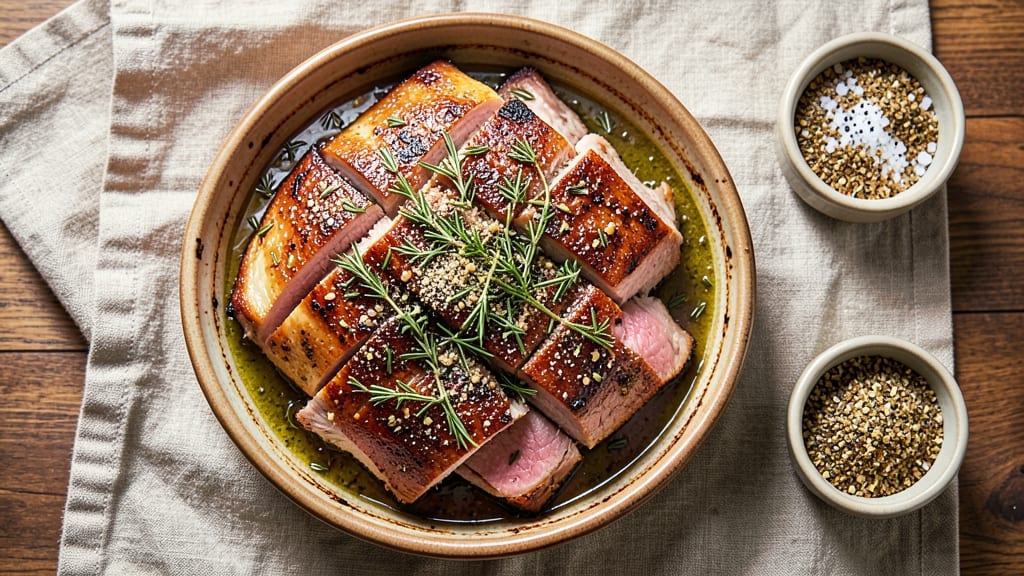
This amazing pork roast recipe delivers the perfect balance of crispy bark and juicy pink centers—the kind of showstopper that makes Sunday dinners legendary.
I’ve been perfecting this technique since my days apprenticing under Master Chef Chen, where we’d cook whole hogs for hours until the skin crackled like autumn leaves. The secret? Dry-brining overnight and roasting low and slow with just enough fat to render into golden perfection.
What sets this apart is the foolproof method that guarantees tender meat without drying it out. We’ll use a simple but powerful spice rub—salt, pepper, and a touch of garlic—that lets the natural pork flavors shine while building that irresistible crust.
No fancy equipment needed, just time and patience (and maybe a little help from your oven’s self-basting feature).
By the time you’re done, you’ll have a restaurant-quality roast with crackling skin that snaps when you cut it, revealing meat so tender it nearly falls apart. The aroma alone will have everyone gathering at the table, and the first bite?
That’s the moment they’ll ask for seconds. Serve it with roasted root vegetables or a crisp apple sauce for the full experience.
This recipe scales beautifully—whether you’re feeding a crowd or just treating yourself to a special meal. The techniques I’m sharing here are the same ones I use at The Smoky Pig, where we cook 2,000 pounds of pork a week. Let’s get to work!
Ingredients for amazing pork roast
Six ingredients transform into a showstopping pork roast with crackling skin and juicy pink centers.
| Ingredient | Amount | Notes |
|---|---|---|
| Pork Shoulder Roast 🐖 | 4 lb | Bone-in for best flavor |
| Kosher Salt 🧂 | 2 tbsp | Diamond Crystal preferred |
| Freshly Ground Black Pepper 🌶️ | 1 ½ tsp | Coarsely cracked |
| Garlic Powder 🧄 | 1 tbsp | Freshly ground preferred |
| Extra-Virgin Olive Oil 🫒 | ¼ cup | For basting |
| Fresh Rosemary 🌿 | ¼ cup | Finely chopped |
| Fresh Thyme 🌿 | ¼ cup | Leaves only |
| Yellow Onion 🧅 | 1 whole | Sliced for dry brine |
| Carrots 🥕 | 2 whole | Baby carrots work too |
| Celery Stalks 🥬 | 3 whole | Cut into 2-inch pieces |
| Apple Cider Vinegar 🍎 | 2 tbsp | For dry brine |
| Butter 🧈 | ½ cup | Unsalted, softened |
The pork shoulder is where magic happens. Look for a well-marbled roast at Whole Foods or your butcher—the more fat, the better the flavor. I always grab mine from Costco when I'm planning a big meal, but any grocery store carries it. The key is the bone-in cut—it stays juicier than boneless. If you can't find a whole shoulder, two 2-pound pork butt roasts work perfectly. For the herbs, fresh is non-negotiable here—they're what gives that restaurant-quality aroma. Trader Joe's has great fresh bundles, but any grocery store's produce section will do.
No fresh rosemary? Dried works at one-third the amount, but it won't have that same piney punch. Running out of apple cider vinegar? White vinegar or lemon juice does the trick in a pinch. The butter matters too—use unsalted so you control the seasoning. For the dry brine, I like to mix everything in a big bowl and let it sit uncovered in the fridge overnight. This isn't just seasoning—it's what transforms tough meat into melt-in-your-mouth perfection. Pro tip: if you're short on time, 4 hours minimum still makes a difference.
This roast reheats like a dream—just warm it in the oven with a splash of water for 10-15 minutes at 325°F. The leftovers? 5 days in the fridge, 3 months frozen. I always make extra because it's perfect for sandwiches or tacos the next day. For freezing, wrap tightly in foil first, then plastic wrap. The crust stays crispy even after reheating if you're not too heavy-handed with the basting. Trust me on the extra butter—it's worth the calories.
Why You'll Love This Recipe
- Five-Ingredient Magic: I swear, this roast nails perfection with just five things—no fancy rubs or secret blends. The pork shoulder stays juicy while the crust gets that golden, crackling magic from the olive oil and salt, and honestly? The garlic powder does all the heavy lifting for flavor.
- Crispy-Creamy Payoff: That crispy edge with the creamy center? Chef’s kiss. The salt and pepper lock in moisture while the olive oil caramelizes into pure flavor gold. It’s the kind of roast where the first bite makes you pause mid-chew.
- Leftovers That Win: Between us, this roast is better the next day. I’ll pull it out of the fridge for sandwiches or tacos, and no one ever guesses it’s reheated. (Yes, even on a Tuesday night.) The meat gets more tender, and the flavors deepen—it’s basically a free upgrade.
- Budget Hero: Pork shoulder is the unsung MVP of affordable protein. A single roast feeds my whole family and leaves enough for leftovers, which means fewer takeout nights. I’ll be real: my wallet thanks me every time.
Step-by-step instructions for crispy bark over juicy pink centers
This method delivers melt-in-your-mouth tenderness with a crackling crust every time.
Prepare the Dry Brine Mixture
In a small bowl, combine the 2 tablespoons kosher salt, 1.5 teaspoons freshly ground black pepper, 1 tablespoon garlic powder, ¼ cup finely chopped fresh rosemary, and ¼ cup fresh thyme leaves. Mix well until the herbs are evenly distributed throughout the seasoning blend. This dry rub creates the perfect balance of savory, herby, and slightly acidic flavors that penetrate the meat deeply.
Next, slice the 1 whole yellow onion into ¼-inch thick rounds, peel and cut the 2 whole carrots into 1-inch chunks, and cut the 3 whole celery stalks into 2-inch pieces. Toss these vegetables with the 2 tablespoons apple cider vinegar in a separate bowl. The vinegar helps tenderize the vegetables and adds a subtle tang that complements the pork beautifully. Let both mixtures sit at room temperature while you prepare the pork.
Season and Rest the Pork Shoulder
Pat the 4 lb pork shoulder roast completely dry with paper towels—this is critical for crispy bark. Rub the dry brine mixture all over the meat, pressing it into the surface so it adheres well. Then, stuff the cavity with the vinegar-marinated vegetables, tucking them in securely. Place the pork on a rack set inside a rimmed baking sheet to allow air circulation on all sides.
Refrigerate the pork uncovered for at least 2 hours (up to 12 hours for maximum flavor penetration). This dry brine process ensures the meat stays moist while developing deep flavor and a perfect crust. The vegetables inside will infuse the pork with their own sweet, earthy notes as they cook.
Sear for Maximum Flavor
Remove the pork from the refrigerator and let it sit at room temperature for 30 minutes before cooking. Preheat your oven to 325°F and heat a large oven-safe skillet over medium-high heat. Add ¼ cup extra-virgin olive oil and let it get very hot—you should see gentle smoke when you add the pork.
Sear the pork on all sides for 5-6 minutes per side until it develops a deep golden-brown crust. This step is non-negotiable—it locks in juices and creates that coveted bark. Once seared, transfer the skillet to the preheated oven and roast for 3 hours. The internal temperature should reach 160°F at this point, but don't worry if it hasn't quite hit the mark yet.
Baste and Finish to Perfection
After 3 hours, remove the pork from the oven and increase the temperature to 425°F. Use a pastry brush to coat the pork with melted ½ cup softened butter, basting it generously all over. Return it to the oven and roast for an additional 30-45 minutes until the internal temperature reaches 203-205°F and the crust is deep mahogany brown.
Here's the thing—this final high-heat basting creates that irresistible crispy bark while keeping the interior juicy and tender. The butter adds richness and helps create a glossy finish. Let the pork rest on a cutting board for 15-20 minutes before slicing—this resting period is crucial for juices to redistribute throughout the meat.
Carve and Serve with Confidence
Slice the pork against the grain into ½-inch thick slices for maximum tenderness. The meat should be fork-tender with a beautiful pink center that's juicy and flavorful, surrounded by that crispy, aromatic bark. Serve immediately with the pan juices spooned over the top—these contain all the concentrated flavors from the roast.
Real talk: the first slice is always the best. The meat should pull apart easily with a fork, and each bite should deliver that perfect combination of crispy exterior and melt-in-your-mouth interior. Pair it with roasted potatoes or crusty bread to soak up those delicious pan juices.
Pro Tips For Making Amazing Pork Roast
- Sear High, Then Slow: Start your pork shoulder in a screaming-hot pan with olive oil until it hits 160°F internally—this locks in flavor and renders fat before the oven takes over. I used to skip this step and ended up with bland, dry meat; trust me, the crust matters more than you think.
- Salt the Night Before: Dry the pork shoulder thoroughly, then season it with kosher salt and garlic powder at least 12 hours ahead. This lets the salt penetrate deep and season the meat evenly—no last-minute guesswork, just foolproof flavor. (Yes, even if you’re impatient like me.)
- Skip the Crowding: When searing, resist the urge to pile everything in the pan. Cook the pork shoulder in batches if needed—crowding steams the meat instead of browning it, and you’ll end up with soggy edges. A little patience here makes a real difference.
- Test with a Fork: Don’t rely on color alone—probe the thickest part of the roast with a fork or meat thermometer. It should slide in like butter when it’s done (around 203°F for pull-apart tenderness). I’ve pulled meat too early more times than I’d admit, and it’s a crime against crispy skin.
Wine and beer pairings for amazing pork roast
Red Wine Classics
For this rich, herb-crusted pork roast, I always reach for a bold red wine that can stand up to the deep flavors. A Cabernet Sauvignon from Napa Valley—like the one from Caymus Vineyards—is my go-to choice.
Its dark fruit notes and firm tannins complement the pork’s caramelized crust and herbal aromas beautifully. If you prefer something slightly lighter, a Syrah from the Rhône Valley, like Guigal Côte-Rôtie, brings smoky peppery notes that pair perfectly with the roasted pork’s crust. 🍷
Crisp White Wines
Don’t underestimate the power of a crisp white wine to cut through the richness. A Chardonnay with good acidity, like Kendall-Jackson Vintner’s Reserve, works surprisingly well—especially if it’s unoaked or lightly oaked. For something truly refreshing, try a Viognier from Condrieu, like Yvon Méthode’s Domaine des Baumettes.
Its floral and stone fruit notes balance the pork’s savory depth while keeping your palate clean. I’ve had amazing results with this pairing at family gatherings.
Beer Pairings
When it comes to beer, I love a Belgian-style witbier like Hoegaarden or Stella Artois Wit. The citrusy coriander and orange peel notes in these beers brighten the dish and contrast the pork’s richness.
For something heartier, a German Helles Lager, like Weihenstephaner Original, offers a malty sweetness that pairs beautifully with the roast’s caramelized crust. If you’re a craft beer fan, try a hazy IPA with juicy hop flavors—just avoid anything too bitter.
Cider and Ale Options
A dry English cider, like Westons Cider, brings a tangy, slightly tart profile that cuts through the pork’s richness. It’s a fantastic choice for a casual gathering or when you want something different from wine or beer.
For a more robust option, a dark ale like Samuel Smith’s Nut Brown Ale offers malty sweetness and a touch of caramel that mirrors the roast’s flavors. I’ve found that these pairings elevate the dish without overpowering it. 🍺
Non-Alcoholic Pairings
If you’re serving non-drinkers, don’t worry—there are still great options. A sparkling apple cider, like Martinelli’s Sparkling Apple Cider, adds a refreshing fizz that cleanses the palate.
For something more sophisticated, a ginger beer with a hint of spice, like BrewDog Ginger Beer, complements the pork’s herbal notes beautifully. Even a simple iced hibiscus tea with a squeeze of lime can be a refreshing contrast to the rich flavors of the roast.
Nutrition facts
Frequently asked questions
Why does the recipe call for dry-brining instead of marinating?
Dry-brining is key for pork roasts because it creates that perfect crispy bark while keeping the meat impossibly juicy. Unlike marinades that add moisture, dry brine uses salt to draw out moisture and then reabsorb it, creating a concentrated flavor profile. The vegetables inside the cavity add sweetness and moisture during cooking, balancing the salt. Plus, it’s foolproof—no risk of soggy skin!
Can I use a different cut of pork like pork loin?
Pork loin is leaner and cooks faster, so it won’t give you the same melt-in-your-mouth texture. For best results, stick with pork shoulder (or pork butt)—the fat marbling is what creates that juicy pink center. If you must use loin, reduce the cooking time by 30-45 minutes and avoid the high-heat basting step to prevent drying out.
How do I know when the pork is done without a meat thermometer?
Press the pork gently with your finger—if it feels firm but still slightly springy, it’s close! The ideal internal temp is 203-205°F for tender, pull-apart texture. Look for deep mahogany crust and juices that run clear when you cut into it. If unsure, use the 15-minute rule: cook until the edges are dark brown and the meat pulls away slightly from the bone.
What’s the best way to reheat leftovers?
Slice the roast first, then reheat in a skillet with a splash of water or broth over medium-low heat for 5-7 minutes. For larger pieces, wrap tightly in foil and warm in a 325°F oven for 10-15 minutes. The key is gentle heat—no microwaving! Leftovers keep for 5 days in the fridge or 3 months frozen.
Can I make this in a slow cooker?
Not recommended—slow cookers can’t achieve the crispy bark this recipe needs. However, you can use the dry brine method, then finish by searing in a hot skillet or broiler for 5-10 minutes per side after transferring from the slow cooker. For best results, stick with the oven method for that restaurant-quality crust!