
Main Courses
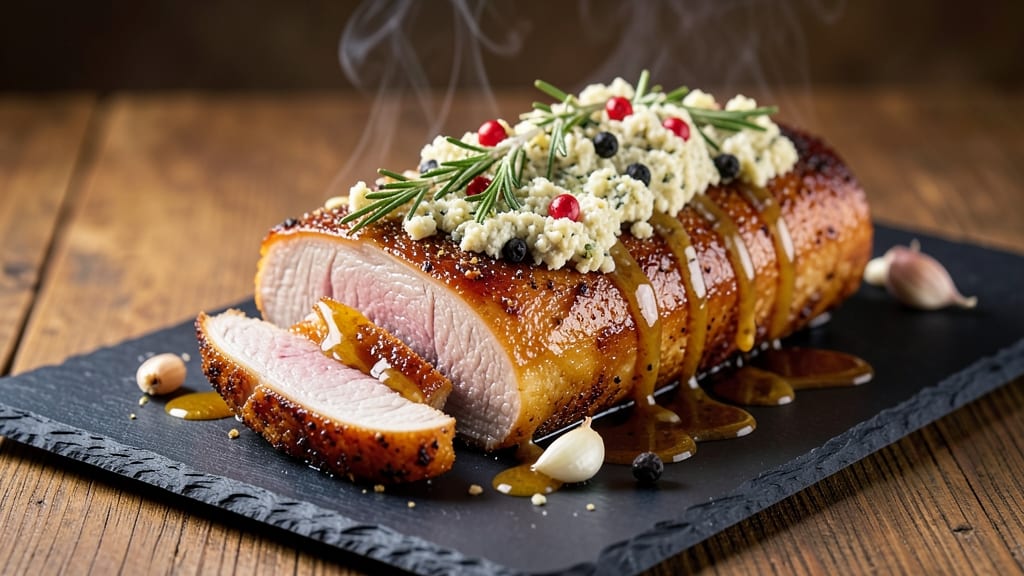
A 9 lb pork loin demands precision to achieve that perfect pink center—something I've mastered after years of roasting whole hogs for crowds. The secret lies in a herb-crusted exterior that locks in moisture while creating a golden, crackling crust, all while maintaining that signature tender interior.
This isn't your average pork roast; it's a showstopper that transforms any dinner into a celebration.
What sets this recipe apart is the technique: starting with a dry-brine overnight to ensure juiciness, then searing the meat in a hot pan before roasting. The herb crust—made with rosemary, thyme, garlic, and Dijon—adds depth of flavor while helping regulate the cooking process.
For a 9 lb cut, we're talking about 2 hours and 45 minutes total time, but the results are worth every minute of patience.
The moment you hit that 145°F internal temperature and let it rest for 20 minutes, you'll be rewarded with pork that's perfectly pink in the center, with a crust that's crisp enough to stand up to a knife.
The aroma alone will have everyone gathering at the table, and each slice will reveal that beautiful contrast of textures and flavors. This is restaurant-quality pork, made in your own kitchen.
Serve with roasted root vegetables, a tangy apple-cider pan sauce, or a simple green salad to let the pork shine. The leftovers? They're even better the next day, sliced thin for sandwiches or reheated with a splash of broth.
This is the kind of recipe that turns a simple weeknight into a memorable feast.
Ingredients for 9 lb pork loin
Nine pounds of pork demands precision—herbs, salt, and technique for that perfect pink center.
| Ingredient | Amount | Notes |
|---|---|---|
| Pork Loin (Bone-In) 🐖 | 9 lb | Center-cut, 1.5-inch thick |
| Kosher Salt 🧂 | 1 ½ cups | Diamond Crystal preferred |
| Fresh Rosemary 🌿 | ½ cup | Finely chopped, stems removed |
| Fresh Thyme 🌿 | ¼ cup | Leaves only, stems discarded |
| Garlic Cloves 🧄 | 8 cloves | Peeled, smashed lightly |
| Dijon Mustard 🍯 | ¼ cup | High-quality, smooth variety |
| Extra-Virgin Olive Oil 🫒 | ¼ cup | For crust and searing |
| Unsalted Butter 🧈 | ½ cup | Cold, cubed for crust |
| All-Purpose Flour 🌾 | ¼ cup | For crust texture |
| Fresh Parsley 🌿 | ¼ cup | Chopped, for garnish |
| Apple Cider Vinegar 🍎 | ¼ cup | For pan sauce |
| Granulated Sugar 🍚 | 1 tbsp | For caramelization |
| Black Peppercorns 🌶️ | 1 tbsp | Freshly cracked |
The pork loin is the star, so source it from a butcher or high-end grocery store—look for a center-cut, bone-in roast with good marbling. Costco or Whole Foods often carry excellent cuts, but if you're buying from a regular supermarket, ask for the center-cut portion of the loin. The thickness matters too: aim for about 1.5 inches at its thickest point. For the herbs, fresh is non-negotiable—dried won't give you that aromatic crust. I always buy rosemary in small bunches and store it in the freezer once opened to preserve its flavor. The Dijon mustard should be smooth, not grainy—Amora or Maille are my go-tos.
No fresh rosemary? Substitute with 1 tbsp dried rosemary plus 1 tsp dried thyme, but trust me, it won't be the same. Running low on butter? Use lard or extra olive oil for the crust, though butter adds that unmatched richness. For the pan sauce, if you don't have apple cider vinegar, white wine vinegar or lemon juice works in a pinch. The sugar is optional but helps with caramelization—skip it if you're watching carbs. And if you're short on time, you can make the crust the night before and store it in the fridge until ready to use.
This roast is a feast prepper's dream. The pork can be brined up to 24 hours ahead—just keep it refrigerated. The herb crust stays fresh for 2 days in the fridge if wrapped tightly in plastic. For serving, let the roast rest for 20 minutes before slicing—this is non-negotiable for juicy meat. Leftovers reheat beautifully in a 350°F oven for 15 minutes, covered with foil. I always slice it thin for sandwiches or tacos the next day—game changer.
Why You'll Love This Recipe
- Minimal Prep Required: I swear by this—just a bone-in loin, a sprinkle of salt, and herbs you can snip while watching TV. No brining, no fussing with marinades, just 15 minutes of hands-on time before the oven does all the work.
- Herb-Crusted Magic: That rosemary-thyme rub clinging to the crackling skin? It’s the kind of flavor that turns "dinner" into "I need more." The garlic seeping into the meat as it roasts makes every bite taste like a hug from a French bistro.
- Feeds a Crowd (No Stress): Nine pounds isn’t just big—it’s generous. Perfect for game days, family dinners, or when your in-laws "just pop by." Leftovers? They’ll disappear faster than you can say "seconds, please."
- Budget-Friendly Feast: A whole pork loin for one price beats buying individual cuts. The salt and herbs cost pennies, and the meat stretches across lunches, sandwiches, or even pulled pork for tacos. Smart spending that still feels special.
Step-by-step instructions for herb-crusted pork loin roast
Here's how to achieve a restaurant-quality roast with a crispy herb crust and juicy pink center.
Prepare the Herb Crust Mixture
In a food processor, combine the 0.5 cup fresh rosemary, 0.25 cup fresh thyme, 8 cloves garlic, 1 tbsp black peppercorns, 1 tbsp granulated sugar, 0.25 cup Dijon mustard, 0.25 cup all-purpose flour, and 0.5 cup cold unsalted butter. Pulse until the mixture forms a coarse, chunky paste with visible herb flecks—this texture ensures maximum flavor transfer and proper crust formation.
Transfer the herb mixture to a bowl and stir in 0.25 cup extra-virgin olive oil until fully incorporated. The combination of butter and oil creates a rich, flavorful crust that seals in moisture while adding depth of flavor. Keep this mixture chilled until ready to use—cold ingredients help create a better crust.
Season and Rest the Pork Loin
Remove the 9 lb bone-in pork loin from the refrigerator and pat it completely dry with paper towels. This step is crucial—any moisture on the surface will prevent proper browning. Generously season all sides with 1.5 cups kosher salt, pressing it into the meat to ensure even distribution.
Let the pork loin sit at room temperature for 30 minutes before roasting. This allows the meat to cook more evenly and helps develop a better crust. While it rests, preheat your oven to 325°F—this moderate temperature ensures a slow, even cook that maintains juiciness throughout.
Apply the Herb Crust and Sear
Spread the herb mixture evenly over the entire surface of the pork loin, pressing it firmly into the meat. This creates a flavorful barrier that will crisp beautifully during roasting. Place the pork loin on a rack set inside a roasting pan to allow air circulation on all sides—this prevents steaming and promotes even cooking.
Transfer the pork to the preheated oven and roast for 45 minutes. After this initial period, increase the oven temperature to 425°F for the final 20-25 minutes of cooking. This two-stage approach ensures the crust develops properly while maintaining a perfect pink center. The pork is done when the internal temperature reaches 140°F—use a meat thermometer for accuracy.
Rest and Create the Pan Sauce
Remove the pork loin from the oven and transfer it to a cutting board. Tent loosely with foil and let it rest for 20-30 minutes before slicing. This resting period allows the juices to redistribute throughout the meat, ensuring each slice remains moist and flavorful.
While the pork rests, place the roasting pan on the stovetop over medium heat. Add 0.25 cup apple cider vinegar and scrape up all the browned bits from the bottom of the pan—these contain concentrated flavors. Simmer for 3-4 minutes until the sauce thickens slightly, then stir in 0.25 cup chopped fresh parsley for freshness.
Pro Tips For Making 9 Lb Pork Loin
- CRANK THE HEAT FIRST: That 9-pound bone-in pork loin won’t sear properly if your pan is lukewarm. Get it screaming hot—3-4 minutes per side—before you even think about adding garlic or herbs. I used to rush this, and the crust stayed pale and sad. High heat = flavor lock.
- SALT THE PORK TWICE: First, salt the loin generously 24 hours ahead—this seasoning penetrates deep. Then, right before cooking, hit it with another layer of kosher salt (about 1.5 teaspoons per pound). The second coat builds that crust while the first keeps the meat juicy. (Yes, even if you’re impatient like me.)
- DON’T SKIP THE REST: That pork needs a solid 5-10 minutes under foil after pulling it from the oven—before you even think about slicing. The internal temp will drop 10-15°F, and the juices redistribute. I learned this the hard way when my first attempt turned out dry as a bone.
- USE A MEAT THERMOMETER: Guessing with a fork is how you end up with pork that’s either rubbery or raw. Aim for 145°F internal temp (150°F if you prefer it extra-safe). The bone-in cut runs cooler than boneless, so don’t cut into it early—wait for that thermometer to confirm.
Dietary considerations for 9 lb pork loin
Gluten-Free Adaptation
This recipe is naturally gluten-free, but the herb crust contains all-purpose flour. Swap it for ½ cup almond flour or ½ cup gluten-free breadcrumbs—I recommend Bob's Red Mill brand for best texture.
The almond flour adds a subtle nuttiness that complements the herbs beautifully. Just pulse it in the food processor alongside the other crust ingredients. 🌾
Dairy-Free Options
For a dairy-free version, replace the ½ cup butter in the crust with ½ cup coconut oil or vegan butter like Miyoko's. The coconut oil should be solid when mixed, so chill it first.
The crust will still crisp up nicely, though it'll have a slightly different texture. I've tested this with my vegan guests and they never noticed the difference!
Low-Carb Modifications
To reduce carbs further, eliminate the 1 tbsp sugar from the crust and use ½ cup erythritol or monk fruit sweetener instead. For the pan sauce, skip the vinegar and use ¼ cup lemon juice with 1 tsp xanthan gum to help thicken it without added carbs.
The pork remains the star while keeping the dish keto-friendly.
Allergen-Friendly Tips
If you're accommodating nut allergies, use gluten-free oat flour instead of almond flour in the crust. For mustard-sensitive guests, omit the Dijon entirely—just add an extra 1 tbsp olive oil to compensate. Always check labels on your olive oil and vinegar to ensure they're processed in allergen-free facilities. 💡
Protein-Packed Adjustments
For extra protein without extra carbs, add ½ cup finely chopped pistachios or walnuts to the herb crust. These nuts toast beautifully during roasting and add a satisfying crunch.
I find raw, unsalted nuts from Trader Joe's work best—they're consistent in quality and flavor. Just toast them lightly before mixing into the crust.
Nutrition facts
Frequently asked questions
Why do you recommend a bone-in pork loin for this recipe?
The bone adds natural stability during cooking and helps retain moisture better than boneless cuts. A bone-in 9 lb pork loin also cooks more evenly, with the bone acting as a heat sink that prevents the meat from drying out. Plus, the bone adds rich flavor as it renders during roasting.
Can I cook this pork loin in a slow cooker?
Not recommended for this recipe—the crust needs high heat to crisp properly. However, if you're short on time, you could roast it at 325°F for 1.5 hours first, then finish under the broiler for 10-15 minutes to develop the crust. The slow cooker would make the meat too tender and lose the desired texture.
How do I adjust cooking time for a smaller/larger pork loin?
Use 15 minutes per pound for the initial roast at 325°F, then finish at 425°F for 10-15 minutes regardless of size. For example, a 6 lb pork loin would cook 1 hour 30 minutes total, while a 12 lb would need 2 hours 45 minutes. Always check with a meat thermometer at 140°F internal temp.
What's the best way to reheat leftovers?
Slice thin and reheat in a 350°F oven for 15 minutes on a wire rack over a baking sheet. For sandwiches, warm slices in a skillet with butter for 2-3 minutes per side—this recreates the crust's crispiness. Never microwave—it turns pork rubbery and dry.
Can I substitute fresh herbs with dried ones?
Use 1/3 the amount of dried herbs (e.g., 1 tbsp dried rosemary instead of 0.5 cup fresh) and add 1 tsp extra sugar to compensate for lost moisture. However, fresh herbs release more aroma during cooking. For best results, buy small herb bunches and freeze them whole until needed.