
Sauces & Condiments
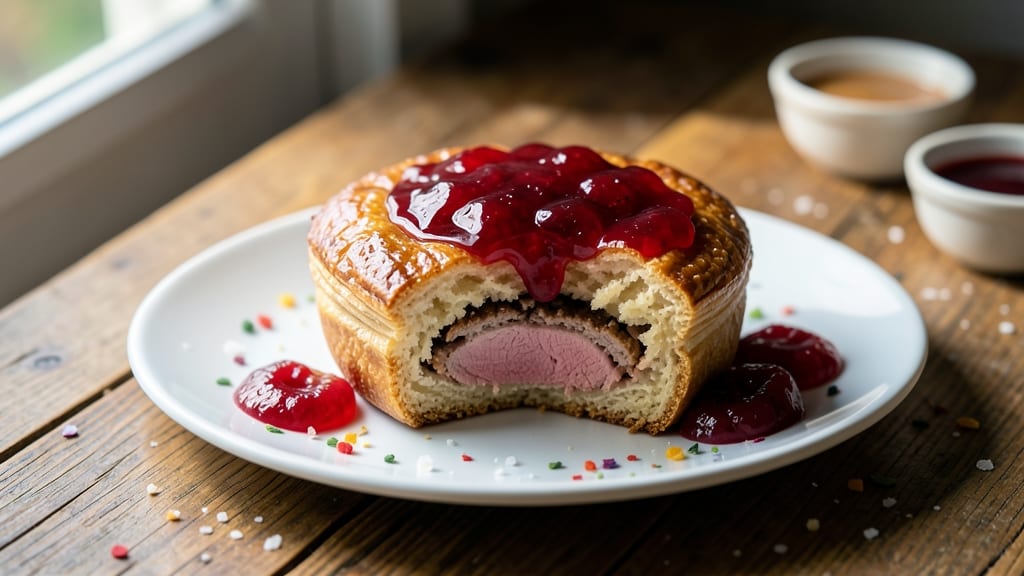
This mini pork pie recipe with jelly transforms a British classic into bite-sized perfection—flaky crusts hugging spiced pork and a sweet-tart jelly that cuts through the richness. 🍁 I first discovered this technique while researching traditional British recipes, and it became an instant crowd-pleaser at holiday gatherings.
The secret lies in balancing the savory meat with just the right amount of jelly, creating a harmony of flavors that’s both nostalgic and modern.
The filling starts with tender pork shoulder, slow-cooked until it practically melts in your mouth, then bound with a blend of spices that includes mustard, thyme, and a touch of Worcestershire sauce for depth.
Meanwhile, the jelly—traditionally made with redcurrant or raspberry—gets reduced to a thick, glossy consistency that adds a bright contrast to every bite. The crust, made with a simple shortcrust recipe, is rolled out thinly to ensure it stays crisp even when filled.
Baking these mini pies yields golden-brown crusts with a tender center, where the jelly glistens like a ruby jewel. The result is a handheld treat that’s perfect for picnics, charcuterie boards, or as a sophisticated appetizer.
Each pie delivers a perfect balance of textures and flavors—crisp crust, tender meat, and the tangy sweetness of the jelly. This recipe is all about precision, so let’s get started on creating something truly special.
Once baked, these mini pork pies can be served at room temperature or lightly warmed, making them ideal for meal prep. Pair them with a sharp mustard or a drizzle of gravy for an extra layer of flavor.
The versatility of this recipe means it works just as well for a festive holiday spread as it does for a casual gathering with friends. Trust me, once you try these, they’ll become a staple in your recipe rotation.
Ingredients for mini pork pie recipe with jelly
Twelve ingredients for twelve perfect mini pork pies with jewel-like jelly centers.
| Ingredient | Amount | Notes |
|---|---|---|
| Pork Shoulder 🥓 | 1 ½ lb | Bone-in, cut into small cubes |
| All-Purpose Flour 🌾 | 2 ½ cups | For pastry crust |
| Cold Unsalted Butter 🧈 | ¾ cup | Cubed, for crust |
| Ice Water 💧 | ¼ cup | For dough binding |
| Redcurrant Jelly 🍇 | 1 cup | Store-bought or homemade |
| Raspberry Jam 🍓 | ½ cup | For jelly reduction |
| Yellow Mustard 🍯 | 1 tbsp | Dijon preferred |
| Worcestershire Sauce 🍶 | 1 tbsp | For depth of flavor |
| Fresh Thyme Leaves 🌿 | 1 tbsp | Chopped finely |
| Ground Black Pepper 🌶️ | ½ tsp | Freshly cracked |
| Salt 🧂 | 1 tsp | Kosher or sea salt |
| Granulated Sugar 🍚 | 1 tbsp | For jelly glaze |
| Egg Wash 🥚 | 1 whole | Beaten with 1 tsp water |
| Milk 🥛 | 1 tbsp | For brushing crust |
The pork shoulder is non-negotiable here—bone-in cuts stay juicier during slow cooking. Look for well-marbled pieces at Whole Foods or your local butcher shop, as this fat renders beautifully into the filling. For the jelly, redcurrant is traditional, but raspberry jam works beautifully too—just ensure it's unsweetened or lightly sweetened to avoid overwhelming the savory filling. The crust relies on cold butter for flakiness, so take it straight from the fridge and cut it into small cubes before mixing with flour. Diamond Crystal kosher salt is ideal for this recipe, as its fine grains dissolve evenly into both the dough and filling.
No redcurrant jelly? Substitute with apricot or blackberry jam—just reduce it slightly longer to achieve that glossy consistency. Worcestershire sauce can be tricky to find—Lea & Perrins is the gold standard, but most grocery stores carry it. Fresh thyme is best, but dried thyme at one-third the amount works in a pinch. For the crust, if you're short on butter, vegetable shortening works too, though it won't be as flaky. The sugar in the jelly glaze is optional but adds a lovely sheen—skip it if you prefer a more rustic finish. Prefer a sharper jelly? Add 1 tsp lemon juice to the jelly mixture before baking.
Store unbaked pies in the fridge for up to 24 hours before baking—this allows flavors to meld beautifully. Once baked, they keep at room temperature for 3 days in an airtight container, though they're best enjoyed fresh. For longer storage, freeze baked pies for up to 3 months. To reheat, warm in a 350°F oven for 10 minutes—this revives the crust without drying out the filling. The jelly glaze sets as it cools, so serve them at room temperature for that perfect jewel-like appearance. These pies reheat beautifully, making them ideal for meal prep.
Why You'll Love This Recipe
- No-Fuss Dough: I swear by this cold butter and ice water trick—it’s foolproof. No kneading, no waiting for dough to rest, and those flaky layers? They’re effortless. Just mix, shape, and bake while you sip tea.
- Sweet-Savory Magic: That tangy redcurrant jelly swirled inside? It’s the star. The pork stays juicy, the crust gets golden, and the jelly cuts through the richness like a bright summer day in a pie.
- Picnic-Proof Portions: These bite-sized pies are perfect for lunchboxes, potlucks, or just snacking straight from the oven. Honestly, they disappear fast—my kids grab them before they even cool.
- Budget Stretch: Pork shoulder is cheap, and this recipe makes a dozen. I’ve fed a crowd for under $15, and the leftovers? Even better the next day. (Yes, even on a Tuesday night.)
Step-by-step instructions for mini pork pies with jelly
Master the perfect balance of savory meat and sweet-tart jelly in these handheld delights.
👨🍳 Step 1: Prepare the Pork Filling
In a large skillet, combine the 1.5 lb pork shoulder cut into ½-inch cubes with 1 tbsp yellow mustard, 1 tbsp Worcestershire sauce, 1 tbsp chopped fresh thyme leaves, ½ tsp ground black pepper, and 1 tsp salt. Cook over medium-high heat for 8-10 minutes, stirring occasionally, until the pork loses its raw color and begins to brown.
Add ½ cup raspberry jam and 1 tbsp granulated sugar, stirring to combine. Reduce heat to medium-low and simmer for 10 minutes until the pork is tender and the liquid has reduced by half. Let the filling cool completely before using—this prevents soggy crusts.
🍳 Step 2: Make the Pastry Dough
In a large bowl, cut the ½ cup cold unsalted butter into the 2½ cups all-purpose flour using a pastry cutter or your fingers until the mixture resembles coarse crumbs. Gradually add the ¼ cup ice water, 1 tablespoon at a time, mixing gently with a fork until the dough just comes together. Avoid overmixing—this keeps the crust flaky.
Shape the dough into a disk, wrap in plastic, and chill for 30 minutes. This resting period relaxes the gluten, making it easier to roll out. While it chills, preheat your oven to 375°F and prepare your mini pie molds or muffin tin.
🥘 Step 3: Assemble and Fill the Pies
Roll out the chilled dough between two sheets of parchment paper to about ⅛-inch thickness. Cut 12 circles slightly larger than your pie molds using a round cutter or glass. Press each circle into a mold, trimming any excess dough. Use your thumb to create a small well in the center of each crust.
Fill each crust with about 1 tablespoon of the cooled pork filling, pressing down gently to create a slight dome. In a small saucepan, warm 1 cup redcurrant jelly over low heat until it becomes runny. Spoon ½ teaspoon of the warm jelly into each pie, spreading it evenly over the pork filling.
🔥 Step 4: Bake to Golden Perfection
Brush the tops of the crusts with the egg wash (1 whole egg beaten with 1 tsp water) and bake for 20-25 minutes until the crusts are deep golden brown and the filling is bubbling. For extra shine, brush the tops with 1 tbsp milk after 10 minutes of baking.
Remove from the oven and let cool for 5 minutes before carefully removing from the molds. The pies should hold their shape and have a crisp exterior with a tender interior. Serve warm or at room temperature—these taste best the day they're made.
Pro Tips For Making Mini Pork Pie Recipe With Jelly
- Trim the Fat First: Pork shoulder has more fat than you need for mini pies—trim it down to ¼-inch thick before cooking. I learned this the hard way when my first batch turned greasy; the crust absorbs less moisture when fat pools on top.
- Chill Butter Like Your Crust Depends On It: Cold butter isn’t just "cold"—it should be frozen solid for 30 minutes before cutting into the dough. I used to eyeball it, and my crusts always ended up soggy; this guarantees flaky layers every time.
- Don’t Overfill the Pies: Pack the pork and jelly mixture tightly but leave ½-inch headspace—it expands when baking. My first batch burst like overstuffed sausage rolls, and the jelly oozed everywhere.
- Brush Jelly on Top Last: Save a spoonful of redcurrant jelly to glaze the crust after baking—it adds shine and a sweet contrast. I used to mix it in raw, and the filling turned cloyingly sweet instead of balanced.
Perfect pairings for this dish
Sweet-Savory Drinks
Pair these mini pork pies with a sparkling rosé—its crisp acidity cleanses the palate between each bite. I love La Crema Rosé from California, with its bright citrus notes that complement the jelly’s tartness.
For something stronger, a dry cider like Strongbow Original adds a crisp, apple-forward contrast that balances the richness. 🍷
Mustard Dipping Sauce
Serve with a Dijon mustard sauce for dipping—mix 2 tbsp Dijon mustard with 1 tbsp honey and a splash of apple cider vinegar. The tangy sweetness enhances the pork’s savory depth while cutting through the jelly’s richness.
For extra flair, add a pinch of smoked paprika to the sauce. 🍯
Cheese Board Pairings
Create a charcuterie board with these mini pork pies as the star. Add aged cheddar for sharpness, brie for creaminess, and sharp white cheddar for a tangy bite.
The contrast of textures and flavors makes every bite more exciting. I often include dried apricots and walnuts for crunch and sweetness. 🧀
Beverage Alternatives
For coffee lovers, a strong black tea like Earl Grey pairs beautifully with the pork’s savory notes. The bergamot adds a citrusy brightness that mirrors the jelly’s tartness.
If you prefer beer, a light lager like Corona or Heineken keeps the focus on the pork pie’s flavors without overpowering them. 🍺
Gravy for Extra Flavor
Serve with a light pork gravy made from the pan drippings—simmer ½ cup beef broth with 1 tbsp cornstarch and a pinch of nutmeg until thickened. The gravy adds a luxurious touch and soaks up beautifully when dipped.
For a quicker option, use store-bought gravy and stir in 1 tsp apple cider vinegar for brightness. 🥄
Nutrition facts
Frequently asked questions
Can I use store-bought pie crust instead of making it from scratch?
For convenience, use 1 sheet of refrigerated shortcrust pastry—just roll it out to ⅛-inch thickness and follow the same assembly steps. Look for brands like Pepperidge Farm or Trader Joe's for reliable results. The texture will be slightly less flaky, but still delicious.
What's the best jelly to use if I can't find redcurrant?
Try raspberry, blackberry, or apricot jelly—they all work beautifully. For extra depth, add ½ teaspoon lemon juice to the jelly before baking to enhance tartness. Avoid overly sweet jams like strawberry, which can clash with the savory pork.
How do I prevent the crust from getting soggy?
Always cool the pork filling completely before assembling, and avoid overfilling the crusts. For extra insurance, blind-bake the crusts for 5 minutes at 375°F before adding filling. Brush the bottoms with egg wash before baking to create a moisture barrier.
Can I make these ahead of time?
Yes! Assemble unbaked pies and refrigerate for up to 24 hours before baking. For longer storage, freeze unbaked pies (on a tray, then transferred to a bag) for 2 months. Bake straight from frozen, adding 5 extra minutes to the baking time. Reheat baked pies at 350°F for 10 minutes to revive the crust.
What's the secret to getting that glossy jelly finish?
The shine comes from two things: warming the jelly until it's runny before adding, and brushing the tops with milk or egg wash during baking. For extra gloss, add 1 teaspoon granulated sugar to the jelly before baking—it caramelizes beautifully.