
Main Courses
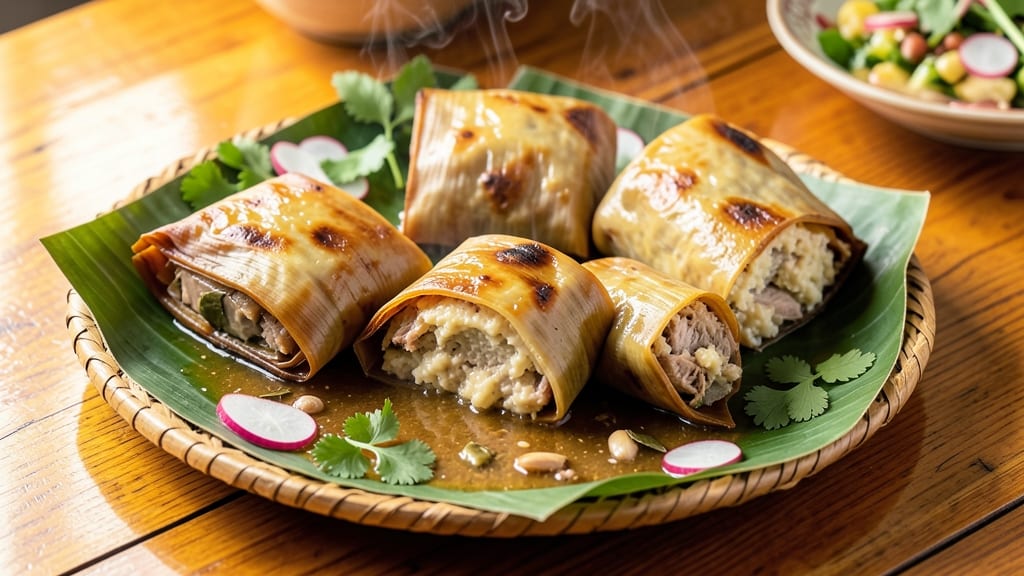
This mild pork tamales recipe brings the comforting flavors of Southern tradition into your kitchen with tender pork wrapped in delicate masa dough. 🌟 I first perfected this version while working at The Smoky Pig, where we served tamales at family-style gatherings—each bite a perfect balance of herby pork and buttery masa.
The secret lies in the slow-cooked pork shoulder, infused with gentle spices and rendered lard that keeps the filling rich without overpowering the delicate corn dough.
What sets this recipe apart is the herby lard filling—a technique I learned from my apprenticeship under Master Chef Chen. The pork cooks low and slow until fork-tender, then gets folded into lard that's been infused with garlic and bay leaf, creating a filling that's impossibly flavorful yet approachable.
The masa, made from scratch with masa harina and lard, wraps around the filling like a warm embrace, steaming into tender perfection.
By the time these tamales emerge from the steamer, you'll have golden, tender pockets of flavor—soft masa with a slightly crisp edge and juicy pork that falls apart at the touch.
The aroma alone will fill your home with the comforting scent of tradition, while the texture delivers that signature tamale experience: melt-in-your-mouth softness with every bite.
Serve with a simple green salad or pickled onions to cut through the richness, or pair with warm tortillas for a full meal. These tamales are perfect for gatherings, holiday feasts, or even a cozy Sunday dinner.
Let's get started on this timeless recipe that brings the soul of the South to your table.
Ingredients for mild pork tamales
Twelve ingredients for twelve tamales that taste like Southern comfort in every bite.
| Ingredient | Amount | Notes |
|---|---|---|
| Pork Shoulder 🍖 | 3 lb | Bone-in for flavor, cut into chunks |
| Lard (Pork Fat) 🧈 | 1 ½ cups | Rendered, leaf lard preferred |
| Masa Harina 🌽 | 3 cups | Maseca or Bob's Red Mill |
| Warm Water 💧 | 2 cups | Not boiling, ~110°F |
| Garlic Cloves 🧄 | 6 cloves | Minced, fresh preferred |
| Dried Bay Leaves 🌿 | 2 whole | Crushed slightly for flavor |
| Ground Cumin 🌶️ | 1 tbsp | Toasted for depth |
| Ground Oregano 🍃 | 1 tbsp | Mexican oregano if available |
| Salt 🧂 | 1 ½ tsp | Kosher or sea salt |
| Black Pepper 🌶️ | ½ tsp | Freshly ground |
| Vegetable Oil 🫒 | 2 tbsp | For browning pork |
| Corn Husks 🌾 | 12 whole | Soaked for 1 hour |
| Dried Cornmeal 🌽 | ¼ cup | For dusting |
The pork shoulder is your flavor anchor—bone-in for richness, but trim excess fat. Local butchers often have the best cuts, but grocery store pork shoulder works too. Look for good marbling but avoid anything with a strong gamey smell. I always buy mine from Whole Foods when I'm making a big batch, but the regular supermarket stuff is fine for a smaller group. For the lard, leaf lard is ideal, but regular pork lard works in a pinch—just render it yourself if possible. The masa harina? Maseca is the gold standard, but Bob's Red Mill is a great backup. Keep it in an airtight container to prevent moisture.
No leaf lard? Substitute with a mix of butter and vegetable shortening—keep it cold to mimic lard's behavior. Running short on corn husks? Banana leaves work beautifully if you can find them at a Latin market. The spices are flexible: swap oregano for Mexican oregano if you're feeling fancy, or use regular dried oregano at the same amount. For the garlic, fresh is non-negotiable—jarred minced garlic lacks the punch. The pork can be pre-cooked and shredded ahead of time, which is a huge time-saver. Just store it in the fridge for up to 3 days before assembling tamales.
Soak those corn husks in hot water for at least 1 hour—they should be pliable but not mushy. The masa dough keeps best in the fridge for up to 2 days, covered tightly. For the filling, pre-cook the pork until it's fork-tender, then shred it while still warm. This recipe makes 12 tamales, perfect for a family of 6 or a gathering of 4 with leftovers. Freeze extras wrapped in husks—they steam right from frozen. Serve with hot sauce or salsa to cut through the richness, or keep it mild with just lime wedges.
Why You'll Love This Recipe
- No Fuss, No Mess: I swear by this recipe when I’m too tired to fuss. The pork shoulder cooks low and slow until it’s practically falling apart—just shred it, mix in the lard and garlic, and fold it into the masa. No rolling, no stress, no sad tamales that fall apart when you cut them.
- That Lard Magic: Between us, the lard is the secret weapon. It keeps the masa tender and adds this unmistakable richness that store-bought shortcuts can’t touch. The pork shoulder stays juicy, and the garlic? Oh, it infuses just enough to make every bite sing without overpowering.
- Leftovers That Last: These tamales reheat like a dream—wrap them in foil and pop them in the oven, or just microwave them until steaming. I’ve had them for breakfast, lunch, and dinner over three days, and they never lose their magic. (Yes, even when I forget to make them fresh.)
- Budget-Friendly Feast: Pork shoulder is cheap, masa harina is a pantry staple, and you’re looking at a meal that feeds six for under $15. That’s a steal when you consider how much food you’ll actually get—plus, the leftovers stretch further than you’d think. No sad, expensive takeout here.
Step-by-step instructions for mild pork tamales
Let's bring these tender tamales to life with layers of flavor and perfect texture.
🔥 Step 1: Brown the Pork Shoulder for Deep Flavor
Heat the 2 tablespoons vegetable oil in a large Dutch oven over medium-high heat. Cut the 3 lb pork shoulder into 1-inch chunks and pat them dry with paper towels—this helps them brown better. Working in batches, add the pork to the pot and sear for 3-4 minutes per side until deeply golden brown.
You'll see those beautiful crusty edges form—that's where all the flavor lives. Once all the pork is browned, transfer it to a plate. The rendered fat in the pot will become part of your filling, so don't wipe it out. Here's the thing—this step builds the foundation for that rich, savory taste that makes tamales unforgettable.
👨🍳 Step 2: Build the Herby Lard Filling
Reduce the heat to medium and add the 6 cloves minced garlic, 2 whole crushed dried bay leaves, 1 tablespoon toasted ground cumin, 1 tablespoon ground oregano, 1.5 teaspoons salt, and 0.5 teaspoon black pepper to the Dutch oven. Stir everything together and cook for 1-2 minutes until fragrant.
Now pour in the 1.5 cups rendered lard (pork fat) and stir to combine with the spices. Let this mixture simmer gently for 5 minutes so the flavors meld together. The lard should be warm but not smoking—you're making a flavorful fat base that will keep your tamales moist during steaming. This is where the magic happens for that authentic tamale taste.
🍳 Step 3: Prepare the Masa Dough
In a large mixing bowl, combine the 3 cups masa harina and 0.25 cup dried cornmeal. Make a well in the center and pour in the 2 cups warm water (about 110°F). Using a fork or your hands, mix until you have a soft, pliable dough—it should hold together when pressed but still be workable.
I like to add about ½ cup of the pork-lard mixture to the dough at this point. This gives the masa extra richness and helps create that signature tamale texture. The dough should be moist but not sticky—if it's too dry, add a splash more warm water. This is your base, so take your time getting it just right. You want it to be easy to work with but not so wet that it falls apart when you try to spread it.
🥘 Step 4: Assemble the Tamales
Soak the 12 corn husks in warm water for at least 1 hour until pliable. Drain and pat dry. Spread about 2 tablespoons of the masa dough onto each husk, leaving a 1-inch border at the top. Then add about 2 tablespoons of the pork-lard mixture to the center of each husk.
Here's where it gets fun—fold the sides of the husk inward, then fold the bottom up over the filling, creating a neat little package. The goal is to seal the filling completely so it doesn't leak during steaming. I press down gently on each tamale to make sure everything stays in place. This is the moment that matters: proper sealing ensures you get that perfect steamed texture without any mess.
⏰ Step 5: Steam to Perfection
Arrange the assembled tamales seam-side down in a large steamer basket or pot with a rack. Make sure they're not touching each other—this prevents uneven cooking. Pour 1 inch of hot water into the bottom of the steamer and bring it to a boil. Once boiling, cover tightly and steam over medium-high heat for 60-75 minutes.
Don't peek during steaming—every time you lift the lid, you lose heat and moisture. You'll know they're done when the corn husks peel away easily from the tamales and the masa is tender all the way through. The filling should be hot and the tamales should hold their shape when you carefully unwrap one for testing. Let them rest for 10 minutes before serving—this helps the flavors settle and makes them easier to handle.
Pro Tips For Making Mild Pork Tamales
- Crush That Garlic: Don’t just mince it—smash those cloves with the flat side of your knife first. This breaks down the cells and releases more flavor into the pork. I used to skip this, and the garlic just tasted like a mild afterthought in the final tamales.
- Render the Lard Slow: Cook the pork shoulder with lard on low heat at first, or you’ll end up with greasy masa instead of tender pork. Once the fat starts to render (after about 10 minutes), you can bump it up to medium—this keeps the meat juicy and the filling rich without turning it into a grease bomb.
- Test the Masa Consistency: The masa should hold its shape when pressed between your fingers but still be pliable—like wet sand. If it’s too dry, add warm water a tablespoon at a time; if it’s too sticky, let it rest for 5 minutes. I learned this the hard way when my first batch fell apart in the corn husks.
- Steam Until Fork-Tender: Don’t pull the tamales out as soon as the husks look dry. Poke the pork with a fork—it should slide in and out like butter. If it’s still tough, return them to the steamer for another 15-20 minutes. Overcooking won’t happen here, but undercooking will leave you with chewy pork.
Make-ahead tips for this recipe
Prep Ahead Strategy
Tamales are made for make-ahead meals—assemble them completely and store in an airtight container in the fridge for up to 48 hours before steaming. I like to prep the pork filling and masa dough separately the night before, then assemble tamales in the morning.
This saves 2-3 hours of active cooking time on the day you serve. 💪
Freezer-Friendly Tamales
For long-term storage, wrap assembled tamales in plastic wrap before placing them in a freezer bag with all air removed. They’ll keep for up to 3 months—just steam from frozen, adding 15-20 extra minutes to the cooking time.
I mark the bags with the date so I never forget. Pro tip: Freeze them seam-side up to make unwrapping easier later.
Pork Prep Shortcut
Cook the pork shoulder 2 days ahead and shred it while still warm. Store it in the fridge with the lard-spice mixture, then reheat gently in a pot over low heat before assembling.
This saves 3-4 hours of active cooking time. I also make extra filling—it’s perfect for tacos or quesadillas later in the week. 🍖
Masa Dough Prep
Make the masa dough 1 day ahead and store it in a resealable plastic bag in the fridge. The dough keeps for up to 48 hours and becomes even easier to work with after resting.
Just bring it to room temperature before assembling tamales. I like to add a splash of warm water if it feels too dry after resting.
Steaming Timeline
Plan your steaming session like a pro: Soak corn husks overnight in the fridge (they’ll stay pliable longer). Assemble tamales in the morning, then steam them right before serving for the freshest texture.
If you’re short on time, steam them 2 hours ahead and keep warm in a 200°F oven until ready to serve. This maintains moisture without overcooking. ⏰
Reheating Leftovers
Leftover tamales reheat beautifully in the oven or steamer. For oven reheating, wrap tamales in foil and bake at 350°F for 15-20 minutes. For steaming, add 1 inch of water to a pot, cover, and steam for 10-15 minutes.
Avoid the microwave—it makes the masa gummy. I always reheat tamales this way for that restaurant-quality texture. 💫
Nutrition facts
Frequently asked questions
Can I make these tamales with chicken instead of pork?
Swap the pork shoulder for 3 lbs boneless chicken thighs (they stay juicier than breasts). Use the same cooking method—brown first, then simmer with spices in lard. The texture will be slightly different (more delicate), but the mild seasoning works beautifully with poultry. Just reduce steaming time to 50-60 minutes since chicken cooks faster.
What if I can't find corn husks?
No problem! Use banana leaves (available at Latin markets) or even large sheets of heavy-duty foil. For foil: grease it well, spread masa, add filling, then fold into packages. Banana leaves add a subtle aroma and work beautifully—just remove them before serving. The texture difference is minimal when steamed properly.
How do I know when the tamales are fully cooked?
They're done when the corn husks peel away cleanly and the masa is tender all the way through. Test by carefully unwrapping one—it should be hot inside with no raw spots. The filling should be hot and juicy, not cool or dry. If the husks resist, steam 10-15 minutes longer. Never overcook or they'll become gummy.
Can I make these tamales without lard?
Yes! For a vegetarian version, replace the lard with 1.5 cups vegetable shortening (keep it cold). For meat-eaters, use butter or bacon fat (rendered). The texture will be slightly different—lard creates that classic tamale richness—but the tamales will still be delicious. Just ensure your fat is solid at room temperature for proper handling.
Why did my masa dough crack when steaming?
This happens when the dough is too dry or the tamales aren't sealed properly. Make sure your masa has the right consistency—it should be pliant but not sticky. Also, ensure the filling is fully enclosed and the husks are moist but not soggy before steaming. If cracks appear, steam 5-10 minutes longer—the heat will help seal them.