
Main Courses
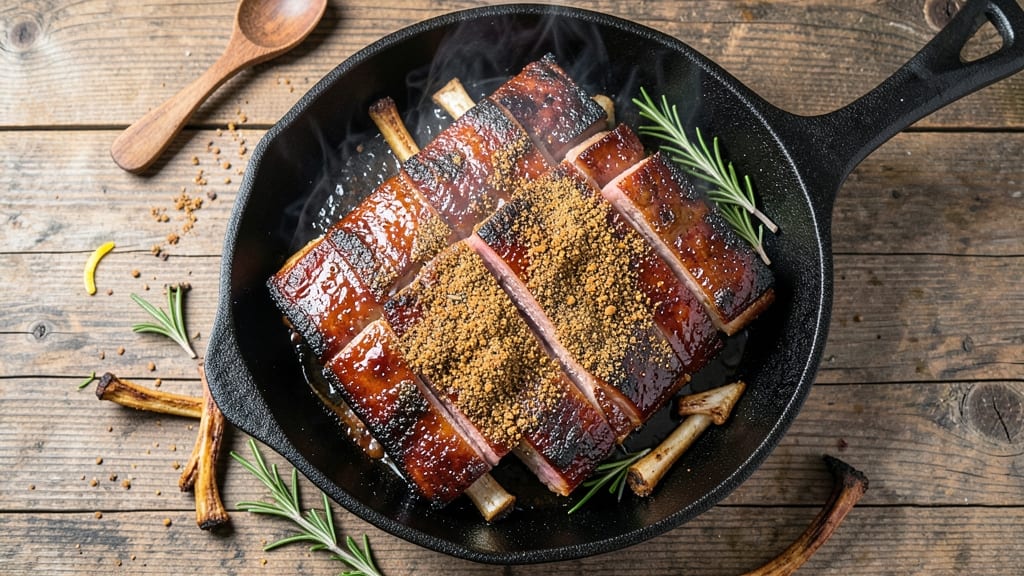
This cast iron pork ribs recipe transforms tough cuts into fall-apart tenderness with a five-spice crust and tangy tamarind glaze—just like my grandmother used to make in Georgia. The secret lies in the cast iron's ability to create that perfect bark while keeping the meat juicy inside.
I've cooked thousands of pounds of pork, and this method never fails to impress, even at my smoky pig restaurant in Atlanta.
The process starts with a dry rub of five-spice powder, brown sugar, and smoked paprika that forms a flavorful crust during the initial sear. Unlike traditional slow-cooked ribs, this technique uses the cast iron's heat retention to lock in moisture while developing deep caramelization.
The tamarind glaze adds that signature sticky sweetness that makes these ribs unforgettable.
By the time you're done, you'll have ribs with crispy edges, tender meat that pulls apart easily, and a glossy glaze that makes every bite worth the wait. The cast iron doesn't just cook—it enhances the natural flavors of the pork, creating a dish that's restaurant-quality without the fuss.
Serve with collard greens and cornbread for the full Southern experience.
What makes this recipe special is its balance of simplicity and sophistication—no smoker required, just your cast iron skillet and a little patience. The five-spice blend adds warmth while the tamarind brings brightness, creating a flavor profile that's complex yet approachable.
Trust me, once you try these, you'll never go back to store-bought ribs again.
Ingredients for cast iron pork ribs
Pantry staples plus a few specialty touches—this is where the magic happens.
| Ingredient | Amount | Notes |
|---|---|---|
| Pork Ribs (Baby Back or St. Louis Style) 🥓 | 4 lb | Bone-in, meaty cuts preferred |
| Five-Spice Powder 🌶️ | 2 tbsp | Ground blend of cinnamon, clove, fennel, star anise, pepper |
| Brown Sugar 🍚 | ½ cup | Light or dark, packed |
| Smoked Paprika 🌶️ | 1 tbsp | For deep smoky flavor |
| Kosher Salt 🧂 | 1 ½ tbsp | Diamond Crystal preferred |
| Black Pepper 🌶️ | 1 tsp | Freshly ground for best flavor |
| Tamarind Paste 🍯 | ½ cup | Thick, unsweetened preferred |
| Honey 🍯 | ¼ cup | Wildflower works best |
| Soy Sauce 🍶 | ¼ cup | Low-sodium preferred |
| Garlic Cloves 🧄 | 6 cloves | Minced for glaze |
| Ginger Root 🌿 | 1 tbsp | Freshly grated |
| Apple Cider Vinegar 🍏 | 1 tbsp | For tangy brightness |
| Vegetable Oil 🫒 | 2 tbsp | High smoke point for searing |
| Fresh Rosemary 🌿 | ¼ cup | Chopped, for finishing |
The ribs are the star, so grab baby back or St. Louis style—they're meatier and more forgiving than spareribs. Costco or local butchers usually have them fresh, but the frozen section works too if you're in a pinch. Look for cuts with good marbling—they'll stay juicier. I always buy extra ribs (about 1.5 lbs per person) because they shrink during cooking. The five-spice powder is non-negotiable for that authentic warmth—Penzeys or bulk bins at natural food stores are your best bet. If you can't find it, mix your own with cinnamon, cloves, fennel seeds, star anise, and black pepper.
No tamarind paste? Substitute lime juice plus a pinch of sugar—it won't be identical, but it'll add tang. The honey can be swapped for maple syrup if you're avoiding it, though honey's floral notes play better here. Short on soy sauce? Coconut aminos or extra tamarind paste work in a bind. The glaze needs to simmer until thickened—don't rush it. If you're feeling fancy, add a splash of bourbon or apple brandy to the glaze for depth. For the rub, if you're missing any spices, double up on what you have—just keep the total at 2 tbsp plus salt. Fresh rosemary is ideal, but dried at half the amount will work in a pinch.
These ribs reheat beautifully—just warm in the oven at 300°F for 10 minutes with a splash of water or glaze. Store leftovers in the fridge for 3-4 days, wrapped tightly in foil to keep them moist. For longer storage, freeze for up to 3 months. I always make a double batch because they disappear fast. The glaze keeps for 2 weeks in the fridge, so use it on chicken or tofu too. The cast iron skillet is your best friend here—season it well before starting to avoid sticking.
Why You'll Love This Recipe
- Cast Iron Magic: I swear by this method—just ribs, spices, and 15 minutes in the cast iron. No messy marinades or hours of smoking, just pure, smoky-sweet satisfaction with almost zero fuss.
- Flavor Bomb Combo: That five-spice powder? It’s the secret weapon—warm, slightly sweet, with a hint of earthiness that pairs perfectly with the caramelized brown sugar crust. My kids fight over the last bite.
- Weeknight Crowd-Pleaser: I make these for game day, lazy Sundays, or even when my book club comes over. They’re hearty enough for a main but simple enough to pair with store-bought coleslaw or crusty bread—no stress.
- Leftovers That Don’t Suck: Unlike other ribs, these actually taste better the next day. I’ll reheat slices in the cast iron with a splash of apple juice until crispy again—zero dryness, all flavor, and it stretches one rack into three meals.
Step-by-step instructions for cast iron pork ribs
Here's how to transform tough pork ribs into fall-off-the-bone tender ribs with a crispy five-spice crust and sticky tamarind glaze.
Prepare the Five-Spice Dry Rub
In a medium bowl, combine the 2 tablespoons five-spice powder, ½ cup brown sugar, 1 tablespoon smoked paprika, 1½ tablespoons kosher salt, and 1 teaspoon black pepper. Mix thoroughly with your hands until the sugar dissolves completely and you have a fine, even coating. This blend is what creates that signature aromatic crust that seals in moisture and adds depth of flavor.
Pat the 4 pounds pork ribs dry with paper towels—this is crucial for that crispy crust. Generously coat each rib with the dry rub, pressing it into the meat so it adheres well. Let the seasoned ribs sit at room temperature for 30 minutes while you prepare the glaze. This resting time allows the rub to penetrate slightly and ensures even cooking.
Sear the Ribs in Cast Iron
Heat a large cast iron skillet over medium-high heat until it's screaming hot. Add 2 tablespoons vegetable oil and let it get shimmering hot—this ensures a proper sear. Working in batches if needed, add the ribs to the skillet and sear for 3-4 minutes per side, until they develop a deep golden-brown crust. Don't crowd the pan; you want that beautiful caramelization.
Once seared, transfer the ribs to a plate and set aside. The residual heat will keep them warm while you prepare the tamarind glaze. This initial sear locks in juices and creates the foundation for that perfect crust we're building.
Create the Sticky Tamarind Glaze
In the same cast iron skillet (no need to clean it—the browned bits add flavor), add the 6 minced garlic cloves and 1 tablespoon freshly grated ginger root. Sauté for 1-2 minutes until fragrant—you'll smell that aromatic punch of ginger and garlic filling your kitchen. Then add the 1 tablespoon apple cider vinegar and let it simmer for 30 seconds to cook off the raw garlic taste.
Pour in the ½ cup tamarind paste, ¼ cup honey, and ¼ cup soy sauce. Stir well and bring to a gentle simmer. Let it cook for 5-7 minutes until it thickens slightly and becomes glossy. The glaze should coat the back of a spoon—this is your signal that it's ready to baste the ribs. If it's too thick, add 1 tablespoon water to loosen it.
Braise the Ribs to Tenderness
Return the seared ribs to the skillet with the glaze. Spoon the sauce over the top, making sure each rib is well-coated. Cover the skillet with a tight-fitting lid and reduce heat to low. Let the ribs braise for 1½ to 2 hours, turning occasionally and basting with the sauce every 20 minutes. You're looking for the ribs to become fork-tender—the meat should pull away easily from the bone.
Here's the thing—don't rush this step. The low and slow cooking breaks down the connective tissue, transforming tough meat into something melt-in-your-mouth delicious. The glaze will caramelize and thicken as it cooks, creating that beautiful sticky coating we're after.
Finish with Rosemary and Serve
Once the ribs are fork-tender, increase the heat to medium and uncover the skillet. Let the sauce reduce for another 5 minutes to thicken further. Sprinkle the ¼ cup chopped fresh rosemary over the top and toss gently to distribute it evenly. The rosemary adds a fresh, herbal note that cuts through the richness of the ribs.
Transfer the ribs to a serving platter and let them rest for 5 minutes before serving. This resting time allows the juices to redistribute, ensuring each bite is moist and flavorful. Serve immediately with the reduced glaze spooned over the top—you'll love how the sauce clings to every bite.
Pro Tips For Making Cast Iron Pork Ribs
- Preheat Cast Iron Like It’s 1985: Get that iron screaming hot—350°F for 10 minutes minimum—before the ribs touch it. I learned this the hard way when my first batch stuck like glue because I rushed. The crust forms fast when the iron’s ready, and that’s where all the flavor hides.
- Trim the Fat, Not the Flavor: Leave a thin layer of fat on the ribs—it renders down into pure deliciousness. Scrape off only the thickest chunks, then pat the rest dry with paper towels. Wet ribs steam instead of sear, and nobody wants soggy ribs.
- Skip the Crowding After 10 Minutes: Let the ribs sizzle undisturbed for the first 10 minutes—even if they look uneven. Moving them too soon breaks the crust, and you’ll end up with patchy browning. After that, flip or rearrange, but give them space to breathe.
- Brown Sugar Needs Heat: Don’t just sprinkle that brown sugar on top and walk away. After searing, toss the ribs with the sugar and let them sit on the hot iron for 2-3 minutes—just until it starts caramelizing. That’s when it turns from sweet to deeply sweet.
Regional styles of this cast iron pork ribs
Georgia Smoky Style
In my home state, ribs are all about that deep, wood-smoked flavor without needing a smoker. I grew up watching my granddaddy cook ribs in his cast iron Dutch oven over pecan wood—this method captures that essence.
Start with a dry rub of 2 tbsp five-spice powder, ½ cup brown sugar, and 1 tbsp smoked paprika, then sear the ribs in the cast iron until they develop a dark mahogany crust.
After the initial sear, transfer them to a 350°F oven for 1½ hours with a splash of apple cider vinegar and ¼ cup honey in the pan. The key is keeping the ribs wrapped in foil during the oven phase to trap steam and tenderize the meat. 🌶️
For serving, I always add a side of collard greens cooked with smoked turkey neck and a sprinkle of hot honey—it cuts through the richness of the ribs perfectly.
The tamarind glaze in this recipe adds that extra tang Georgia pitmasters love, but if you're going for pure Southern style, swap it for a vinegar-based mop made with ½ cup apple cider vinegar, ¼ cup brown sugar, and 1 tbsp hot sauce.
The cast iron retains heat beautifully, so you can finish the ribs right on the stove for that crispy bark.
Charleston Low-Country
Down in Charleston, ribs get a seafood-inspired twist—just look at the ingredients in my recipe. The tamarind glaze brings that tangy brightness reminiscent of she-crab soup, while the five-spice powder adds warmth that pairs beautifully with shrimp or oysters.
For a true Lowcountry touch, serve these ribs with shrimp and grits or a shrimp boil on the side. The cast iron method works perfectly for batch cooking, which is essential when feeding a crowd at a Charleston cookout.
Here's a pro tip: After searing the ribs, add ½ cup shrimp stock to the cast iron along with the tamarind glaze. Simmer for 10 minutes before basting the ribs—this infuses the meat with that briny depth that defines Lowcountry cuisine.
I also like to finish the dish with a pinch of cayenne and 1 tbsp fresh thyme, which are staples in Charleston kitchens. The cast iron's ability to handle both high-heat searing and gentle simmering makes it the ideal tool for this regional style. 🍤
Atlanta BBQ Pit Style
Back in Atlanta, where I run The Smoky Pig, we take ribs to another level by combining the best of Georgia and Texas traditions. The five-spice crust gives us that aromatic depth, while the tamarind glaze adds a sticky sweetness that keeps guests coming back for seconds.
For an Atlanta touch, I add 1 tbsp bourbon to the glaze while it simmers—just enough to caramelize slightly and deepen the flavor. The cast iron skillet becomes our makeshift pit, with the ribs finishing at 375°F for the last 20 minutes to crisp up that crust.
In Atlanta, we serve ribs with buttermilk biscuits and pickled okra—the tang of the okra cuts through the richness, just like the tamarind glaze. The beauty of this cast iron method is that you can start with a small batch and scale up easily.
I've cooked 20 pounds of ribs at once in my restaurant's cast iron braisers, and the technique stays the same. The only difference? More bourbon in the glaze and a side of spicy slaw to keep the heat balanced. 🔥
Southeast Fusion Twist
One of my favorite adaptations is adding a Cajun kick—just toss in 1 tsp cayenne with the five-spice rub and a dash of filé powder (ground sassafras) at the end.
This fusion of Southeast and Cajun flavors works surprisingly well, especially when paired with cornbread dressing instead of collard greens. The cast iron's versatility lets you experiment with different regional styles without needing specialized equipment.
For a true fusion experience, try serving these ribs with blackened shrimp and a peach-corn salad—the sweetness of the peaches balances the smoky ribs perfectly. The tamarind glaze also works wonders on grilled peaches, so you can double the batch and use the leftovers for dessert.
This is how I bring the flavors of the entire Southeast together in one dish, all while keeping the cast iron at the center of the action. 🌟
Nutrition facts
Frequently asked questions
Can I use spareribs instead of baby back or St. Louis style ribs?
Spareribs work beautifully, but they'll need 30-45 extra minutes of cooking time due to their larger bone structure. For spareribs, trim excess fat first and consider adding ½ cup beef broth to the glaze to help tenderize. The five-spice crust will still form perfectly, but expect to baste them more frequently during the braising phase.
How do I prevent my cast iron skillet from sticking during searing?
Make sure your skillet is completely dry and preheated until it's "screaming hot" before adding oil. Use high-smoke-point oil like avocado or grapeseed oil, and let it get shimmering before adding ribs. A well-seasoned cast iron is crucial—if it's new, cook it with oil at 450°F for 1 hour first. Pat ribs very dry with paper towels and don't overcrowd the pan.
Can I make this recipe in an oven instead of just cast iron?
Yes! After searing, transfer ribs to a 350°F oven in the same cast iron skillet (covered with foil). Braise for 1½-2 hours, basting every 30 minutes. The oven method works especially well for larger batches. For extra crispiness, finish under the broiler for 2-3 minutes at the end. The cast iron's heat retention makes it perfect for both stovetop and oven methods.
What's the best way to reheat leftover cast iron pork ribs?
Wrap ribs tightly in foil and reheat at 300°F for 10-15 minutes with a splash of water or glaze. For extra crispiness, broil for 2-3 minutes at the end. Never microwave—it makes ribs soggy. The cast iron's ability to distribute heat evenly makes oven reheating ideal. Store leftovers in the fridge for 3-4 days or freeze for up to 3 months.