
Main Courses
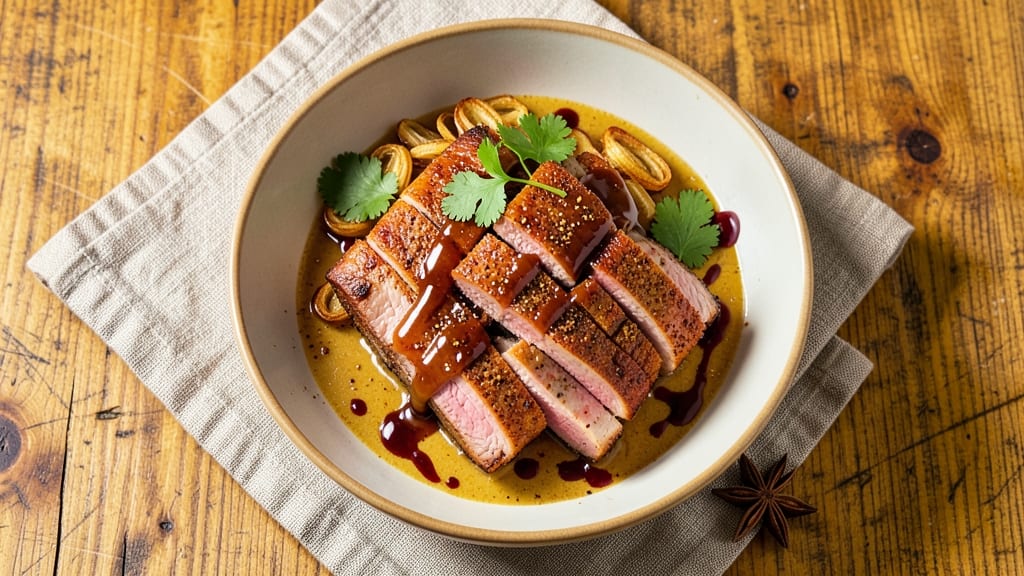
This caramel pork recipe transforms humble pork into a dish that tastes like it belongs in a dim sum spread. The secret lies in a five-spice crust that crackles under the teeth and a tamarind glaze so sticky it makes every bite irresistible.
I developed this after years of perfecting braising techniques in Charleston, where pork shoulder becomes tender enough to fall apart with just a fork.
The magic happens in two stages: first, searing the pork until it develops a deep mahogany crust infused with star anise, cinnamon, and cloves. Then, braising it low and slow until the meat is so tender it practically melts.
The tamarind glaze, reduced with brown sugar and a splash of soy, creates that signature sticky-sweet balance that makes this dish unforgettable.
By the time you serve it, you'll have restaurant-quality pork with a caramelized crust that shatters at every bite, tender meat that dissolves on your tongue, and a glaze that clings to each piece like liquid gold.
The aroma alone will have everyone gathering at your table—this is the kind of dish that turns weeknights into special occasions.
Pair it with steamed bok choy and jasmine rice for a complete meal, or serve it over noodles for a quick weeknight dinner. The technique is straightforward, but the results are anything but ordinary—this is pork cooking at its finest. Let's get started on creating something truly special.
Ingredients for caramel pork
Pork shoulder, five-spice powder, and tamarind paste—these are your stars for restaurant-style caramel pork.
| Ingredient | Amount | Notes |
|---|---|---|
| Pork Shoulder 🥓 | 3 lb | Bone-in for flavor, cut into 2-inch chunks |
| Brown Sugar 🍯 | ½ cup | Light or dark, packed |
| Five-Spice Powder 🌶️ | 2 tbsp | Homemade or store-bought blend |
| Tamari or Soy Sauce 🍶 | ½ cup | Tamari for gluten-free option |
| Tamarind Paste 🍈 | ¼ cup | Or 1 tbsp tamarind concentrate |
| Star Anise 🌿 | 2 whole | For deep aromatic flavor |
| Cinnamon Sticks 🌿 | 2 whole | For infusion, removed later |
| Cloves 🌿 | 4 whole | Lightly crushed for aroma |
| Fresh Ginger 🧄 | 2 tbsp | Grate finely for brightness |
| Garlic Cloves 🧄 | 6 cloves | Smashed for deep flavor |
| Honey 🍯 | 2 tbsp | For glaze sweetness |
| Neutral Oil 🫒 | 2 tbsp | Avocado or vegetable oil |
| Water 💧 | 1 cup | For braising liquid |
| Sesame Oil 🫒 | 1 tbsp | For finishing aroma |
| Green Onions 🧅 | 4 whole | Sliced for garnish |
The pork shoulder is non-negotiable here—look for a well-marbled cut with good fat cap. Costco or local butchers often have the best quality, but any grocery store pork shoulder works if it's fresh. The five-spice powder should be aromatic and vibrant; Penzeys or Asian markets carry the best blends. For tamarind paste, Thai Kitchen brand is reliable, but if you can't find it, tamarind concentrate from the international aisle works too. The ginger and garlic should be fresh—no dried substitutes here. Star anise and cinnamon sticks add depth, so don't skip them even if they're not in your everyday spice rotation.
No five-spice powder? Mix 1 tsp each of cinnamon, cloves, fennel, star anise, and pepper—it's the same thing. Tamarind paste unavailable? Substitute 1 tbsp lemon juice plus 1 tbsp brown sugar, though it won't be identical. The honey can be swapped for maple syrup if you prefer, but it'll have a different flavor profile. For the pork, if you can't find bone-in, use boneless but add an extra 1/2 cup broth to keep it moist. The sesame oil is optional but adds that authentic finish—Kadoya brand is my go-to for the best flavor.
Pork keeps well in the fridge for 3-4 days before cooking, but use it within 2 days for best texture. The five-spice powder and whole spices stay potent for 6 months in a cool, dark place. Once cooked, the caramel pork reheats beautifully—just add a splash of water or broth and warm through. Portion into containers with the glaze for easy lunches. The glaze thickens as it cools, so thin with a splash of water if needed when reheating.
Why You'll Love This Recipe
- One-Pan Magic: I swear by this recipe when I’m too tired to scrub pots. Toss the pork shoulder in a mix of brown sugar, five-spice powder, and tamari—then let the oven do the work while I sip tea. Minimal chopping, zero fuss, and still feels like a restaurant dish.
- Sweet-Savory Crunch: That sticky caramel glaze? Chef’s kiss. The tamarind paste cuts through the richness while the brown sugar caramelizes into a glossy, crackly crust. It’s got depth—smoky, slightly tangy, with just enough heat from the five-spice to wake up your taste buds.
- Weeknight to Party: Honestly, this recipe works for everything. Slap it on rice for a lazy Tuesday dinner, serve it over noodles for a quick date night, or bring it to a potluck—it’s hearty enough to feed a crowd but simple enough to make last-minute. My roommate’s boyfriend asked for the recipe after one bite.
- Leftovers That Don’t Suck: Between us, most caramelized pork dries out by day two. Not this one. The tamari keeps it tender, and the glaze stays sticky (in a good way). I meal prep it all the time—just reheat slices in a pan with a splash of water, and it’s like it was just made. Budget-friendly? Absolutely. Worth the hype? Even more.
Step-by-step instructions for caramel pork with five-spice crust
This method delivers tender, caramelized pork shoulder with a perfect balance of sweet and savory flavors.
Prepare the Spice Rub and Sear the Pork
In a small bowl, combine the 0.5 cup brown sugar, 2 tbsp five-spice powder, and 2 tbsp honey. Mix until the sugar is evenly coated with spices—this creates the aromatic crust. Pat the 3 lb pork shoulder dry with paper towels, then generously coat all sides with the spice mixture, pressing it into the meat so it adheres well.
Heat a large oven-safe skillet over medium-high heat until hot. Add the 2 tbsp neutral oil, then carefully place the pork shoulder in the pan, fat-side down. Let it sear undisturbed for 5-6 minutes until a deep golden-brown crust forms. Flip and sear the other side for another 4-5 minutes. This initial searing locks in juices and builds flavor.
Build the Aromatic Braising Liquid
In a separate bowl, combine the 0.5 cup tamari or soy sauce, 0.25 cup tamarind paste, 1 cup water, 2 whole star anise, 2 whole cinnamon sticks, 4 whole cloves, 2 tbsp finely grated fresh ginger, and 6 smashed garlic cloves. Stir well to dissolve the tamarind paste completely—this creates the tangy, aromatic base for the braise.
Pour this mixture into the skillet with the seared pork, making sure the liquid reaches about halfway up the meat. Bring to a simmer over medium heat, then carefully transfer the entire skillet to a preheated 325°F oven. The pork should be submerged in the liquid to prevent drying out.
Braise Until Fork-Tender
Braise the pork for 3 to 3½ hours, or until the meat is fork-tender and easily pulls apart. The internal temperature should reach 203°F when measured in the thickest part of the shoulder. I check for doneness by inserting a fork—if it slides in easily and the meat flakes apart, it's ready.
During the last 30 minutes of cooking, tent the skillet loosely with aluminum foil to prevent excessive evaporation. This helps maintain moisture while allowing the caramelized crust to develop. The pork will continue to cook slightly after removal from the oven, so don't overcook it.
Finish with Sesame Oil and Garnish
Remove the pork from the oven and let it rest for 10 minutes. Using tongs, transfer the pork to a cutting board and discard the star anise, cinnamon sticks, and cloves. Skim any excess fat from the braising liquid, then stir in the 1 tbsp sesame oil and 2 tbsp honey. Simmer for 2-3 minutes to thicken the sauce slightly.
Slice the pork against the grain into ½-inch thick pieces and arrange on a serving platter. Spoon the caramelized braising sauce over the top, then garnish with the 4 sliced green onions. The finished dish should have a glossy, sticky glaze with a perfect balance of sweet, tangy, and aromatic flavors.
Pro Tips For Making Caramel Pork
- CRISP THE PORK FIRST: I used to skip this, but searing the pork shoulder in small batches over medium-high heat until deep golden—about 3-4 minutes per side—builds flavor that cuts through the sweetness later. Don’t rush it; let the sugar caramelize properly.
- WHISK THE TAMARIND: Dilute that tamarind paste in warm water first—about 2 tablespoons per 1 tablespoon paste—until it’s smooth as maple syrup. Stirring dry paste into hot liquid later clumps like glue and ruins the glossy sauce.
- LOW AND SLOW AFTER SEARING: After browning, drop the heat to 275°F (135°C) and cover loosely with foil. I learned this the hard way—too high a temp turns the sugar into burnt syrup before the pork tenderizes. Patience here means fall-apart texture.
- SALT THE BROWN SUGAR: Mix ½ teaspoon fine sea salt into the brown sugar before adding it to the pan. It balances the sweetness and prevents the caramel from tasting one-note, especially if you’re using a mild tamari instead of soy sauce. Trust me, it makes a real difference.
Regional styles of this recipe
Charleston-Style Braised
In Charleston, we take our pork seriously—this version swaps tamarind for a blackstrap molasses glaze that gives it a deep, almost butterscotch richness. I use a 2-inch pork shoulder cut into chunks, braised with ½ cup molasses, ¼ cup apple cider vinegar, and a pinch of cayenne.
The key is slow-cooking it in a cast iron Dutch oven until the meat falls apart, then finishing with a quick sear in a screaming-hot skillet to caramelize the edges. Serve it with collard greens and cornbread for a true Lowcountry feast. 🌶️
Atlanta BBQ Pit
At The Smoky Pig, we love our pork shoulder wrapped in peach wood smoke for hours until it's tender enough to pull with a fork.
For a pit-style caramel pork, I coat the meat with a dry rub of brown sugar, smoked paprika, and black pepper, then smoke it at 225°F for 8-10 hours.
In the last hour, I baste it with a mix of ½ cup apple juice and 2 tbsp honey to create a sticky caramelized crust. The result is a dish that’s smoky, sweet, and perfect for sandwiches or plates with pickled onions and slaw. ⚡
Chinese Five-Spice Classic
This is the version I learned from Chef Chen—char siu-style caramel pork with a glossy, sticky glaze.
Start with a 2-inch pork shoulder cut into large chunks, marinated overnight in a mix of ½ cup hoisin sauce, 2 tbsp soy sauce, 2 tbsp Shaoxing wine, and 1 tbsp five-spice powder.
After searing, braise it with 1 cup water and 2 tbsp rock sugar until tender. The glaze is made by reducing ½ cup brown sugar, 2 tbsp soy sauce, and 1 tbsp honey until it coats the back of a spoon.
The aroma alone will have your guests begging for seconds. 💫
Modern Air-Fryer Shortcut
For a quick weeknight version, I use the air fryer to create a crispy, caramelized crust without the oven. Toss 1-inch pork shoulder cubes with 1 tbsp five-spice powder, 1 tbsp brown sugar, and 1 tsp soy sauce.
Air-fry at 375°F for 12 minutes, shake the basket, then cook another 8-10 minutes until caramelized. Finish with a quick glaze of 1 tbsp honey and 1 tsp tamarind paste brushed on top.
Serve with steamed jasmine rice and quick-pickled cucumbers for a balanced meal in under 30 minutes. ✨
Thai-Inspired Sticky Glaze
This version swaps tamarind for a palm sugar glaze with a hint of lime. I marinate the pork in a mix of 2 tbsp fish sauce, 1 tbsp lime juice, 1 tbsp palm sugar, and 1 tsp five-spice powder for at least 2 hours.
After searing, braise it with 1 cup coconut milk and 1 tbsp red curry paste until tender. The glaze is made by reducing ½ cup palm sugar, 2 tbsp coconut milk, and 1 tbsp lime juice until syrupy.
Garnish with fresh cilantro and lime wedges for a dish that’s sweet, tangy, and packed with depth. 🌿
Nutrition facts
Frequently asked questions
Can I substitute pork tenderloin for pork shoulder in this recipe?
The recipe is designed for pork shoulder because of its fat content and collagen, which create that signature tender, caramelized texture. Pork tenderloin is leaner and will dry out during the long braising time. If you must use it, cut it into 1-inch cubes, reduce the cooking time to 1-1.5 hours, and use a meat thermometer to ensure it reaches 145°F before serving.
How do I adjust the sweetness in the tamarind glaze?
The tamarind glaze balances sweet and tangy flavors perfectly. To make it sweeter, add an extra 1 tbsp of honey or brown sugar while reducing. For more tang, increase the tamarind paste to 3 tbsp or add 1 tsp of rice vinegar. Taste as you go—this glaze should coat the back of a spoon with a glossy, syrupy consistency.
Can I make this recipe in a slow cooker?
Brown the pork in a skillet first, then transfer it to your slow cooker with all the braising ingredients. Cook on low for 8 hours or high for 5-6 hours, until the meat is fork-tender. Finish by skimming excess fat, adding sesame oil, and simmering for 2-3 minutes to thicken the sauce. The slow cooker method is perfect for hands-off cooking.
What’s the best way to reheat leftover caramel pork?
Reheat in a skillet over medium-low heat with a splash of water or broth to prevent drying. Add the pork and sauce together, cover, and warm through for 3-5 minutes. For oven reheating, bake at 300°F for 15-20 minutes until heated through. Avoid microwaving—it can make the glaze watery and the crust soggy.
How can I make this dish gluten-free?
Replace tamari with gluten-free soy sauce or coconut aminos, and ensure your five-spice powder is certified gluten-free. For extra safety, check labels on all spices and ingredients. The recipe remains delicious and just as flavorful—just be mindful of cross-contamination if using shared utensils or surfaces.