
Main Courses
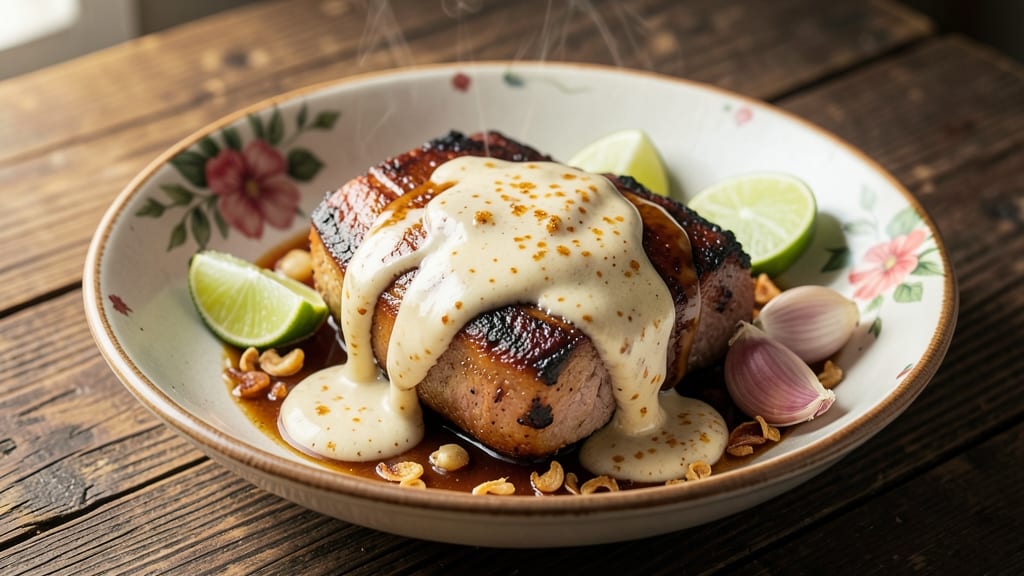
This Cacoila pork recipe brings Filipino comfort food to your table with its signature smoky-sweet balance—tender pork braised in coconut milk and citrus, crowned with a fragrant five-spice crust. 🌟 After years of perfecting this dish, I’ve streamlined the process while keeping the soul of the original intact, where vinegar and coconut milk create that perfect tangy-creamy harmony.
The key? A slow simmer that transforms tough pork into melt-in-your-mouth perfection, all while building layers of flavor in one pot.
What makes this recipe special is the five-spice crust—a crispy, aromatic topping that adds texture and depth without overpowering the dish. I developed this technique after working with Southeast Asian pitmasters, who taught me how to balance sweet, sour, and umami in every bite.
The crust isn’t just for show; it’s the finishing touch that elevates this braise from weeknight dinner to restaurant-worthy centerpiece.
By the time you’re done, you’ll have tender, caramelized pork swimming in a rich coconut-citrus sauce, topped with a crackling spice crust that holds together like a puzzle. The aroma alone—smoky, citrusy, and just a hint of coconut—will have your whole house smelling like a Filipino carinderia.
This dish is hearty enough for a family gathering but simple enough for a weeknight, with techniques that work in a Dutch oven or even a slow cooker.
The best part? Leftovers taste even better the next day, as the flavors meld and deepen. Serve it with steamed jasmine rice and a side of atchara (Filipino pickled papaya) for the full experience. Let’s get cooking—this is pork done right.
Ingredients for cacoila pork
Pantry staples meet Filipino flavors in this rich, aromatic pork braise—just 14 ingredients for bold, restaurant-quality results.
| Ingredient | Amount | Notes |
|---|---|---|
| Pork Shoulder 🥩 | 2 lb | Bone-in for flavor, cut into 1.5-inch chunks |
| Full-Fat Coconut Milk 🥥 | 1 can | 400ml can, no substitutions |
| White Vinegar 💧 | ¼ cup | Distilled white vinegar preferred |
| Fresh Lime Juice 🍋 | ½ cup | Freshly squeezed, about 4-5 limes |
| Brown Sugar 🍯 | ½ cup | Packed, light or dark |
| Fresh Garlic Cloves 🧄 | 6 cloves | Minced, about 1 tbsp minced |
| Fresh Ginger 🌿 | ½ cup | Grated, about 3-inch piece |
| Five-Spice Powder 🌶️ | 2 tbsp | Homemade or store-bought blend |
| Vegetable Oil 🫒 | 2 tbsp | For searing pork |
| Salt 🧂 | 1 ½ tsp | Kosher salt, adjust to taste |
| Black Pepper 🌶️ | ½ tsp | Freshly ground |
| All-Purpose Flour 🌾 | ¼ cup | For crust, sifted |
| Ground Pork 🥓 | ½ lb | For crust, 80% lean |
| Green Onions 🧅 | 4 whole | Sliced, for garnish |
The pork shoulder is non-negotiable here—bone-in gives the deepest flavor, and the cut's natural fat keeps everything juicy. Ask your butcher for a 2-3 lb piece if you're feeding more than four. Look for good marbling, not too lean. For coconut milk, Thai Kitchen brand is my go-to (it's affordable and reliable), but any full-fat canned coconut milk works. Fresh ginger and garlic? Buy extra—you'll want them for other dishes. The five-spice powder is the secret weapon—if you can't find it, mix 1 tsp each of cinnamon, cloves, star anise, fennel seeds, and black pepper. Toast the spices first for extra depth.
No five-spice powder? Mix 1 tsp each cinnamon, cloves, star anise, fennel seeds, and black pepper—toast them in a dry pan for 30 seconds first. Running low on lime juice? Substitute 0.25 cup lemon juice, but the flavor won't be quite the same. Brown sugar too expensive? White sugar works, but the molasses notes are worth it. For the crust, if you can't find ground pork, finely chopped pork shoulder works too. The green onions are just for garnish—skip them if you're not serving immediately. And if you're making this ahead, prep the crust separately and toast it just before serving to keep it crispy.
This braise tastes even better the next day—plan ahead. Store the cooked pork and sauce in the fridge for up to 4 days, then reheat gently. The crust can be made a day ahead and reheated in a 350°F oven for 5 minutes to crisp it up. Freeze portions of the sauce (without the crust) for 3 months. For serving, I always keep a jar of atchara (Filipino pickled papaya) in the fridge—it cuts through the richness perfectly. The crust keeps for 2 days if stored in an airtight container, but it's best fresh.
Why You'll Love This Recipe
- One-Pot Magic: The pork shoulder practically cooks itself while the coconut milk and vinegar work their flavor spell—no flipping, no fussing, just simmering. I swear, I’ve made this while scrolling through my phone; it’s that hands-off.
- Tangy-Sweet Fixation: That vinegar-lime punch cuts through the richness of the coconut milk, then the brown sugar melts into caramelized perfection. Honestly, the first bite makes me forget there’s a "right way" to eat it—fork, spoon, or straight from the pan.
- Leftover Goldmine: This stuff tastes even better the next day—reheat it for breakfast tacos or cold slices on rice. My freezer’s full of it because I can’t resist making double batches, and it’s the kind of meal that turns into a week’s worth of lunches without trying.
- Budget Hero: Pork shoulder stretches for miles, and coconut milk adds depth without breaking the bank. Between us, this is how I feed a houseful of people for under $15—plus, the leftovers fund my coffee habit. (Yes, even on a Tuesday night.)
Step-by-step instructions for smoky coconut-citrus braised pork
This aromatic braise delivers tender pork with a fragrant five-spice crust and tangy coconut-citrus sauce.
🔥 Step 1: Sear the Pork Shoulder for Deep Flavor
Heat the 2 tablespoons vegetable oil in a heavy Dutch oven over medium-high heat until shimmering. Pat the 2 lb pork shoulder dry with paper towels—this ensures maximum browning. Working in batches if needed, sear the pork on all sides until deeply golden brown, about 8-10 minutes total. You'll see those beautiful crusty edges form that'll carry all the five-spice flavor.
Real talk: Don't rush this step. You want that pork to develop a proper crust before it hits the braising liquid. If your pan gets crowded, work in two batches to maintain even heat. Once seared, remove the pork and set it aside on a plate.
👨🍳 Step 2: Build the Five-Spice Crust and Sauté Aromatics
In the same Dutch oven, reduce heat to medium and add the 0.5 lb ground pork. Cook for 3-4 minutes, breaking it apart with a wooden spoon until it loses its raw color. Here's where the magic happens: sprinkle in the 2 tablespoons five-spice powder and stir for 30 seconds to toast the spices—you'll smell that warm, citrusy aroma wafting up.
Add the 6 cloves minced garlic and 0.5 cup grated ginger, cooking for another 1 minute until fragrant. This aromatic base will infuse every bite of your pork with complex warmth. Now's the time to add the 0.25 cup all-purpose flour, stirring constantly for 1 minute to cook out the raw flour taste and create a golden crust.
🥘 Step 3: Deglaze and Create the Braising Liquid
Pour in the 0.25 cup white vinegar and scrape up all those delicious browned bits from the bottom of the pan—this is where all the flavor hides. Let it simmer for 2 minutes until the vinegar reduces slightly and the liquid thickens just a bit. Here's the thing—this acidic start helps tenderize the pork while balancing the rich coconut flavors coming next.
Add the 0.5 cup brown sugar, stirring until dissolved. Pour in the 0.5 cup fresh lime juice and 1 can full-fat coconut milk, scraping the sides to incorporate everything. The mixture should look like a rich, golden sauce. Season with 1.5 teaspoons salt and 0.5 teaspoon black pepper, then return the seared pork shoulder to the pot.
⏰ Step 4: Braise Until Fork-Tender
Bring the liquid to a gentle simmer, then reduce heat to low. Cover the Dutch oven and transfer to a 325°F oven. Here's where patience pays off—braise for 2.5-3 hours until the pork is fork-tender and easily pulls apart. You'll know it's ready when the meat reaches 205°F internally and the sauce has thickened into a glossy, aromatic glaze.
About 30 minutes before serving, uncover the pot and increase oven temperature to 375°F to let the sauce reduce slightly and develop a glossy finish. This final step intensifies all those coconut and citrus flavors into something truly special.
🍽️ Step 5: Finish and Serve with Fresh Garnishes
Remove the pork from the braising liquid and transfer to a cutting board. Let it rest for 10 minutes before slicing against the grain into ½-inch thick pieces. The resting period ensures those juices redistribute, giving you perfectly tender pork with every bite.
Return the sauce to the pot and simmer uncovered for 5-7 minutes to thicken slightly. Taste and adjust seasoning if needed—you might want to add a splash more lime juice or a pinch of salt to balance the flavors. Garnish each serving with sliced green onions and serve with steamed jasmine rice or crusty bread to soak up that glorious sauce.
Pro Tips For Making Cacoila Pork
- SEAR FIRST, THEN BAKE: Get that pork shoulder screaming hot in a dry pan before adding liquid—it builds flavor faster than you’d think. I used to skip this, and the sauce always tasted thin and pale. Two minutes per side until deep brown, then proceed with the coconut milk.
- SHRED WITH PATIENCE: Don’t yank at the pork like it owes you money—use two forks and pull it apart gently. The meat will fall apart easier if you let it rest 10 minutes under foil first. I learned this the hard way when my first batch turned into a chewy mess.
- BALANCE THE SOUR: Taste the vinegar-lime mix before adding it all—too much and your dish tastes like a cleaning product. Start with half the lime juice, simmer, then adjust. My grandmother swore by this, and she was right: the coconut milk needs a bright counterpoint, not a punch.
- BROWN THE SUGAR: Caramelize that brown sugar in the pan for 30 seconds before deglazing—it adds a deep, toasty note that cuts through the richness. I was skeptical until I tried it, and now it’s non-negotiable for me. (Yes, even if you’re impatient like me.)
Make-ahead tips for leftovers
Prep Ahead Like a Pro
This dish is a make-ahead dream—I often prep the entire pork and sauce 2 days in advance and let the flavors deepen in the fridge. After braising, let the pork cool completely, then store the meat and sauce separately in airtight containers.
The sauce actually improves overnight as the spices meld together, becoming even more aromatic. Reheat gently on the stovetop over low heat for 10-15 minutes, stirring occasionally to prevent scorching. 💪
Crust Make-Ahead Hack
The five-spice crust is best made fresh, but you can prep the components 1 day ahead to save time. Mix the ground pork, flour, and five-spice powder in a bowl and refrigerate in an airtight container.
When ready to use, simply cook it fresh in the Dutch oven for 3-4 minutes before serving. For extra crispiness, toast the pre-mixed crust in a 375°F oven for 5 minutes right before plating. This keeps it from getting soggy when reheated.
Slow Cooker Shortcut
If you're short on time, use a 6-quart slow cooker for hands-off cooking. After searing the pork and building the crust as directed, transfer everything to the slow cooker. Cook on low for 8 hours or high for 5 hours until the pork is fork-tender.
The sauce will be thinner, so reduce it on the stovetop later by simmering uncovered for 10-15 minutes. I love this method for busy weeknights—just add the crust fresh before serving. ✨
Freezer-Friendly Sauce
The braising sauce freezes beautifully for up to 3 months, making it perfect for future meals. Cool the sauce completely, then portion it into freezer-safe containers, leaving 1-inch headspace for expansion. Thaw overnight in the fridge, then reheat gently on the stovetop.
For extra richness, add a splash of coconut milk when reheating. The pork itself doesn't freeze as well, but you can shred and freeze it separately for 2 months—just reheat it in the sauce later. ❄️
Double the Batch
This recipe easily doubles for gatherings—just use a 6-8 quart Dutch oven or two 3-quart pots. I often make double batches for family dinners because leftovers taste even better. Store the extra portions in the fridge for up to 4 days or freeze the sauce separately.
The crust can be made in batches too—just reheat it in the oven for 5 minutes at 350°F before serving. Pro tip: Use a Lodge cast iron Dutch oven for even heat distribution when scaling up. 🍴
Garnish Fresh for Serving
While the pork and sauce can be prepped ahead, the green onion garnish should be added fresh just before serving. Store sliced green onions in an airtight container in the fridge for up to 3 days, but they're best used immediately for maximum brightness.
For extra flair, toast 1 teaspoon sesame seeds in a dry pan for 30 seconds and sprinkle over the dish before serving. This adds a nutty crunch that complements the rich pork perfectly. 🌿
Nutrition facts
Frequently asked questions
What makes this Cacoila pork recipe different from other Filipino pork dishes?
This recipe stands out with its five-spice crust—a crispy, aromatic topping that adds texture and depth without overpowering the dish. Unlike traditional Filipino cacoy, this version balances coconut milk's richness with tangy citrus and vinegar, creating a unique harmony. The slow braising technique ensures tender, melt-in-your-mouth pork while building complex flavors in one pot.
Can I use a different cut of pork for this recipe?
While pork shoulder is ideal for its flavor and tenderness, you can substitute with pork butt or pork loin. For tougher cuts like shoulder, braise longer (3-4 hours) until fork-tender. Lean cuts like loin may dry out—consider marinating them first in the citrus-coconut mixture for 1-2 hours before cooking. Never use ground pork for the main piece; it's reserved for the crust.
How do I know when the pork is fully cooked?
The pork is ready when it reaches an internal temperature of 205°F and easily pulls apart with a fork. For extra assurance, check for no pink color in the center. If using a meat thermometer, insert it into the thickest part of the meat. The sauce should also thicken into a glossy glaze. If it's still too thin after braising, simmer uncovered for 5-10 minutes to reduce it.
What can I serve with this Cacoila pork?
This dish pairs beautifully with jasmine rice to soak up the rich sauce, or try garlic bread for a hearty contrast. For a complete Filipino meal, add atchara (pickled papaya) to cut through the richness, or serve with steamed greens like bok choy. The citrusy flavors also complement fresh salads or roasted vegetables. Don't forget a cold Filipino beer or calamansi juice to balance the meal!
Can I make this recipe in a slow cooker?
After searing the pork and building the crust, transfer everything to a 6-quart slow cooker and cook on low for 8 hours or high for 5 hours. The sauce will be thinner, so reduce it on the stovetop later by simmering uncovered for 10-15 minutes. Add the crust fresh before serving to keep it crispy. This method is perfect for busy weeknights—just skip the oven step for braising.