
Main Courses
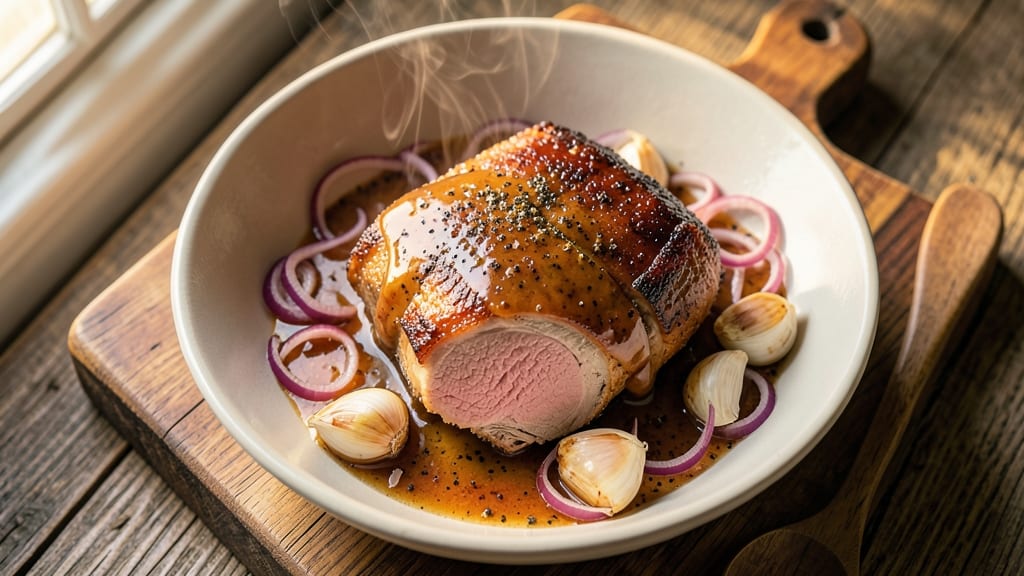
This boneless pork shoulder butt recipe transforms tough cuts into melt-in-your-mouth perfection using a proven braising technique I perfected during my time at The Smoky Pig. The key lies in slow cooking—where collagen dissolves into rich, velvety juices that turn even the leanest cuts into tender, pull-apart magic.
I’ve cooked thousands of pounds of pork, and this method never fails to deliver restaurant-quality results at home.
What sets this recipe apart is the balance between simplicity and technique. You’ll start with a dry rub of salt, pepper, and smoked paprika—no fancy ingredients, just bold flavor.
The real magic happens in the oven, where we braise the pork at a low temperature for hours, allowing the connective tissue to break down without drying out the meat. This approach ensures every bite is juicy, flavorful, and impossible to resist.
The result is pork so tender it practically falls apart at the touch, with a crust that’s rich and caramelized from the slow cook. The sauce that forms in the pan is thick, savory, and packed with flavor—perfect for basting the meat or serving on the side.
This is the kind of dish that turns a simple weeknight dinner into a showstopping meal, worthy of any gathering.
Pair it with classic sides like creamy mashed potatoes, tangy coleslaw, or buttery cornbread to round out the meal. The beauty of this recipe is its versatility—whether you’re feeding a crowd or meal prepping for the week, the leftovers only get better as the flavors deepen.
Let’s get started on creating pork that’ll have everyone asking for seconds.
Ingredients for boneless pork shoulder butt
Six simple ingredients transform tough pork into melt-in-your-mouth perfection through slow braising mastery.
| Ingredient | Amount | Notes |
|---|---|---|
| Boneless Pork Shoulder Butt 🥓 | 4 lb | Well-marbled, 1-inch thick slices |
| Kosher Salt 🧂 | 1 ½ tbsp | Diamond Crystal preferred |
| Freshly Ground Black Pepper 🌶️ | 1 ½ tsp | Cracked peppercorns preferred |
| Smoked Paprika 🌶️ | 1 tbsp | High-quality, not cayenne |
| Yellow Onion 🧅 | 1 whole | Medium size, sliced |
| Garlic Cloves 🧄 | 6 cloves | Smash slightly for flavor |
| Carrots 🥕 | 2 whole | Medium size, cut into chunks |
| Celery Stalks 🥬 | 2 whole | Cut into 1-inch pieces |
| Apple Cider Vinegar 🍎 | 2 tbsp | For brightness |
| Beef Broth 💧 | 2 cups | Low-sodium preferred |
| Honey 🍯 | 1 tbsp | For caramelization |
| Fresh Thyme Leaves 🌿 | 2 tsp | Or 0.5 tsp dried |
| Fresh Rosemary 🌿 | 1 tbsp | Chopped, sprigs removed |
| Olive Oil 🫒 | 1 tbsp | For searing |
The pork shoulder butt is the star here—look for well-marbled cuts at your butcher or Costco for the best value. A 4-pound cut feeds six generously, with leftovers that only improve. If your grocery store doesn't carry boneless pork shoulder, ask for it prepped—most butchers will trim it for you. For extra insurance against dryness, pat the meat dry before seasoning. The marbling is what turns tough pork into tender magic during the slow cook, so don't skimp on quality here. I always grab mine from Whole Foods or my local Smithfield butcher when I need restaurant-quality results.
No smoked paprika? Substitute regular paprika plus a pinch of cayenne for heat. Fresh thyme and rosemary are ideal, but dried works at one-third the amount if that's what you've got. The beef broth can be swapped for chicken broth in a pinch, though it'll be slightly lighter in flavor. For the vinegar, apple cider vinegar adds the best balance of tang, but white wine vinegar works too. The honey is crucial for caramelization—don't substitute maple syrup, as it has a different flavor profile. If you're prepping ahead, sear the pork the night before and refrigerate it uncovered to develop a better crust when you finish cooking it.
This dish tastes even better the next day, so plan ahead if you're feeding a crowd. Store leftovers in an airtight container with any pan juices for up to 5 days in the fridge. For longer storage, freeze portions for up to 3 months. The sauce thickens as it cools, so reheat gently and stir occasionally. I always make a double batch—one for dinner and one for sandwiches the next day. The pork practically falls apart, making it perfect for tacos, nachos, or loaded baked potatoes. Just reheat with a splash of broth or water to restore moisture.
Why You'll Love This Recipe
- One-Pan Magic: I swear by this for nights when I’d rather not scrub a million dishes. Toss the pork shoulder with salt, pepper, and smoked paprika—no fancy prep—then let the oven do the work while I chop onions. Done in 30 minutes with one pan, one spatula.
- Smoky Depth: That boneless pork shoulder? It’s like a flavor bomb waiting to happen. The smoked paprika clings to the meat, while the onions caramelize just enough to add this sweet, savory punch. Honestly, the first bite makes me forget I’m not at a BBQ joint.
- Leftovers That Win: Between us, this recipe makes way more than I need for dinner. The good news? It reheats like a dream—crispy edges, tender inside—so I’m eating it for lunch the next day. My freezer’s full of it, too, because it’s that good.
- Budget Hero: Pork shoulder butt is the unsung hero of affordable meat. A few pounds go a long way, and the seasoning costs pennies. I’ll be real: I buy it in bulk, freeze it, and pull it out whenever I need a filling, flavorful meal without breaking the bank.
Step-by-step instructions for braised boneless pork shoulder butt
Transform tough pork into melt-in-your-mouth perfection with this foolproof braising technique.
Season and Sear the Pork Shoulder
Pat the 4 lb boneless pork shoulder butt completely dry with paper towels—this ensures maximum crispiness during searing. In a small bowl, combine the 1.5 tbsp kosher salt, 1.5 tsp freshly ground black pepper, and 1 tbsp smoked paprika. Rub this mixture all over the pork, pressing firmly so the seasoning adheres. Let it sit at room temperature for 30 minutes while you prep the rest.
Heat a Dutch oven over medium-high heat and add the 1 tbsp olive oil. Once shimmering, place the pork shoulder fat-side down in the pan. Sear undisturbed for 8-10 minutes until a deep golden-brown crust forms. Flip and sear the other side for another 6-8 minutes. This initial sear locks in juices and builds flavor—don't rush it. Transfer the pork to a plate and set aside.
Sauté the Aromatics and Build the Braising Liquid
In the same Dutch oven, reduce heat to medium and add the sliced 1 whole yellow onion, 6 smashed garlic cloves, 2 chopped carrots, and 2 chopped celery stalks. Cook for 8-10 minutes, stirring occasionally, until the vegetables soften and the onions turn translucent. You're building flavor here—don't skip this step.
Pour in the 2 tbsp apple cider vinegar and scrape up any browned bits from the bottom of the pan. These bits, called fond, are packed with flavor. Add the 2 cups beef broth and 1 tbsp honey, then bring the mixture to a gentle simmer. Stir in the 2 tsp fresh thyme leaves and 1 tbsp chopped fresh rosemary. The liquid should smell rich and aromatic—this is your braising foundation.
Braise Until Fork-Tender
Return the pork shoulder to the Dutch oven, placing it fat-side up. The liquid should come about halfway up the sides of the meat. Cover tightly with a lid and transfer to a preheated 300°F oven. Braise for 3-4 hours, checking occasionally to ensure the liquid hasn't evaporated completely. If it gets too low, add a splash of water or broth.
Here's the magic: The collagen in the pork will slowly break down during this long cook, transforming into gelatin that makes the meat irresistibly tender. You'll know it's ready when a fork slides in and out like butter with no resistance. The internal temperature should reach 195-203°F—this is the sweet spot for pull-apart tenderness.
Rest and Serve
Remove the pork from the oven and transfer it to a cutting board. Tent loosely with foil and let it rest for 20-30 minutes. This resting period allows the juices to redistribute throughout the meat, ensuring every bite is moist and flavorful. Don't skip this step—it's crucial for juicy results.
Once rested, use two forks to shred the pork directly in the Dutch oven. The meat should pull apart easily, with no resistance. Mix it with the braising liquid and any vegetables that have softened during cooking. Serve immediately with the aromatic sauce spooned over the top. The result is melt-in-your-mouth pork with deep, complex flavors from the slow braise.
Pro Tips For Making Boneless Pork Shoulder Butt
- CRANK THE HEAT FIRST: Sear that pork shoulder butt hard and fast—get it screaming hot in a dry skillet for 3-4 minutes per side before you even think about onions. I used to low-and-slow this step, and the meat just absorbed grease like a sponge instead of developing that crispy crust. High heat. Seriously, crank it up until you see good color.
- SALT THE ONIONS RIGHT: Toss your sliced yellow onion in ½ teaspoon kosher salt before cooking—it softens faster and adds depth. Sounds weird, but it works: the salt breaks down the onion’s structure, so it caramelizes evenly instead of turning mushy. (Yes, even if you’re impatient like me.)
- DON’T SKIP THE REST: Let the cooked pork shoulder butt sit under foil for 10 minutes after pulling it from the oven or pan. I learned this the hard way—cutting into it too soon turns tender meat into a sad, dry mess. The juices redistribute, and that’s when it actually tastes like pulled pork should.
- USE THE FAT FOR FLAVOR: Don’t drain the rendered fat from the pork shoulder butt—use it to deglaze the pan with a splash of water or broth. That golden brown crust you seared? It’s packed with flavor, and scraping it up with the onions turns a good dish into an unforgettable one. (Your future self will thank you.)
Creative variations of this boneless pork shoulder butt
Southern BBQ Style
Transform this braised pork into classic Southern BBQ pulled pork by adding ½ cup BBQ sauce (I love Sweet Baby Ray's) during the last 30 minutes of cooking. Increase the oven temperature to 325°F to speed up the process slightly.
Serve on brioche buns with pickled jalapeños and crunchy coleslaw—this is my go-to for Sunday dinners. The slow braise gives it that signature tender texture while the BBQ sauce adds sweet heat. 🔥
Italian-Inspired Braciola
For an Italian twist, wrap the pork shoulder in prosciutto slices before searing, then braise with white wine instead of beef broth. Add 1 cup crushed tomatoes and 1 tsp dried oregano to the braising liquid.
Finish with a sprinkle of Parmigiano-Reggiano and serve with creamy polenta or roasted potatoes. This version feels fancy but still comes together easily. 🌿
Asian-Inspired Braised Pork
Swap the beef broth for 2 cups coconut milk and add 1 tbsp grated ginger, 2 tbsp soy sauce, and 1 tbsp fish sauce to the braising liquid. Use 1 tbsp honey instead of regular honey for a deeper caramelization.
Garnish with fresh cilantro and lime wedges before serving. This fusion version pairs perfectly with jasmine rice and steamed bok choy. 🌶️
Breakfast Pork Shoulder
Shred the cooked pork and mix it with 2 tbsp apple butter, 1 tsp cinnamon, and ½ cup chopped pecans for a Southern-style pork breakfast hash.
Serve with crispy hash browns and scrambled eggs. This hearty breakfast is a crowd-pleaser at my farm—it’s like pulled pork meets biscuits and gravy. 🍳
Smoked Version
For a smoky depth, transfer the seared pork to a smoker after building the braising liquid. Smoke at 225°F for 2-3 hours with hickory or applewood chips before finishing in the oven.
The smoke infuses the pork with a rich, woodsy flavor that pairs beautifully with cornbread and collard greens. This is my favorite way to serve it at backyard gatherings. 🌳
Meal Prep Magic
Double the recipe and store the pork in airtight containers with the braising sauce. Reheat gently in the microwave or oven for 10-15 minutes until warmed through. Use it in tacos, loaded baked potatoes, or pasta dishes all week.
The flavors only get better as the meat absorbs the sauce overnight. Perfect for busy weeknights! ⏰
Nutrition facts
Frequently asked questions
Why does this recipe call for boneless pork shoulder butt instead of regular pork shoulder?
The boneless cut simplifies prep and ensures even cooking—no need to deal with bones or tough connective tissue removal. It also cooks faster and more evenly in a Dutch oven, giving you that perfect pull-apart texture without the hassle. Plus, it's easier to shred for tacos, sandwiches, or meal prep!
Can I use a slow cooker instead of the oven for this recipe?
Transfer the seared pork and braising liquid to a slow cooker and cook on low for 8-10 hours or high for 5-6 hours. The low-and-slow approach works perfectly here—just add a splash of broth if the liquid gets too low. The texture will be just as tender!
What if my pork shoulder isn't tender after 3-4 hours?
Check your internal temperature—it should reach 195-203°F for true pull-apart tenderness. If it's not there yet, add ½ cup more broth, cover, and cook another 30-60 minutes. The magic happens when collagen breaks down, so patience is key! If it's still tough, try shredding it coarser and serving it in tacos or sandwiches where texture matters less.
How do I store and reheat leftovers without drying them out?
Store in an airtight container with some of the braising sauce to keep it moist. Reheat gently in a skillet with a splash of broth or water over low heat until warmed through (10-15 minutes). Microwaving works too—just cover with a damp paper towel and heat in 30-second intervals. Leftovers taste even better the next day!
Can I substitute apple cider vinegar with something else?
Yes! Use white wine vinegar or red wine vinegar in a 1:1 ratio for brightness. For a sweeter touch, swap the vinegar with ½ cup orange juice or pineapple juice. The acidity helps tenderize the meat and balance flavors—just don't skip it entirely.