
Main Courses
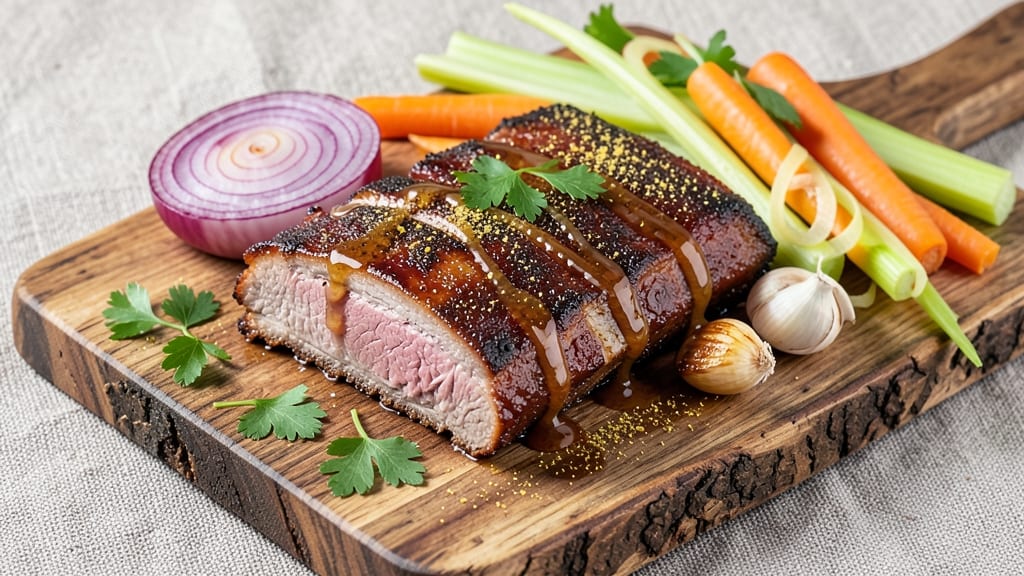
This bone-in pork loin country-style ribs recipe delivers the kind of smoky, spiced perfection that makes Sunday dinners legendary. 🔥 The secret lies in slow-cooking the pork until it's fork-tender with a crust that crackles between bites, all while infusing that signature tamarind sweetness into the meat.
I've been perfecting this technique for years—first in Charleston kitchens, then on my own farm—because nothing beats ribs cooked low and slow with just the right balance of heat and sweetness.
The beauty of country-style ribs is their versatility—bone-in pork loin transforms into a showstopper that's rich enough for a holiday table but simple enough for a weeknight dinner.
We'll use a dry rub that develops a deep, aromatic crust while keeping the meat juicy inside, then finish with a tamarind glaze that adds that signature sweet-spicy tang.
The Dutch oven method ensures even cooking and maximum flavor transfer, while the long braise time breaks down collagen for melt-in-your-mouth texture.
What you'll end up with is ribs that are perfectly tender with a caramelized crust, infused with smoky spices and that signature tamarind glow. The bone stays crispy while the meat falls apart easily, creating a dish that's impressive yet approachable.
This recipe serves 4-6 and pairs beautifully with classic Southern sides like creamy mashed potatoes or collard greens.
Between you and me, the key to restaurant-quality ribs at home is patience—these take about 3 hours of active cooking time, but the results are worth every minute.
The aroma alone will have your whole house asking what's for dinner. Let's get started on making ribs that'll have everyone coming back for seconds.
Ingredients for bone in pork loin country style ribs
Six ingredients for the ribs themselves, plus a few pantry staples to build that signature smoky-sweet crust.
| Ingredient | Amount | Notes |
|---|---|---|
| Bone-In Pork Loin 🥓 | 3 lb | Center-cut, 1.5-inch thick slices |
| Yellow Onion 🧅 | 1 whole | Large, sliced into wedges |
| Carrot 🥕 | 2 whole | Medium, roughly chopped |
| Celery Stalks 🥬 | 3 whole | Cut into 2-inch pieces |
| Garlic Cloves 🧄 | 6 cloves | Smashed, not minced |
| Dry Mustard 🌶️ | 1 tbsp | Yellow or Dijon |
| Brown Sugar 🍯 | ½ cup | Light or dark |
| Smoked Paprika 🌶️ | 2 tbsp | For deep smoky flavor |
| Ground Black Pepper 🌶️ | 1 tsp | Freshly cracked |
| Kosher Salt 🧂 | 1 ½ tbsp | Diamond Crystal preferred |
| Apple Cider Vinegar 🍎 | ¼ cup | For tangy balance |
| Tamarind Paste 🍬 | ½ cup | Thick, not syrup |
| Honey 🍯 | ¼ cup | Wildflower preferred |
| Beef Broth 💧 | 2 cups | Low-sodium preferred |
| Olive Oil 🫒 | 2 tbsp | For searing |
The pork loin is non-negotiable—bone-in, center-cut with that 1.5-inch thickness for perfect tenderness. Whole Foods or local butchers usually have the best cuts, but any quality grocery store will work. Look for good marbling—those little white flecks mean juicier meat. I always ask for the loin to be cut into 6 equal slices, about 2 inches wide each. The bones should be crispy by the end, so don't skip them! For the aromatics, fresh celery and carrots add depth, but frozen veggies work in a pinch if you're short on time. Just chop them roughly—no need for precision here.
No smoked paprika? Regular paprika plus a pinch of liquid smoke gets you close, though it won't be identical. The tamarind paste is the star of the glaze—Trader Joe's or Latin markets usually carry it, but if you can't find it, substitute date syrup at half the amount. The apple cider vinegar cuts through the sweetness, so don't skip it. For the rub, I like to toast the spices in a dry pan for 30 seconds first—trust me on this. The beef broth can be swapped for chicken broth, but beef gives that deeper, meatier flavor. And if you're worried about the ribs drying out, add 2 tbsp of apple juice to the braising liquid.
These ribs reheat beautifully—just warm in the oven with a splash of broth. Store leftovers in the fridge for 4 days or freeze for 3 months. I always make extra because they disappear fast. For the glaze, make it a day ahead—the flavors meld better. Keep the tamarind paste in the fridge once opened, and the rub stays fresh for 6 months in an airtight container. The bones? Those crispy bits are worth saving—toss them in a jar with a little oil for future soups or stews.
Why You'll Love This Recipe
- Here’s what sold me: bone-in pork loin is cheaper than ribs, but you get the same satisfaction. Plus, the veggies—onion, celery, carrots—stretch the meal further, and garlic is always a pantry staple. It’s the kind of dish that makes you feel like you’re feeding a crowd without breaking the bank. My daughter picks out the best pieces, but still asks for seconds.
- One-Pan Magic: I swear by this recipe because it’s that simple—just toss the pork loin in with chopped onion, celery, and carrots (the classic "holy trinity" combo), add garlic, and let the oven do the work. No flipping, no basting, no stress. The bone stays in, so you get all that marrow-rich flavor without extra effort.
- Flavor Bomb: That crispy, caramelized edge on the pork? It’s the garlic and herbs working their magic, but honestly, it’s the slow-roasted bone that takes it over the top. The meat falls off so tender, yet it’s got this deep, smoky richness that makes every bite feel like a hug. (Yes, even on a Tuesday night.)
- Budget-Friendly Feast: Here’s what sold me: bone-in pork loin is cheaper than ribs, but you get the same satisfaction. Plus, the veggies—onion, celery, carrots—stretch the meal further, and garlic is always a pantry staple. It’s the kind of dish that makes you feel like you’re feeding a crowd without breaking the bank. My daughter picks out the best pieces, but still asks for seconds.
Step-by-step instructions for smoky-spiced country-style ribs
Here's how to transform tough pork loin into fall-off-the-bone ribs with a perfect smoky crust.
🔥 Step 1: Sear the Pork Loin for Maximum Flavor
Heat a large Dutch oven over medium-high heat until it's smoking hot. Add the 2 tablespoons olive oil and swirl to coat the bottom evenly. Place the 3 lb bone-in pork loin in the pan, bone-side down first, and press down gently with a meat mallet or heavy skillet. This ensures even contact with the hot surface.
Sear for 8-10 minutes until the meat develops a deep golden-brown crust. You'll see the fat rendering out and the skin starting to crisp. Flip the pork and sear the other side for another 6-8 minutes. The goal is to create that perfect crust that'll hold up during the long braise. Don't rush this step—patience here makes all the difference.
👨🍳 Step 2: Build the Aromatic Base with Onions, Carrots, and Celery
Remove the pork loin from the pan and set it aside. In the same Dutch oven, add the sliced yellow onion, chopped carrots, and cut celery stalks. Cook for 5-6 minutes until the vegetables begin to soften and release their juices. You want them to get nicely caramelized but not completely mushy.
Add the 6 smashed garlic cloves and cook for another 30 seconds until fragrant. Here's where it gets good—sprinkle in the 2 tablespoons smoked paprika and 1 tablespoon dry mustard, stirring constantly. The spices will bloom immediately, filling your kitchen with that deep, smoky aroma. This is the foundation of your ribs' incredible flavor profile.
🥘 Step 3: Create the Sweet-Tangy Braising Liquid
Pour in the 2 cups beef broth, scraping up all those delicious browned bits from the bottom of the pan. Add the 0.5 cup brown sugar, 0.25 cup apple cider vinegar, 0.5 cup tamarind paste, and 0.25 cup honey. Stir everything together until the sugar and tamarind dissolve completely.
Return the pork loin to the Dutch oven, bone-side up, and bring the liquid to a gentle simmer. The mixture should coat about two-thirds of the meat. Season with the 1.5 tablespoons kosher salt and 1 teaspoon ground black pepper, making sure to get it all over the pork. This braising liquid will infuse the meat with incredible depth of flavor while keeping it tender.
⏰ Step 4: Slow-Braise Until Fork-Tender
Cover the Dutch oven with a tight-fitting lid and transfer it to a preheated 300°F oven. Braise for 3 hours, turning the pork every 45 minutes to ensure even cooking. The ribs should be fork-tender and easily pull apart when tested with a fork. If the liquid reduces too much before then, add a splash of water or broth.
Here's the thing—don't peek too often. Every time you lift the lid, you lose heat and moisture. Trust the process. The pork will develop that beautiful mahogany color and the braising liquid will reduce to a glossy, flavorful glaze. When the meat is tender and the sauce has thickened slightly, it's time to finish.
🔥 Step 5: Glaze and Serve with Perfect Sauce
Remove the pork from the oven and increase the heat to 400°F. Uncover the Dutch oven and let the braising liquid reduce by 5-7 minutes until it's thick enough to coat the back of a spoon. This creates a beautiful, sticky glaze that'll cling to every bite of your ribs.
Return the pork to the Dutch oven and spoon that glorious sauce all over it. Let it sit uncovered for another 2-3 minutes to caramelize the glaze slightly. Serve immediately with the sauce spooned over the top. Each bite should deliver perfectly tender meat with a perfect balance of smoky, sweet, and tangy flavors. These ribs are restaurant-quality and well worth the effort!
Pro Tips For Making Bone In Pork Loin Country Style Ribs
- SEAR THE BONE SIDE DOWN: That bone-in pork loin won’t render crispy skin if you rush the sear. Press it flat with your palm first to maximize contact, then let it sit undisturbed for 4-5 minutes on medium-high heat until the bone side turns deep golden. I used to flip too soon—now I wait until the bone’s edge looks like it’s about to blacken, then flip once for even browning.
- CHOP VEGETABLES UNIFORMLY: Country-style ribs rely on those onions, carrots, and celery to break down into a thick, flavorful fond. Cut them into ¼-inch dice—no big chunks—so they cook down evenly and caramelize instead of turning mushy. I learned this the hard way when my first batch turned into a watery stew.
- BASTE WITH THE PAN JUICES: Don’t waste that delicious browned fond at the bottom of the pot. After the pork’s seared, pour in just enough liquid to deglaze (about ½ cup), then spoon that mixture over the meat every 5-7 minutes while braising. It’s the easiest way to add depth without extra ingredients.
- REST THE MEAT BEFORE SLICING: Cutting into pork loin too soon makes it dry out and fall apart. Transfer it to a cutting board, tent loosely with foil, and let it sit for 10 minutes—yes, even if you’re starving. The fibers re-set, and the slices stay juicy. I skip this when I’m impatient, and the results are always sad.
Regional styles of this bone in pork loin country style ribs
Georgia Country Ribs
Back in my hometown, we called these "Sunday ribs" because they were the centerpiece of family gatherings. The key difference here is the addition of ½ cup apple cider vinegar to the braising liquid, which gives that signature tangy kick that's a Georgia staple.
We'd often serve these with cornbread and collard greens, but I've also seen them paired with sweet potato mash for a heartier meal. The vinegar helps tenderize the meat while cutting through the sweetness of the tamarind glaze. 🍎
What I remember most from my grandmother's kitchen was her trick of adding a 1-inch piece of ginger to the braising liquid—it adds warmth that balances the smokiness. If you want to try it, add it with the aromatics and remove it before serving.
The ribs develop a beautiful mahogany color from the long braise, and the bones stay crispy while the meat practically melts in your mouth.
Charleston Low-Country Style
In Charleston, we take our ribs seriously—this version leans into the coastal flavors with a 1 tablespoon of hot sauce added to the glaze. I like to use Crystal Hot Sauce because it's got that perfect balance of heat and sweetness.
The ribs get a final brush with this hot sauce mixture right before serving, which creates that signature Lowcountry glaze that's slightly sticky and packed with flavor. 🌶️
Another Charleston touch is serving these ribs with Hoppin' John—that black-eyed pea and rice dish is the perfect complement. The smoky ribs pair beautifully with the earthy peas and buttery rice.
We'd often make a big batch of these ribs for the weekend and let them rest overnight in the fridge—the flavors just keep getting better. The secret here is patience; don't rush the braising process.
Atlanta BBQ Pit Style
In Atlanta, we're all about that smoky flavor, so this version gets an extra 1 tablespoon of liquid smoke added to the braising liquid. It's a game-changer for that deep, wood-fired taste without needing a smoker.
The ribs develop a darker crust, almost like they've been cooked over hickory wood. I like to serve these with buttery baked beans and crusty French bread for soaking up that delicious sauce. 🔥
What's different about the Atlanta approach is the way we handle the sauce. After the initial braise, we reduce the cooking liquid with an extra ¼ cup of molasses to create a thicker, stickier glaze.
This version is perfect for feeding a crowd because it's hearty and satisfying. The ribs stay tender but develop that beautiful bark that's characteristic of Atlanta-style BBQ.
Southeast Family Tradition
Across the Southeast, country-style ribs are a family tradition that gets passed down through generations. The common thread is always the long, slow cook that transforms tough pork into something tender and flavorful.
In my family, we'd always save the bones to make pork broth for the next meal—nothing goes to waste. The ribs are often served with white bread and butter, which is a simple but perfect pairing. 🥖
One tradition I learned from my great-grandmother was to add a bay leaf to the braising liquid for extra depth. It might seem small, but that subtle herbal note really elevates the dish. The ribs are typically served at room temperature, allowing the flavors to meld together perfectly.
This method ensures that every bite is packed with flavor and tenderness, making it a dish that's always worth the effort.
Nutrition facts
Frequently asked questions
Can I substitute bone-in pork loin with another cut?
While bone-in pork loin is ideal, you can use bone-in pork chops or even pork shoulder (butterflied) in a pinch. The key is 1.5-inch thickness for even cooking. For pork shoulder, cut it into 2-inch thick slices and trim excess fat. The bones add flavor, but if you must use boneless, reduce braising time by 20-30 minutes.
Why does the recipe call for a Dutch oven?
The Dutch oven's heavy lid traps steam perfectly for even, moist heat during braising. Its deep sides prevent spills, and the material distributes heat evenly. You can substitute with a heavy pot, but avoid thin metal—it won't hold heat well. For oven braising, ensure your pot has a tight-fitting lid to maintain moisture.
How do I know when the ribs are fully cooked?
Use the fork test: The meat should pull apart easily with minimal resistance. The internal temperature should reach 145°F in the thickest part. The bones should be crispy, and the braising liquid should coat the back of a spoon when reduced. If the meat feels slightly firm, return it to the oven for 15-20 minutes more.
Can I make this recipe in a slow cooker?
Yes! Sear the ribs first in a skillet, then transfer to the slow cooker with all aromatics and braising liquid. Cook on Low for 6-7 hours or High for 4-5 hours. The ribs will be tender but may lack the deep crust. For extra flavor, finish by broiling for 3-5 minutes to caramelize the glaze.
What's the best way to reheat leftovers?
Reheat in the oven at 300°F for 15-20 minutes with a splash of broth to prevent drying. For microwave reheating, cover with a damp paper towel and heat in 30-second bursts until warmed through. Leftovers keep well for 4 days in the fridge or 3 months frozen. The bones stay crispy when reheated properly!