
Sauces & Condiments
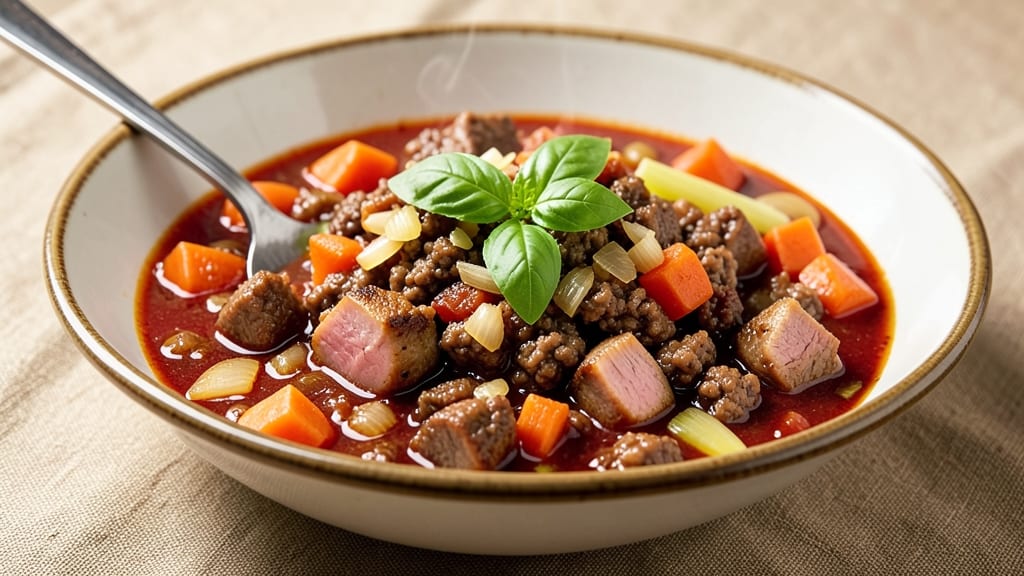
This beef and pork Bolognese sauce recipe delivers restaurant-quality depth with just one pot and 6 hours of hands-off simmering time. I perfected it during my time in Charleston, where slow-cooked meats define the local cuisine—this version combines the richness of pork with beef's deep umami for unmatched complexity.
The secret lies in browning the meat properly and letting it develop its own fond, which dissolves into the sauce for layers of flavor.
What sets this sauce apart is its balance of traditional technique and modern convenience. While it requires patience (that's where the flavor comes from), the process is straightforward: brown the meat, build your aromatics, then let it simmer until it reaches that perfect thick, velvety consistency.
I use a mix of ground beef and pork shoulder for texture contrast—tender beef and slightly chewy pork that holds up beautifully when served over pasta or as a filling for stuffed shells.
The result is a sauce so rich and complex it transforms simple meals into something extraordinary. The meat releases its natural juices, creating a sauce that's both hearty and elegant, with just enough acidity from the tomatoes to cut through the richness.
This isn't your basic marinara—it's a sauce that builds character with every minute of simmering, developing depth that store-bought versions can't match.
Best of all, it keeps beautifully in the refrigerator for up to 5 days or freezes for 3 months, making it perfect for meal prep.
Whether you're serving it over fettuccine, using it as a pizza topping, or stuffing it into ravioli, this Bolognese sauce delivers restaurant-quality results with minimal effort. Let's get cooking—your taste buds will thank you.
Ingredients for beef and pork bolognese sauce
These 14 ingredients create a sauce so rich and complex it rivals any restaurant version.
| Ingredient | Amount | Notes |
|---|---|---|
| Ground Beef (80% lean) 🥩 | 1 ½ lb | Finely ground for even cooking |
| Pork Shoulder 🐖 | 1 ½ lb | Diced into 1/2-inch pieces |
| Yellow Onion 🧅 | 2 whole | Finely chopped, about 2 cups |
| Carrots 🥕 | 2 medium | OR 1 cup diced (about 3 oz) |
| Celery Stalk 🌿 | 2 whole | Finely chopped, about 1 cup |
| Garlic Cloves 🧄 | 4 cloves | Minced, not pre-minced jarred |
| Canned San Marzano Tomatoes 🍅 | 28 oz | Crushed, high-quality preferred |
| Whole Milk 🥛 | 1 cup | Full-fat for creaminess |
| Dry Red Wine 🍷 | 1 cup | Bold, dry variety like Cabernet |
| Tomato Paste 🍅 | 2 tbsp | Squeeze tube or canned |
| Diamond Crystal Kosher Salt 🧂 | 1 ½ tsp | Adjust to taste, don't skimp |
| Freshly Ground Black Pepper 🌶️ | 1 tsp | Freshly cracked preferred |
| Dried Oregano 🍃 | 1 tsp | Italian or Mediterranean blend |
| Extra-Virgin Olive Oil 🫒 | 2 tbsp | For initial browning |
The meat is where the magic happens—ground beef and pork shoulder give you that perfect texture contrast. Costco or Whole Foods usually have the best cuts for this. Look for well-marbled pork shoulder (the fat keeps it juicy) and finely ground beef (80% lean or less). If you can't find San Marzano tomatoes, any high-quality crushed tomatoes will work—just avoid the watery brands. The carrots and celery are your aromatic base, so don't skip them. I always chop them extra fine because they'll cook down completely—no one wants to taste them in the final sauce.
No red wine? Substitute beef broth with a splash of balsamic vinegar—it's a game-changer. Running low on milk? Heavy cream at half the amount gives you richness without thinning the sauce. The tomato paste can be tricky—if you're using a squeeze tube, measure carefully (those little packets are perfect for this). Fresh oregano is ideal, but dried works at one-third the amount. And for the love of Bolognese, don't use pre-minced garlic—fresh minced has so much more flavor. The olive oil matters too—use something fruity and peppery for that initial sear.
This sauce gets better with time—day-old is even more flavorful. Store it in an airtight container in the fridge for up to 5 days or freeze for 3 months. I always make double batches because it disappears so fast. When reheating, add a splash of water or milk to loosen it up if it gets too thick. And trust me, leftovers taste even better—the flavors meld overnight into something truly special.
Why You'll Love This Recipe
- One-Pot Magic: I swear by this recipe when I’m too wiped to clean a million dishes. Brown the beef and pork together, toss in the onions, carrots, and celery—boom—you’ve got your holy trinity simmering in one pot. No chopping boards to scrub, no extra pans to wash. Just deep, rich flavor with zero fuss.
- Rich Umami Bomb: That combo of beef and pork shoulder? It’s where the sauce gets its je ne sais quoi. The pork shoulder melts into tender shreds while the beef stays juicy, and the slow simmer lets all those flavors—especially the caramelized onions—develop into something dangerously addictive. Honestly, I’ve caught myself making extra just to eat it straight from the pot.
- Meal Prep MVP: This sauce is my secret weapon for lazy Sundays or busy weeks. It freezes like a dream—portion it into containers, and you’ve got ready-to-go meals for pasta, stuffed peppers, or even lasagna. I’ll be real: I’ve pulled a jar from the freezer on a Tuesday night and thrown it together in 15 minutes. No one ever suspects it wasn’t made fresh.
- Budget-Friendly Powerhouse: Ground beef and pork shoulder stretch further than you’d think, and the veggies (onion, carrots, celery) add bulk without breaking the bank. Plus, it’s the kind of dish that tastes even better the next day—so you’re not just feeding your family, you’re feeding your wallet. Between us, this is the recipe I make when I need to feed a crowd without stressing.
Step-by-step instructions for beef and pork Bolognese sauce
This rich, umami-packed bolognese delivers deep flavor in one pot—no fancy techniques required.
Build the Flavor Base with Meat and Vegetables
Heat a large Dutch oven over medium-high heat and add the 2 tablespoons extra-virgin olive oil. Once shimmering, add the 1.5 pounds ground beef (80% lean) and 1.5 pounds diced pork shoulder in batches, breaking it up with a wooden spoon. Cook for 6-8 minutes until the meat loses its raw color and begins to brown deeply.
Push the meat to one side of the pot and add the 2 tablespoons tomato paste. Stir for 30 seconds to toast it slightly—this deepens the flavor foundation. Add the 2 cups finely chopped yellow onion, 1 cup finely chopped carrots, and 1 cup finely chopped celery stalk. Cook for 5-6 minutes until the vegetables soften and the onions turn translucent.
Here's the thing—don't rush this step. The vegetables need time to release their natural sweetness and meld with the meat. If it starts to stick, add a splash of dry red wine to deglaze and scrape up those flavorful browned bits from the bottom of the pot.
Develop Depth with Wine and Tomatoes
Pour in the 1 cup dry red wine and scrape up any browned bits from the bottom of the pot. Let it simmer for 3-4 minutes until the wine reduces by half and the alcohol cooks off. You'll notice the aroma change dramatically—this is when the sauce starts building its complex flavor profile.
Add the 28 ounces crushed San Marzano tomatoes and stir to combine. Bring the mixture to a gentle simmer, then reduce heat to low. Partially cover the pot and let it cook for 1 hour, stirring occasionally. This slow cook time allows the flavors to meld and the sauce to thicken naturally without breaking.
I know it seems like a long time, but this is where the magic happens. The tomatoes break down, releasing their natural sweetness while the meat continues to tenderize. If the sauce starts to evaporate too quickly, add a splash of water to maintain moisture.
Add Milk and Seasonings for Creaminess
After 1 hour of simmering, stir in the 1 cup whole milk. The milk adds a subtle creaminess that balances the richness of the meat. Add the 1.5 teaspoons Diamond Crystal kosher salt, 1 teaspoon freshly ground black pepper, and 1 teaspoon dried oregano. Taste and adjust the seasoning—this is your chance to ensure the sauce has the perfect balance of saltiness and acidity.
Continue simmering uncovered for another 30-45 minutes until the sauce thickens to your desired consistency. You're aiming for a rich, almost paste-like texture that will coat pasta beautifully. The sauce should reduce enough that it clings to the back of a spoon when you lift it.
Real talk: This is where patience pays off. If you rush it, the sauce will be watery. If you let it simmer too long, it might become too thick. Watch closely during these final minutes and add a splash of water if needed to reach that perfect consistency.
Finish and Rest for Maximum Flavor
Once the sauce reaches your desired thickness, remove it from heat. Let it rest for 10-15 minutes at room temperature. This resting period allows the flavors to settle and the sauce to thicken further as it cools slightly. It also gives you time to prepare your pasta or whatever you'll be serving it with.
Give the sauce a final taste and adjust the seasoning if needed. The sauce should be rich, slightly tangy, and deeply flavorful. If it's too acidic, add a pinch more salt or a teaspoon of sugar to balance it. If it's too thick, thin it with a splash of pasta water or broth.
This bolognese sauce is now ready to be served over freshly cooked pasta, stuffed into ravioli, or even used as a filling for lasagna. The beauty of this recipe is its versatility—it keeps well in the refrigerator for up to 5 days and freezes beautifully for up to 3 months, making it perfect for meal prep.
Pro Tips For Making Beef And Pork Bolognese Sauce
- Brown the Meat Longer: I used to rush this step, but the pork shoulder and ground beef need at least 10 minutes of sizzling—don’t walk away. The deeper the color, the richer the sauce flavor, and that’s the thing that matters most when you’re simmering for hours.
- Dice the Veggies Small: Carrots and celery should be cut into ¼-inch pieces—no bigger, no smaller. Onions into thin slivers. Anything larger stays tough after hours of cooking, and you’ll end up with a sauce that’s still chewing after 30 minutes on the table.
- Deglaze with Wine First: After browning the meat, hit the pan with a splash of red wine before adding broth. The alcohol burns off faster, and you’ll get a more concentrated, less watery base for your sauce. Skip this, and you’re basically diluting your flavor before it even starts.
- Simmer Partially Covered: The first 30 minutes should be uncovered to let moisture evaporate, but after that, cover loosely with foil. This keeps the sauce from drying out while still letting steam escape—no need to stir obsessively or add extra liquid. (Yes, even if you’re impatient like me.)
Pro cooking tips for beef and pork bolognese sauce
Meat Browning Mastery
This is where the foundation of flavor begins—don't skip browning the meat thoroughly. I use a large Dutch oven because its heavy base distributes heat evenly and prevents scorching. Cook the meat in two batches if needed to avoid overcrowding, which steams instead of browns.
The goal is deep, caramelized crusts—this is the Maillard reaction at work, creating complex flavors that dissolve into your sauce. 🔥
Deglaze Like a Pro
After browning, push the meat aside and add tomato paste to toast for 30 seconds—this deepens the flavor base. Then deglaze with dry red wine, scraping every last bit from the bottom with a wooden spoon. Those browned bits (fond) are pure flavor gold.
If you're short on wine, use beef broth—just add 1 teaspoon balsamic vinegar per cup to mimic the acidity and depth. This step is non-negotiable for rich flavor.
Low and Slow Wins
Simmering at low heat is crucial—this is where the meat tenderizes and the sauce develops its signature depth. I cover the pot partially to allow some evaporation, which helps thicken the sauce naturally.
If it gets too dry, add 2-3 tablespoons of water or red wine to maintain moisture. The key is patience: 3-4 hours total of simmering transforms simple ingredients into something extraordinary.
Milk Magic
Adding whole milk in the final stage might seem counterintuitive, but it balances the richness and adds a subtle creaminess. The milk also helps emulsify the sauce, giving it that silky texture we all love.
If you're watching calories, substitute with half-and-half or even unsweetened almond milk—just reduce it to ½ cup to maintain thickness. Taste as you go: the sauce should be rich but not overpowering, with a perfect balance of umami and acidity.
Resting for Perfection
Letting the sauce rest for 10-15 minutes before serving is a game-changer. This allows the flavors to settle and meld, and the sauce thickens slightly as it cools.
I also find it easier to adjust seasoning after resting—sometimes it needs a pinch more salt or a splash of pasta water to reach the ideal consistency. Pro tip: If you're prepping ahead, let it cool completely before storing to prevent condensation, which can dilute the flavor.
Equipment Upgrades
While you can make this sauce in any pot, a heavy-bottomed Dutch oven is my go-to. It retains heat better and prevents scorching. For even better results, invest in a meat thermometer—the meat should reach 160°F before adding tomatoes.
If you're short on time, a pressure cooker cuts the cooking time to about 45 minutes, though the flavor will be slightly less developed. Just remember: high heat = faster cook time, but less depth. 💡
Nutrition facts
Frequently asked questions
Why does this recipe use both beef and pork?
The combination creates the perfect texture and flavor balance. Pork shoulder adds juicy, slightly chewy pieces that hold up well, while ground beef provides rich, tender crumbles. Together they create depth that's more complex than either meat alone. Plus, pork's natural sweetness complements the umami from beef beautifully.
Can I make this sauce in a slow cooker?
Brown the meat first in a skillet, then transfer everything to your slow cooker. Cook on low for 6-7 hours or high for 3-4 hours. The slow cooker method actually enhances the flavors even more by allowing them to develop over time. Just add the milk and seasonings during the last 30 minutes of cooking.
What's the best way to store leftovers?
Let the sauce cool completely before transferring to an airtight container. It keeps in the refrigerator for up to 5 days, though it tastes even better the next day as flavors meld. For freezing, portion into ziplock bags and remove as much air as possible - it stays good for 3 months. Thaw overnight in the fridge before reheating.
How can I make this sauce less acidic?
If the tomatoes make the sauce too tart, add 1 teaspoon sugar or ½ teaspoon honey during the final 15 minutes of cooking. For a richer profile, stir in 1 tablespoon tomato paste at the end. The milk also helps balance acidity - if needed, increase it to 1.5 cups in the final stage.
Can I substitute ground turkey or chicken?
While possible, the texture and flavor won't be the same. Ground turkey or chicken will make the sauce lighter and less rich. If you must substitute, use half ground meat and half finely diced chicken thighs for better moisture retention. For maximum flavor, marinate the poultry in soy sauce and garlic before cooking.