
Main Courses
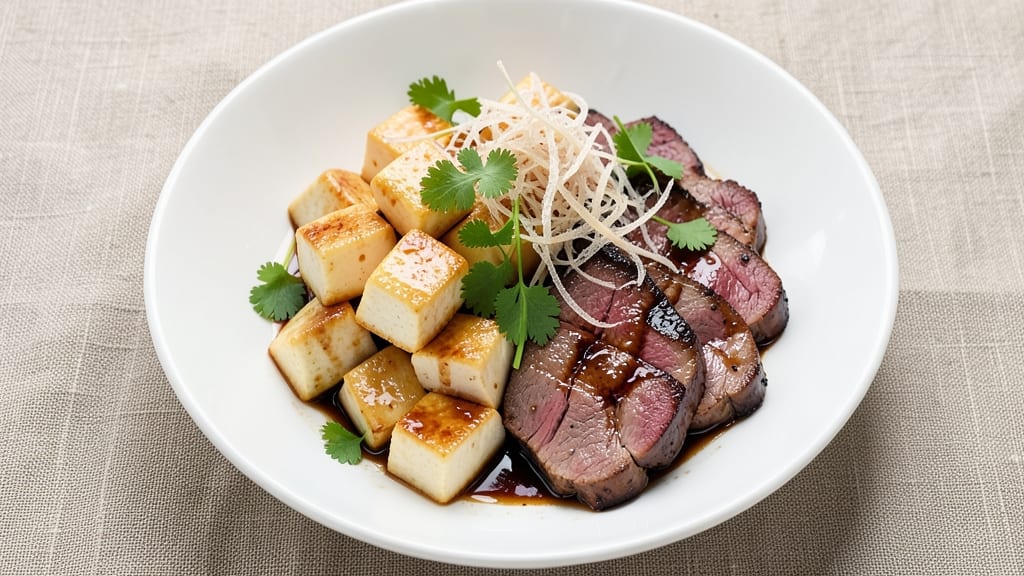
Mastering crispy bean curd and tender pork creates a dish that balances texture and flavor perfectly. This wok-seared recipe delivers restaurant-quality results with silky tofu bites and caramelized pork, all achieved through precise technique. The key lies in high-heat searing and careful ingredient pairing—no shortcuts here, just professional-level execution.
What makes this dish special is the contrast between crispy edges on the bean curd and perfectly tender pork, all tied together with a savory sauce. Traditional Chinese cuisine often features this combination, but my version simplifies the process while keeping the authentic flavors.
The secret is in the preparation: pressing the tofu for maximum crispiness and marinating the pork just enough to enhance its natural richness.
By the time you plate this dish, you'll have a visually stunning meal with golden-brown pork slices and perfectly seared tofu cubes. The sauce—simple yet flavorful—binds everything together, creating a harmonious balance of textures and tastes. This is the kind of dish that elevates everyday cooking to something truly memorable.
Serve with steamed jasmine rice or noodles to complete the meal. The crispy edges and silky centers make every bite satisfying, while the aromatic sauce adds depth. Whether you're cooking for family or hosting a dinner party, this recipe delivers professional results with minimal fuss.
Ingredients for bean curd and pork
Restaurant-quality textures start with these carefully selected ingredients—crispy bean curd and tender pork meet precise technique.
| Ingredient | Amount | Notes |
|---|---|---|
| Extra-Firm Bean Curd (Tofu) 🧀 | 1 ½ lb | Pressed for 30 minutes, cut into 1-inch cubes |
| Boneless Pork Loin 🥩 | 1 ½ lb | Thinly sliced, marinated 30 minutes |
| Cornstarch 🌾 | ½ cup | For crispy tofu coating |
| Vegetable Oil 🫒 | ½ cup | High smoke point for wok searing |
| Light Soy Sauce 🍶 | ½ cup | For marinade and sauce |
| Dark Soy Sauce 🍶 | 1 tbsp | For color and depth |
| Sesame Oil 🫒 | 1 tbsp | Toasted for aroma |
| Garlic Cloves 🧄 | 6 cloves | Minced for marinade |
| Fresh Ginger 🌿 | 2 tbsp | Grated, for marinade |
| Green Onions 🧅 | 4 whole | Thinly sliced, for garnish |
| White Pepper 🌶️ | ½ tsp | Freshly ground for heat |
| Sugar 🍚 | 1 tbsp | Balances flavors |
| Jasmine Rice 🍚 | 1 ½ cups | Uncooked, for serving |
| Sesame Seeds 🌰 | 1 tbsp | Toasted for garnish |
The bean curd demands attention. Extra-firm tofu is non-negotiable—it holds shape during pressing and searing. Press it for at least 30 minutes between paper towels and a weight. For the pork, loin cuts work best—ask your butcher for thin slices if they don't pre-cut. Whole Foods or Asian markets carry pre-sliced pork for convenience. The cornstarch coating transforms bland tofu into crispy edible lace—don't skip the double-dredge process. For authentic flavor, use Kikkoman light soy sauce and La Choy dark soy sauce—their balance is unmatched.
No extra-firm tofu? Silken tofu pressed for 1 hour works, though texture differs. Substitute pork with chicken thigh strips—they hold up better than breast. Running short on sesame oil? Toast regular sesame seeds in a dry pan first, then grind into powder. The ginger should be peeled and grated fresh—bottled paste lacks the bright punch. For the sauce, reduce the soy mixture by half before adding tofu and pork. This concentrates flavors without overpowering the delicate textures. The sugar isn't just sweetness—it cuts through the saltiness for balance.
Press the tofu immediately after purchase—it loses crispiness fast. Store pressed tofu in the fridge, wrapped in a damp towel, for up to 3 days. Marinated pork keeps 2 days in the fridge, but cook it within 24 hours for best texture. The sauce can be prepped ahead and reheated gently—just add a splash of water if it thickens. For serving, steam the jasmine rice in a rice cooker with 1:1.5 water-to-rice ratio. Toast the sesame seeds in a dry pan until golden—this enhances their aroma. Leftovers reheat best in a steamer or air fryer to maintain crispiness.
Why You'll Love This Recipe
- No-Fuss Ingredients: I keep a block of extra-firm tofu and a pork loin in my fridge for this—no specialty shopping. The cornstarch coating turns the pork into crispy shards with zero fuss, and the light soy sauce adds just enough savory punch without overpowering.
- Crispy-Creamy Magic: That first bite? The pork’s golden crust gives way to tender meat, while the tofu soaks up the sauce just enough to stay silky. Honestly, it’s the kind of contrast that makes you reach for seconds without even thinking.
- Lunchbox Hero: Pack this for work or school—it reheats like a dream. The tofu holds up perfectly, the pork stays juicy, and the sauce clings to every bite. (Yes, even on a Tuesday night when you’re too tired to think.)
- Budget Win: Pork loin and tofu stretch across multiple meals without breaking the bank. I’ll make a double batch, freeze half, and still have leftovers that taste just as good cold as they do hot. My wallet and my taste buds thank me.
Step-by-step instructions for wok-seared bean curd and pork
Master the technique of creating crispy tofu and tender pork with perfect balance in every bite.
Prepare the Marinades and Press the Tofu
Begin by pressing the 1.5 lb extra-firm bean curd (tofu) for 30 minutes between paper towels or a clean kitchen towel. This removes excess moisture and ensures crispy edges when seared. Cut the pressed tofu into 1-inch cubes and set aside on a plate.
In a bowl, combine 0.5 cup light soy sauce, 1 tbsp dark soy sauce, 1 tbsp sugar, 1 tbsp sesame oil, 6 minced garlic cloves, and 2 tbsp grated fresh ginger. This marinade will tenderize the pork and add depth to the final dish. Thinly slice the 1.5 lb boneless pork loin and coat evenly in the marinade. Let it sit for 30 minutes at room temperature while you prepare the tofu.
Coat the Tofu and Sear in Hot Oil
Transfer the 1.5 lb cubed tofu to a bowl and toss gently with 0.5 cup cornstarch until each cube is fully coated. The cornstarch creates a crispy exterior while keeping the inside silky. Heat 0.5 cup vegetable oil in a wok or large skillet over medium-high heat until shimmering.
Add the tofu cubes in a single layer, being careful not to overcrowd the pan. Cook for 4-5 minutes until golden brown on all sides and the edges are crispy. Remove the tofu and set aside on a paper towel-lined plate to drain excess oil. The tofu should hold its shape when pressed gently—if it crumbles, it needs a bit more cornstarch next time.
Sear the Pork and Build the Sauce
In the same wok, increase heat to high and add the marinated pork slices. Sear for 2-3 minutes per side until lightly browned and cooked through. The pork should reach an internal temperature of 145°F when measured with a meat thermometer. Remove the pork and set aside with the tofu.
Reduce heat to medium and add 0.5 cup light soy sauce, 1 tbsp dark soy sauce, and 0.5 tsp white pepper to the wok. Bring to a gentle simmer, scraping up any browned bits from the bottom with a wooden spoon. Let the sauce reduce for 2-3 minutes until slightly thickened. This step captures all the flavorful fond from the searing process.
Combine and Garnish
Return the tofu and pork to the wok, tossing gently to coat evenly in the sauce. Cook for an additional 1-2 minutes until everything is heated through and the tofu absorbs some of the sauce's richness. The tofu should be crispy on the outside and soft on the inside, while the pork remains tender with a slight chew.
Garnish with thinly sliced green onions and 1 tbsp toasted sesame seeds for texture and aroma. Serve immediately over 1.5 cups cooked jasmine rice, ensuring each bite delivers the perfect contrast of crispy tofu, tender pork, and silky sauce.
Pro Tips For Making Bean Curd And Pork
- Freeze the Tofu First: Pop your extra-firm bean curd in the freezer for 30 minutes before slicing—it stays together better when frying. I used to skip this and end up with crumbly pieces that fell apart mid-stir-fry. Trust me, the texture holds up way cleaner.
- Marinate Pork Thin: Slice the pork loin paper-thin (about 1/8-inch) and let it soak in soy sauce for at least 20 minutes. Thick slices stay chewy, and skipping the marinade means bland, flavorless pork. If you’re in a rush, 10 minutes still helps, but don’t skip it entirely.
- High Heat, Fast Stir: Get your wok or pan screaming hot before adding oil—anything less and your pork will steam instead of sear. I learned this the hard way when my first batch turned out soggy. Once the pork hits the pan, stir constantly for 30 seconds max before adding tofu.
- Toss Tofu in Cornstarch: Don’t just dip—toss the tofu cubes in cornstarch until they’re fully coated, like they’re rolling in flour. I used to be lazy and just sprinkle, and the result was uneven browning. A quick shake in a bag works if you’re impatient, but your hands do the job just fine.
Best sauces and condiments for these flavors
Classic Soy-Ginger Sauce
This foundational sauce ties everything together with its perfect balance of salt, sweet, and umami. Start with ½ cup light soy sauce and 1 tbsp dark soy sauce—the dark variety adds depth and that signature mahogany color.
I always use Kikkoman for light soy and La Choy for dark because their profiles are consistent. Add 1 tbsp sugar to cut through the saltiness, then finish with 1 tbsp toasted sesame oil for aroma.
The key is reducing this mixture by half before combining with the pork and tofu—this concentrates the flavors without overpowering the delicate textures. 🍶
Spicy Chili Oil Finish
For a kick, drizzle 1 tsp chili oil (homemade or store-bought like Lee Kum Kee) over the finished dish just before serving. I like to infuse mine with 1 tbsp dried red chili flakes and 1 crushed garlic clove for extra punch.
The oil should be smoky and slightly oily—not watery. Add it right before plating so the heat doesn’t soften the crispy tofu edges. A pinch of white pepper (½ tsp) in the sauce adds subtle heat without overpowering. 🌶️
Sweet and Tangy Plum Sauce
Swap the soy-based sauce for a homemade plum sauce to add fruity brightness. Simmer ½ cup plum jam (I use Bon Appétit brand) with 2 tbsp rice vinegar, 1 tbsp soy sauce, and ½ tsp grated ginger until thickened.
This works beautifully with the pork’s richness and adds a sweet-tangy contrast that cuts through the fat. Thin with 1 tsp water if needed—it should coat the back of a spoon but still be pourable. 🍑
Garlic-Scallion Oil
For a lighter, more aromatic option, make a garlic-scallion oil to drizzle over the dish. Sauté 3 minced garlic cloves and 2 tbsp chopped scallions in 2 tbsp neutral oil (like avocado oil) until fragrant but not browned.
Strain to remove solids, then drizzle 1 tbsp over the plated dish. This adds freshness without heaviness and pairs perfectly with the crispy tofu. Store the oil in the fridge for up to 5 days—it’s great for other stir-fries too! 🧅
Sesame-Ginger Dressing
Blend 2 tbsp tahini, 1 tbsp rice vinegar, 1 tbsp soy sauce, 1 tbsp grated ginger, and 1 tsp honey for a creamy dressing that adds texture. Thin with 1-2 tbsp water until it coats a spoon smoothly.
Drizzle lightly over the dish or serve on the side for dipping. The tahini adds a nutty richness that complements the pork’s savory notes. For extra depth, toast 1 tsp sesame seeds and sprinkle on top. ✨
Nutrition facts
Frequently asked questions
Can I substitute regular tofu for extra-firm in this recipe?
Regular or silken tofu won't work as well—it's too soft and absorbs too much oil. For best results, use extra-firm tofu pressed for 30 minutes to achieve that perfect crispy exterior. If you absolutely must substitute, try super-firm tofu pressed for 1 hour, but expect slightly less crispiness. The texture difference is worth the effort!
How do I prevent the pork from drying out during cooking?
Marinate the pork for at least 30 minutes (up to 2 hours for deeper flavor) and use thin slices—about ¼-inch thick. Cook quickly over high heat for 2-3 minutes per side until just done (145°F internal temp). Overcooking is the enemy—pork should be tender with a slight chew, not rubbery. A meat thermometer is your best friend here!
What's the best way to reheat leftovers without losing crispiness?
Reheat in a skillet over medium heat with a splash of water or broth for 2-3 minutes until warmed through. For extra crispiness, broil for 1-2 minutes at the end. Microwaving kills the texture—never do it! Store leftovers in an airtight container for up to 3 days in the fridge. The sauce can be reheated separately and added back before serving.
Is this dish gluten-free? Can I make it vegan?
Traditional versions use soy sauce (gluten-containing), but you can substitute with tamari for gluten-free. For vegan, replace pork with extra-firm tofu or tempeh marinated in the same sauce. Use vegan soy sauce and ensure your cornstarch is certified gluten-free. The technique remains identical—just swap the protein and verify all ingredients.
Why does my tofu turn out soggy instead of crispy?
Soggy tofu usually means one of three things: not enough pressing (30+ minutes required), insufficient cornstarch coating, or overcrowding the pan. For crispy results, press thoroughly, coat with cornstarch (not flour), and cook in small batches over medium-high heat. The oil should be hot enough to sizzle when the tofu hits the pan—if it bubbles gently, it's not hot enough!