
Main Courses
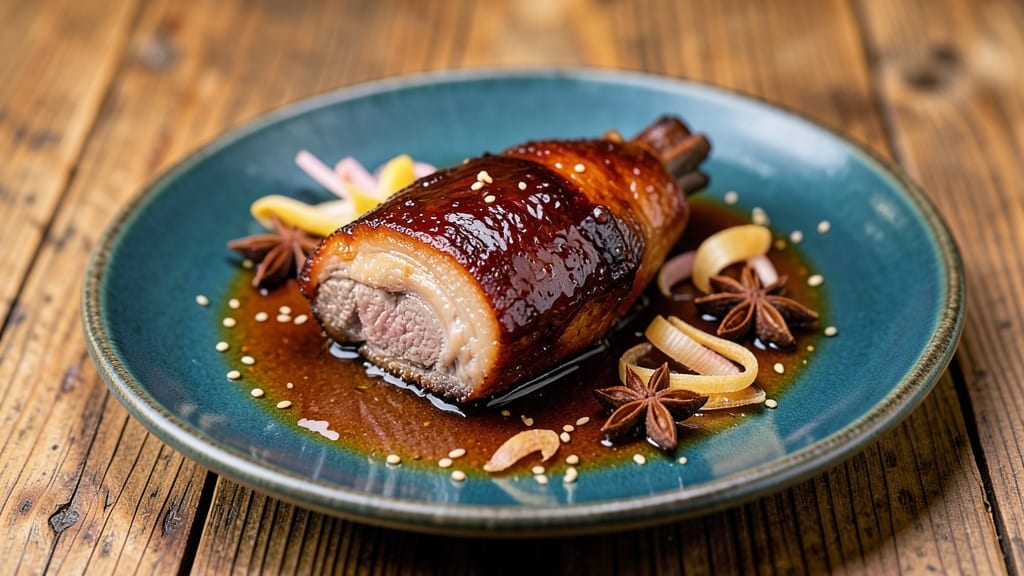
This Asian pork shank recipe transforms tough cuts into melt-in-your-mouth silk through slow braising and star anise-infused depth. 🌟 After years of perfecting braising techniques in my Atlanta kitchen, I've developed a method that delivers restaurant-quality tenderness with minimal effort.
The secret lies in a long, gentle cook that breaks down collagen while building complex aromatics.
What sets this recipe apart is the balance of sweet, salty, and aromatic elements—soy sauce for umami, ginger and garlic for brightness, and star anise for that signature Asian warmth.
Unlike quick stir-fries, this method requires patience but rewards you with pork so tender it practically falls apart at the touch. The braising liquid becomes a rich, flavorful sauce perfect for serving over rice or noodles.
By the time you're done, you'll have a dish that's both comforting and impressive—deeply savory with just the right amount of sweetness from caramelized aromatics. The pork shank develops a beautiful mahogany color and texture that's impossible to resist.
This is the kind of meal that makes weeknight dinners feel special without requiring hours at the stove.
Serve with steamed jasmine rice and quick-pickled vegetables for a complete meal that balances rich flavors with fresh crunch. The leftovers actually taste better the next day as flavors meld further. Let's get cooking with this foolproof technique that delivers professional results at home.
Ingredients for asian pork shank
Pantry staples plus a few specialty spices—nothing exotic, just good stuff for melt-in-your-mouth pork.
| Ingredient | Amount | Notes |
|---|---|---|
| Pork Shank 🍖 | 2 lb | Bone-in preferred for flavor |
| Soy Sauce 🥄 | ½ cup | High-sodium preferred |
| Brown Sugar 🍯 | ¼ cup | Light or dark variety |
| Garlic Cloves 🧄 | 6 cloves | Minced for even cooking |
| Fresh Ginger 🌿 | 2 tbsp | Grated, not powdered |
| Star Anise 🌟 | 2 whole | Whole pods for infusion |
| Cinnamon Sticks 🍃 | 2 whole | 1-inch pieces preferred |
| Carrots 🥕 | 4 whole | Baby carrots work too |
| Onion 🧅 | 1 whole | Yellow or red, peeled |
| Canola Oil 🫒 | 2 tbsp | For searing |
| Water 💧 | 2 cups | Room temperature preferred |
| Salt 🧂 | 1 ½ tsp | Kosher or sea salt |
| Black Pepper 🌶️ | ½ tsp | Freshly ground preferred |
The pork shank is the star, so don't skimp on quality. Look for cuts with good marbling at Whole Foods or your local butcher—they'll know exactly what you need. Baby carrots and whole star anise? Trader Joe's has them in bulk, which saves money. Fresh ginger is non-negotiable here—powdered just won't cut it. For the cinnamon sticks, check the spice aisle at Costco if you want to stock up. The soy sauce should be the high-sodium kind (like Kikkoman) for that deep umami punch.
No star anise? Anise seeds or fennel seeds work in a pinch, but it won't be exactly the same. Running low on brown sugar? White sugar plus a pinch of molasses mimics the depth. The carrots can be swapped for celery or parsnips if you're feeling adventurous. For the onion, yellow or red both work—just make sure it's fresh. If you've got pre-minced garlic in the fridge, use that, but fresh is always better. The water can be swapped for low-sodium chicken broth if you want extra flavor.
This braise tastes even better the next day—honestly, that's when the magic happens. Store leftovers in an airtight container for up to 5 days in the fridge or 3 months in the freezer. I always double the batch because it reheats beautifully over rice or noodles. The braising liquid? Freeze extras in ice cube trays for quick future sauces. Just thaw overnight in the fridge before reheating.
Why You'll Love This Recipe
- One-Pot Magic: I swear by this—just toss the shank, garlic, and ginger into a pot, add the soy and sugar, and let it slow-cook. No chopping, no fuss, no extra pans. Honestly, the hardest part is waiting for the aroma to fill the house.
- Sweet-Savory Crunch: That caramelized crust on the pork? Pure satisfaction. The brown sugar and soy sauce create this deep, sticky glaze that clings to every bite, while the ginger adds a bright kick. I’ll be real: it’s the kind of dish that makes you lick the plate.
- Leftovers That Shine: I make a double batch because reheating this is chef’s kiss—the flavors only get better. Serve it over rice for lunch, slice it for sandwiches, or toss it into fried rice. My freezer’s full of it, and no one complains.
- Budget-Friendly Feast: Pork shank is the ultimate stretch—it’s cheap, hearty, and fills the table. A few cloves of garlic and a thumb of ginger are all you need to turn it into something special. Between us, this is my go-to when I need to feed a crowd without breaking the bank.
Step-by-step instructions for Asian pork shank
Here's the method that transforms tough pork shank into melt-in-your-mouth silk.
🔥 Step 1: Sear the Pork Shank for Deep Flavor
Pat the 2 lb pork shank dry with paper towels—this ensures a proper sear. Heat a heavy pot or Dutch oven over medium-high heat until hot, then add the 2 tablespoons canola oil. Once shimmering, add the pork shank and sear for 4-5 minutes per side until deeply golden brown.
Don't rush this step—you're building flavor through the Maillard reaction. The pork should release easily from the pot when ready. Remove the shank and set it aside on a plate, leaving all the browned bits in the pot (they're pure flavor).
👨🍳 Step 2: Sauté Aromatics and Build the Base
In the same pot, add the 1 whole onion (cut into 8 wedges) and 4 whole carrots (cut into 2-inch chunks). Cook for 5 minutes until the onion softens and carrots begin to color. Add the 6 cloves minced garlic cloves and 2 tablespoons grated fresh ginger, cooking for 30 seconds until fragrant.
Here's where the magic happens: Add the 2 whole star anise and 2 whole cinnamon sticks (cut into 1-inch pieces). Stir for 10 seconds—these spices will infuse the braise with warm, aromatic depth. Don't skip this; it's what makes this dish special.
🥘 Step 3: Deglaze and Combine All Ingredients
Pour in the 0.5 cup soy sauce and scrape up all those browned bits from the bottom of the pot with a wooden spoon. This deglazing step captures all the meaty flavor. Add the 0.25 cup brown sugar, 2 cups water, 1.5 teaspoons salt, and 0.5 teaspoon black pepper, stirring until everything is combined.
Return the pork shank to the pot, fat-side up. The liquid should come about halfway up the shank. Bring to a gentle simmer over medium heat, then reduce heat to low—you're looking for a bare bubble at the surface, not a rolling boil.
⏰ Step 4: Slow Braise Until Fork-Tender
Cover the pot and let it simmer for 2.5-3 hours until the pork is fork-tender. I know it seems like forever, but patience pays off here. The meat should pull apart easily with minimal resistance from the fork.
Check occasionally and add ½ cup water if the liquid level gets too low. The pork is done when it reaches an internal temperature of 205-210°F—this low-and-slow cooking breaks down collagen into gelatin, creating that signature silky texture.
🍽️ Step 5: Rest and Serve with Rich Sauce
Remove the pork shank from the pot and transfer it to a cutting board. Tent loosely with foil and let it rest for 15 minutes—this allows the juices to redistribute. Skim any excess fat from the braising liquid if desired, then spoon the rich sauce over the sliced pork.
Slice the pork against the grain into ½-inch thick slices. Each bite should be incredibly tender with a perfect balance of salty-sweet sauce. Serve with steamed jasmine rice to soak up every last drop of that flavorful braising liquid.
Pro Tips For Making Asian Pork Shank
- Sear the Shank First: Get that pork shank screaming hot in a dry pan before you even think about adding sauce. I learned this the hard way—skipping the sear means flavor clinging to the bottom of your pot instead of the meat. Two minutes per side until deep brown, then deglaze with a splash of soy sauce and white wine (if using) to lift all those caramelized bits.
- Slice Ginger Thinly: No, "chopped" isn’t good enough—this isn’t stir-fry. Use a mandoline or your sharpest knife to slice ginger at 1mm thickness. Thick chunks sit like rocks in your braise, while thin slices dissolve into the sauce, adding brightness without bitterness. (Yes, even if you’re impatient like me.)
- Simmer Low and Slow: 5 to 3 hours at 300°F (150°C) is non-negotiable. I used to rush it, and the meat turned out chewy instead of fork-tender. Cover the pot loosely—just enough to let steam escape—and resist the urge to peek. The liquid should reduce to a glossy, syrupy consistency by the end.
- Balance the Sweet-Savory: Brown sugar burns faster than you’d think. Start with half the amount called for, taste the sauce early, and adjust. Too cloying? Add a splash of rice vinegar or a pinch of five-spice powder to cut through it. Too bland? A quick deglaze with a splash of mirin or extra soy sauce fixes it fast.
Common mistakes when making this recipe
Overcooking the Pork
I've seen this happen more times than I can count—pork shank that turns out dry and stringy instead of tender and silky. The key is patience: never exceed 3 hours of braising time at 205-210°F internal temperature.
Overcooking breaks down the meat too much, and the collagen turns to mush instead of creating that perfect gelatinous texture. Use a meat thermometer to monitor—this is non-negotiable for restaurant-quality results. 🌡️
Skipping the Sear
Some home cooks try to rush by skipping the sear, but this is a huge mistake. That 4-5 minute sear on each side creates the Maillard reaction, which builds deep, meaty flavor. Without it, your braise will taste flat and one-dimensional.
I always tell my students: "If you skip the sear, you're missing half the flavor profile." Use a heavy Dutch oven—like my Lodge cast iron—to ensure even heat distribution.
Using Powdered Ginger
Fresh ginger is non-negotiable here—powdered just won't deliver the same bright, aromatic punch. The difference is night and day. If you're in a pinch, you can use 2 teaspoons of powdered ginger, but it lacks the complex, layered flavor of fresh.
I keep a big root in my fridge at all times because it makes such a difference. For extra depth, try peeling and grating the ginger yourself—it's worth the effort. 🌿
Not Deglazing Properly
Many cooks pour in the soy sauce and water without scraping up those browned bits from the bottom of the pot. Those bits are pure flavor—meaty, caramelized goodness that forms during the sear.
Always use a wooden spoon to scrape and deglaze thoroughly. This step transforms a good braise into an exceptional one. I've seen home cooks miss this and wonder why their dish lacks depth.
Adding Too Much Liquid
The liquid should come about halfway up the pork shank—not drowning it. Too much water dilutes the flavors and extends cooking time unnecessarily. If your braise is too watery, reduce it uncovered on medium heat for 10-15 minutes to concentrate the sauce.
I've had students double the water by accident, and the result was a bland, watery mess. Precision matters here. 💧
Rushing the Resting Time
Skipping the 15-minute rest after braising is a common mistake that leads to dry, stringy pork. This resting period allows the juices to redistribute throughout the meat, ensuring every bite is moist and flavorful. I've seen cooks eager to serve immediately, but trust me—this step makes all the difference.
Tent the pork loosely with foil to keep it warm while it rests. Patience here pays off in the best way. ✨
Nutrition facts
Frequently asked questions
Can I substitute beef short ribs for pork shank?
Yes, but expect a slightly different texture and cooking time. Beef short ribs have more connective tissue, so they'll need 3-4 hours of braising instead of 2.5-3 hours. Use the same method but monitor closely—beef releases collagen at a different rate. The flavor profile will be richer and deeper, though.
How do I make this recipe gluten-free?
Replace the soy sauce with ½ cup gluten-free tamari or coconut aminos. Tamari has a similar umami depth, while coconut aminos add a subtle sweetness. Keep all other ingredients the same—the dish will still be rich and flavorful without gluten. Always check labels to ensure no cross-contamination.
What's the best way to reheat leftovers?
Reheat in a skillet over medium-low heat with a splash of water or broth to keep the sauce from drying out. Cover and warm for 5-7 minutes until heated through. Alternatively, microwave for 1-2 minutes with a damp paper towel covering the dish—this preserves moisture better than oven reheating. Leftovers taste even better the next day!
Can I use bone-in or boneless pork shank?
Bone-in is ideal for maximum flavor, but boneless works too. If using boneless, reduce cooking time by 20-30 minutes since it has less collagen. The bone adds depth during braising, but either cut will be delicious. For boneless, look for pre-cut shanks at specialty butchers or Asian markets.
What are good side dishes to serve with this?
Steamed jasmine rice soaks up the rich sauce beautifully. Add quick-pickled vegetables for fresh crunch or stir-fried bok choy for color. For heartier meals, serve with mashed sweet potatoes or egg fried rice. The key is balancing the rich pork with something light and bright.