
Main Courses
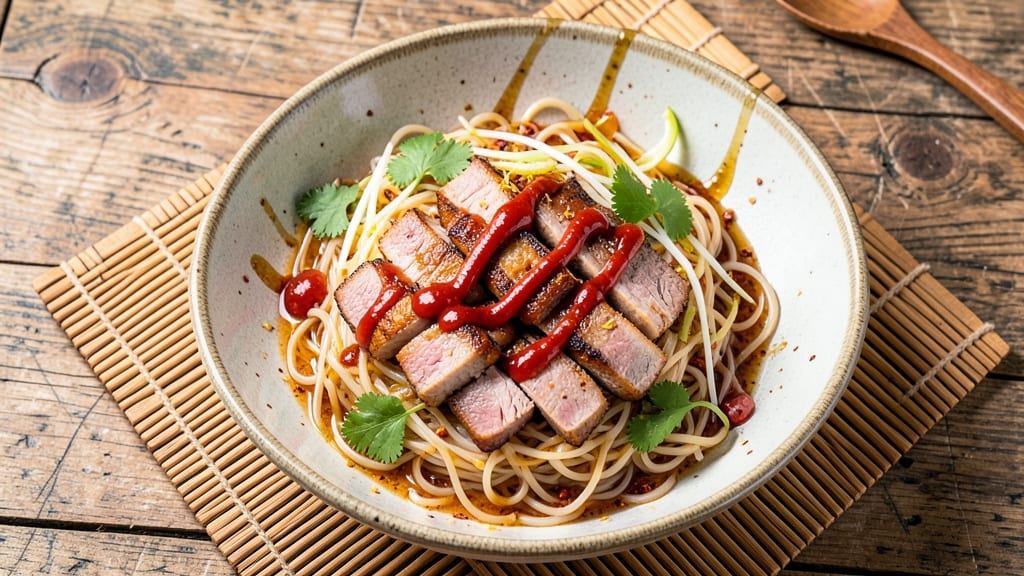
This Asian pork noodle bowl recipe delivers restaurant-quality flavor with smoky chili-lime pork over chewy rice noodles—perfect for a weeknight dinner that feels like a night out. 🔥 The secret lies in perfectly balanced components: tender pork marinated in bold spices, al dente noodles, and a sauce that ties everything together with deep umami and bright acidity.
I developed this after years of refining my pork techniques, ensuring every bite delivers that perfect harmony of textures and flavors.
The foundation starts with the pork, which gets marinated in a blend of soy sauce, lime juice, and chili paste before being stir-fried to develop that signature smoky aroma.
Meanwhile, the rice noodles soak up just enough water to become chewy but still hold their shape, creating the ideal base for the rich sauce.
The sauce itself is where the magic happens—a fusion of traditional soy-based flavors with modern twists like a touch of honey and sesame oil for depth.
What you'll end up with is a bowl that's visually stunning and packed with layers of flavor: tender, slightly charred pork, perfectly chewy noodles, and a sauce that coats every bite with smoky-sweet complexity.
The finishing touches—crisp green onions, toasted sesame seeds, and a drizzle of chili oil—elevate it from homemade to restaurant-worthy. This is the kind of dish that disappears faster than you can say "wok hei."
Whether you're feeding a crowd or treating yourself to a solo meal, this recipe scales beautifully while keeping prep simple. The techniques are approachable yet professional, ensuring consistent results every time. Let's get cooking—your taste buds will thank you.
Ingredients for asian pork noodle bowl
Pantry staples and a few fresh ingredients—this bowl delivers restaurant-level flavor at home.
| Ingredient | Amount | Notes |
|---|---|---|
| Boneless Pork Shoulder 🥓 | 1 ½ lb | Cut into 1-inch cubes |
| Rice Noodles 🍜 | 8 oz | Flat or round, uncooked |
| Soy Sauce 🍶 | ½ cup | Light or dark, not low-sodium |
| Lime Juice 🍋 | ¼ cup | Freshly squeezed, about 2 limes |
| Chili Paste 🌶️ | 2 tbsp | Red curry or sambal oelek |
| Honey 🍯 | 1 tbsp | Wildflower or clover |
| Sesame Oil 🫒 | 1 tbsp | Toasted, for finishing |
| Garlic Cloves 🧄 | 6 cloves | Minced, for marinade |
| Green Onions 🧅 | ¼ cup | Sliced, for garnish |
| Sesame Seeds 🌾 | 1 tbsp | Toasted, for garnish |
| Vegetable Oil 🫒 | 2 tbsp | High smoke point |
| Chili Oil 🌶️ | 2 tbsp | Store-bought or homemade |
| Salt 🧂 | 1 tsp | Kosher or sea salt |
| Black Pepper 🌶️ | ½ tsp | Freshly ground |
| Ginger Root 🌿 | 1 tbsp | Freshly grated |
The pork shoulder is your secret weapon—it stays tender even after stir-frying, giving you that signature smoky aroma. Look for well-marbled cuts at the grocery store, and ask the butcher to trim off any large fat chunks if needed. I grab mine from Whole Foods or Trader Joe's since they carry high-quality cuts. For the rice noodles, flat or round both work, but flat noodles soak up sauce better. Soak them in warm water for 10-15 minutes before using—just enough to make them pliable, not mushy. Fresh ginger and garlic are non-negotiable here; the frozen dried stuff won't give you that bright, fresh punch.
No lime juice? Lemon juice works in a pinch, but the flavor won't be quite the same. Short on chili paste? Sriracha or sambal oelek at half the amount adds heat without changing the depth of flavor. The soy sauce should be light or dark—not low-sodium, as that'll dilute the umami. For a quicker prep, pre-minced garlic and ginger from the store save time, though fresh is always better. If you're making this ahead, marinate the pork overnight—the flavors meld even more beautifully. The sesame oil and chili oil should be stored in the fridge after opening to keep them fresh.
This dish reheats beautifully—just add a splash of water to the noodles and warm everything through. Keeps in the fridge for 3-4 days, though it's best enjoyed fresh. For leftovers, store the pork and sauce separately from the noodles to keep them from getting soggy. The garnishes—green onions and sesame seeds—are best added fresh right before serving. If you're feeding a crowd, double the pork and noodles, but keep the sauce proportions the same—you can always add more later. The flavors actually get better the next day as everything melds together.
Why You'll Love This Recipe
- No-Fuss Protein: I marinate the pork shoulder overnight—or toss it in soy sauce and lime juice for 30 minutes if I’m impatient—and it still turns out tender. That’s the magic of this dish: the pork almost cooks itself while I prep the rest.
- Umami Bomb: The combo of soy sauce and chili paste gives this sauce a depth that’s hard to beat. Add a squeeze of lime? Suddenly it’s bright, tangy, and dangerously addictive—like a flavor explosion in every bite.
- Leftover Hero: This bowl tastes just as good cold the next day, which means I can make a big batch on Sunday and have effortless lunches. My kids even ask for it—yes, even the picky ones—because it’s simple enough to customize with whatever veggies I have lying around.
- Budget Win: Pork shoulder is cheap, rice noodles last forever, and a little chili paste goes a long way. I stretch this recipe to feed four for under $10, and honestly? It’s one of my go-to meals when I’m trying to save money without sacrificing flavor.
Step-by-step instructions for smoky chili-lime pork noodle bowl
This vibrant bowl comes together in just 30 minutes—juicy pork, chewy noodles, and a bright, zesty sauce.
🔥 Step 1: Marinate and Cook the Pork
In a large bowl, combine the 1.5 lb boneless pork shoulder cut into 1-inch cubes with 0.5 cup soy sauce, 2 tbsp chili paste, 1 tbsp honey, 6 minced garlic cloves, 1 tbsp freshly grated ginger root, 1 tsp salt, and 0.5 tsp black pepper. Mix well to coat the pork completely, then let it marinate for at least 15 minutes (or up to 2 hours in the fridge for deeper flavor).
Heat 2 tbsp vegetable oil in a large skillet over medium-high heat. Add the marinated pork in a single layer and cook undisturbed for 3-4 minutes until golden brown on the bottom. Flip and cook another 3-4 minutes until the pork reaches an internal temperature of 160°F. The pork should be tender but still slightly firm—it'll finish cooking in the sauce. Transfer to a plate and set aside.
🍳 Step 2: Prepare the Sauce
In the same skillet (no need to clean it—the browned bits add flavor), reduce heat to medium and add 0.25 cup lime juice and 2 tbsp chili oil. Stir and let it simmer for 2 minutes until slightly reduced. Pour in 1 tbsp sesame oil and scrape up any browned pork bits from the bottom of the pan.
Return the cooked pork to the skillet and stir to combine with the sauce. Let it simmer for 2-3 minutes until the pork absorbs the flavors and the sauce thickens slightly. You're looking for a glossy, sticky sauce that clings to the pork—this is what makes the dish so addictive. Taste and adjust seasoning if needed.
🥘 Step 3: Cook the Noodles
While the pork cooks, prepare the 8 oz rice noodles according to package instructions. I like to use hot water (not boiling) and let them soak for 8-10 minutes until al dente—slightly chewy but not mushy. Drain and rinse briefly under cold water to stop the cooking process, then toss with 1 tbsp sesame oil to prevent sticking.
Divide the cooked noodles among four bowls. Top each serving with the pork and its smoky sauce, reserving some for garnish. The noodles should be the star here—chewy, springy, and perfectly cooked. If they're too soft, cook them for a minute longer next time.
👨🍳 Step 4: Assemble and Garnish
To finish, spoon any remaining sauce over the noodles and pork. Garnish each bowl with 0.25 cup sliced green onions and 1 tbsp toasted sesame seeds. The green onions add a fresh, bright contrast to the rich pork, while the sesame seeds give a nutty crunch. Drizzle with an extra drizzle of chili oil if you like a little more heat.
Serve immediately while the noodles are hot and the pork is juicy. This dish tastes even better the next day, so make extra if you can—it's that good. The balance of smoky, sweet, tangy, and spicy flavors makes every bite irresistible.
Pro Tips For Making Asian Pork Noodle Bowl
- CUT PORK INTO BATTERS: 1/2-inch chunks: I learned this the hard way—thin slices cook too fast and end up dry, while big hunks stay tough. Aim for 1/2-inch cubes so they render fat but stay juicy through the stir-fry. (Yes, even if your knife skills are rusty—just keep them consistent.)
- SOAK NOODLES IN COLD WATER: Rice noodles stick together like glue when overcooked. Soak them in ice water for 10 minutes, then drain and toss with a splash of lime juice—this keeps them separate and adds brightness. (Trust me, your bowl will thank you.)
- SAVE THE FAT, NOT THE WATER: When searing pork shoulder, resist the urge to rinse off the fat—it’s flavor gold. Instead, pat dry with paper towels, then sear in a hot pan until deeply browned. That crust locks in moisture and adds depth to the soy-chili sauce.
- ACIDIFY THE SAUCE LAST: Add lime juice and chili paste after the pork is cooked, not before. The acid breaks down the meat’s proteins too early, making it mushy. Stir it in right when plating—your noodles will stay firm, and the flavors will pop. (I know, it feels counterintuitive.)
Regional styles of asian pork noodle bowl
Japanese Yakisoba Style
For a Japanese-inspired twist, swap the rice noodles for yakisoba noodles (flat wheat noodles) and use a lighter tonkatsu sauce base instead of soy. I recommend Kikkoman tonkatsu sauce—it has that perfect balance of sweetness and umami.
Thinly slice the pork shoulder into ¼-inch strips for quick cooking, and stir-fry with beni shoga (red pickled ginger) for a bright, tangy kick. Garnish with thinly sliced cabbage and a sprinkle of furikake seasoning for that authentic Japanese street-food vibe. 🌶️
Thai Green Curry Twist
Transform this into a Thai-inspired dish by adding 1 cup coconut milk to the sauce and blending in 2 tbsp green curry paste (like Maesri or Thai Kitchen). Use rice noodles and stir in 1 cup Thai basil leaves at the end for that signature aroma.
Top with crushed peanuts and lime wedges for serving. The coconut milk mellows the heat while adding richness, and the basil gives it that fresh, herbal note. ✨
Korean Kimchi Pork Bowl
Give it a Korean makeover by adding ½ cup chopped kimchi to the pork marinade and cooking it in with the meat.
Use udon noodles instead of rice noodles, and finish with a drizzle of gochujang sauce (mix 2 tbsp gochujang with 1 tbsp honey and 1 tsp rice vinegar). Garnish with fried egg and sesame seeds for a hearty, spicy kick.
The kimchi adds tangy depth, while the gochujang ties everything together with a sweet-spicy punch. 🔥
Vietnamese Pho-Inspired
For a Vietnamese-inspired version, use rice noodles and infuse the pork broth with star anise, cinnamon, and ginger (simmer for 10 minutes before adding the pork). Replace the soy sauce with fish sauce and add hoisin sauce for depth.
Top with bean sprouts, Thai basil, and jalapeño slices for freshness. The aromatic spices in the broth elevate the dish to pho-like perfection, while the hoisin adds a touch of sweetness. 💫
Chinese Dan Dan Noodle Fusion
Blend Chinese flavors by using egg noodles and adding 1 tbsp Sichuan peppercorns to the marinade for a numbing-spicy kick. Replace the chili oil with la gan ma sauce (or mix 1 tbsp chili oil with 1 tbsp soy sauce and 1 tsp vinegar).
Garnish with pickled mustard greens and crushed peanuts for texture. The Sichuan peppercorns add that signature "mala" heat, while the pickled greens bring a tangy contrast. 🌟
Singaporean Laksa Twist
For a Singaporean-inspired bowl, use rice noodles and add coconut milk to the sauce along with lemongrass, galangal, and kaffir lime leaves (simmer for 5 minutes before adding the pork). Top with shredded cucumber, lime wedges, and fresh cilantro**.
The aromatic herbs give it that fragrant, tropical flavor, while the coconut milk adds a creamy richness. This version is like a lighter, noodle-based laksa—bright, spicy, and deeply satisfying. 💛
Nutrition facts
Frequently asked questions
Can I use ground pork instead of pork shoulder for this recipe?
Ground pork works but will give you a different texture—it cooks much faster and becomes more like a patty than tender cubes. For best results, stick with pork shoulder cut into 1-inch cubes for that signature juicy, smoky bite. If you must use ground pork, form it into small patties and cook them thicker to prevent drying out.
How do I adjust the spice level for picky eaters?
Start by reducing the chili paste to 1 tbsp instead of 2 tbsp and skip the chili oil entirely. For extra mildness, replace it with 1 tbsp sweet soy sauce or a drizzle of honey. The lime juice already adds brightness without heat, so you'll still get that zesty punch.
What's the best way to store leftovers?
Store the pork and sauce separately from the noodles in airtight containers for up to 3-4 days. Reheat the pork and sauce together in a skillet with a splash of water, then toss with the noodles. The sauce will thicken slightly when reheated—add a little water if needed. For longer storage, freeze the pork mixture for up to 3 months.
Can I make this recipe gluten-free?
Use tamari or coconut aminos instead of soy sauce, and check that your chili paste and rice noodles are certified gluten-free. For extra flavor, add 1 tbsp fish sauce to the marinade. The rest of the ingredients are naturally gluten-free, so you'll only need to swap these three components.
Why did my noodles turn mushy?
Over-soaking or rinsing rice noodles with cold water makes them mushy. Soak them in hot water for 8-10 minutes (not boiling), then drain immediately without rinsing. For extra chewiness, rinse them in lukewarm water instead of cold. Also, don't let them sit in water longer than necessary—they'll absorb too much moisture.