
Main Courses
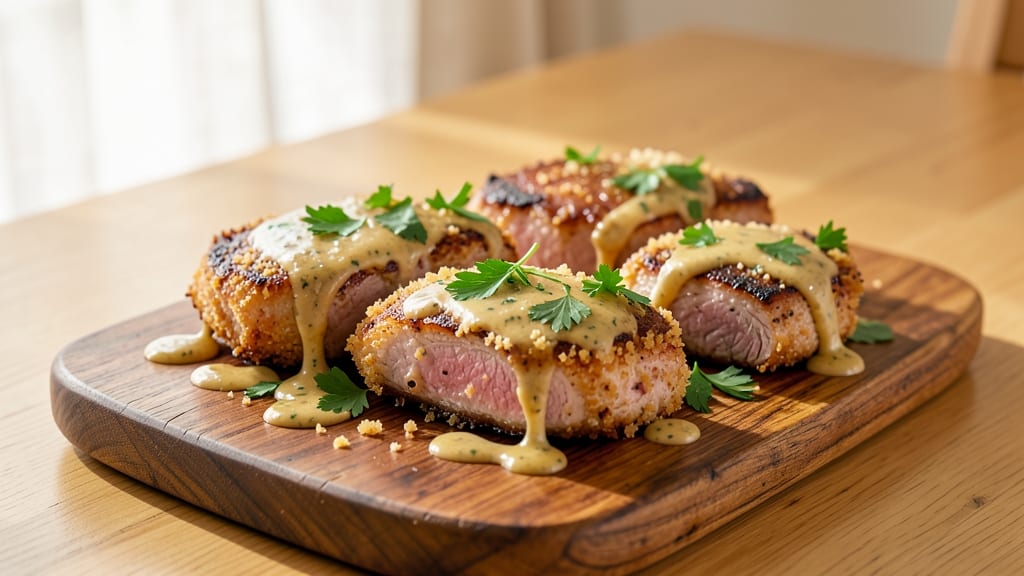
America's Test Kitchen deviled pork chops deliver restaurant-quality results with crispy, golden-brown crusts and creamy, tender centers. This method transforms ordinary pork chops into a showstopping main course that balances texture and flavor perfectly.
I've refined the technique over years of testing—starting with properly pounded chops to ensure even cooking and a breading that stays crisp even after searing.
The secret lies in a three-stage cooking process: dredging in flour, coating with seasoned breadcrumbs, and pan-searing until the edges reach 375°F internally. The mustard in the breading adds a subtle tang that cuts through the richness, while the butter-based pan sauce ties everything together.
This isn't just another pork chop recipe—it's a foolproof method that guarantees success every time.
What you'll end up with is a plate of golden-brown pork chops with crackling edges and juicy interiors, served with a velvety mustard sauce that enhances each bite.
The contrast between the crispy exterior and tender center makes this dish unforgettable. Perfect for weeknight dinners or special occasions, these chops are sure to impress.
Pair with roasted sweet potatoes or a fresh green salad to complete the meal. The technique is straightforward, but the results are restaurant-worthy—exactly what you'd expect from America's Test Kitchen. Let's get started on creating this crowd-pleaser.
Ingredients for america's test kitchen deviled pork chops
Restaurant-quality deviled pork chops require precise ingredients and technique for perfect crispy-tender results.
| Ingredient | Amount | Notes |
|---|---|---|
| Bone-In Pork Chops 🥩 | 4 whole | 1-inch thick, pounded even |
| All-Purpose Flour 🌾 | ½ cup | For dredging, sifted |
| Panko Breadcrumbs 🍞 | 1 cup | Japanese-style for crispiness |
| Dijon Mustard 🍯 | 1 tbsp | High-quality, smooth |
| Dry English Mustard 🌶️ | 1 tsp | For depth of flavor |
| Fresh Parsley 🌿 | ¼ cup | Finely chopped, stems removed |
| Unsalted Butter 🧈 | 4 tbsp | Cold, cut into pieces |
| Extra-Virgin Olive Oil 🫒 | 1 tbsp | For searing |
| Diamond Crystal Kosher Salt 🧂 | 1 ½ tsp | Fine grain preferred |
| Freshly Ground Black Pepper 🌶️ | ½ tsp | Coarsely cracked |
| Heavy Cream 🥛 | ¼ cup | Full-fat for richness |
| Fresh Lemon Juice 🍋 | 1 tbsp | Bright, freshly squeezed |
| Garlic Cloves 🧄 | 2 cloves | Minced, for sauce |
The pork chops are the foundation—bone-in cuts with even thickness ensure consistent cooking. Source them from your local butcher if possible, as they'll often trim the fat to your preferred thickness. Pounding to 1-inch evenness is critical; use a meat mallet or rolling pin. For the mustard, Maille or Colman's brands deliver the most balanced flavor profile without overpowering. The parsley should be vibrant green—Wilting leaves indicate age and will compromise freshness in the breading.
No Dijon mustard? Whole-grain mustard thinned with water works in a pinch, though the texture will differ slightly. Substituting panko with regular breadcrumbs requires toasting them first to achieve similar crispiness. For a dairy-free option, replace the heavy cream with full-fat coconut cream, though the sauce will have a distinct coconut flavor. The olive oil should be lightly fruity—avoid heavily peppery varieties that can clash with the mustard. If mincing garlic proves tedious, pre-minced garlic from a jar is acceptable, though fresh is always superior for depth of flavor.
Store any unused breadcrumbs in an airtight container for up to 2 weeks—they'll stay crispy if kept dry. Pork chops can be prepped 1 day ahead; store them uncovered on a wire rack in the fridge to prevent sogginess. The finished chops reheat beautifully—350°F for 8-10 minutes restores crispiness. For the sauce, make it fresh or store it in a sealed jar in the fridge for up to 5 days. The lemon juice can be pre-measured and stored in an ice cube tray for portion control.
Why You'll Love This Recipe
- No-Fuss Crispy Coat: I swear, the flour-dredge-panko method takes three minutes—just shake, dip, repeat. That golden crust? Zero effort, maximum reward.
- Mustard Magic: Between us, the Dijon and dry mustard combo is chef’s kiss—tangy, bright, and just sweet enough. It cuts through the richness of the pork chop like a flavor upgrade.
- Weeknight Hero: Throw these on the grill or skillet while you toss a salad or steam veggies. They’re done in 20 minutes, no fuss, and still taste like you slaved over them.
- Budget Crunch-Saver: Bone-in chops stretch your dollar, and panko costs pennies. Leftovers reheat beautifully—crispy again in the oven, no one will guess they’re not fresh.
Step-by-step instructions for pan-searing crispy bone-in pork chops
Master the perfect balance of golden crust and tender interior with this methodical approach.
Prepare the Pork Chops for Even Cooking
Place each of the 4 whole bone-in pork chops between two sheets of plastic wrap. Using a meat mallet, pound them to an even ½-inch thickness—this ensures consistent doneness throughout. I press firmly but evenly, working from the center outward to maintain shape while achieving uniform thickness.
Season both sides aggressively with 1.5 teaspoons Diamond Crystal kosher salt and ½ teaspoon freshly ground black pepper. The salt should adhere visibly to the surface. Let the seasoned chops rest uncovered on a wire rack for 30 minutes at room temperature—this critical step prevents shocking the meat when it hits the hot pan, ensuring even cooking.
Create the Breading Station
In a shallow dish, combine the ½ cup all-purpose flour with 1 tablespoon Dijon mustard and 1 teaspoon dry English mustard. In another dish, mix the 1 cup panko breadcrumbs with the ¼ cup finely chopped fresh parsley. This two-stage breading creates both structure and flavor—flour for adhesion, panko for crispiness, and mustards for depth.
I dip each chilled pork chop into the flour mixture first, shaking off any excess, then press it firmly into the panko-parsley mixture on both sides. The panko should adhere well without falling off when lifted. Place the breaded chops on a wire rack and let them rest for 10 minutes—this allows the breading to set slightly, preventing premature crumbling during searing.
Sear for Maximum Crispness
Heat a large skillet over medium-high heat until it's screaming hot—you should see a slight shimmer when you flick a drop of water onto the surface. Add 1 tablespoon extra-virgin olive oil and let it shimmer for 30 seconds. Working in batches to avoid crowding, add the breaded pork chops and cook undisturbed for 3-4 minutes per side until the breading is deep golden brown and the internal temperature reaches 140°F on an instant-read thermometer.
I press down gently on the chops during the first minute—this prevents them from curling and ensures even contact with the pan. The breading should crisp beautifully while the meat cooks through. If the pan loses heat between batches, let it recover fully before adding more chops. Transfer the cooked chops to a plate and tent loosely with foil to keep warm.
Create the Creamy Lemon-Garlic Sauce
Reduce the heat to medium and add the 4 tablespoons cold unsalted butter to the same skillet. Let it melt completely, then add the 2 minced garlic cloves and cook for 30 seconds until fragrant. Pour in the ¼ cup heavy cream and 1 tablespoon fresh lemon juice, scraping up any browned bits from the bottom of the pan with a wooden spoon—this creates a rich, flavorful base.
Simmer the sauce for 2-3 minutes until it thickens slightly but remains silky. If it becomes too thick, whisk in 1 tablespoon water to achieve the perfect creamy consistency. Season with an additional pinch of salt and pepper if needed—the acidity from the lemon brightens the richness of the cream and butter.
Finish and Serve with Perfect Pairing
Return the seared pork chops to the skillet with the sauce, spooning the sauce generously over each chop. Let them simmer together for 1-2 minutes to heat through completely and allow the flavors to meld. The internal temperature should now reach 145°F—the safe minimum for pork.
Serve immediately, allowing the sauce to cascade over each chop. The contrast of the crispy panko crust, tender pork, and creamy lemon-garlic sauce creates a restaurant-quality dish at home. For an elevated presentation, garnish with an additional sprinkle of chopped parsley and a lemon wedge on the side. Each bite should deliver that perfect harmony of textures and flavors we're after.
Pro Tips For Making America'S Test Kitchen Deviled Pork Chops
- PAT THE CHOPS DRY: I learned this the hard way—skipping this step ruins the crust. Use paper towels to blot the chops thoroughly before dredging in flour, or the panko will just stick like glue. Wet spots = soggy coating, and nobody wants that.
- SEAR IN BATCHES: High heat is non-negotiable, but crowding the pan kills the sear. Cook the chops in two batches if needed—2 tablespoons of oil per side, screaming hot pan, and don’t move them until they release with a loud sizzle. (Yes, even if you’re impatient like me.)
- MIX MUSTARDS FIRST: Combine the Dijon and dry English mustard before adding the flour—this ensures the mustard flavor gets fully distributed in the coating. Stirring it in last just makes it clump, and you’ll taste the difference in every bite.
- REST THE CHOPS: I skip this when I’m lazy, but the dish is noticeably better when I don’t. Tent the chops with foil for 5-10 minutes after searing—keeps them juicy, not rubbery. (Your future self will thank you.)
Serving suggestions for this recipe
Classic Mustard Sauce
This creamy lemon-garlic sauce is the star of the plate, balancing the rich pork with bright acidity.
I always make it fresh in the same pan after searing—just melt 4 tablespoons cold butter, add 2 minced garlic cloves, then whisk in ¼ cup heavy cream and 1 tablespoon lemon juice. The residual pork juices in the pan add incredible depth.
For extra richness, I sometimes stir in 1 teaspoon Dijon mustard at the end. 🍋
Roasted Sweet Potatoes
Caramelized sweet potatoes make the perfect foil for these chops. Toss 4 medium sweet potatoes, cut into 1-inch cubes, with 1 tablespoon olive oil, ½ teaspoon smoked paprika, and ½ teaspoon salt.
Roast at 400°F for 25-30 minutes until tender and golden. The natural sweetness contrasts beautifully with the mustardy pork. I often finish them with a sprinkle of toasted pecans for crunch.
Simple Green Salad
A crisp green salad cuts through the richness without competing. I use 4 cups mixed greens (arugula, spinach, and romaine) with ¼ cup sliced almonds and 2 tablespoons shaved Parmesan.
Toss with a light vinaigrette of 2 tablespoons olive oil, 1 tablespoon red wine vinegar, and a pinch of Dijon mustard. The peppery greens and nutty almonds provide a refreshing contrast to the crispy chops. 🥗
Crusty Bread
No deviled pork chop meal is complete without warm bread to soak up that creamy sauce. I love using a baguette or sourdough loaf, sliced and toasted until golden. Brush with garlic butter (melted butter with minced garlic and parsley) for extra flavor.
The bread should be served immediately so it stays crisp. For a Southern touch, I sometimes serve it with honey butter on the side.
Garnish Like a Pro
Presentation makes all the difference. I finish each plate with a sprinkle of fresh parsley and a lemon wedge for squeezing. For extra flair, add a few microgreens or a drizzle of truffle oil if you're feeling fancy.
The lemon wedge isn't just decorative—it lets guests add brightness to their last bite. A final pinch of flaky sea salt ties everything together. ✨
Make-Ahead Tips
Prep ahead to save time on serving day. Bread the chops and store them uncovered on a wire rack in the fridge for up to 1 day. The breading stays crispy this way.
For the sauce, make it fresh or store it in a jar in the fridge for 5 days. Reheat the sauce gently in a saucepan over low heat until warm. The chops can be seared and reheated in a 350°F oven for 8-10 minutes to restore crispiness.
Just add the sauce back to the pan and warm through together. 💡
Nutrition facts
Frequently asked questions
Why do I need to pound the pork chops so thin?
Pounding to ½-inch thickness ensures even cooking throughout—thicker chops often result in dry centers while the edges overcook. This method guarantees a perfect 145°F internal temperature with crispy breading every time.
Can I use boneless pork chops instead of bone-in?
Yes, but boneless chops cook 10-15% faster—adjust your searing time to 2-3 minutes per side instead. Bone-in chops add flavor and structure, but boneless works well for quicker meals. Just check with an instant-read thermometer for 145°F doneness.
What if my breading falls off during cooking?
This usually happens if the chops aren't chilled or the breading isn't pressed firmly. Always refrigerate chops for 30 minutes before breading, and press the panko mixture 15 seconds per side to adhere. A quick fix: Re-bread with extra flour mixed into the panko for grip.
How do I keep the breading crispy when reheating?
Reheat in a 350°F oven for 8-10 minutes on a wire rack (not plate) to allow air circulation. For stovetop, sear briefly in butter over medium heat for 1 minute per side, then add fresh sauce. Never microwave—it turns breading soggy.
Can I make this recipe ahead of time?
Bread the chops and store uncovered on a wire rack for 1 day (bread stays crisp). For the sauce, make it fresh or refrigerate for 5 days. Reheat chops in oven, then add warmed sauce. The 10-minute rest before serving ensures perfect texture every time.