
Main Courses
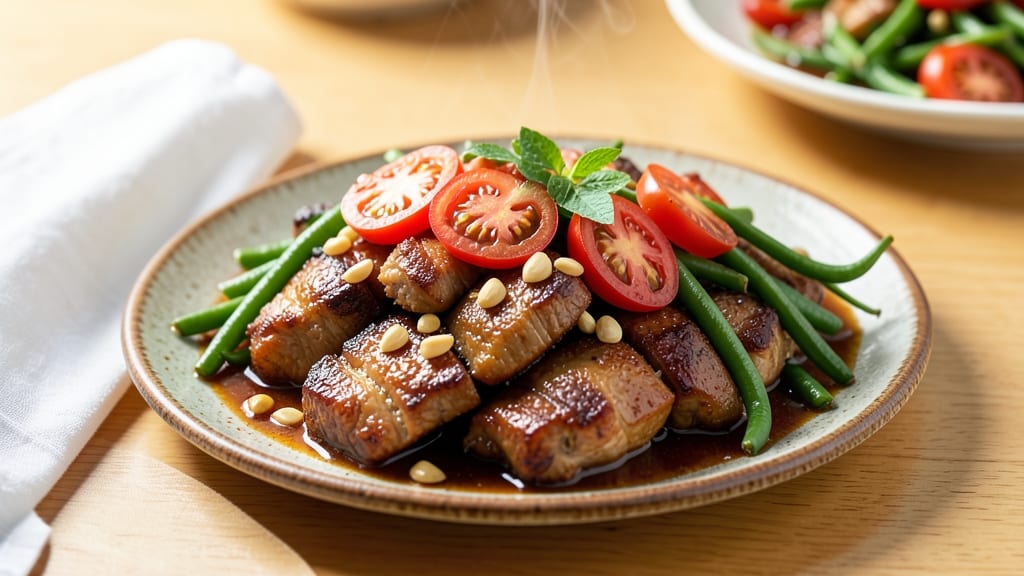
This adobong sitaw with ground pork brings the soul-warming flavors of Filipino home cooking to your table with its perfect balance of tangy, savory, and slightly sweet notes. 🔥 As someone who's spent years perfecting pork dishes—from backyard BBQ to high-end braises—I know how to get that signature crispy texture on the pork while keeping the sauce rich and velvety.
The string beans add just the right crunch, making this dish as comforting as it is flavorful.
The secret lies in the braising technique: searing the pork first develops deep, meaty flavors, while the vinegar and soy sauce create that signature adobo tang. I use cane vinegar for authenticity—it adds a subtle complexity that store-bought vinegar can't match.
The black peppercorns and garlic infuse the sauce with warmth, balancing the acidity perfectly. This isn't just a recipe; it's a taste of home, where every bite tells a story.
What you'll end up with is tender, crispy-edged pork bites swimming in a glossy, slightly thickened sauce that clings to every bean and bite of meat.
The aroma alone will have your kitchen smelling like a Filipino karinderia, and the first taste will remind you why this dish is a staple in Filipino households. It's the kind of meal that feels like a hug—warm, familiar, and impossible to resist.
Serve it steaming hot over fluffy jasmine rice, and don't forget to offer extra rice for soaking up that delicious sauce. This dish is perfect for family dinners, potlucks, or whenever you're craving something that tastes like love. Let's get cooking—your taste buds will thank you.
Ingredients for adobong sitaw with ground pork
The heart of Filipino home cooking—crispy pork, tangy sauce, and tender string beans.
| Ingredient | Amount | Notes |
|---|---|---|
| Ground Pork 🐖 | 1 ½ lb | 80% lean for crispy texture |
| String Beans (Sitaw) 🌱 | 2 cups | Trimmed, cut into 2-inch pieces |
| Cane Vinegar 🍶 | ½ cup | Authentic Filipino flavor profile |
| Soy Sauce 🥄 | ⅓ cup | Dark soy for rich color |
| Tomatoes 🍅 | 4 whole | Roma or vine-ripened, crushed |
| Garlic Cloves 🧄 | 6 cloves | Minced for aromatic base |
| Black Peppercorns 🌶️ | 1 tsp | Crushed for warmth |
| Bay Leaves 🌿 | 2 whole | Dried, for depth |
| Olive Oil 🫒 | 2 tbsp | For searing pork |
| Brown Sugar 🍯 | 1 tbsp | Balances acidity |
| Salt 🧂 | 1 ½ tsp | Adjust to taste |
| Onion 🧅 | 1 whole | Diced, yellow or red |
| Green Onions 🌿 | 4 whole | Sliced, for garnish |
| Jasmine Rice 🍚 | 2 cups | Uncooked, for serving |
The ground pork is where all the magic happens. Look for 80% lean—it crisps up perfectly while staying juicy inside. Filipino markets or well-stocked Asian grocery stores like 99 Ranch or H Mart usually carry it pre-ground, but the butcher counter at Costco works too. Cane vinegar is non-negotiable here—it's what gives that signature tang. If you can't find it, white vinegar plus 1 tsp sugar gets you close. The string beans should be bright green and crisp; trim the ends and cut them into even 2-inch pieces so they cook uniformly. For the tomatoes, Roma or vine-ripened work best—they're meatier and less watery than grocery-store varieties.
No cane vinegar? White vinegar plus 1 tsp sugar mimics the flavor, though it won't be identical. Swap dark soy sauce for regular soy if needed, but you'll lose that deep color. The black peppercorns should be crushed—not ground—so they release their oils gradually. Pre-ground pepper loses potency fast. For the garlic, peel and mince it fresh—jarred minced garlic has a metallic aftertaste. The brown sugar balances the acidity, so don't skip it. If you're short on time, baby string beans work just as well, but they'll cook faster so add them later. The green onions at the end are purely for garnish—use whatever's freshest, even scallions if that's what you've got.
This dish tastes even better the next day as the flavors meld. Store leftovers in an airtight container in the fridge for up to 5 days. The sauce thickens as it cools, so you can thin it with a splash of water when reheating. For serving, jasmine rice is traditional, but basmati works too. If you're making this ahead, cook the rice separately—it absorbs the sauce too much if added later. Freeze portions for up to 3 months—just thaw overnight in the fridge before reheating.
Why You'll Love This Recipe
- One-Pan Magic: I swear by this recipe when I’m too tired to wash dishes—just toss everything in one pot, stir, and let the soy and vinegar do their thing. The pork browns right in the same liquid, so no extra pans, no extra mess.
- Tangy-Savory Balance: That cane vinegar cut? It’s the star. Sharp enough to wake up your taste buds but balanced by the deep umami of soy sauce and tomatoes—like a perfect hug for your palate, especially when the sitaw gets tender.
- Lunchbox Hero: Between us, this is my go-to for packed lunches. The flavors only get better the next day, and the string beans stay crisp enough to eat cold. (Yes, even on a Tuesday night.)
- Pork Stretch Power: A single pound of ground pork feeds four easily, especially when you bulk it up with sitaw and tomatoes. Honestly, it’s my budget-friendly way to make a meal feel special without breaking the bank.
Step-by-step instructions for adobong sitaw with ground pork
Here's how to create crispy pork bites and tender string beans in this classic Filipino braise.
🔥 Step 1: Sear the Ground Pork for Crispy Texture
Heat a large, heavy-bottomed skillet over medium-high heat and add the 2 tablespoons olive oil. Once shimmering, add the 1.5 lb ground pork and break it apart with a wooden spoon. Let it cook undisturbed for 3-4 minutes until the pork begins to brown and develop crispy edges.
This initial searing is crucial—it creates those delicious crispy pork bites you want in every bite. I like to press down gently on the pork with the spoon during the first minute to ensure even contact with the pan. Once you see golden brown patches forming, it's time to stir and break up the pork into smaller, bite-sized pieces. Cook for another 2-3 minutes until all the pork is nicely browned.
🍳 Step 2: Build the Flavor Base with Aromatics
Add the 1 whole onion (diced) and 6 cloves garlic cloves (minced) to the skillet with the cooked pork. Stir everything together and cook for 3-4 minutes until the onions soften and become translucent. The garlic should be fragrant but not browned—this ensures it adds flavor without bitterness.
Next, add the 1 teaspoon crushed black peppercorns and 2 whole bay leaves. Stir for 30 seconds to toast the spices slightly. This step develops the aromatic base that will infuse the entire dish. If you smell the spices releasing their oils, you're on the right track—this is when the dish starts to come together.
🥘 Step 3: Add Tomatoes and Simmer the Sauce
Pour in the 4 whole tomatoes (crushed) and add the 0.5 cup cane vinegar, 0.33 cup soy sauce, and 1 tablespoon brown sugar. Stir everything together and bring to a gentle boil. Once boiling, reduce heat to medium-low and let it simmer uncovered for 10-12 minutes.
During this time, the tomatoes will break down and create a rich, slightly thickened sauce. You'll notice the liquid reduce and the flavors meld together. If the sauce looks too thick, add 2-3 tablespoons water to help it reach the right consistency. The sauce should coat the back of a spoon but still be pourable. Taste and adjust seasoning with the 1.5 teaspoons salt if needed.
🥘 Step 4: Incorporate String Beans and Braise
Add the 2 cups string beans (sitaw) to the skillet and stir to coat them evenly with the sauce. Increase heat to medium and bring to a gentle boil. Once boiling, reduce heat to low and let it simmer uncovered for 12-15 minutes.
You want the string beans to soften but still retain a slight bite—this ensures they're tender but not mushy. Stir occasionally to prevent the beans from sticking to the bottom of the pan. The dish should have a rich, slightly tangy sauce with tender pork and string beans. If the sauce starts to dry out, add a splash of water to maintain the right consistency.
🍽️ Step 5: Finish and Serve with Jasmine Rice
Remove the 2 whole bay leaves from the skillet. Stir in the 4 whole green onions (sliced) and cook for 1-2 minutes until they wilt slightly. This adds a fresh, bright finish to the dish. Taste one last time and adjust seasoning if needed—Filipino adobo should balance tangy, sweet, and savory flavors.
Serve the adobong sitaw hot over 2 cups cooked jasmine rice. The crispy pork bites and tender string beans will pair perfectly with the fragrant rice. Garnish with additional sliced green onions if desired. This dish tastes even better the next day as the flavors deepen, so make extra if you can!
Pro Tips For Making Adobong Sitaw With Ground Pork
- Crank the Heat First: Don’t simmer the pork right away—sear it in a dry pan over medium-high heat until it loses its raw color and starts browning. I learned this the hard way: rushing to add vinegar and tomatoes too soon leaves the pork bland and gray. Let it crisp for 3-4 minutes first, then deglaze with a splash of water before adding the rest.
- Trim the Sitaw Properly: String beans (sitaw) need more than a quick rinse—trim the tough ends and snap off any woody stems. My grandmother swore by this, and she was right: leaving the ends whole makes them chewy and ruins the texture. Cut them into 2-inch pieces for even cooking, and blanch them for 30 seconds if you’re worried about bitterness.
- Balance the Vinegar: Cane vinegar is potent—start with ¼ cup and taste as you go. I was skeptical until I tried it: too much makes the dish harsh, while too little leaves it flat. Add it gradually, then let the sauce simmer uncovered for 5 minutes to mellow the acidity. The tomatoes will mellow it out, but don’t skip the final taste check.
- Brown the Tomatoes: Skip the raw tomato chunks—sauté them in the same pan as the pork until they break down and darken slightly. This isn’t the prettiest method, but it works: caramelized tomatoes add depth that raw ones never will. Do this for 5-6 minutes before adding the vinegar, and your sauce will taste richer without extra seasoning.
Pro cooking tips for adobong sitaw with ground pork
Searing Secrets
That first sear is where the magic happens—don't rush it! I use a heavy-bottomed cast iron skillet (my vintage Lodge 10.25-inch) because it distributes heat evenly and creates those coveted crispy edges.
Heat the pan until it's smoking hot before adding the pork, then let it sit undisturbed for 3-4 minutes while you press down gently with a wooden spoon. This ensures maximum contact and browning. 🔥
Vinegar Balance
Cane vinegar is non-negotiable for authentic flavor, but if you're using white vinegar, add 1 teaspoon sugar to mimic its complexity. The key is balancing the acidity—start with the full ½ cup but taste as you go.
If the sauce tastes too sharp after simmering, add ½ teaspoon brown sugar to round out the flavors. I've learned this the hard way: underestimating the vinegar's power leads to a dish that's all tang and no harmony.
String Bean Timing
Add the string beans after the sauce has reduced but before it fully thickens—this ensures they absorb flavor without turning mushy. If using baby string beans, add them 5 minutes before serving so they stay crisp.
For longer beans, 12-15 minutes of simmering works perfectly. Pro tip: Taste-test one bean—it should be tender but still have a slight bite when you bite into it.
Sauce Consistency
The sauce should coat the back of a spoon but still be pourable—think of it like heavy cream consistency. If it thickens too much, add 2-3 tablespoons water gradually while stirring.
I've ruined a batch by letting it reduce too far; the pork ends up dry and the beans tough. The goal is a glossy, clinging sauce that enhances every ingredient without overpowering them. 💫
Spice Toasting
Those 30 seconds of toasting the black peppercorns and bay leaves might seem insignificant, but they make all the difference. The peppercorns release their oils, adding warmth, while the bay leaves infuse a subtle earthiness.
If you're short on time, crush the peppercorns right before adding them—pre-ground pepper loses potency fast. This step is what transforms a good adobo into a great one.
Leftovers Love
This dish tastes even better the next day as the flavors meld and deepen. Store leftovers in an airtight container and refrigerate for up to 5 days. When reheating, add a splash of water or broth to loosen the sauce—it thickens as it cools.
I always make extra because it's impossible to resist, and the flavors only get richer with time. Trust me, your future self will thank you. ✨
Nutrition facts
Frequently asked questions
Can I substitute ground beef or chicken for the pork?
Ground pork is traditional, but you can use ground beef (80% lean) or chicken for a lighter version. For beef, use the same amount, but reduce cooking time by 2-3 minutes since it browns faster. With chicken, add 1 extra tablespoon vinegar to balance the milder flavor. Avoid ground turkey—it dries out too quickly in the acidic sauce.
What if I can't find string beans (sitaw)?
Green beans or snap peas work perfectly! Trim and cut them to similar length (2-inch pieces). For a different texture, try baby corn or thinly sliced eggplant. Just reduce cooking time by 3-5 minutes—these vegetables cook faster than string beans. Avoid mushrooms as they absorb too much liquid.
How do I make the sauce less tangy?
If the vinegar flavor overpowers, reduce it by 1-2 tablespoons and add ½ teaspoon more brown sugar to balance. For a milder taste, simmer the sauce 5 minutes longer—the heat helps mellow the acidity. Another trick: add 1 extra tomato (crushed) to dilute the tang while adding natural sweetness.
Can I make this in a slow cooker?
Brown the pork first in a skillet, then transfer everything to the slow cooker. Cook on low for 3-4 hours or high for 2 hours. The slow cooker creates a thicker sauce—add ¼ cup water if it gets too dry. The pork will be extra tender, though slightly less crispy. Stir in green onions at the end to keep them fresh.
Why did my pork turn out dry?
Overcooking or using leaner pork (like 93% lean) causes dryness. For crispy texture, sear the pork first and cook it only until done (8-10 minutes total after searing). Use 80% lean pork and avoid stirring too much—this breaks up the meat and releases juices. If the sauce reduces too much, add 2-3 tablespoons water before serving.