
Main Courses
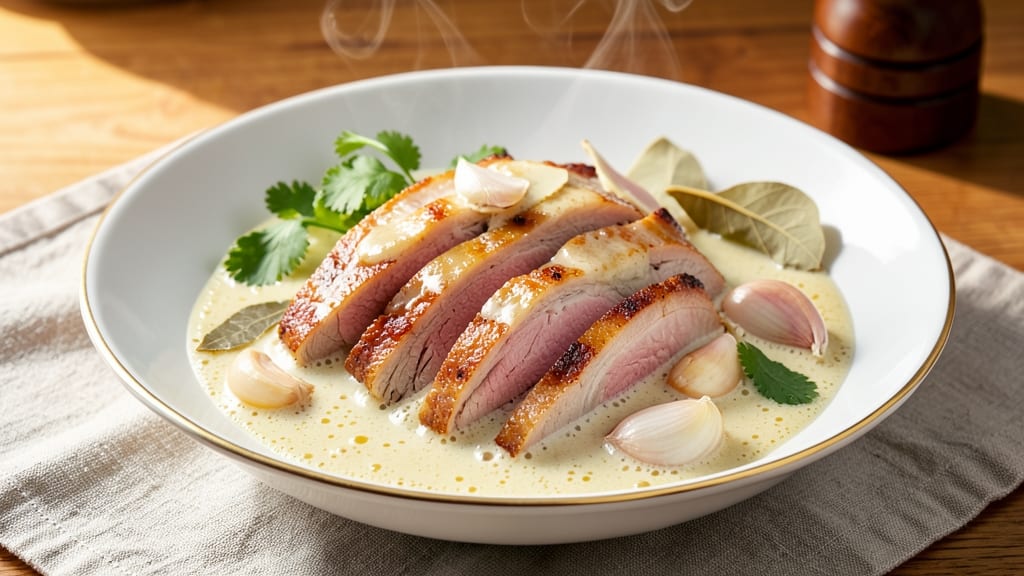
This adobong puti pork recipe brings the comforting flavors of Filipino home cooking to your table with its signature tender meat and creamy coconut sauce. 💛 Growing up, I learned that slow-cooked pork dishes transform tough cuts into melt-in-your-mouth perfection, and this version delivers that same magic with a touch of coconut cream and aromatic herbs.
The secret lies in the marinade—a blend of white vinegar, coconut milk, and bay leaves that works its magic over hours of gentle braising.
Unlike traditional adobo, this recipe uses coconut cream instead of vinegar as the primary acid, creating a milder, creamier sauce that pairs beautifully with the tender pork. The result is a dish that's equally at home at family gatherings or weeknight dinners.
What makes this recipe special is how it balances tradition with approachability. We'll use simple ingredients—pork shoulder, coconut milk, garlic, and bay leaves—to create a dish that's rich in flavor but easy to prepare.
The slow cooking process ensures the meat falls apart tenderly, while the coconut sauce adds a velvety texture that makes every bite irresistible.
Serve this adobong puti with steamed rice and a side of sautéed vegetables to complete the meal. The combination of tender pork, creamy sauce, and fluffy rice creates a harmonious balance of flavors that will transport you straight to the Philippines. Let's get cooking!
Ingredients for adobong puti pork
Six ingredients transform tough pork into melt-in-your-mouth perfection with coconut cream magic.
| Ingredient | Amount | Notes |
|---|---|---|
| Pork Shoulder 🍖 | 3 lb | Bone-in for flavor, cut into 2-inch chunks |
| Coconut Cream 🥥 | 1 ½ cups | Full-fat, not coconut milk |
| White Vinegar 💧 | ½ cup | Distilled preferred |
| Garlic Cloves 🧄 | 8 cloves | Minced, not powdered |
| Fresh Ginger 🌿 | ½ cup | Finely grated, about 2 oz |
| Bay Leaves 🌿 | 4 whole | Dried, standard size |
| Onion 🧅 | 1 whole | Yellow, chopped |
| Olive Oil 🫒 | 2 tbsp | Extra-virgin for richness |
| Salt 🧂 | 1 ½ tsp | Kosher or sea salt |
| Black Peppercorns 🌶️ | ½ tsp | Freshly cracked |
| Green Onions 🧅 | 4 whole | Sliced, for garnish |
| Fresh Thyme 🌿 | ¼ cup | Chopped, stems removed |
| Sugar 🍚 | 1 tbsp | White granulated |
The pork shoulder is where this dish shines—bone-in for extra flavor, but bone-less works too. Trader Joe's and Filipino markets often carry pre-cut pork shoulder, but the regular supermarket butcher section has it too. Look for good marbling—fat equals flavor. If you can't find coconut cream, full-fat coconut milk works in a pinch (just add a splash of water to thin it). The ginger should smell fresh and zesty—no musty jars here. Filipino markets often sell it pre-grated, but if you're using fresh, a microplane makes quick work of it.
No white vinegar? Apple cider vinegar is a solid swap, though it'll have a slightly different tang. Fresh thyme hard to find? Dried thyme at half the amount works, but fresh is worth hunting down for that bright aroma. The bay leaves are non-negotiable—they're the backbone of the flavor. If you've got whole peppercorns, crush them slightly for extra punch. The sugar balances the acidity, but if you're avoiding it, a pinch of salt can help. Pro tip: Toast your garlic and ginger in the olive oil first—it deepens the flavor.
This sauce gets better with time, so don't rush it. The pork stays good for 4 days in the fridge, and the sauce? Even better the next day. Freeze portions for up to 3 months—just thaw and reheat. I always make extra sauce because it's perfect over rice or noodles. Store the meat and sauce separately in airtight containers. The green onions and thyme can wait until serving—no need to prep ahead with those.
Why You'll Love This Recipe
- One-Pot Magic: The pork shoulder and coconut cream simmer together in the same pot—no extra bowls, no messy transfers. Honestly, I’ve made this while chatting with my neighbor; the only real effort is mincing the garlic and ginger, which takes two minutes.
- Tangy Creamy Bliss: That vinegar cut with rich coconut cream? It’s the kind of balance that makes you pause mid-bite. The pork stays tender while the sauce gets this glossy, slightly sweet-sour glaze that clings like a dream.
- Leftovers That Beg: Between us, this dish only gets better the next day. The flavors meld into something deeper, and reheating it? Just a splash of water, 10 minutes on low—my lazy Sundays are saved.
- Budget-Friendly Feast: Pork shoulder is cheap but feels luxurious here, and coconut cream stretches far. I’ve fed six people for under $15, plus it’s the kind of meal that makes guests think you slaved over it (they won’t know it’s this unfussy).
Step-by-step instructions for adobong puti pork
Here's how to make this creamy, herb-infused pork dish with melt-in-your-mouth tenderness.
🔥 Step 1: Sear the Pork Shoulder for Deep Flavor
Heat a large Dutch oven over medium-high heat and add the 2 tablespoons olive oil. Once shimmering, add the 3 lb pork shoulder cut into 2-inch chunks, working in batches if needed to avoid crowding. Let each piece sear for 2-3 minutes per side until golden brown and deeply caramelized.
This step builds incredible flavor through the Maillard reaction. Press down gently on the pork with a spatula during the first minute—this prevents it from curling and ensures even contact with the hot oil. Remove the pork and set aside on a plate, leaving all the rendered fat in the pot.
🍳 Step 2: Build the Aromatic Base
In the same Dutch oven, add the chopped onion and cook for 3-4 minutes until softened. Add the minced garlic cloves and finely grated fresh ginger, stirring constantly for 30 seconds until fragrant—you should smell that bright, zesty aroma.
Here's where it gets good: Add the 4 whole bay leaves, 1.5 teaspoons salt, and 0.5 teaspoon freshly cracked black peppercorns. Stir everything together and let it cook for 1 minute until the spices release their oils. This aromatic base is the flavor foundation of your adobong puti.
🥘 Step 3: Simmer the Vinegar and Sugar Mixture
Pour in the 0.5 cup white vinegar and 1 tablespoon sugar, stirring to deglaze the pot and scrape up all those delicious browned bits from the bottom. Let this mixture simmer for 3-4 minutes until it reduces by about half and becomes slightly syrupy.
This vinegar-sugar combo is what gives adobong puti its signature tangy-sweet balance. If you're worried about the vinegar being too sharp, don't be—it'll mellow out as we add the coconut cream later. The sugar helps caramelize the vinegar into something more complex and less acidic.
🥘 Step 4: Add Coconut Cream and Herbs
Return the seared pork to the pot and pour in the 1.5 cups coconut cream. Add the 0.25 cup chopped fresh thyme and stir everything together. Bring to a gentle simmer, then reduce heat to low and cover partially with a lid. Let it cook for 1 hour, stirring occasionally.
The coconut cream will create a luxurious, velvety sauce that coats every bite of pork. The thyme adds an earthy depth that pairs perfectly with the coconut. After 1 hour, the pork should be fork-tender—you'll see it easily pull apart with minimal resistance. If it's not quite there, give it another 15-20 minutes of cooking.
🔪 Step 5: Finish and Serve with Fresh Garnishes
Once the pork is tender, discard the bay leaves and adjust the seasoning if needed. The sauce should be creamy but not watery—if it's too thick, add 1-2 tablespoons water to loosen it. Taste and add more salt if needed, remembering that the coconut cream is naturally salty.
To serve, ladle the pork and sauce into bowls, garnishing each portion with sliced green onions. The bright green color contrasts beautifully with the creamy white sauce. Serve immediately with steamed rice to soak up all that delicious sauce—this dish is best enjoyed fresh when the pork is at its most tender and the sauce is at its peak creaminess.
Pro Tips For Making Adobong Puti Pork
- Simmer Slow and Steady: I learned this the hard way—rushing the simmer turns your adobo into a watery mess. After the pork browns, drop the heat to low and let it bubble gently for at least 45 minutes. The vinegar needs time to mellow, and the coconut cream won’t curdle if you’re patient (yes, even if you’re impatient like me).
- Use Thick Coconut Cream: Store-bought coconut milk often separates, but thick coconut cream? That’s the real star here. If you’re using canned coconut milk, scoop out the top layer (the thick cream) and reserve it—it’s richer and won’t thin out your sauce. Skip the watery part unless you’re okay with a lighter texture.
- Balance the Vinegar: Too much white vinegar and your dish tastes harsh; too little and it’s bland. Start with ½ cup per pound of pork, then taste as you go. If it’s too sharp, add a splash of coconut cream to mellow it out. I was skeptical until I tried it—now I adjust mid-cook.
- Brown the Pork First: This isn’t the prettiest method, but it’s the tastiest. Cut the pork shoulder into chunks, then sear them in a hot pan with oil until deeply browned on all sides. That crust locks in flavor and keeps the meat from drying out later. (Your future self will thank you.)
Troubleshooting great adobong puti pork
Pork Not Tender Enough
If your pork isn't falling apart after 1.5 hours, it needs more time—don't rush it! The pork shoulder should be fork-tender, so extend the cooking time by 30-45 minutes on low heat.
I've found that adding 1 cup water to the pot during the last 30 minutes helps steam the meat gently and speeds up the process. Never skip the resting time either—let it sit for 10 minutes before serving. 💡
Sauce Too Thin or Watery
A thin sauce usually means the coconut cream didn't reduce enough. To fix this, remove the pork and simmer the sauce uncovered over medium heat for 5-10 minutes until it thickens.
If it's still too thin, mix 1 tablespoon cornstarch with 2 tablespoons water and stir it in until it reaches the right consistency. For extra richness, whisk in 1 tablespoon butter at the end. 🥥
Vinegar Overpowering Flavor
The white vinegar should mellow out during cooking, but if it's still too sharp, balance it with 1 tablespoon sugar or ½ teaspoon salt. Simmer the sauce uncovered for 2-3 minutes to let the acidity cook off.
If you prefer a milder flavor, reduce the vinegar to ¼ cup next time. A splash of coconut milk can also help dilute the tang without thinning the sauce too much. 🌶️
Bay Leaves Too Strong
If the bay leaves are overpowering, remove them earlier—after 45 minutes of cooking. For a more subtle flavor, use 1 bay leaf instead of 4, or crush them lightly before adding. If you're sensitive to their taste, skip them altogether and rely on thyme and garlic for depth.
I've found that Filipino bay leaves (if available) have a milder flavor than standard dried ones. 🌿
Pork Too Dry After Cooking
Dry pork often happens when the sauce isn't properly incorporated. After searing, spoon some of the sauce over the pork during cooking to keep it moist. If it's still dry, shred the meat and mix it with the sauce to redistribute the juices.
For extra moisture, add 2-3 tablespoons water or coconut milk at the end. Always cover the pot while cooking to trap steam. 💧
Crispy Topping Not Crispy
If your flour topping turns out soggy, it likely absorbed too much moisture. Next time, toast the flour in a dry skillet over medium-low heat for 3-4 minutes until golden, then immediately remove from heat. Spread it on a wire rack to cool completely before adding it to the dish.
For extra crunch, sprinkle it just before serving. I keep a small batch pre-toasted in my pantry for quick use. 🍞
Nutrition facts
Frequently asked questions
Can I use regular coconut milk instead of coconut cream?
The recipe calls for coconut cream because it's thicker and richer, giving that signature velvety texture. If you only have regular coconut milk, use 2 cups instead of 1.5 cups of cream, and simmer the sauce longer to reduce it properly. For extra richness, stir in 1 tablespoon butter at the end. The flavor will be slightly lighter but still delicious!
What's the best cut of pork for this recipe?
Pork shoulder is ideal because it's flavorful and becomes tender when slow-cooked. For a leaner option, use pork loin (but expect a shorter cooking time of 45-60 minutes instead of 1.5 hours). Avoid tenderloin—it's too delicate and will dry out. Bone-in cuts add extra flavor, but boneless works too.
How do I make this recipe in a slow cooker?
Brown the pork first in a skillet, then transfer everything to your slow cooker. Cook on low for 6-7 hours or high for 3-4 hours. The pork should be fork-tender. If the sauce seems too thin, remove the pork and simmer the sauce uncovered on the stove for 5-10 minutes to thicken it. The slow cooker method is perfect for busy days!
Can I prepare this ahead of time?
This dish tastes even better the next day! Store the pork and sauce separately in airtight containers in the fridge for up to 4 days. Reheat gently on the stove over low heat until warmed through. For freezing, portion into containers and freeze for up to 3 months. Thaw overnight in the fridge before reheating. The flavors meld beautifully over time.
What are good sides to serve with adobong puti?
Steamed jasmine rice is the classic pairing, but you can also serve it with garlic fried rice, sautéed bok choy, or Filipino-style string beans. For a complete meal, add a crisp green salad with a citrus vinaigrette. The creamy pork pairs wonderfully with the freshness of vegetables.