
Main Courses
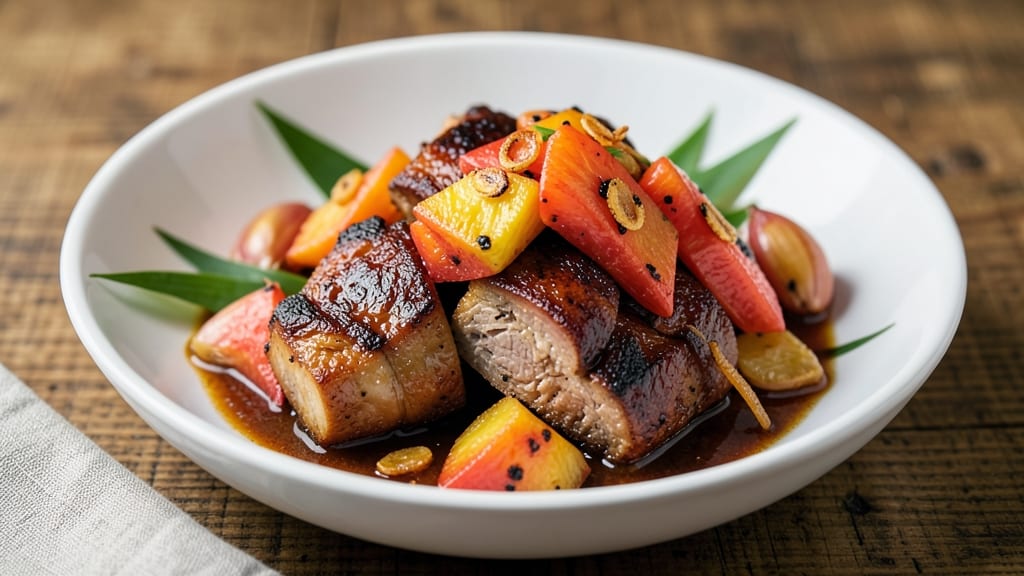
This adobo pork with pineapple recipe brings the bold flavors of Filipino comfort food to your kitchen—where tender pork simmers in a tangy, sweet-savory sauce until it's fall-apart perfect. The key lies in balancing the vinegar's sharpness with pineapple's natural sweetness, creating a harmony that's both familiar and exciting. I've perfected this one-pot method after years of testing, ensuring every bite delivers that perfect contrast of flavors.
The magic starts with marinating the pork in soy sauce, vinegar, and garlic, which tenderizes the meat while building deep umami layers. As it braises, the pineapple not only adds sweetness but also breaks down the meat further, making it melt-in-your-mouth tender.
What makes this recipe special is how the sauce thickens just enough to coat each bite without being overly heavy—restaurant-quality results in a single pot.
By the time you're done, you'll have a dish that's rich, aromatic, and packed with layers of flavor—golden-brown pork pieces swimming in a glossy sauce that's tangy, slightly sweet, and perfectly balanced.
The aroma alone will have everyone gathering around the table, and the taste? That's where the real magic happens.
Serve it with steamed rice to soak up every last drop of that delicious sauce, or pair it with roasted potatoes for a heartier meal. This recipe is versatile enough for weeknight dinners or special occasions, and the leftovers? Even better the next day. Let's get cooking!
Ingredients for adobo recipe pork with pineapple
Pork shoulder, vinegar, and pineapple—three simple ingredients that create restaurant-quality adobo.
| Ingredient | Amount | Notes |
|---|---|---|
| Pork Shoulder 🥩 | 2 lb | Bone-in for flavor, cut into 2-inch chunks |
| White Vinegar 💧 | ½ cup | Distilled or cane vinegar preferred |
| Soy Sauce 🍶 | ½ cup | Light or all-purpose soy sauce |
| Fresh Pineapple 🍍 | 1 cup | Chopped, fresh or canned (no syrup) |
| Garlic Cloves 🧄 | 6 cloves | Minced, fresh preferred |
| Fresh Ginger 🌿 | 2 tbsp | Grated, fresh preferred |
| Brown Sugar 🍚 | ¼ cup | Light or dark, packed |
| Black Peppercorns 🌶️ | 1 tsp | Crushed, freshly ground preferred |
| Bay Leaves 🍃 | 2 whole | Dried, standard size |
| Olive Oil 🫒 | 2 tbsp | Extra-virgin for richness |
| Salt 🧂 | 1 tsp | Kosher or sea salt |
| Water 💧 | ½ cup | Room temperature preferred |
| Green Onions 🧅 | 2 whole | Sliced, for garnish |
The pork shoulder is non-negotiable here—bone-in pieces add incredible flavor as they braise. Costco or Trader Joe's usually have great prices on pork shoulder, and look for cuts with good marbling. If you can't find bone-in, use boneless but add an extra bay leaf to compensate. Fresh ginger and garlic are worth the extra cost—they make all the difference in that aromatic sauce. I always grab extra pineapple because it's a great garnish too, and you can use the leftovers for smoothies or salsa.
No fresh ginger? Ground ginger at half the amount works in a pinch, but it won't have the same zing. Running low on soy sauce? Coconut aminos is a decent substitute, though it's more expensive. The brown sugar can be swapped for white sugar if that's what you have, but the molasses notes in brown sugar add depth. For a quicker version, use canned pineapple—just drain it well and pat dry. The bay leaves? Don't skip them—they're the secret to that authentic Filipino flavor. If you're feeling fancy, add a splash of calamansi juice (if available) for extra tang.
This sauce gets better with time, so don't rush it. Store leftovers in the fridge for up to 5 days, or freeze for 3 months—it reheats beautifully. I always make extra because it's perfect over rice the next day. The pork pieces become even more tender after sitting overnight. For serving, garnish with those sliced green onions and a drizzle of the sauce. Trust me, the first bite is worth every minute of waiting.
Why You'll Love This Recipe
- Pork in Minutes: I swear, this is one of those recipes where you throw everything in and walk away. The pork shoulder stays juicy while the vinegar and soy sauce work their magic—no babysitting required. (Yes, even on a Tuesday night.)
- Sweet-Savory Magic: That tangy-sweet combo? Unreal. The pineapple’s natural acidity cuts through the richness of the pork, while the garlic cloves add a punch that lingers. It’s the kind of flavor that makes you want to eat it straight off the pan.
- Leftovers That Shine: Between us, this dish gets better the next day. The pork stays tender, the sauce thickens just right, and it reheats like a dream. Pack it for lunch or freeze portions—it’s my go-to for lazy days.
- Budget-Friendly Crowd-Pleaser: Pork shoulder is cheap, and you use every bit. The pineapple adds freshness without breaking the bank, and the ingredients stretch for a week of meals. Honestly, it’s the kind of recipe that makes grocery day feel like a win.
Step-by-step instructions for adobo pork with pineapple
Here's how to create a rich, tangy-sweet adobo that tenderizes pork perfectly while balancing pineapple's brightness.
Sear the Pork Shoulder for Deep Flavor
Heat the 2 tablespoons olive oil in a large, heavy pot over medium-high heat until shimmering. Add the 2 lb pork shoulder cut into 2-inch chunks, working in batches if needed to avoid crowding. Sear each piece for 2-3 minutes per side until deeply golden brown and crispy edges form.
This searing step is crucial—it develops the Maillard reaction that creates deep, savory notes in the finished dish. Don't rush this; you'll know it's ready when the pork releases easily from the pot. Remove the seared pork and set aside temporarily on a plate.
Build the Adobo Base with Aromatics
In the same pot, reduce heat to medium and add the 6 cloves minced garlic cloves and 2 tablespoons grated fresh ginger. Cook for 1-2 minutes until fragrant and just beginning to color—don't let them burn, as this creates bitterness.
Add the 0.5 cup white vinegar and 0.5 cup soy sauce immediately, scraping up any browned bits from the bottom of the pot. These bits pack intense flavor. Let the mixture simmer for 3-4 minutes until slightly reduced and the raw vinegar smell mellows into something more complex.
Combine Everything and Simmer Low
Return the seared pork to the pot along with the 1 cup chopped fresh pineapple, 0.25 cup packed brown sugar, 1 teaspoon crushed black peppercorns, 2 whole bay leaves, and 1 teaspoon salt. Stir gently to combine, then add the 0.5 cup room temperature water.
Bring the mixture to a gentle simmer over medium-low heat, then reduce to the lowest setting that maintains a steady bubble. Cover partially with a lid (leave a small gap for steam to escape) and let it cook for 1 hour 15 minutes to 1 hour 30 minutes, stirring occasionally.
Tenderize the Pork to Perfection
After the initial simmering time, check the pork's tenderness by piercing a piece with a fork. If it slides in easily and the meat is fork-tender, it's ready. If not, continue cooking for another 15-20 minutes, adding 1-2 tablespoons water if the liquid reduces too much.
Real talk: The sauce should coat the back of a spoon but not be watery. If it's too thin, uncover and simmer for 5-10 minutes to thicken slightly. The pineapple should be tender but still hold its shape—overcooking turns it mushy. Taste and adjust seasoning if needed, adding more soy sauce for saltiness or brown sugar for sweetness.
Finish and Garnish
Once the pork is perfectly tender, remove the 2 whole bay leaves and discard them. Stir in the sliced 2 whole green onions and let the dish sit off heat for 5 minutes to allow flavors to meld. Serve the pork and sauce over steamed rice, garnished with additional green onions if desired.
Each bite should deliver perfectly tender pork with a balance of sweet, tangy, and savory flavors from the adobo sauce. The pineapple adds a bright contrast that cuts through the richness. Don't skip the resting time—it lets the juices redistribute for the most flavorful result.
Pro Tips For Making Adobo Recipe Pork With Pineapple
- Brown the Pork First: Don’t skip this step—sear the pork shoulder in a hot pan until it’s deep golden on all sides before adding liquids. I used to rush this, and the final dish always tasted flat; the Maillard reaction builds flavor that vinegar and soy sauce can’t replicate.
- Core the Pineapple: Cut the pineapple in half lengthwise, scoop out the core with a spoon, then slice it into rings. Leaving the core in makes the fruit mushy and watery—trust me, your sauce will thank you.
- Deglaze with Vinegar: After browning the pork, pour in just ¼ cup of white vinegar right away to scrape up the fond. This adds tangy depth without overpowering the dish later, and it’s the only time you should use vinegar early.
- Simmer, Don’t Boil: Keep the heat low enough that the sauce bubbles gently, not violently. I learned this after watching my first batch turn into a watery mess—pork shoulder needs time to tenderize, not a fast boil.
Make-ahead tips for this recipe
Marinate Ahead
I always prep the pork marinade the night before—it's a game-changer. Combine 0.5 cup white vinegar, 0.5 cup soy sauce, 6 cloves minced garlic, 2 tbsp grated ginger, and 2 tbsp olive oil in a bowl.
Toss the 2 lb pork shoulder chunks in this marinade and refrigerate overnight in a sealed container. The acid tenderizes the meat while building flavor—trust me, it's worth the wait. 🌟
Slow Cooker Shortcut
For a hands-off approach, use a 6-quart slow cooker on low for 6-8 hours. After searing the pork, transfer everything to the slow cooker (including marinade) and cook until fork-tender.
The slow cooker's gentle heat ensures the pork stays moist without drying out. I love this for busy weeknights when I can't babysit the stove. ⏰
Freezer-Friendly Sauce
Make the adobo sauce without the pork and freeze it in 1-cup portions in airtight containers. When ready to cook, thaw the sauce and add fresh seared pork to finish. The sauce keeps its tangy-sweet balance beautifully—just add 1 cup water to the frozen concentrate.
This is my go-to for quick meals when I'm craving adobo but don't have time to start from scratch. ❄️
Make-Ahead Serving
Cook the entire dish one day and refrigerate it in an airtight container. The flavors actually deepen overnight as the pork absorbs more sauce. Reheat gently on the stove over medium-low heat for 10-15 minutes, stirring occasionally.
The pork will be even more tender, and the sauce will be perfectly balanced. I often double the recipe because leftovers make amazing lunches or rice bowl toppings. 💫
Pineapple Prep
Chop the pineapple a day ahead and store it in the fridge in a sealed container. Fresh pineapple holds up well for 24 hours without browning. For canned pineapple, drain it completely and pat dry with paper towels before adding to the pot.
The moisture control is key—you want the sauce to thicken properly during cooking. 🍍
Rice Prep
Cook a big batch of rice while the adobo simmers. I use 2 cups uncooked jasmine rice to 4 cups water ratio in a rice cooker. The rice will be ready just as the pork finishes cooking, making serving a breeze.
Warm the rice with a splash of the adobo sauce before plating for extra flavor infusion. 🍚
Nutrition facts
Frequently asked questions
Can I use chicken instead of pork in this recipe?
Yes, but adjust the cooking time! Chicken breasts or thighs will cook faster—about 30-40 minutes instead of 1.5-2 hours. Use boneless, skinless pieces cut into 1-inch chunks and check for doneness at 165°F internal temperature. The sauce will still work beautifully, but the meat will be more delicate.
How do I balance the sweetness from pineapple?
Add 1 extra tablespoon of vinegar for tartness or ½ tsp more black pepper for depth. The key is to taste as you go—start with 15 minutes of simmering, then adjust. If the pineapple overpowers, a pinch of salt helps balance the flavors. Think of it like adjusting a song's bass and treble!
What if my sauce turns out too thin?
Remove the pork and simmer the sauce uncovered for 5-10 minutes to reduce. For extra thickness, mash 1 small potato (peeled) into the sauce while simmering—it absorbs liquid beautifully. Never add flour or cornstarch directly to adobo, as it can make the sauce taste artificial.
Can I make this recipe without fresh pineapple?
Use 1 (15 oz) can crushed pineapple, drained and patted dry. For extra tang, add ½ tsp lemon juice. Canned pineapple works best when you reduce the water by 2 tablespoons since it contains more moisture. The texture will be slightly softer, but the flavor remains bright.
Why does my adobo smell stronger than it tastes?
This happens when the vinegar smell dominates. Let the sauce simmer uncovered for 5 extra minutes to evaporate excess acidity. Add a splash of soy sauce or a pinch of brown sugar to round out flavors. The aroma should mellow into something complex—like a good wine opening in a glass!