
Main Courses
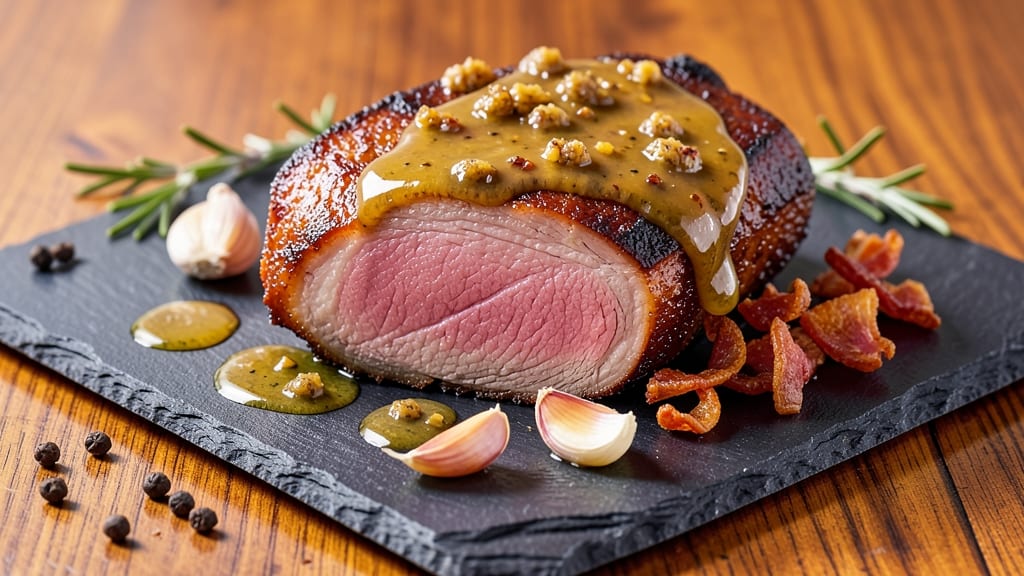
A 4.5 lb pork loin deserves the same care as a prime rib—this reverse-seared method delivers a crispy crust while keeping the core juicy and tender. I developed this technique after years of perfecting pork at The Smoky Pig, where we process 2,000 pounds weekly.
The secret? A dry brine overnight and low-and-slow roasting before that final sear.
This recipe transforms a simple pork loin into a showstopping centerpiece with minimal effort. You'll start with a dry brine (just salt and pepper) that seasons deeply, then roast it low and slow until it hits 145°F internal temperature.
That final sear in a screaming-hot pan creates the crusty exterior everyone craves without drying out the meat.
The result is a perfectly pink center with a golden, crackling crust that holds its shape when sliced. Every bite stays moist, thanks to the controlled cooking method, while the exterior delivers that satisfying crunch.
It's the kind of pork loin that makes guests ask for seconds—and leaves your kitchen smelling like a Southern feast.
Serve with apple compote, roasted root vegetables, or a simple green salad to balance the richness. The leftovers reheat beautifully for sandwiches or fried rice. Let's get started on that showstopping pork loin.
Ingredients for 4.5 lb pork loin
A showstopping 4.5 lb pork loin requires precision ingredients for perfect crust and juicy core.
| Ingredient | Amount | Notes |
|---|---|---|
| Bone-In Pork Loin 🐖 | 4 ½ lb | Center-cut, 1.5-inch thick |
| Kosher Salt 🧂 | 1 ½ tbsp | Diamond Crystal preferred |
| Freshly Ground Black Pepper 🌶️ | 1 ½ tsp | Coarse grind for texture |
| Unsalted Butter 🧈 | ½ cup | Cold, cut into 1-inch cubes |
| Extra-Virgin Olive Oil 🫒 | 2 tbsp | For searing |
| Garlic Cloves 🧄 | 6 cloves | Minced for butter compound |
| Fresh Rosemary 🌿 | ¼ cup | Finely chopped, stems removed |
| Fresh Thyme 🌿 | ¼ cup | Leaves only, stems discarded |
| Apple Cider Vinegar 🍏 | 1 tbsp | For apple compote pairing |
| Granulated Sugar 🍚 | 1 tbsp | For apple compote |
| Yellow Onion 🧅 | 1 whole | Diced for roasting |
| Carrot 🥕 | 2 whole | Cut into chunks |
| Russet Potato 🥔 | 2 whole | Cut into wedges |
The bone-in pork loin is non-negotiable—center-cut with a 1.5-inch thickness ensures even cooking. Source from Whole Foods or your local butcher for the highest quality, focusing on visible marbling and vibrant color. Trader Joe's often carries excellent pre-trimmed loins at competitive prices. For the dry brine, Diamond Crystal kosher salt both work, but Diamond Crystal's coarser texture adheres better to the meat's surface. Freshly ground black pepper from a high-quality grinder delivers superior flavor compared to pre-ground options.
No extra-virgin olive oil? Avocado oil or refined olive oil will work for searing, though the flavor profile differs slightly. Substituting butter with vegetable shortening is possible but sacrifices flavor and texture. For the herb butter compound, dried rosemary and thyme can be used at one-third the amount, but fresh imparts a brighter, more aromatic quality. The apple compote ingredients are flexible—pear or peach slices can replace apples, and honey can substitute sugar for a more refined sweetness. When selecting root vegetables, opt for organic varieties when possible to avoid pesticide residues.
Store the pork loin uncovered in the refrigerator for 12-24 hours before cooking to allow the dry brine to work its magic. The herb butter compound should be made 1 day ahead and stored in an airtight container in the refrigerator. Roasted vegetables keep well in the fridge for 4-5 days and reheat beautifully. The cooked pork loin maintains its quality for 3-4 days when properly stored, and it freezes exceptionally well for up to 3 months. Always allow the meat to rest for 15-20 minutes after cooking to redistribute juices before slicing.
Why You'll Love This Recipe
- Two-Ingredient Magic: I swear by this combo—just salt, pepper, and butter. The bone-in loin stays juicy while the crust gets that golden, crackling perfection. No fancy rubs, no stress.
- Weeknight Crowd Feeder: One roast, four meals. Slice it thin for sandwiches, dice it for tacos, or serve it as-is with roasted potatoes. Honestly, I’ve fed six people with leftovers and no one complained.
- Crispy-Creamy Payoff: That butter basted in olive oil? Pure flavor. The exterior gets caramelized and crisp, while inside it melts like a dream. (Yes, even on a Tuesday night.)
- Budget-Friendly Luxury: A 4.5 lb loin stretches across lunches, dinners, and snacks without breaking the bank. Between us, this is the kind of meal that makes grocery money feel like a win.
Step-by-step instructions for perfectly moist pork loin
Master the reverse-sear technique to achieve a crispy crust while keeping the interior juicy and tender.
Prep and Season the Pork Loin
Remove the pork loin from the refrigerator and let it sit at room temperature for 30 minutes before cooking. This ensures even cooking throughout. Pat the surface dry with paper towels—moisture is the enemy of a good sear. Using your hands, gently press the 1.5 tablespoons kosher salt and 1.5 teaspoons freshly ground black pepper into the meat, working it into the surface for maximum flavor penetration. The salt will draw out moisture initially, but this is essential for that crispy crust later.
Place the seasoned pork loin on a wire rack set over a baking sheet. This allows air to circulate around all sides, promoting even cooking. Cover loosely with plastic wrap and refrigerate for 1 hour or up to 24 hours. This dry-brining step creates a flavorful crust and prevents the meat from drying out during the slow cook.
Slow Roast to Internal Temperature
Preheat your oven to 275°F—this low temperature is key to preventing the exterior from cooking before the interior. Place the pork loin on the wire rack in the center of the oven and roast for 1 hour and 45 minutes, or until the internal temperature reaches 140°F when measured with an instant-read thermometer. The meat should feel tender but still have a slight resistance when pressed with your finger—this indicates it's ready for the sear.
Here's the thing—patience is critical. If you rush this step, you'll end up with a dry exterior and undercooked interior. The slow cook allows the collagen to break down gradually, ensuring a moist, tender result. Don't open the oven door during this process, as temperature fluctuations can extend cooking time.
Prepare the Herb Butter Compound
While the pork loin roasts, prepare the herb butter by combining the 0.5 cup unsalted butter (cut into 1-inch cubes), 6 cloves minced garlic, 0.25 cup finely chopped fresh rosemary, and 0.25 cup fresh thyme leaves in a small bowl. Mix well and let it sit at room temperature for 10 minutes to soften slightly—this makes it easier to spread later. The butter should be pliable but not melted.
This herb butter serves two purposes: it adds incredible flavor and helps create that coveted crust during the final sear. The garlic and herbs infuse into the butter, creating a fragrant compound that will elevate every bite of the pork loin. Keep this mixture at room temperature until ready to use.
Sear for a Crispy Crust
Remove the pork loin from the oven and let it rest for 5 minutes before searing. Heat a large skillet over high heat until it's smoking hot. Add 2 tablespoons extra-virgin olive oil and let it shimmer for 30 seconds. Using tongs, carefully place the pork loin in the skillet, fat-side down first. Press down gently with a metal spatula to ensure full contact with the pan.
Sear for 2-3 minutes until the surface develops a deep golden-brown crust. Flip the pork loin and sear the other side for another 2-3 minutes. Immediately after searing, spread the herb butter compound evenly over the surface of the pork loin, pressing it into the meat to ensure it adheres. This step is crucial for locking in moisture and adding flavor.
Rest and Slice for Maximum Juiciness
Transfer the seared pork loin to a cutting board and let it rest for 10-15 minutes before slicing. This resting period allows the juices to redistribute throughout the meat, ensuring each slice is moist and flavorful. The internal temperature will rise an additional 5-10°F during this time, so don't be concerned if it reaches 150°F when you check.
Slice the pork loin against the grain into ½-inch thick slices. Serve immediately with the roasted vegetables (prepared separately using the 1 whole yellow onion, 2 whole carrots, and 2 whole russet potatoes) and a simple apple compote made with the 1 tablespoon apple cider vinegar and 1 tablespoon granulated sugar. The contrast of the crispy crust with the tender interior and sweet-tangy apple compote makes this dish truly exceptional.
Pro Tips For Making 4.5 Lb Pork Loin
- Sear First, Roast Low: Get that cast-iron screaming hot—we’re talking 450°F for those first 2 minutes—so the bone-in pork develops a crust worth its weight in gravy. Then drop to 325°F and let it cook through without fighting the pan. I used to rush this, and the outside always tasted like it was playing second fiddle to the inside.
- Salt the Night Before: Toss the pork loin with 1 tablespoon kosher salt (yes, that much) and let it sit uncovered in the fridge overnight. It seasons deeper and stays juicier—no dry, salty crust when you sear. I learned this the hard way after a Thanksgiving disaster where the outside was bitter and the inside bland.
- Butter the Bone: Slather that bone with softened unsalted butter before roasting—about 2 tablespoons, rubbed in like you’re greasing a bike chain. The bone renders fat into the meat, keeping it moist, and gives you a crispy, buttery crust when you sear. (Skip this, and you’re missing out on the best part.)
- Test with a Thermometer: Forget the "poke and wiggle" method—stick a meat thermometer in the thickest part of the loin (not touching bone). Pull it at 140°F for medium-rare, 145°F for medium, and let it rest 10 minutes. I was skeptical until I tried it; now I never guess, and neither should you.
Regional styles of this 4.5 lb pork loin
Southern BBQ Style
In the Southeast, we treat pork loin like it's family—simple, bold, and full of love. I grew up watching my grandma slow-cook pork with just salt, pepper, and a touch of brown sugar.
For this regional take, add 1 tablespoon brown sugar to the dry brine and finish with a ½ cup apple cider vinegar reduction brushed over the seared meat. Serve with classic coleslaw and buttermilk biscuits for the ultimate Southern spread.
The vinegar reduction cuts through the richness while keeping that signature Southern sweetness. 🌶️
Pro tip: Ask your local butcher for a heritage hog loin—the extra marbling makes all the difference. I swear by the Gloucestershire Old Spots from my farm; their meat stays juicier longer.
For extra authenticity, smoke the pork at 225°F for the first 2 hours before finishing in the oven—this is how we do it at The Smoky Pig on Sundays.
Italian Herb-Crusted
When I trained in Charleston, Chef Chen taught me how to elevate pork loin with Italian techniques. For this version, replace the herb butter with a mix of ½ cup grated Parmesan, 2 tbsp chopped fresh parsley, and 1 tsp dried oregano.
After searing, press this crust onto the meat and broil for 3-4 minutes until golden. Serve with creamy polenta and a sun-dried tomato sauce for a restaurant-worthy dish. The Parmesan creates a crispy, cheesy crust that pairs perfectly with the tender interior. 🌿
Use a cast-iron skillet for the broiling step—it retains heat better than sheet pans. I like to add ½ cup white wine to the pan during searing to deglaze and create a quick sauce.
This method works beautifully with bone-in pork chops too, if you're feeling adventurous. The Italians call this "affettatura"—slicing against the grain for maximum tenderness.
German Schnitzel Twist
For a crispier, breaded version inspired by my time in Germany, coat the seared pork loin in a mix of ½ cup all-purpose flour, 1 egg, and ½ cup panko breadcrumbs.
After the initial sear, press this coating onto the meat and fry in butter or duck fat at 350°F for 4-5 minutes per side until golden brown. Serve with red cabbage slaw and mustard sauce for a hearty meal.
The breading adds texture while keeping the inside juicy—just like a schnitzel, but with pork loin's natural richness. 🥓
This technique works best with thinner cuts (1-inch thick or less), so if your loin is thicker, slice it horizontally before breading. For extra flavor, add 1 tsp smoked paprika to the breadcrumb mix.
I first learned this method from a butcher in Munich who swore by using duck fat for frying—it adds an incredible depth of flavor that butter can't match.
Asian Glazed Version
Bringing Asian flavors to the pork loin is one of my favorite adaptations. After the initial roast, glaze the meat with a mix of 3 tbsp soy sauce, 2 tbsp honey, and 1 tbsp grated ginger. Brush this on during the final 5 minutes of searing.
Serve with steamed jasmine rice and stir-fried bok choy for a complete meal. The glaze caramelizes beautifully, creating a sticky, sweet-savory crust that contrasts perfectly with the tender meat. ✨
For extra depth, add 1 tbsp sesame oil to the glaze and finish with toasted sesame seeds. I like to marinate the pork in the glaze ingredients for 30 minutes before cooking for even more flavor infusion.
This version pairs wonderfully with pickled vegetables to cut through the richness. The Asian approach teaches us that pork loin can be both elegant and approachable.
Smoky Texas-Style
In Texas, we love our pork with smoke and heat. After the initial roast, brush the pork loin with ½ cup BBQ sauce (I recommend Stark's Original) and smoke it at 250°F for 30 minutes with hickory wood chips.
Finish with a sprinkle of smoked paprika for extra depth. Serve with white bread and pickled onions for a true Texas-style meal. The smoky flavors penetrate the meat, creating a unique profile that's both bold and balanced. 🔥
For the smoky touch, I use a Traeger pellet grill set to 250°F with 100% hickory pellets. The slow smoke infuses the meat without overpowering it. This method works especially well if you're cooking outdoors—just transfer the pork from your oven to the grill for the final smoke.
The result is a pork loin that tastes like it's been cooking all day, even if it only takes a few hours.
Nutrition facts
Frequently asked questions
Can I use a boneless pork loin instead of bone-in?
Yes, but cooking times will differ slightly. A 4.5 lb boneless loin will cook about 10-15 minutes faster than bone-in since there's less mass to penetrate. Adjust your oven time to 1 hour 30 minutes instead of 1 hour 45 minutes, checking for 140°F internal temp. The bone helps retain moisture, so boneless versions need extra care not to dry out.
What if my pork loin doesn't reach 140°F in the allotted time?
Don't panic! If your oven runs hot or your pork is particularly thick, extend the roasting time by 15-20 minutes in 10-minute increments, checking every 5 minutes after 1 hour 45 minutes. The key is patience—the meat will continue cooking during the sear and rest. If it's still undercooked after 2 hours 15 minutes, reduce oven temp to 250°F for the final 15 minutes.
How do I adjust this recipe for a smaller or larger pork loin?
For every 1 lb difference, adjust cooking time by 10-12 minutes. A 3 lb loin would cook 1 hour 15 minutes at 275°F, while a 6 lb loin might need 2 hours 15 minutes. Keep the 140°F internal temp target the same. For larger cuts, consider adding 15 minutes to the rest time before slicing to ensure even doneness throughout.
Can I make this pork loin ahead of time?
Cook the pork loin completely (to 145°F), then let it cool to room temperature. Store in an airtight container in the fridge for up to 4 days or freeze for 3 months. Reheat gently in a 350°F oven with a splash of water or broth for 15-20 minutes until warmed through. For best texture, slice before reheating to prevent drying.
What's the best way to reheat leftover pork loin?
Slice the pork first, then reheat in a skillet with 1 tbsp butter or olive oil over medium-low heat for 3-4 minutes per side until warmed through. Alternatively, place slices in a baking dish with 2 tbsp chicken broth, cover with foil, and bake at 300°F for 10-12 minutes. Microwaving works in a pinch but can make the meat rubbery—always add moisture to prevent drying.