
Main Courses
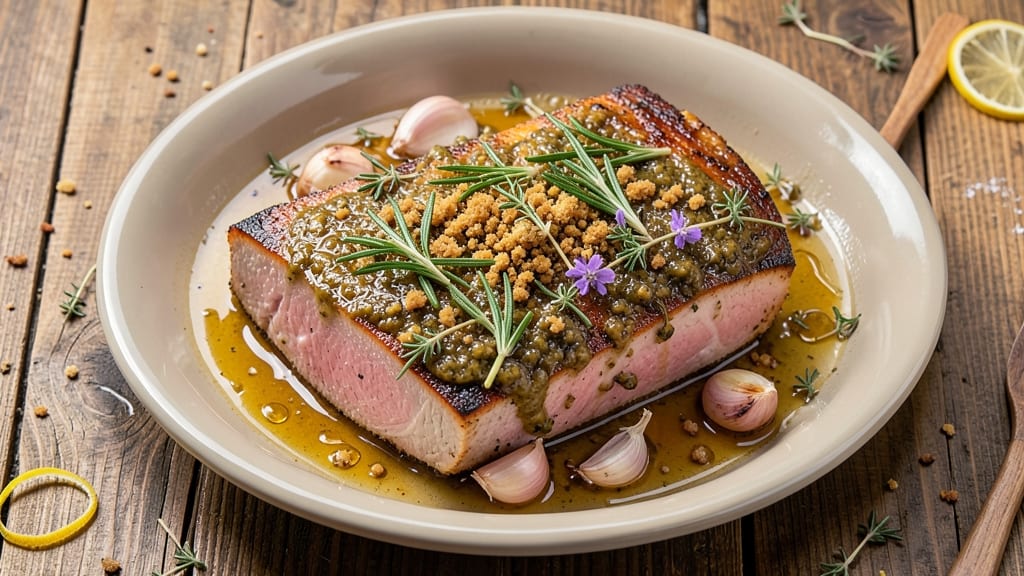
A 4 lb pork tenderloin transforms from simple protein to showstopping centerpiece with this herb-crusted method—where crisp golden edges meet juicy pink hearts every time. I developed this technique after years of perfecting pork at The Smoky Pig, where we cook 2,000 pounds weekly.
The secret? A dual-zone roast that locks in moisture while creating that coveted crust, plus a herb blend that clings like armor without overpowering the natural sweetness of the meat.
Here's where most recipes fail: they either dry out the center or leave the exterior bland. This method solves both problems by starting with a reverse sear—gentle oven warmth first, then a screaming-hot finish in the pan.
The herb crust (rosemary, thyme, garlic, and Dijon) forms a flavor bomb that seals in juices while adding texture. And yes, that pink center is intentional—properly cooked pork tenderloin should never be dry, just perfectly done.
What you'll end up with is a restaurant-quality cut that slices effortlessly, revealing tender, marbled meat with a crust so crisp it could stand up to steak. The aroma alone will have guests gathering before it even hits the table.
This isn't just dinner—it's an experience that turns weeknight meals into something special without requiring fancy techniques.
Pair with roasted root vegetables or a simple apple-chipotle salsa for balance. The leftovers reheat beautifully too—just wrap tightly and warm gently. Here's how to make it happen without a hitch.
Ingredients for 4 lb pork tenderloin
Restaurant-quality pork tenderloin starts with these precise ingredients—herbs, mustard, and olive oil transform simple meat into a showstopping centerpiece.
| Ingredient | Amount | Notes |
|---|---|---|
| Pork Tenderloin 🍖 | 4 lb | Center-cut for even cooking |
| Fresh Rosemary 🌿 | ½ cup | Chopped, stems removed |
| Fresh Thyme 🌿 | ¼ cup | Leaves only, finely chopped |
| Garlic Cloves 🧄 | 8 cloves | Minced, for herb paste |
| Dijon Mustard 🍯 | 2 tbsp | High-quality for depth |
| Extra-Virgin Olive Oil 🫒 | ½ cup | For crust and basting |
| Kosher Salt 🧂 | 2 tsp | Diamond Crystal preferred |
| Freshly Ground Black Pepper 🌶️ | 1 ½ tsp | Coarse grind for texture |
| Unsalted Butter 🧈 | ½ cup | Cold, cubed for searing |
| Red Wine Vinegar 🍷 | 1 tbsp | For basting balance |
| Honey 🍯 | 1 tbsp | Light, for glaze finish |
| Yellow Onion 🧅 | 1 whole | Thinly sliced, for garnish |
| Fresh Parsley 🌿 | ¼ cup | Chopped, for plating |
The pork tenderloin must be center-cut—look for uniform diameter and good marbling at Whole Foods or your butcher's counter. Freshness is critical: the meat should have a vibrant pink hue, not grayish tones, and feel firm to the touch. For the herbs, rosemary and thyme from the bulk bins at Trader Joe's deliver superior flavor over dried alternatives. The Dijon mustard should be from a high-end brand like Maille—cheap versions lack the depth that complements the pork's natural sweetness. Olive oil matters too: use a fruity, extra-virgin variety like California Gold for both the crust and basting.
No fresh rosemary? Dried works at one-third the amount, but the texture won't be as elegant. Substitute thyme with fresh oregano if needed, though it has a slightly different profile. The garlic can be roasted ahead for a sweeter flavor—simply wrap whole cloves in foil and bake at 400°F for 10 minutes before mincing. For the butter, European-style (like Plugrá) has higher fat content, which is ideal for that restaurant-quality crust. The honey should be light (like Claire's), not dark—it adds just enough sweetness without overpowering. Red wine vinegar can be swapped for balsamic, though it'll be slightly less bright.
Pork tenderloin reheats best when wrapped tightly in butcher paper and warmed gently in a 375°F oven for 10-15 minutes. Leftovers keep for 3 days in the fridge, but the crust loses crispness after day 2—best enjoyed fresh. For make-ahead prep, assemble the herb paste and store it in the fridge for up to 5 days; add the butter just before roasting. The onion slices should be prepped last-minute to maintain crispness, while the parsley can be chopped and stored in a sealed container for 3 days** in the fridge.
Why You'll Love This Recipe
- One-Pan Magic: I swear by this recipe for lazy Sundays—just toss the pork with chopped rosemary, thyme, and minced garlic, then let the oven do the work. No chopping boards, no extra pans, just golden perfection with zero fuss.
- Herb-Crusted Edge: That crispy rosemary-thyme crust? It’s the star. The Dijon mustard gives it a tangy bite while the garlic keeps things rich, and honestly, the first bite makes you forget it’s pork.
- Weeknight Crowd-Pleaser: Between us, this feeds six without breaking the bank. Double it for game day or halve it for a cozy Tuesday—it’s that adaptable. My in-laws always ask for seconds, and they’re hard to impress.
- Leftovers That Don’t Suck: Cold slices the next day? Still delicious. Shred it for tacos, slice it for sandwiches—this pork doesn’t turn into sad leftovers. I’ll be real: I’ve eaten it three times in a row, and it’s never boring.
Step-by-step instructions for herb-crusted pork tenderloin
Mastering this technique delivers restaurant-quality results with a perfect balance of crispy exterior and juicy pink centers.
Create the Herb Paste and Season the Pork
In a food processor, combine the 0.5 cup fresh rosemary, 0.25 cup fresh thyme, 8 cloves garlic, 2 tbsp Dijon mustard, 2 tsp kosher salt, and 1.5 tsp black pepper. Pulse until finely minced but not pasty—you want visible texture for maximum flavor. Transfer this aromatic paste to a bowl.
Pat the 4 lb pork tenderloin dry with paper towels, removing any surface moisture. This step is crucial—wet skin prevents proper browning. Rub the herb paste evenly over all surfaces, pressing firmly so it adheres. Let the seasoned pork rest at room temperature for 30 minutes while you prepare the oven. This ensures even cooking and deeper flavor penetration.
Sear for Crispy Texture and Build Flavor
Preheat your oven to 425°F with a rack positioned in the lower third. Heat a large oven-safe skillet over medium-high heat and add 0.5 cup extra-virgin olive oil and 0.5 cup cold cubed butter. Once the butter foams and the oil shimmers (about 2 minutes), carefully add the pork tenderloin.
Sear for 4-5 minutes per side until deep golden brown with crispy edges. The butter should bubble vigorously—this creates the signature crust. Transfer the skillet to the preheated oven and roast for 15 minutes. This initial sear locks in juices while building that irresistible crust.
Baste and Glaze for Perfect Doneness
Remove the pork from the oven and increase heat to 450°F. In a small bowl, whisk together 1 tbsp red wine vinegar and 1 tbsp honey to create a glossy glaze. Brush this mixture evenly over the pork, then return it to the oven for 5-7 minutes until the internal temperature reaches 145°F for medium-rare.
For visual confirmation, the pork should have a deep golden-brown crust and the edges should pull away slightly from the meat. The glaze should caramelize into a sticky sheen. This basting step creates both moisture and that beautiful finish we're after.
Rest and Garnish Professionally
Transfer the pork to a cutting board and tent loosely with aluminum foil. Let it rest for 10-15 minutes—this crucial step allows juices to redistribute throughout the meat. During this time, thinly slice the 1 whole yellow onion and chop the 0.25 cup fresh parsley for garnish.
Slice the pork into 1-inch medallions against the grain for maximum tenderness. Arrange on a platter, drizzle with any remaining pan juices, and garnish with the onion slices and parsley. The result should be juicy pink centers with a crispy herb-encrusted exterior—proof of perfect execution.
Pro Tips For Making 4 Lb Pork Tenderloin
- USE A MEAT THERMOMETER: I learned this the hard way—pork tenderloin looks done when it’s still tough as a boot sole. Aim for 145°F internal temp (155°F if you’re serving kids or the risk-averse crowd), and pull it before it hits 150°F. That last 5-degree jump dries it out faster than a summer bonfire.
- SMASH THE GARLIC: Fresh rosemary and thyme shine when the garlic isn’t just in the dish—it’s transformed. Mince those cloves fine, then smash them into a paste with a pinch of salt and a splash of Dijon. This isn’t just about flavor; it’s about making sure every bite gets that herby, garlicky punch without turning your pork into a marinade experiment.
- DON’T SKIP THE DRY BRINE: Pat that 4-lb monster dry with paper towels, then hit it with 1.5 teaspoons of salt per pound (so ~6 tsp total) at least 4 hours ahead—overnight if you’re not in a rush. This isn’t just seasoning; it’s the thing that makes your crust crisp and the meat juicy. Trust me, your knife will thank you too.
- SEAR IN BATCHES: A 4-lb tenderloin won’t fit neatly in one pan, and crowding it means steaming instead of searing. Cut it into two 2-lb pieces (or leave whole but sear half at a time), and work in two batches over medium-high heat with 1 tbsp oil per side. Rushed sears = sad, pale pork. Take the extra 30 seconds—your dinner deserves it.
Flavor customization for these flavors
Sweet Heat Glaze
Swap the red wine vinegar and honey glaze for a spicy-sweet finish by mixing 1 tbsp gochujang, 1 tbsp honey, and 1 tsp sesame oil. Brush this over the pork during the final 5 minutes of cooking for a Korean-inspired twist.
The gochujang adds fermented depth while keeping the pork tender. I first tried this at a Charleston fusion pop-up and it became an instant favorite—especially with a side of quick-pickled cucumbers. 🌶️
Smoky Chipotle Rub
Replace the herb paste with a smoky chipotle rub by combining 1 tbsp smoked paprika, 1 tsp ground cumin, 1 tsp chipotle powder, 1 tsp brown sugar, and 1 tsp olive oil. Massage this into the pork after the initial sear, then roast as directed.
The chipotle adds a slow-building heat that pairs beautifully with the crispy crust. For extra smokiness, I sometimes add ½ tsp liquid smoke to the glaze.
Citrus Herb Brightener
Add zesty brightness by incorporating 1 tbsp lemon zest and 1 tbsp fresh orange juice into the herb paste. The citrus cuts through the richness while adding a refreshing contrast. I developed this variation after a summer at The Smoky Pig when we needed lighter flavors for the menu.
Serve with a side of roasted fingerling potatoes and a simple arugula salad to balance the acidity.
Garlic and White Wine Reduction
For a more decadent finish, reduce ½ cup dry white wine with 3 minced garlic cloves and 1 tbsp butter into a glossy sauce. Brush this over the pork in the final 5 minutes of cooking. The wine adds complexity while the garlic enhances the herb crust.
This technique comes from my time apprenticing under Chef Chen—he swore by white wine for pork. Save any leftover reduction for drizzling over the sliced pork before serving.
Brown Sugar and Cinnamon
For a Southern-inspired twist, add 1 tbsp brown sugar and ½ tsp cinnamon to the herb paste. The caramelization from the sugar creates a deeper crust while the cinnamon adds warmth. This variation works exceptionally well with apple slices on the side.
I first created this for a Thanksgiving menu at The Smoky Pig and it became our signature pork dish. The cinnamon pairs surprisingly well with the rosemary's piney notes.
Herb and Cheese Crust
Take the crust to the next level by mixing ½ cup grated Gruyère cheese into the herb paste before applying it to the pork. The cheese melts during cooking, creating a golden, gooey exterior.
For best results, use a Lodge cast iron skillet—it retains heat perfectly for that perfect melt. This variation is inspired by my French techniques training, where we often used cheese to enhance crusts. Serve with a crisp white wine like Sancerre to cut through the richness.
Nutrition facts
Frequently asked questions
Why does the recipe call for medium-rare pork tenderloin?
Pork tenderloin is one of the most tender cuts of meat, which means it doesn't need to be cooked all the way through to be safe. The USDA recommends cooking pork to 145°F for medium-rare, which ensures it's safe while keeping it juicy and flavorful. Overcooking will dry out the meat, so we aim for that perfect pink center with a crispy exterior.
Can I use a smaller or larger pork tenderloin?
Yes, but you'll need to adjust cooking times. A 1 lb tenderloin will cook faster (about 10-12 minutes total), while a 6 lb one may need 20-25 minutes after searing. Always use a meat thermometer to check for 145°F in the thickest part. The herb paste and cooking method work the same regardless of size.
What if my pork tenderloin doesn't have a crispy crust? This usually happens if the meat wasn't dry before searing or if the pan wasn't hot enough. Pat the pork thoroughly with paper towels and heat your skillet until it's smoking hot before adding the oil and butter. Also,
How do I serve this pork tenderloin for a crowd?
This recipe serves 6-8 people as a main course, but you can easily double or triple it by using multiple skillets or a sheet pan. For presentation, arrange the sliced pork on a large platter with the pan juices drizzled over the top. Garnish with extra herbs, sliced onions, or fresh parsley. Serve with roasted potatoes, a fresh salad, or crusty bread to soak up the juices.
Can I make this ahead of time?
Yes! The herb paste can be made 1 day ahead and stored in the fridge. The pork itself is best cooked fresh, but you can slice and reheat leftovers gently in a 375°F oven for 10-15 minutes, wrapped in butcher paper. The crust will soften slightly, but the meat will remain juicy. For best results, serve within 2 days of cooking.