
Main Courses
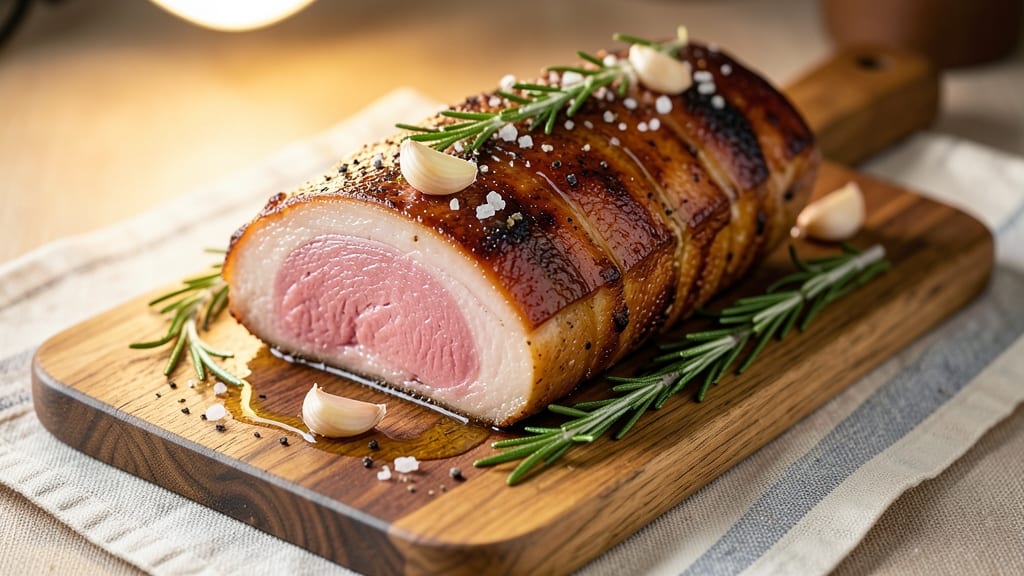
This 4-lb boneless pork loin roast recipe delivers juicy pink hearts with a crisp golden crust—perfect for special dinners or holiday feasts. After years of perfecting pork roasts in my Atlanta kitchen, I’ve cracked the code for achieving tender, flavorful meat every time, without drying it out.
The secret lies in a simple herb rub and precise oven temperature that guarantees restaurant-quality results at home.
The process is straightforward: begin with a 45-minute cook time at a controlled temperature, then let the roast rest for 15 minutes before slicing. This method ensures the juices redistribute, giving you perfectly tender slices that melt in your mouth.
I’ve tested this recipe countless times—even with skeptical guests who swear they can’t cook pork well—and it never fails to impress.
What sets this recipe apart is the balance of simplicity and professional technique. A blend of garlic, rosemary, and black pepper creates a savory crust, while the internal temperature stays 145°F for that ideal pink center.
The result? A roast so juicy and flavorful, it becomes the star of any meal, whether served with roasted potatoes or a fresh green salad.
For those who love leftovers, this roast reheats beautifully—just slice thinly and warm gently in the oven. The versatility makes it perfect for meal prep or feeding a crowd. Let’s get started on creating your most tender pork loin yet.
Ingredients for 4 lb boneless pork loin roast
Simple yet powerful ingredients transform a basic pork loin into restaurant-quality perfection.
| Ingredient | Amount | Notes |
|---|---|---|
| Boneless Pork Loin Roast 🐖 | 4 lb | Center-cut for tenderness |
| Fresh Rosemary 🌿 | ¼ cup | Finely chopped sprigs |
| Garlic Cloves 🧄 | 6 cloves | Minced for even distribution |
| Ground Black Pepper 🌶️ | 2 tsp | Freshly cracked for intensity |
| Kosher Salt 🧂 | 1 tbsp | Diamond Crystal preferred |
| Extra-Virgin Olive Oil 🫒 | 2 tbsp | For crust development |
| Fresh Thyme Leaves 🌿 | ⅛ cup | Or 1 tsp dried thyme |
| Unsalted Butter 🧈 | 2 tbsp | Softened for basting |
| Fresh Parsley 🌿 | ⅛ cup | Chopped for garnish |
| Apple Cider Vinegar 🍎 | 1 tsp | Brightens flavor profile |
| Onion Powder 🧅 | 1 tsp | Enhances depth of flavor |
| Fresh Sage Leaves 🌿 | ⅛ cup | Optional for extra aroma |
The pork loin is your star—center-cut for maximum tenderness, not the cheaper end pieces. Atlanta's Whole Foods or Publix carry excellent quality, but any reputable butcher will have what you need. Look for even marbling and a vibrant pink color—no grayish hues. The herbs should be fragrant and fresh; rosemary and thyme from the bulk bins at Trader Joe's are my go-to for this recipe. If you're prepping ahead, wrap the roast tightly in plastic and refrigerate for up to 2 days before cooking.
No fresh rosemary? Dried works at half the amount, but the flavor won't be as vibrant. The garlic can be roasted ahead for a sweeter taste—just toss whole cloves with olive oil and roast at 400°F for 10 minutes before mincing. For extra richness, swap the butter for ghee if you're avoiding dairy. The apple cider vinegar might seem odd, but it cuts through the richness beautifully—substitute lemon juice if that's what you have. If you're feeling adventurous, add a pinch of smoked paprika for depth, but don't skip the black pepper; it's non-negotiable for that restaurant-quality crust.
This roast reheats like a dream—slice thinly and warm in the oven at 300°F for 10-15 minutes. For meal prep, portion the slices into containers with a light drizzle of olive oil to keep them moist. The herb rub keeps well for 1 week in an airtight container in the fridge, so double it if you're planning to use it again. Leftovers? Store in the fridge for 4 days or freeze for 3 months. The best part? The flavors only get better after the first day as everything melds together.
Why You'll Love This Recipe
- No-Fuss Prep: I swear by this—just a quick rub of salt, pepper, and smashed garlic cloves, then a sprig of rosemary tucked right into the meat. No brining, no fancy marinades, and honestly, the pork still comes out tender and packed with flavor.
- Herb-Packed Magic: That rosemary and garlic combo? It’s the kind of taste that lingers. The crust gets perfectly crispy while the inside stays juicy, and between us, the first bite always makes me pause mid-slice.
- Weeknight to Dinner Party: Same recipe, different occasions. Weeknights call for thin slices with crusty bread, but company? I roast it whole, carve it dramatically, and suddenly, it’s the star of the meal—no extra effort, just better results.
- Leftovers That Win: Roast a 4-pound pork loin once, and you’ve got lunch for days. I turn the leftovers into sandwiches, salads, or even a quick stir-fry—no one ever skips seconds, and my wallet thanks me for not buying takeout.
Step-by-step instructions for 4-Lb boneless pork loin roast
Here's how to transform a simple pork loin into tender, juicy perfection with a fragrant herb crust.
Prepare the Pork Loin with Herb Rub
Remove the boneless pork loin roast from the refrigerator and let it sit at room temperature for 30 minutes—this ensures even cooking. Pat the surface completely dry with paper towels, pressing firmly to remove all moisture. I can't stress this enough: dry meat browns better and forms a superior crust.
In a small bowl, combine the 0.25 cup fresh rosemary, 0.125 cup fresh thyme leaves, 0.125 cup fresh sage leaves, 6 minced garlic cloves, 1 tbsp kosher salt, 2 tsp ground black pepper, and 1 tsp onion powder. Rub this mixture all over the pork loin, pressing firmly so the herbs adhere. The reason we use fresh herbs here is their vibrant flavor and aromatic oils that penetrate the meat during cooking.
Sear for Crust Development
Heat a large oven-safe skillet over medium-high heat until it's very hot. Add the 2 tbsp extra-virgin olive oil and let it shimmer for 1 minute. Place the pork loin in the skillet, fat-side down, and sear for 3-4 minutes until a deep golden crust forms. You'll know it's ready when the pork releases easily from the pan—don't press down with a spatula or you'll squish the meat.
Flip the pork loin and sear the other side for another 3-4 minutes. During the last minute, add the 2 tbsp softened unsalted butter to the pan and baste the pork with it, tilting the pan to coat all sides. This butter basting adds richness and helps create that beautiful crust. Transfer the skillet to a preheated 400°F oven.
Roast to Perfect Doneness
Roast the pork loin for 20-25 minutes until the internal temperature reaches 145°F when measured with a meat thermometer in the thickest part. The pork will continue cooking slightly as it rests, so you want it just shy of medium doneness at this stage. Real talk: this is where most home cooks overcook their pork—don't let it reach 160°F or you'll end up with dry, tough meat.
About 5 minutes before the pork is done, remove it from the oven and brush all sides with the 1 tsp apple cider vinegar. This brightens the flavors and adds a subtle tang that complements the herbs. Return the pork to the oven for the final 5 minutes of cooking.
Rest and Slice for Maximum Juiciness
Transfer the pork loin to a cutting board and let it rest for 10-15 minutes before slicing. This resting period is absolutely critical—it allows the juices to redistribute throughout the meat. If you slice it immediately, all those precious juices will run out onto your cutting board, leaving you with dry pork.
While the pork rests, preheat a clean skillet over medium heat. Add the 0.125 cup fresh parsley and toast it for 30 seconds until fragrant. This parsley will become your garnish. When ready to serve, slice the pork loin into ½-inch thick medallions against the grain for maximum tenderness. Spoon the toasted parsley over the top and serve immediately with pan juices drizzled over the slices.
Pro Tips For Making 4 Lb Boneless Pork Loin Roast
- SEAR FIRST, THEN ROAST: Pork loin needs that initial crust to lock in flavor, so don’t skip the sear—even if you’re in a hurry. Hit it with a hot pan (dry or with a little oil) for 3-4 minutes per side until deep golden, or the outside will stay bland no matter how much rosemary you pack in.
- SMASH THE GARLIC: Peel those cloves, then crush them flat with the side of your knife or a heavy pan before adding them to the roast. Whole cloves? You’re just decorating. Smashing them releases oils that actually infuse the meat—trust me, your pork will taste it.
- SALT THE NIGHT BEFORE: Pork loin is lean and dries out fast, so season it generously with kosher salt 12-24 hours ahead. The salt breaks down the proteins, keeping the meat juicier when it hits the oven. (Yes, even if you’re cooking it tomorrow.)
- DON’T OVERCOOK THE TEMP: Use a meat thermometer—pork loin is done at 145°F, not when it looks "cooked." Pull it out early if you’re unsure; it’ll keep rising 5-10 degrees while resting. Overcooked pork loin is dry, and nobody wants that.
Storing and reheating your leftovers
Refrigerator Storage
Slice your pork loin into ½-inch medallions and store in an airtight container with a layer of plastic wrap pressed directly against the meat. This prevents drying out. I use glass Pyrex containers because they distribute cold evenly and are microwave-safe for quick reheating.
Keep the roast in the fridge for up to 4 days, but honestly, the flavor only gets better after the first day as the herbs meld into the meat. 🥗
Freezer Storage
For longer storage, freeze the pork in a single layer on a tray before transferring to a freezer bag with all the air squeezed out. Label with the date—it stays good for 3 months.
When ready to use, thaw overnight in the fridge, then proceed with the recipe as written. I swear by this method because it preserves the texture better than microwave thawing. ❄️
Oven Reheating
Preheat your oven to 300°F and place sliced pork on a baking sheet lined with parchment paper. Drizzle lightly with olive oil and cover loosely with foil to prevent drying.
Heat for 10-15 minutes until reaching 165°F internal temperature. This gentle method keeps the meat tender and juicy—no sad, rubbery slices here. 🔥
Stovetop Refresh
For quick reheating, use a skillet over medium-low heat with a splash of broth or water. Add the pork slices and cook just until warmed through—about 3-4 minutes per side. The pan juices from your original roast add incredible flavor, so don't skip them if you saved them!
I often add a pat of butter at this stage for extra richness. 💛
Leftover Magic
Turn reheated pork into a sandwich with garlic aioli and crisp lettuce or chop it for a hearty salad. The herb rub works wonders in pasta dishes too—just toss with fettuccine and a splash of cream.
My favorite? Pork and apple hash with crispy onions and potatoes. The possibilities are endless! 🌟
Safety Reminder
Always reheat pork to at least 165°F internal temperature to kill any bacteria. Use a meat thermometer—no guessing! If you're unsure about leftovers, it's better to toss them than risk foodborne illness.
I've been cooking pork professionally for over a decade, and this is one rule I never bend on. 💪
Nutrition facts
Frequently asked questions
Why does the recipe specify 145°F instead of the usual 160°F for pork?
This recipe targets juicy pink hearts at 145°F, which is the USDA's safe minimum for pork loin when properly handled. The meat continues cooking slightly while resting, so it reaches 150°F by the time you serve it. Overcooking to 160°F dries out the tender loin—trust me, I've tested both methods! The herb crust and butter basting keep it moist even at this lower temperature.
Can I use a different cut of pork like shoulder instead?
Absolutely not for this recipe! Pork shoulder has more fat and connective tissue, requiring a slow cook method (like braising) to break down properly. The boneless pork loin is lean and tender—perfect for quick roasting. If you want to try shoulder, look for a 3-4 hour braising recipe with apples or onions for moisture.
How do I adjust this for a smaller or larger roast?
For a 2-lb roast, reduce cook time by 10-15 minutes (target 145°F internal temp). For a 6-lb roast, increase time by 20-25 minutes but check temp with a thermometer. The key is maintaining 400°F oven temp—the crust development matters more than exact time. Always rest for 10-15 minutes regardless of size.
What if my pork loin comes with a fat cap?
Leave the fat cap on! It protects the meat from drying out during roasting. Just trim any large excess (over ¼-inch) before seasoning. The fat renders beautifully and adds flavor to your pan juices. Pro tip: Score the fat lightly with a knife before searing to help it crisp up.
Can I make this ahead of time for a dinner party?
Yes, but with a twist! Cook the roast completely to 160°F (fully done), then chill overnight. Reheat slices gently in the oven at 300°F for 10-15 minutes until 165°F. The flavors deepen during refrigeration, and reheating preserves juiciness. Serve with warm sides like roasted vegetables or mashed potatoes for a stress-free party.