
Main Courses
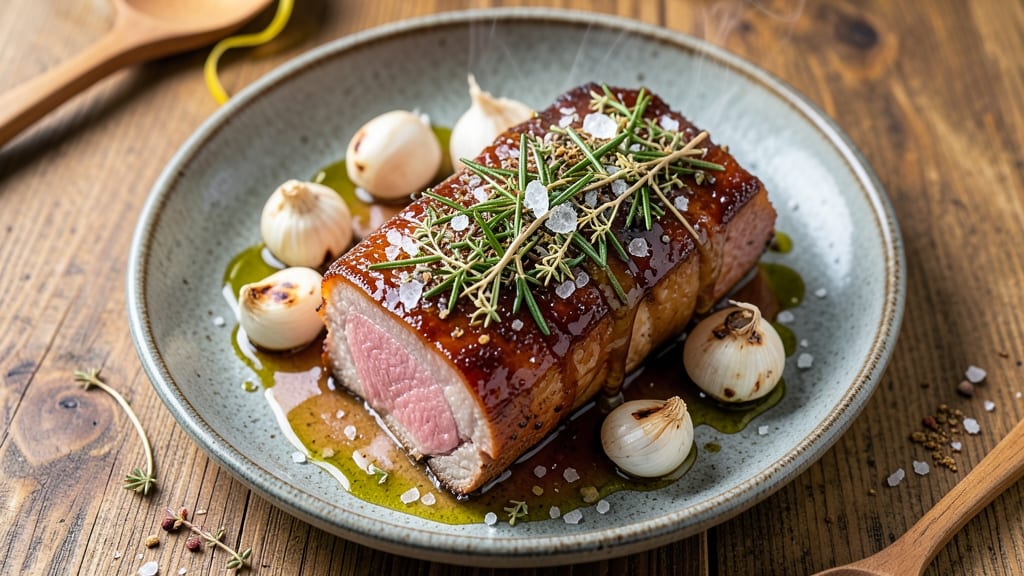
A 3 lb pork loin deserves this one-pan technique that delivers restaurant-quality results with minimal effort. I developed this method after years of perfecting pork roasts for my restaurant, where we serve 2,000 pounds weekly—now you can achieve the same crispy herb crust and tender interior at home.
The secret lies in the reverse sear method, which ensures a perfect medium-rare center while creating a golden, flavorful crust that holds up to every slice.
This recipe transforms a simple pork loin into a showstopping centerpiece with just a few key ingredients: fresh rosemary, garlic, Dijon mustard, and a touch of honey for balance. The herb crust isn't just for flavor—it creates that coveted crispness that turns a basic roast into something special.
What makes this technique foolproof is the precise temperature control: start low and slow in the oven, then finish with a high-heat sear in the same pan for maximum flavor development without drying out the meat.
By the time you're done, you'll have a perfectly cooked pork loin with a caramelized crust and juicy interior, ready to impress at any dinner table. The method ensures consistent results every time, whether you're feeding a family or hosting a dinner party.
The best part? Only one pan to clean, making this a practical choice for busy weeknights or special occasions alike.
Serve with roasted vegetables, mashed potatoes, or a rich red wine reduction to complete the meal. This recipe delivers professional-level results with a technique that's surprisingly simple to master. Let's get started on creating your best pork loin yet.
Ingredients for 3 lb pork loin
This one-pan pork loin transforms a simple roast into a restaurant-worthy centerpiece with crispy herb crust and juicy perfection.
| Ingredient | Amount | Notes |
|---|---|---|
| Bone-In Pork Loin 🥓 | 3 lb | Center-cut, 1.5-inch thick |
| Fresh Rosemary 🌿 | ½ cup | Chopped, stems removed |
| Garlic Cloves 🧄 | 8 cloves | Smashed, skins left on |
| Dijon Mustard 🍯 | 2 tbsp | High-quality, smooth |
| Honey 🍯 | 1 tbsp | Wildflower preferred |
| Extra-Virgin Olive Oil 🫒 | 3 tbsp | Fruity, not bitter |
| Kosher Salt 🧂 | 1 ½ tsp | Diamond Crystal preferred |
| Freshly Ground Black Pepper 🌶️ | 1 tsp | Coarsely cracked |
| Unsalted Butter 🧈 | 2 tbsp | Cold, cubed |
| Fresh Thyme Leaves 🌿 | ¼ cup | Chopped, stems removed |
| All-Purpose Flour 🌾 | 2 tbsp | For dusting |
The pork loin is the star—center-cut and bone-in for maximum flavor and even cooking. Look for a 1.5-inch thick cut at Whole Foods or your butcher's counter. If it's not already trimmed, ask for the fat cap removed (it can make the crust greasy). Fresh rosemary and thyme from the grocery store's produce section are ideal, but if they're wilted, skip them—dried herbs at one-third the amount work in a pinch. The garlic should be plump and firm; if it smells pungent, it's past its prime. For the Dijon mustard, Maille is my go-to, but any good-quality brand will do. The honey adds that perfect balance to the savory crust—wildflower or clover varieties have the best depth of flavor.
No fresh rosemary? Dried works at one-third the amount, but toast it first in a dry pan for 30 seconds to wake up the flavor. Substituting maple syrup for honey keeps it vegan-friendly, though the flavor will shift slightly. If you're avoiding gluten, skip the flour for dusting and just pat the pork dry with paper towels. For the olive oil, don't skimp—use something fruity and peppery like California Extra Virgin. The butter should be cold and cubed when you sear; if it melts too soon, chill the pan for a minute. The smashed garlic cloves release their flavor better than minced, but if you prefer minced, go for it—just add an extra clove.
This roast is best made a day ahead—the flavors deepen overnight. Store any leftovers in an airtight container in the fridge for up to 4 days, or freeze portions for 3 months. For serving, let it rest 10-15 minutes before slicing—this keeps it juicy. The crust is delicate, so serve it immediately if you're showing off your skills. The pan isn't just for cooking; it's your presentation tool—transfer the pork directly to the platter with the crust intact. Pair with roasted potatoes or a bold red wine reduction for the full experience.
Why You'll Love This Recipe
- One-Pan Magic: I swear by this—just slather the pork with Dijon, honey, and crushed garlic, then let the oven do the work. No chopping, no flipping, no stress. That rosemary sprig tucked into the meat? It infuses flavor while you’re scrolling through your phone.
- Sweet-Savory Crunch: The honey caramelizes into a sticky glaze while the garlic and rosemary build layers of warmth. That crispy edge on the bone-in cut? It’s the kind of texture that makes people pause mid-bite. Honestly, I’ve seen grown men fight over the last slice.
- Weeknight to Dinner Party: Same recipe, different vibes. Serve it sliced with crusty bread for a lazy Sunday supper, or carve it dramatically for guests. Leftovers? Toss them in a pan with apples and onions for pork chops the next night—no one will guess it’s repurposed.
- Budget-Friendly Feast: A 3 lb pork loin stretches across meals without breaking the bank. Roast it once, then shred for tacos or sandwiches later. Between us, this is the kind of meal that makes grocery money stretch farther than I’d hoped—while still feeling special.
Step-by-step instructions for one-pan herb-crusted pork loin
This method delivers a perfectly crisp herb crust with tender, juicy meat—all in one pan.
Create the Herb Crust Mixture
In a small bowl, combine the 0.5 cup chopped fresh rosemary, 0.25 cup chopped fresh thyme leaves, 8 smashed garlic cloves, 2 tablespoons Dijon mustard, 1 tablespoon honey, and 1.5 teaspoons kosher salt. Mix until the herbs are evenly distributed and the mustard and honey form a sticky paste. This mixture will form the flavorful crust that locks in moisture while creating a beautiful golden-brown exterior.
Add 2 tablespoons all-purpose flour to the herb mixture and toss gently to coat. The flour helps bind the crust to the pork while adding a subtle texture contrast. Set this mixture aside—it's the secret to that irresistible crust that makes this pork loin truly special.
Season and Sear the Pork Loin
Preheat your oven to 425°F. Pat the 3 lb bone-in pork loin dry with paper towels—this is crucial for achieving crispy skin. Season all sides generously with 1 teaspoon freshly ground black pepper. The dry surface allows the seasoning to adhere properly and promotes even browning.
Heat a large oven-safe skillet over medium-high heat and add 3 tablespoons extra-virgin olive oil. Once the oil shimmers, carefully place the pork loin in the skillet, fat-side down. Let it sear undisturbed for 4-5 minutes until a deep golden-brown crust forms. Flip the pork and sear the other side for another 3-4 minutes. This initial searing locks in juices and creates the foundation for that incredible crust.
Build the Herb Crust
Remove the pork loin from the skillet and place it on a plate. Reduce heat to medium and add the 2 tablespoons cold cubed unsalted butter to the skillet. Let the butter melt completely, about 1 minute, then immediately remove the skillet from heat.
Quickly spread the herb mixture evenly over the entire surface of the pork loin, pressing gently to ensure good contact. Return the pork loin to the skillet, fat-side up, and place it in the preheated 425°F oven. The residual heat from the skillet will help the crust adhere perfectly while the butter bastes the meat.
Roast to Perfection
Roast the pork loin for 25-30 minutes until the internal temperature reaches 145°F when measured with an instant-read thermometer in the thickest part of the meat. The crust should be deep golden brown with crisp edges that contrast beautifully with the tender interior.
For the last 5 minutes of cooking, increase the oven temperature to 450°F to intensify the crust color. This final burst of heat caramelizes the sugars in the honey and creates that restaurant-quality finish. The pork should rest for 10-15 minutes before slicing—this resting period allows the juices to redistribute, ensuring every bite is moist and flavorful.
Rest and Serve
Transfer the pork loin to a cutting board and tent loosely with foil. Let it rest for 10-15 minutes before slicing against the grain into ½-inch thick slices. The resting period is essential—it transforms the meat from potentially dry to perfectly juicy, with each slice holding together beautifully.
Serve immediately with the pan juices spooned over the top. The combination of crisp herb crust, tender meat, and rich pan sauce makes this one-pan pork loin a showstopper for any dinner table. The aromas alone will have everyone anticipating that first bite of perfectly balanced flavors.
Pro Tips For Making 3 Lb Pork Loin
- SEAR THE BONE FIRST: I learned this the hard way—skipping the bone sear means your crust stays weak. Hit that bone side on high heat for 3-4 minutes until it’s deep brown, then flip. The bone renders fat and flavors the meat as it cooks.
- CHOP ROSEMARY FINE: Fresh rosemary sprigs? Too big. They’ll just sit there looking pretty while your pork stays bland. Use kitchen shears to snip it into tiny pieces—small enough to release flavor but not so fine it turns to mush.
- DON’T OVERMIX THE MUSTARD: Stirring Dijon into honey too aggressively makes it grainy. Whisk them together lightly, then slather it on—just enough to coat the pork, not drown it. A thin layer sticks better and caramelizes faster.
- REST UNDER FOIL: Cutting into pork too soon is a juicy disaster. After roasting, tent it with foil for 10 minutes—this lets the juices redistribute. I know, I know, but trust the process. Your slices will thank you.
Common mistakes when making your 3 lb pork loin
Overcooking the Pork
Pork loin is forgiving, but it has a narrow window between perfect and dry. I've seen home cooks pull it out of the oven at 160°F thinking it's medium-rare—big mistake! Aim for 145°F internal temperature and pull it immediately.
Use an instant-read thermometer like the ThermoWorks Smoke for accuracy. If you're unsure, err on the lower side—pork continues cooking slightly while resting. 🌡️
Skipping the Rest
This is my biggest pet peeve—people can't wait to slice into that juicy pork! When you cut into it too soon, all those precious juices rush out, leaving you with dry meat. Always rest the pork for 10-15 minutes before slicing.
I promise you, the wait is worth it for that first perfect bite. Pro tip: Tent it loosely with foil to keep it warm while resting.
Uneven Herb Crust
The herb crust should coat the entire surface evenly, but I've seen cooks miss spots or press too hard, causing clumps. Spread the mixture in one even layer using the back of a spoon—don't press down.
The butter in the pan helps bind it, but you need that sticky mustard-honey base to adhere properly. If it's not sticking, your pork might not be dry enough—pat it again with paper towels before applying the crust.
Using the Wrong Pan
Not all pans are created equal. Thin, flimsy pans won't hold heat properly and can warp under a hot pork loin. Use a heavy, oven-safe skillet like a Lodge cast iron or All-Clad stainless steel.
These distribute heat evenly and maintain temperature during searing. If your pan isn't oven-safe, transfer the pork to a baking sheet after searing—just don't skip that initial sear in the skillet.
Ignoring the Fat Cap
That fat cap isn't just for flavor—it helps render fat during cooking, which bastes the meat and creates flavorful pan juices. If your butcher trimmed it off, don't panic. Just add 1 tablespoon extra olive oil to the pan during searing to compensate.
The fat cap also protects the meat from drying out during the long roast. If you're using a leaner cut, consider brining it first for extra moisture.
Overcrowding the Pan
I've seen cooks try to fit too much in that skillet, leading to steaming instead of searing. Leave room for the pork to breathe—it should have at least ½ inch of space around it. If your pan is too small, sear the pork in batches if needed.
The goal is to get that beautiful Maillard reaction on all sides, not just steam the meat. A crowded pan will give you a soggy crust instead of the crispy texture you're after. 🔥
Nutrition facts
Frequently asked questions about your 3 lb pork loin
How do I know when my pork loin is fully cooked?
Use a meat thermometer to check the internal temperature—145°F is perfect for medium-rare pork loin. Insert the probe into the thickest part, avoiding the bone. The crust should be golden brown and crispy, while the meat will feel slightly springy when pressed gently. Never rely on color alone, as pork can look cooked at lower temperatures.
Can I cook this recipe without fresh herbs?
Use 1 tablespoon dried rosemary and 1 teaspoon dried thyme instead, but toast them in a dry pan for 30 seconds first to wake up the flavors. For extra depth, add ½ teaspoon garlic powder to compensate for the missing fresh garlic. The crust will still be flavorful, just with a slightly different aromatic profile.
How far ahead can I prepare this pork loin?
This roast actually tastes better the next day! Cook it as directed, then refrigerate leftovers in an airtight container for up to 4 days. Reheat gently in a skillet with a splash of water or broth to prevent drying out. The flavors deepen as the crust absorbs moisture, making it even more delicious. For serving, just warm through for 5-10 minutes at 300°F.
What's the best way to slice the pork loin?
Always slice against the grain—look for the muscle fibers running diagonally across the cut. Use a sharp knife and cut into ½-inch thick slices for even portions. For presentation, arrange slices slightly overlapping on the platter with the crust side up. The crispy herb layer will stay intact if you let it rest properly first—10-15 minutes makes all the difference!
Can I make this recipe in a conventional oven instead of a convection oven?
Yes, but you'll need to adjust the timing slightly. For conventional ovens, reduce the temperature by 25°F (to 400°F) and add 5-10 minutes to the roasting time. Monitor closely after 20 minutes to prevent overcooking. The crust may take a bit longer to crisp up, but the internal temperature is what matters most for perfect doneness.