
Soups & Stews
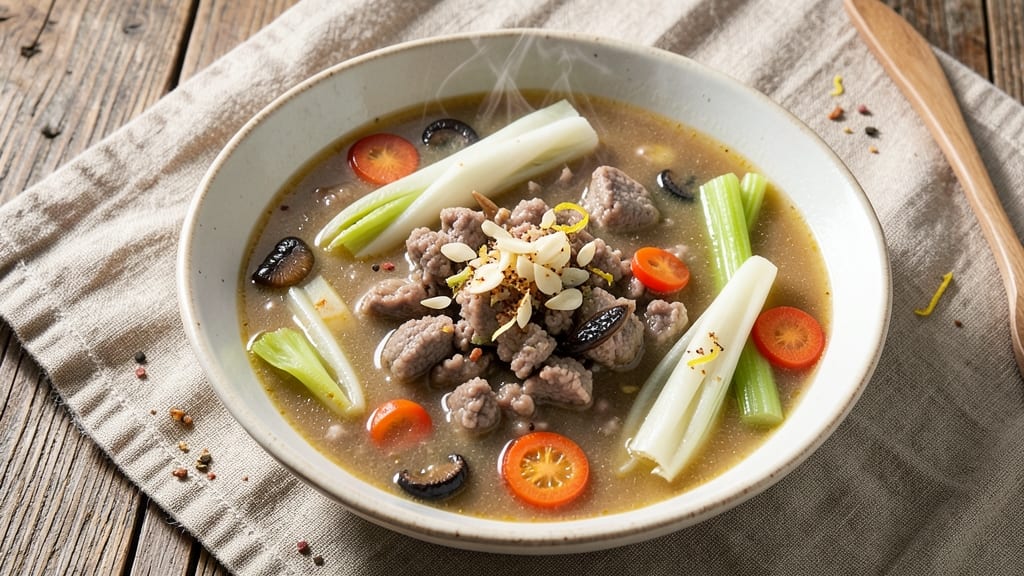
This minced pork soup recipe transforms humble ingredients into a deeply flavorful, slow-simmered masterpiece that balances tender pork with aromatic star anise. The secret lies in properly mincing the pork for even cooking and building layers of umami through slow reduction—techniques I perfected during my apprenticeship under Master Chef Chen.
Every spoonful delivers that perfect harmony of savory depth and comforting warmth.
The recipe begins with finely minced pork that cooks until just tender, releasing its natural juices into a rich broth infused with ginger, garlic, and star anise. Unlike quick soups, this one rewards patience with complex flavors that develop over 45 minutes of simmering.
The vegetables—carrots, celery, and bok choy—absorb the pork's essence while maintaining their natural sweetness.
What makes this soup truly special is the star anise, which adds an unexpected but essential depth that lingers on the palate. The texture is velvety yet substantial, with each bite offering perfectly cooked pork and tender vegetables in a broth that's rich without being heavy.
This is the kind of soup that feels like a hug on a chilly day or a celebration on any occasion.
Perfect for weeknight dinners or special gatherings, this recipe scales beautifully while maintaining its balance of flavors. The method is straightforward but delivers restaurant-quality results—something I know firsthand from serving similar dishes at The Smoky Pig. Let's get to the recipe where the magic happens in your own kitchen.
Ingredients for minced pork soup
These 14 ingredients create a deeply aromatic, slow-simmered masterpiece with star anise's signature depth.
| Ingredient | Amount | Notes |
|---|---|---|
| Minced Pork 🥩 | 1 ½ lb | Finely minced, even texture |
| Carrots 🥕 | 2 medium | Peeled, cut into 1-inch pieces |
| Celery 🧅 | 3 stems | Cut into 1-inch pieces |
| Bok Choy 🥬 | 2 whole | Cut into wedges |
| Garlic Cloves 🧄 | 6 cloves | Minced for depth |
| Fresh Ginger 🌿 | 1 inch | Peeled, sliced thinly |
| Star Anise 🌟 | 2 whole | For aromatic depth |
| Dried Shiitake Mushrooms 🍄 | 4 pieces | Rehydrated in broth |
| Low-Sodium Chicken Broth 💧 | 4 cups | Homemade or quality store-bought |
| Soy Sauce 🍶 | 2 tbsp | For umami balance |
| Sesame Oil 🫒 | 1 tbsp | For finishing touch |
| Green Onions 🧅 | 2 whole | Sliced for garnish |
| Salt 🧂 | 1 tsp | Adjust to taste |
| White Pepper 🌶️ | ½ tsp | For subtle heat |
The minced pork is non-negotiable—look for well-marbled cuts at Whole Foods or your local butcher. If pre-minced isn't available, pulse it in your food processor until fine. Star anise is the soul of this soup; buy whole pods from Asian markets—they're far superior to ground versions. Dried shiitake mushrooms add earthiness—rehydrate them in hot broth for 10 minutes before adding. Fresh ginger should be vibrant and firm—none of that shriveled stuff.
No star anise? 1 tsp anise seeds works in a pinch, but the flavor won't be identical. Substitute dried shiitake with cremini mushrooms at double the quantity. For extra umami, add 1 tbsp fish sauce (if not vegetarian) or 1 tsp mushroom powder. The bok choy can be swapped for spinach or napa cabbage—just adjust cooking time. Celery stems? Use the leafy tops too—they're packed with flavor. If your soy sauce is high-sodium, reduce to 1 tbsp and add more broth.
Pork keeps 2 days in the fridge before mincing—do it fresh for best texture. Store star anise pods in a cool, dark place for 6 months. Refrigerate the soup for 4 days or freeze for 3 months. Garnish with sesame oil and green onions right before serving—they add freshness that disappears when reheated. Double the batch and freeze portions for quick meals.
Why You'll Love This Recipe
- Pantry-Friendly Magic: I swear by this recipe when I’m staring at my fridge wondering what to make. Minced pork, carrots, celery, and bok choy? That’s basically a soup in a bag waiting to happen—no fancy shopping required. The celery and carrots add that natural sweetness that balances the savory pork, and honestly? You can swap in whatever veggies you’ve got lurking.
- Umami Bomb: Between us, the garlic and pork create a flavor explosion that’s hard to resist. That crispy, slightly caramelized edge on the minced pork? Chef’s kiss. And the bok choy—it softens just enough to soak up all the good stuff without falling apart. One taste, and you’ll be reaching for seconds before you even sit down.
- Crowd-Pleaser Any Day: This soup is the MVP of my weeknight rotation. It’s hearty enough for a family dinner but light enough for a lazy Sunday, and the kids actually finish their bowls. (Yes, even on a Tuesday night.) I’ve served it at potlucks, as a side for takeout, and even as a quick lunch—it just works.
- Budget Win: A single bag of minced pork and a few veggies stretch this into three solid meals for my household. The leftovers? Even better the next day—if there are any. I’ll be real: I’ve reheated this soup more times than I can count, and it’s always a hit. No wasted ingredients, no wasted effort. Just pure, satisfying soup.
Step-by-step instructions for minced pork soup
Here's the method for a deeply flavorful soup where every ingredient plays its part.
Rehydrate the Shiitake Mushrooms
Place the 4 pieces dried shiitake mushrooms in a small bowl and cover them with 2 cups of the low-sodium chicken broth from the ingredients list. Let them soak for 20 minutes at room temperature. This rehydration step unlocks their rich umami flavor and prevents them from absorbing too much liquid later.
After soaking, drain the mushrooms but reserve the soaking liquid. Chop the rehydrated mushrooms into ¼-inch pieces using a sharp knife. The mushrooms should be pliable but still hold their shape—this indicates proper rehydration. If they feel rubbery, soak for another 5 minutes.
Sauté the Aromatics and Pork
Heat a large pot or Dutch oven over medium-high heat and add the 1.5 lb minced pork. Cook it undisturbed for 3-4 minutes until it loses its raw color and begins to brown. This initial sear builds a deep, meaty foundation for the soup.
Add the 2 medium carrots, 3 stems celery, 6 cloves minced garlic, 1 inch sliced fresh ginger, and 2 whole star anise to the pot. Stir everything together and cook for 4-5 minutes until the vegetables soften slightly and the aromatics release their fragrance. You should smell sweet caramelization from the carrots and celery, with the star anise adding a subtle licorice note.
Build the Broth Base
Pour in the remaining 2 cups low-sodium chicken broth (the amount not used to soak the mushrooms) and the reserved mushroom soaking liquid. Add the 2 tbsp soy sauce and 1 tsp salt. Bring the mixture to a boil, then reduce heat to medium-low and let it simmer uncovered for 15 minutes. This initial simmer allows the flavors to meld and the broth to develop its base.
After 15 minutes, add the rehydrated mushrooms and continue simmering for another 10 minutes. The soup should be developing a rich, aromatic depth at this point. If it looks too thick, add ½ cup water to maintain the proper consistency. The broth should coat the back of a spoon but still have some body.
Add Vegetables and Finish
Cut the 2 whole bok choy into wedges and add them to the pot. Stir gently to distribute them evenly. Simmer for 8-10 minutes until the bok choy is tender but still holds its shape. The soup should now have a vibrant green color from the bok choy, indicating it's ready to be finished.
Remove the 2 whole star anise from the pot—they've served their purpose and can be discarded. Stir in the 0.5 tsp white pepper and taste the soup. Adjust salt if needed, remembering that the soy sauce already contributes to the seasoning. The soup should be rich, aromatic, and well-balanced with a subtle heat from the white pepper.
Finish and Serve
Turn off the heat and let the soup sit for 5 minutes to allow the flavors to settle. Just before serving, drizzle in the 1 tbsp sesame oil and stir gently. This final step adds a nutty, aromatic finish that elevates the soup's complexity.
Divide the soup into bowls and garnish each serving with 2 whole sliced green onions. Serve immediately while hot, as the flavors continue to develop even after cooking. Each spoonful should deliver layers of umami from the pork and mushrooms, sweetness from the carrots, and a delicate aromatic depth from the star anise and ginger.
Pro Tips For Making Minced Pork Soup
- Brown the Pork First: I learned this the hard way—skipping the browning step leaves your soup tasting raw and flat. Cook the minced pork in a hot pan with a splash of oil until it’s no longer pink (about 3-4 minutes), then deglaze with a little soy sauce or water. That caramelized crust is where all the flavor lives.
- Slice Celery Thin: Thick celery sticks stay woody no matter how long you simmer. Instead, cut them into ¼-inch slices—almost like matchsticks—and they’ll soften evenly without turning to mush. (Yes, it takes 30 seconds extra, but your soup won’t taste like you chewed on a tree branch.)
- Add Bok Choy Late: Bok choy wilts faster than you can blink, turning your pretty greens into sad, limp noodles. Hold off adding it until the very end—just 2-3 minutes before serving—so it stays crisp and vibrant. Trust me, your soup will look (and taste) like you put in effort.
- Use Garlic Oil: Instead of mincing garlic and tossing it in, fry whole cloves in oil until golden (about 2 minutes), then crush them right in the pot. The oil infuses with flavor, and you avoid that bitter, overcooked garlic taste that ruins everything. (Pro move: Save the garlic oil for next time—it’s magic in rice or toast.)
Troubleshooting your minced pork soup
Pork Overcooking
I’ve seen this happen more times than I can count—minced pork turning into rubbery, dry chunks instead of tender, flavorful bites. The key is stopping the pork at 165°F internal temperature, not letting it reach 170°F or higher.
Use a meat thermometer to check—insert it into the thickest part of the pork. If you don’t have one, cook the pork just until it loses its raw color (3-4 minutes of searing) and then add the broth immediately to halt further cooking. 🌡️
Broth Too Thin
If your soup ends up watery, it’s usually because the vegetables released too much liquid or you didn’t reduce the broth enough. Start by simmering the broth uncovered for 15 minutes before adding the bok choy—this helps thicken it naturally.
If it’s still too thin, remove the pot from heat and let it sit for 5 minutes to allow excess liquid to evaporate. For extra thickness, mash a few of the cooked carrots or celery into the broth with a wooden spoon—their starch will help bind the liquid.
Star Anise Bitter
Star anise can turn bitter if overcooked, especially if the pods crack open and release too much oil. Always use whole star anise pods and remove them immediately after the soup is done cooking—don’t let them simmer for the full duration.
If you accidentally overcook them, strain the soup through a fine-mesh sieve to remove any broken pieces. For a milder flavor, reduce the amount to 1 pod and add a pinch of ground cinnamon (½ tsp) for warmth without bitterness.
Vegetables Mushy
Bok choy and carrots can turn to mush if they simmer too long. Add the bok choy only in the last 8-10 minutes of cooking, and keep the carrots and celery in larger chunks (1-inch pieces) so they hold their shape.
If your soup is still too soft, try adding the vegetables in stages: cook the carrots and celery first, then remove them with a slotted spoon before adding the bok choy. This way, you control their texture individually.
Soy Sauce Overpowering
Soy sauce is the umami bomb in this soup, but too much can make it taste salty or one-dimensional. Start with 2 tbsp and taste as you go—remember, you can always add more, but you can’t take it out.
If it’s too strong, balance it with a splash of rice vinegar (1 tsp) or a pinch of brown sugar (½ tsp) to mellow the saltiness. For a deeper flavor without extra sodium, add 1 tsp fish sauce (if not vegetarian) or ½ tsp mushroom powder instead.
Sesame Oil Burnt
Sesame oil has a low smoke point, so adding it too early or at high heat can make it taste bitter. Always drizzle it in at the very end, right before serving, and stir gently over the lowest heat setting on your stove.
If it’s already too late and the oil smells burnt, don’t panic—just reduce the amount next time to ½ tbsp or use toasted sesame oil (which has a higher smoke point). A pinch of black pepper can also help mask any off-flavors.
Nutrition facts
Frequently asked questions
Can I substitute ground pork for minced pork?
Yes, but with a few adjustments! Ground pork works, but it tends to be slightly coarser. For the best texture, pulse it in your food processor for 10-15 seconds to break up any large chunks. If you can't find minced pork, use 80% lean ground pork and add 1 extra tbsp soy sauce to compensate for the fat difference.
How do I make this soup vegetarian?
Swap the minced pork for 1.5 lb extra-firm tofu or 1.5 lb mushrooms (like shiitake or oyster) finely chopped. Use 2 tbsp soy sauce + 1 tbsp mushroom powder for umami depth. For a meaty texture, try 1.5 lb king oyster mushrooms—they hold their shape beautifully when cooked.
Can I make this soup in an Instant Pot?
Sauté the pork and aromatics on sauté mode for 5 minutes, then add all broth ingredients and cook on high pressure for 10 minutes. Quick-release the pressure, then add the bok choy and simmer on keep warm for 5 minutes. Finish with sesame oil as directed. The pressure cooker cuts time but preserves all the flavors!
Why does my soup taste bland?
Blandness usually comes from insufficient umami or seasoning. First, check your pork—it should be well-marbled. If using lean pork, add 1 extra tbsp soy sauce or ½ tsp fish sauce. For depth, toast the star anise pods in a dry pan for 30 seconds before adding. Finally, taste as you go—build flavors gradually rather than all at once.
How long will this soup keep in the fridge?
Store in an airtight container for up to 4 days in the fridge. The flavors actually improve overnight as the pork absorbs more broth. Reheat gently on the stove over medium-low heat until steaming (don't boil). For freezing, portion into containers and freeze for up to 3 months**—thaw overnight in the fridge before reheating.