
Main Courses
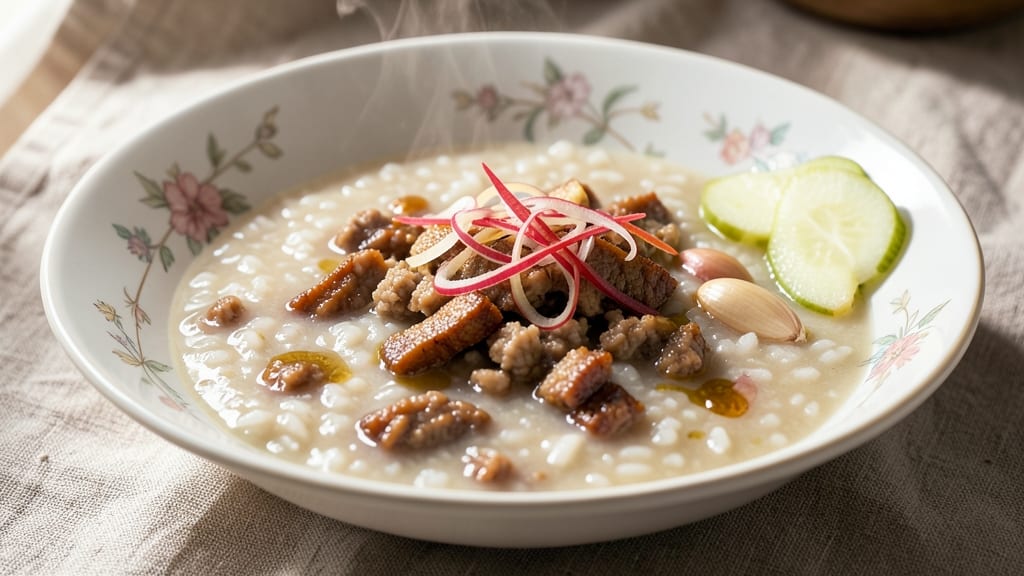
This minced pork congee recipe transforms simple ingredients into a velvety, comforting bowl that warms the soul. 💛 Growing up in Georgia, I learned how pork could elevate humble rice into something extraordinary—this dish proves it.
The secret lies in slow-simmered broth and tender, finely chopped pork that melts into every spoonful.
What makes this recipe special is the balance of textures: silky rice porridge cradling delicate pork, all enriched by a savory broth. Unlike quick instant congee, this version requires patience—letting the rice soak and simmer for hours develops that signature silky texture and deep flavor.
The process might take time, but the result is worth every minute.
By the end, you'll have a bowl of restaurant-quality congee with perfectly cooked rice, tender pork, and a rich broth that's impossible to resist. The aroma alone will have everyone gathering around the table. This dish is more than just comfort food—it's a celebration of simple ingredients done right.
Serve it with pickled vegetables, fried shallots, or a drizzle of chili oil for that perfect balance of textures and flavors. Here's how to make it—step by step, just like my grandmother taught me.
Ingredients for minced pork congee
Simple ingredients, slow simmering, restaurant-quality comfort in every bowl.
| Ingredient | Amount | Notes |
|---|---|---|
| Ground Pork 🐖 | 1 ½ lb | Finely minced for tenderness |
| Jasmine Rice 🍚 | 1 cup | Long-grain, uncooked |
| Chicken Broth 💧 | 6 cups | Low-sodium preferred |
| Shallots 🧅 | 3 whole | Minced for aromatic base |
| Garlic Cloves 🧄 | 4 cloves | Minced for depth of flavor |
| Fresh Ginger 🌿 | 1 tbsp | Grated, for warmth |
| Soy Sauce 🍶 | 2 tbsp | Light or dark variety |
| Sesame Oil 🫒 | 1 tbsp | Toasted for aroma |
| Olive Oil 🫒 | 1 tbsp | For initial searing |
| Salt 🧂 | 1 tsp | Adjust to taste |
| White Pepper 🌶️ | ½ tsp | Freshly ground preferred |
| Scallions 🧅 | 3 whole | Sliced for garnish |
| Green Onions 🧅 | 2 whole | Optional garnish |
The ground pork is the heart of this dish—look for finely minced pork at your local butcher or Asian market for that signature melt-in-your-mouth texture. Costco or Trader Joe's often carry pre-minced pork that works well, but if you're feeling ambitious, pulse it in a food processor for even finer results. Fresh ginger and garlic are non-negotiable here; frozen or jarred won't give you that bright, fresh flavor. For the broth, homemade chicken stock is ideal, but Swanson or Pacific brand low-sodium options work in a pinch. Jasmine rice is key—its delicate aroma pairs perfectly with the savory pork.
No fresh ginger? Substitute 1 tsp ground ginger, but it won't have the same zing. Out of soy sauce? A mix of tamari and a pinch of sugar mimics the balance. The sesame oil adds depth, but if you're avoiding it, toasted peanut oil works similarly. For the rice, if you can't find jasmine, long-grain white rice is a fine substitute—just keep an eye on the texture as it simmers. The scallions and green onions are purely for garnish, so feel free to skip them if you're in a rush, but they add that fresh pop of color that makes the dish feel complete.
This congee tastes even better the next day—store leftovers in the fridge for up to 5 days and reheat gently on the stove with a splash of water. For longer storage, freeze portions for up to 3 months. The rice will absorb more liquid when reheated, so add water gradually until it reaches your desired consistency. To save time, soak the rice overnight before cooking—this cuts down on simmering time by about 30 minutes. Serve with fried shallots or chili oil for that extra restaurant touch.
Why You'll Love This Recipe
- No Chopping Nightmare: I swear by this recipe because the ground pork and pre-minced shallots mean zero knife work—just brown, simmer, and enjoy. Honestly, I’ve made this on days when I couldn’t even be bothered to peel garlic, and it still tastes like a hug in a bowl.
- Umami Bomb: That crispy, caramelized pork layered over creamy rice? It’s the kind of flavor that makes you pause mid-bite. The garlic and shallots toast until they’re golden, then melt into the broth—rich, deep, and impossible to resist.
- Office Lunch Hero: Between us, this is my go-to for meal prep. The congee thickens perfectly in the fridge, so I just reheat portions with a splash of broth. My coworkers think I’m a saint because it’s warm, filling, and never boring—even on the fifth day.
- Pocketbook Winner: A pound of ground pork and a bag of rice stretch across three meals for my family of four. The broth adds depth without cost, and leftovers taste just as good reheated as they do fresh. Not the prettiest, but the taste makes up for it—and my wallet thanks me.
Step-by-step instructions for silky minced pork congee
Master this delicate balance of texture and flavor with precise technique.
🍳 Step 1: Sear the Ground Pork for Maximum Flavor
Heat the 1 tablespoon olive oil in a heavy-bottomed pot over medium-high heat. Add the 1.5 lb ground pork and break it up with a wooden spoon, cooking for 3-4 minutes until the pork loses its raw color and begins to brown. This step develops deep umami flavors that infuse the entire congee.
Here's where it gets important: don't overcrowd the pan. Work in batches if needed to ensure the pork browns properly rather than steaming. Once fully cooked, remove the pork from the pot and set aside—we'll return it later. The remaining pork fat will help create our silky texture.
👨🍳 Step 2: Build the Aromatic Base
In the same pot (no need to wipe it clean—those browned bits are pure flavor), add the 1 tablespoon olive oil if needed, then stir in the 3 minced shallots, 4 minced garlic cloves, and 1 tablespoon grated fresh ginger. Cook over medium heat for 2-3 minutes until the shallots soften and become translucent, and the mixture releases a fragrant aroma.
This aromatic base forms the flavor foundation. I like to press the shallots and garlic down with a wooden spoon for 30 seconds to help them break down faster. Watch carefully—they'll darken quickly. When they're just beginning to turn golden at the edges, they're ready for the next step.
🍲 Step 3: Simmer the Rice for Perfect Texture
Add the 1 cup jasmine rice to the pot and stir to coat it in the aromatic oil. Pour in the 6 cups chicken broth and bring to a gentle boil over medium-high heat. Once boiling, immediately reduce heat to low and cover the pot with a tight-fitting lid.
The key here is patience. Let the congee simmer gently for 45-50 minutes without disturbing it. The rice should break down completely, creating a silky, porridge-like consistency. You'll know it's ready when the rice grains are barely visible and the mixture has a smooth, almost custard-like texture.
🥘 Step 4: Season and Finish the Congee
Return the cooked pork to the pot and stir gently to distribute it evenly. Add the 2 tablespoons soy sauce, 1 teaspoon salt, and 0.5 teaspoon white pepper. Stir well to combine, then taste and adjust seasoning if needed. The congee should be savory with a subtle sweetness from the pork.
For that final touch, drizzle in the 1 tablespoon sesame oil and stir gently. The oil should emulsify into the congee, adding a delicate nutty aroma. Remove from heat and let it sit covered for 5 minutes to thicken slightly before serving.
🍽️ Step 5: Garnish and Serve Immediately
Ladle the congee into serving bowls. Garnish each portion with sliced scallions and chopped green onions for freshness and color contrast. The garnishes should float on top, adding both visual appeal and a bright, fresh element to each bite.
Serve the congee immediately while still hot. The texture should be silky and smooth, with each spoonful offering a perfect balance of tender pork, aromatic broth, and delicate rice. The congee will continue to thicken slightly as it cools, so serve it while it's at its most luxurious consistency.
Pro Tips For Making Minced Pork Congee
- Fry Pork First, Fast: I used to add the pork to the broth right away, but frying it first in a dry pan for 2-3 minutes—until it loses that raw, meaty smell—makes the flavor pop. The pork releases fat and tightens, so it stays tender instead of turning mushy later.
- Mince Shallots, Don’t Dice: Thinly minced shallots (almost like a paste) melt into the congee without leaving chunks, while diced pieces just sit there. Use the flat side of your knife to press them down while chopping—it’s faster and more even.
- Simmer Rice Low and Long: Skipping the low simmer is how you end up with gritty, undercooked rice. Once the broth starts bubbling, drop the heat to the lowest setting and let it cook uncovered for 45-60 minutes. Stir occasionally—just enough to keep it from sticking.
- Bloom Garlic in Fat: After frying the pork, turn off the heat and let the fat pool in the pan. Toss in the minced garlic and let it sit for 30 seconds—it’ll soften and perfume the fat without burning. Then add the broth. This step makes the garlic taste deeper than if you just tossed it in raw.
Dietary considerations for minced pork congee
Gluten-Free Adaptations
This recipe is naturally gluten-free, but watch for hidden sources in your ingredients. Use tamari instead of soy sauce if you're avoiding gluten entirely—it's a 1:1 substitute and delivers that same savory depth.
I always double-check my chicken broth label to ensure it's certified gluten-free, especially if you're sensitive. For extra insurance, opt for homemade broth using fresh chicken and aromatic vegetables. 🌱
Low-Sodium Options
Since we're using low-sodium chicken broth, you can safely skip the added salt if your broth is already well-seasoned. For extra flavor without sodium, boost the umami with 1 teaspoon fish sauce or ½ teaspoon mushroom powder.
I've found that adding a splash of rice vinegar (just ½ teaspoon) brightens the broth while keeping it light. Always taste as you go—congee is forgiving when it comes to seasoning adjustments.
Dairy-Free Considerations
This recipe is inherently dairy-free, but if you're adding toppings, be mindful of creamy elements. Skip the traditional fried shallots if they're made with butter, and opt for olive oil-fried shallots instead. For garnishes, stick with fresh herbs, chili oil, or crispy shallots made with neutral oil.
The congee's natural richness comes from the pork and broth, so no dairy is needed to satisfy. 🥗
Protein Variations
If you're avoiding pork, substitute with finely minced chicken thigh for similar texture and flavor. For a vegetarian version, swap the pork for mushroom stems (finely chopped) or tofu (pressed and crumbled). I've even seen success with shredded chicken that's been pulsed in a food processor for a meaty texture.
The key is keeping the protein finely textured to mimic the original dish's silky mouthfeel.
Allergen-Friendly Swaps
For sesame allergies, replace sesame oil with 1 teaspoon toasted peanut oil or avocado oil—both add richness without the nutty flavor. If you're sensitive to garlic or shallots, use 1 tablespoon finely chopped leek greens instead—they provide a similar mild onion flavor.
Always check your broth for hidden allergens like fish or wheat, especially if using store-bought versions. When in doubt, homemade is always the safest bet. 💡
Nutrition facts
Frequently asked questions
Can I use regular ground pork instead of finely minced pork?
Regular ground pork works, but for that signature silky texture, finely minced pork is ideal. Pulse the pork in a food processor for 10-15 seconds to break it down further. If you can't find pre-minced pork, look for "ground pork for congee" at Asian markets—it's specifically prepared for this dish.
How do I fix congee that's too thick or too thin?
For thick congee, stir in 2-3 tablespoons of warm broth gradually until you reach a smooth, creamy consistency. If it's too thin, simmer uncovered for 5-10 minutes to evaporate excess liquid. The key is patience—never rush the simmering process.
Can I make this congee in a slow cooker?
Use the same ingredients but reduce the broth to 5 cups instead of 6. Cook on low for 6-8 hours or high for 3-4 hours, stirring occasionally. Add extra broth if needed to reach your desired texture. The slow cooker method is perfect for hands-off cooking.
What's the best way to reheat leftover congee?
Gently reheat on the stove over low heat with a splash of water or broth to restore the creamy texture. Avoid microwaving—it makes the rice grainy. For extra richness, stir in ½ teaspoon sesame oil while reheating. Leftovers actually improve in flavor!
Why does my congee taste bland?
Bland flavor usually means the pork wasn't browned enough or the broth lacks depth. Next time, sear the pork until deeply browned for maximum umami. Boost flavor by adding 1 teaspoon fish sauce or ½ teaspoon mushroom powder to the broth. Fresh ginger and garlic are non-negotiable—never substitute with powdered versions.