
Main Courses
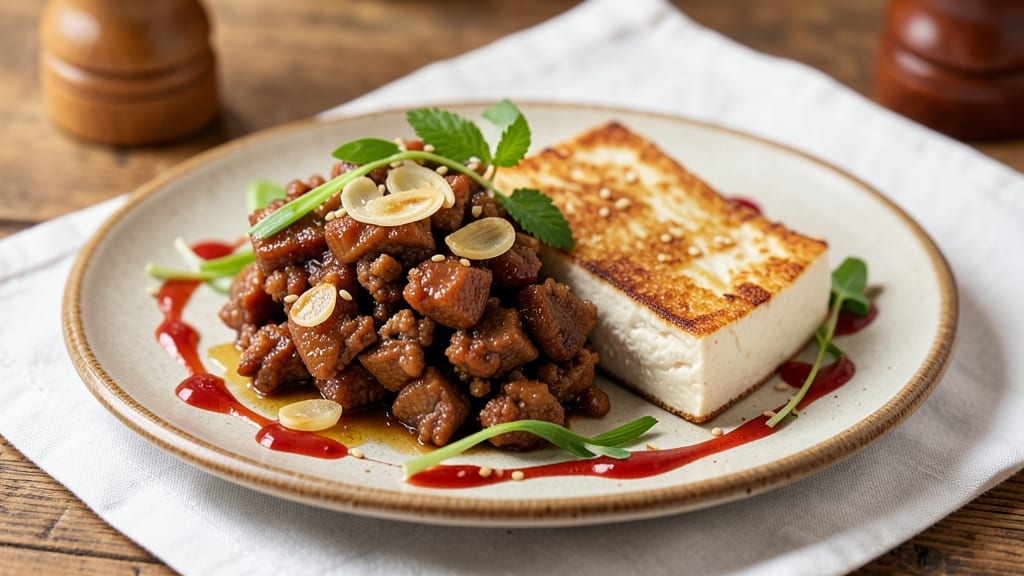
This mince pork and tofu recipe delivers restaurant-quality stir-fry with crispy edges and layers of umami flavor that balance both proteins perfectly. 🔥 As someone who's spent years perfecting protein combinations, I can tell you this recipe transforms simple ingredients into a dish that's rich, savory, and satisfying for everyone at the table—whether they're meat-eaters or plant-based.
The secret lies in marinating each protein separately before combining them in the wok. For the pork, a blend of soy sauce, garlic, and ginger creates deep flavor, while the tofu gets a crispy cornstarch coating that holds up beautifully during stir-frying.
High heat ensures those crispy edges we're all chasing, while a quick homemade sauce ties everything together with just the right balance of sweet, tangy, and umami notes.
What you'll end up with is a vibrant stir-fry where each bite delivers tender pork and crispy tofu in perfect harmony, all coated in that glossy, flavorful sauce. The aromas alone—garlic sizzling, soy caramelizing, ginger brightening—will have your kitchen smelling like a bustling Asian street market.
This is comfort food that feels special, with techniques that are simple enough for weeknight dinners but impressive enough for guests.
Serve it steaming hot over jasmine rice or noodles, and don't forget the garnish—fresh cilantro and sesame seeds add that final professional touch. The best part? This recipe scales effortlessly, so you can easily double it for a crowd while keeping the same restaurant-quality results. Let's get cooking!
Ingredients for mince pork and tofu
Crispy edges and umami layers—just 15 ingredients transform simple proteins into restaurant-quality stir-fry.
| Ingredient | Amount | Notes |
|---|---|---|
| Ground Pork 🥩 | 1 lb | Lean ground pork preferred |
| Extra-Firm Tofu 🍲 | 14 oz | Pressed and cubed |
| Cornstarch 🌾 | ½ cup | For crispy coating |
| Soy Sauce 🥢 | ⅓ cup | High-quality, light soy |
| Sesame Oil 🫒 | 1 tbsp | Toasted for aroma |
| Garlic Cloves 🧄 | 6 cloves | Minced for marinade |
| Fresh Ginger 🌿 | 2 tbsp | Grated finely |
| Hoisin Sauce 🍶 | 2 tbsp | For umami depth |
| Oyster Sauce 🥢 | 2 tbsp | Vegetarian version if needed |
| Rice Vinegar 🍶 | 1 tbsp | For tangy balance |
| Brown Sugar 🍚 | 1 tbsp | Lightly packed |
| Neutral Oil 🫒 | 2 tbsp | Avocado or vegetable oil |
| Fresh Cilantro 🌿 | ¼ cup | Chopped for garnish |
| Toasted Sesame Seeds 🌾 | 1 tbsp | For crunchy finish |
| Jasmine Rice 🍚 | 1 ½ cups | Uncooked, for serving |
The pork needs to be lean but flavorful—Trader Joe's or Whole Foods carry excellent ground pork with good marbling. For the tofu, extra-firm blocks are non-negotiable; Nasoya or House Foods are my go-tos. Press it for 20 minutes wrapped in a towel to squeeze out excess water—this is key for crispiness. Fresh ginger and garlic should smell bright and pungent; if they're musty, skip them. The sesame oil? Look for toasted varieties at Asian markets—they have that nutty depth that regular sesame oil lacks.
No soy sauce? Coconut aminos work in a pinch, though the flavor will be subtly different. Short on hoisin? Mix 1 tbsp soy sauce with 1 tsp brown sugar. The cornstarch coating is crucial for that crispy texture—don't substitute flour. For the sauce, if you can't find vegetarian oyster sauce, mushroom sauce is a decent swap. Brown sugar can be swapped for white sugar or maple syrup, though the flavor profile shifts slightly. The rice vinegar adds that bright tang—substitute lemon juice at half the amount if needed.
Press the tofu ahead of time and store it wrapped in the fridge for up to 3 days. The marinade keeps for 5 days in the fridge, making this a great meal-prep option. Cooked rice reheats beautifully—microwave with a splash of water to restore moisture. The stir-fry itself reheats well but loses some crispiness; re-crisp in a hot pan for 2 minutes if serving leftovers. Garnishes like cilantro and sesame seeds add freshness—store them separately to keep the dish vibrant.
Why You'll Love This Recipe
- No-Fuss Protein Combo: I swear by this trick—just toss the tofu cubes in cornstarch and pan-fry until golden while the pork browns. No marinating, no fuss, and suddenly you’ve got two textures working together instead of competing.
- Umami Crunch Magic: That sesame oil hit? Chef’s kiss. It turns the tofu into crispy little bites while the pork soaks up the soy sauce like a sponge. Honestly, the first time I made this, I kept sneaking bites straight from the pan.
- Lunchbox Hero: Between us, this is my go-to for meal prep. The pork and tofu hold up for days—just reheat with a splash of soy sauce, and it’s like you’re eating fresh. My kid brings it to school in a thermos, and honestly? I’d trade my coffee for a container of this.
- Budget Stretch: Ground pork’s cheaper than steak, and tofu’s a protein powerhouse. I make this for four people for under $10, and somehow it always disappears. (Yes, even on a Tuesday night.) The leftovers? Even better the next day.
Step-by-step instructions for umami-packed stir-fry with crispy edges
Here's how to create a restaurant-quality stir-fry with perfectly crispy pork and tofu every time.
🍳 Step 1: Prepare the Crispy Pork and Tofu Coating
In a large bowl, combine the 1 lb ground pork and the 14 oz pressed and cubed extra-firm tofu. Add the 0.5 cup cornstarch and mix thoroughly with your hands or a fork until every piece is evenly coated. This coating is what creates those irresistible crispy edges we're after.
For the tofu, I press it between paper towels for 15 minutes before cubing to remove excess water. This ensures your tofu stays crispy instead of turning soggy. Once coated, spread both mixtures on separate plates and let them sit at room temperature for 10 minutes. This resting period helps the cornstarch adhere better and prevents the proteins from releasing too much moisture during cooking.
🔥 Step 2: Cook the Pork Until Golden and Crispy
Heat 1 tablespoon neutral oil in a large skillet or wok over medium-high heat until shimmering. Add the pork mixture in even layers, pressing down gently with a spatula during the first 30 seconds to ensure even contact with the pan. Cook undisturbed for 3-4 minutes until the edges are deep golden brown and the pork releases easily from the pan.
Here's the thing—don't walk away. The pork can go from perfect to burnt in seconds. You'll know it's ready when you see those beautiful crispy edges and hear that satisfying sizzle. Once golden, transfer the pork to a plate and set aside. Wipe out the skillet with a paper towel to remove any pork bits before cooking the tofu.
🍳 Step 3: Create the Crispy Tofu Using the Two-Stage Method
Return the skillet to medium-high heat and add the remaining 1 tablespoon neutral oil. Add the tofu in a single layer, pressing down gently with a spatula. Cook undisturbed for 4-5 minutes until the bottoms are golden brown. This is the crucial first stage—it builds the foundation for crispy tofu.
Here's where it gets fun: carefully flip each tofu cube using tongs and cook for another 3-4 minutes until all sides are deep golden brown and crispy. The reason we cook it in two stages is to prevent the tofu from steaming in its own moisture. If it looks like it's not browning enough, increase the heat slightly—just don't let it burn. Transfer the crispy tofu to the plate with the pork.
🥘 Step 4: Build the Flavorful Sauce and Combine
In the same skillet (no need to clean it—the browned bits add flavor), add 1 tablespoon sesame oil and let it heat for 30 seconds until fragrant. Add the 6 cloves minced garlic cloves and 2 tablespoons fresh grated ginger, cooking for 30 seconds until fragrant but not browned. This is where all the aromatic magic happens.
Pour in the 0.33 cup soy sauce, 2 tablespoons hoisin sauce, 2 tablespoons oyster sauce, 1 tablespoon rice vinegar, and 1 tablespoon brown sugar. Bring to a gentle simmer and cook for 2-3 minutes until the sauce thickens slightly and coats the back of a spoon. Taste and adjust seasoning—you want it perfectly balanced between sweet, salty, and umami.
🍽️ Step 5: Finish and Serve Over Jasmine Rice
Return the pork and tofu to the skillet, tossing gently to coat in the sauce. Cook for just 1-2 minutes to heat through—don't overcook or the crispy edges will soften. Stir in the 0.25 cup chopped fresh cilantro and 1 tablespoon toasted sesame seeds.
Serve immediately over 1.5 cups cooked jasmine rice. The contrast of crispy pork and tofu against the soft rice is what makes this dish so satisfying. Each bite should deliver that perfect crunch followed by tender meat and tofu in a rich, umami-packed sauce. Garnish with extra sesame seeds if you're feeling fancy!
Pro Tips For Making Mince Pork And Tofu
- Press the Tofu: Wrap the extra-firm tofu in paper towels, place a heavy pan on top for 10 minutes—this squeezes out moisture that’ll turn your stir-fry greasy. I learned this the hard way after my first batch ended up soggy and stuck together.
- Preheat Your Pan: Get that wok or skillet screaming hot before adding pork—medium-high isn’t enough, aim for high heat. Cold pans make the pork steam instead of sear, and you’ll end up with mushy, uneven cooking.
- Mix Cornstarch Early: Toss the tofu cubes in cornstarch before cooking, not after. A light, even coating ensures crispy edges without turning the tofu into a gluey mess. (Yes, even if you’re impatient like me.)
- Finish with Sesame Oil: Stir in sesame oil at the very end—just a teaspoon—over low heat. Adding it earlier burns the flavor, and you’ll regret it when your dish tastes like charred oil instead of nutty, aromatic goodness.
Common mistakes when making this dish
Overcrowding the Pan
This is the #1 mistake I see in home kitchens—adding too much tofu or pork at once. When you overcrowd your pan, the proteins steam instead of sear, resulting in soggy edges and uneven cooking.
I've seen home cooks try to rush by cooking everything at once, but trust me, patience pays off. For this recipe, work in batches if needed—your skillet should never be more than half full when cooking the pork or tofu. 🔥
Skipping the Pressing Step
Unpressed tofu is the fast track to a mushy stir-fry. That extra moisture prevents the cornstarch from creating crispy edges. I've tested this repeatedly—pressed tofu that's been wrapped in towels for 20 minutes (or even overnight in the fridge) makes all the difference.
If you're short on time, use a tofu press or even heavy books to apply pressure. The goal is to get that water out before cooking.
Uneven Cooking Temperatures
Low heat means sad, greasy pork and limp tofu. High heat that's too aggressive burns the edges before the centers cook. The sweet spot is medium-high heat—hot enough to sizzle but controlled enough to develop those crispy edges.
I recommend using a cast iron skillet because it maintains even heat distribution better than nonstick. And here's my pro tip: if your pan isn't smoking slightly, it's not hot enough.
Not Resting the Proteins
After coating the pork and tofu with cornstarch, many cooks jump straight to cooking. But letting them rest for 10 minutes at room temperature allows the cornstarch to adhere properly. This simple step prevents the proteins from releasing too much moisture during cooking, which is what causes soggy results.
Think of it like letting your dough rest—it makes all the difference in the final texture.
Using the Wrong Oil
Not all oils are created equal for high-heat cooking. I've seen people use olive oil, which has a low smoke point and can turn bitter. For this recipe, stick with neutral oils like avocado or vegetable oil—they handle the heat without adding flavor.
And here's another mistake: reusing the same oil for both pork and tofu without wiping the pan first. Those pork bits left behind can make your tofu taste like it's been swimming in pork fat. Always wipe the pan clean between proteins.
Overmixing the Sauce
The sauce is what ties everything together, but many cooks overcomplicate it by stirring constantly. Once you add the soy sauce and other components, let it simmer gently for 2-3 minutes without constant stirring. This allows the flavors to meld naturally.
And here's a common mistake: adding all the rice vinegar at once. Start with just ½ tablespoon, taste, then add the remaining ½ tablespoon—this gives you better control over the tangy balance. The sauce should coat the back of a spoon but still be pourable.
Nutrition facts
Frequently asked questions
Can I substitute chicken for the pork in this recipe?
Yes! Ground chicken works beautifully and keeps the dish lighter. Use the same marinade ratio (soy sauce, garlic, ginger) and cook the chicken for 2-3 minutes less than the pork since it cooks faster. For extra crispiness, press the chicken pieces gently with a spatula during the first minute of cooking.
What if I don't have extra-firm tofu?
Use firm tofu instead—it holds up better than soft tofu. Press it for 30 minutes (instead of 20) to remove more moisture, then cube and coat with cornstarch. For a firmer texture, freeze the tofu first (thaw and press after), but this changes the mouthfeel slightly.
How can I make this vegetarian?
Skip the pork entirely and double the tofu (use 28 oz extra-firm tofu). Replace oyster sauce with 2 tbsp vegetarian mushroom sauce or an extra 1 tbsp soy sauce + 1 tsp sugar. The sauce will still pack umami flavor without meat. Serve with extra sesame seeds for crunch!
Can I prep this ahead of time?
Marinate the pork (and tofu if using) up to 2 days ahead in the fridge. For the tofu, press and coat it, then refrigerate on a wire rack for 1 hour before cooking to prevent sogginess. The sauce can be made 3 days ahead—store separately and combine just before serving.
Why does my tofu turn out soggy?
Soggy tofu usually means one of three things: not pressing long enough, overcrowding the pan, or using the wrong oil. Press for 20+ minutes, cook in batches, and use neutral oil (like avocado or vegetable). Also, pat the tofu dry with a paper towel after pressing for extra crispiness.