
Sauces & Condiments
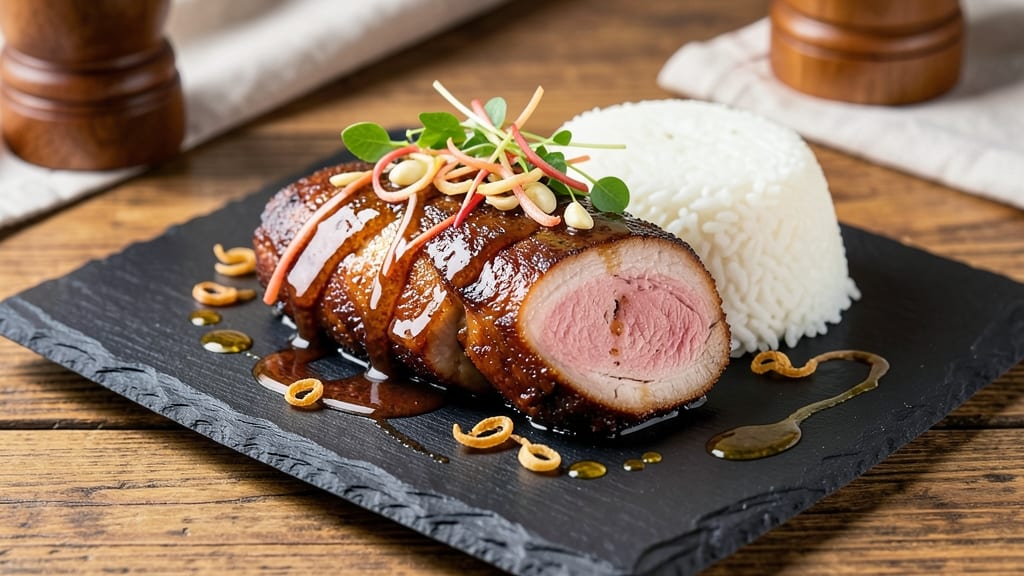
This Asian pork glaze recipe transforms simple pork into a restaurant-worthy centerpiece with its perfect balance of sweet, tangy, and umami flavors. 🔥 I developed this glaze during a particularly busy week at the pit when I needed something that could elevate even the most basic cut of pork—it’s now my go-to for grilled, roasted, or even slow-cooked pork dishes.
The secret lies in the slow reduction of a simple sauce base—honey, soy sauce, and garlic—that creates a thick, glossy glaze with deep caramelized notes. Unlike store-bought versions, this one builds flavor through controlled simmering, ensuring every brush delivers layers of complexity.
The result? Pork that’s sticky, tender, and packed with flavor in just 15 minutes of active cooking.
What makes this glaze truly versatile is its adaptability—use it on grilled pork chops, roasted pork tenderloin, or even as a drizzle over braised pork belly. The balance of sweetness from honey and tang from rice vinegar ensures it works with both mild and bold flavors.
Plus, it keeps well in the fridge for up to 2 weeks, making it perfect for meal prep.
For those who love heat, a dash of chili paste or sriracha can be stirred in at the end, while a splash of sesame oil adds nutty depth. The glaze’s simplicity hides its sophistication—once you try it, you’ll never go back to bottled versions. Let’s get cooking!
Ingredients for asian pork glaze
Sweet, tangy, and umami-packed—just 10 ingredients make this glaze restaurant-worthy.
| Ingredient | Amount | Notes |
|---|---|---|
| Raw Honey 🍯 | ½ cup | Light amber for mild sweetness |
| Light Soy Sauce 🍶 | ½ cup | Kikkoman preferred for balance |
| Rice Vinegar 🍶 | ¼ cup | White or seasoned rice vinegar |
| Garlic Cloves 🧄 | 6 cloves | Minced for smooth texture |
| Fresh Ginger 🌿 | 1 tbsp | Finely grated, peel removed |
| Sesame Oil 🫒 | 1 tbsp | Toasted sesame oil for aroma |
| Cornstarch 🌾 | 1 tbsp | For thickening glaze |
| Water 💧 | ½ cup | Room temperature preferred |
| Red Chili Flakes 🌶️ | 1 tsp | Optional for heat (adjust to taste) |
| Salt 🧂 | ½ tsp | Kosher or sea salt |
The honey and soy sauce are the power duo here—Kikkoman soy sauce is my go-to because it’s perfectly balanced, but any light soy will work. For the honey, light amber gives that mild sweetness without overpowering, but dark amber adds depth if you prefer it richer. Fresh ginger and garlic should be bright and vibrant—if they smell musty, skip them. Trader Joe's usually has great pre-minced garlic, but I always grab fresh ginger from the produce section. The sesame oil? Toasted is key—it adds that nutty aroma that makes the glaze sing. Don’t grab the cheap stuff from the international aisle; Kirkland Signature or La Choy are solid choices.
No sesame oil? Neutral oil like vegetable or canola works in a pinch, but you’ll lose that signature flavor. Short on ginger? Substitute with 1/2 tsp ground ginger, but fresh is always better. The cornstarch is non-negotiable for that perfect glossy finish—it’s what turns this from a sauce into a glaze. If you’re making this ahead, mix the dry ingredients (cornstarch + salt) separately until you’re ready to thicken. The red chili flakes are totally optional, but if you add them, start with just a pinch and taste as you go—it’s easy to overdo it.
This glaze keeps like a dream—2 weeks in the fridge sealed in a jar, or 3 months in the freezer if you’re prepping for a big cookout. I like to make a double batch and freeze half; that way, I’ve always got it ready for last-minute grilling. When reheating, just warm it gently on the stove with a splash of water to loosen it up. Pro tip: Brush the glaze on pork while it’s still hot—it’ll caramelize beautifully and stick like glue. Leftovers? Toss them in a container and keep them in the fridge for quick drizzles on rice bowls or noodles.
Why You'll Love This Recipe
- Five-Ingredient Magic: I swear, this glaze comes together with what’s already in my pantry. No fancy techniques—just chop garlic, grate ginger, and let the honey and soy sauce do the heavy lifting while I sip my coffee.
- Sweet-Savory Balance: That honey and rice vinegar combo? It’s the secret weapon. The soy sauce adds depth, but the ginger and garlic keep it from being too heavy—like a perfect umami hug for your pork.
- Weeknight & Weekend: Slather it on stir-fried pork for a quick dinner, or brush it on roasted pork belly for company. Honestly, I’ve even drizzled it over rice bowls when I’m too tired to cook anything else.
- Leftovers That Don’t Suck: The glaze thickens beautifully when reheated, so I make extra and toss it in the fridge. A quick simmer revives it—great for batch cooking or when I’m too lazy to measure fresh.
Step-by-step instructions for Asian pork glaze
This glaze delivers that perfect sticky-sweet balance with just a few simple steps.
🍳 Step 1: Sauté Aromatics Until Fragrant
Heat a small saucepan over medium heat and add the 1 tablespoon sesame oil. Once the oil shimmers, add the 6 cloves minced garlic and 1 tablespoon finely grated ginger. Cook for 1-2 minutes until the garlic turns golden and the mixture smells heavenly—this releases all their aromatic oils.
Here's the thing—don't walk away. Garlic burns in seconds, and you want that nutty aroma, not bitter char. Stir constantly until the ginger becomes translucent and the garlic just starts to color. This aromatic base is the flavor foundation for your entire glaze.
🍳 Step 2: Combine Wet Ingredients and Simmer
Add the 0.5 cup raw honey, 0.5 cup light soy sauce, 0.25 cup rice vinegar, 1 teaspoon red chili flakes, and 0.5 teaspoon salt to the saucepan. Stir well to combine all ingredients. Bring the mixture to a gentle boil over medium-high heat, then immediately reduce to medium-low heat.
Let it simmer for 5-7 minutes until the mixture reduces by about one-third. You'll see it thicken slightly and the colors deepen to a rich amber. This reduction concentrates the flavors and creates that signature sticky texture. If it gets too thick too quickly, add 1 tablespoon of water to keep it flowing.
🥘 Step 3: Thicken the Glaze with Cornstarch
In a small bowl, whisk together the 1 tablespoon cornstarch with the 0.5 cup water until completely dissolved. This creates a smooth slurry that will perfectly thicken your glaze. Pour this mixture into the simmering saucepan while stirring constantly with a wooden spoon.
Continue cooking for another 2-3 minutes until the glaze reaches your desired consistency—it should coat the back of a spoon but still be pourable. You're aiming for that perfect balance between thick enough to cling to pork and thin enough to glaze evenly. If it's still too thin, add another ½ teaspoon cornstarch mixed with 1 teaspoon water and cook for 30 seconds more.
⏰ Step 4: Cool and Use Immediately
Remove the saucepan from heat and let the glaze cool for 5 minutes. This resting period allows the flavors to meld completely and the glaze to reach the perfect temperature for application. The glaze should be warm but not hot when you use it—this prevents it from cooking too quickly when applied to pork.
For best results, use the glaze immediately on grilled or roasted pork. The warm pork will help the glaze adhere beautifully, creating that perfect caramelized crust. If you need to store it, transfer to an airtight container and refrigerate for up to 1 week. Reheat gently in a small saucepan over low heat, stirring frequently until warmed through.
Pro Tips For Making Asian Pork Glaze
- Simmer Low and Slow: After burning the honey the first three times, I learned to drop the heat to medium-low once everything’s combined. The glaze thickens best when it’s just bubbling gently—like a lazy Sunday morning, not a frantic weekday rush. If it looks too thin, walk away for 5 minutes; it’ll come together.
- Peel and Mince Ginger Properly: Skip the pre-peeled ginger from the jar—it’s mushy and lacks punch. Use a spoon to scoop off the skin, then stand the root upright and slice off thin shards with a sharp knife. For this glaze, you only need about 1 teaspoon of finely minced ginger (no need to pulse it in a food processor—it’ll turn to paste and dominate the flavor).
- Balance the Vinegar First: I used to add rice vinegar last, only to end up with a glaze that tasted sharp and unfinished. Taste the raw honey and soy sauce before adding vinegar, then mix in 1 teaspoon at a time until it’s bright but not sour. The glaze should taste like a happy medium—sweet, salty, and just a hint of tang.
- Reduce Without Stirring Constantly: The glaze thickens faster when you let it work on its own. After combining everything, cover the pan and let it simmer unattended for 8–10 minutes. Only stir at the end—this prevents splattering and helps the honey caramelize instead of sticking to the bottom. (Yes, even if you’re impatient like me.)
Flavor customization for these flavors
Sweet Heat Variations
For a spicy kick, stir in 1-2 teaspoons of sriracha or 1 tablespoon of gochujang during the final 2 minutes of simmering. I love adding ½ teaspoon of chili crisp for a smoky heat—it’s my go-to for when I’m craving something bold.
If you prefer a milder heat, swap the red chili flakes for ½ teaspoon of ground white pepper for a subtle kick. 🌶️
For a sweeter profile, replace half the honey with ½ cup of maple syrup or ¼ cup of agave nectar. This works especially well with grilled pork chops, giving them a deeper caramelized crust.
I’ve also experimented with 1 tablespoon of brown sugar mixed into the glaze for a molasses-like richness that pairs beautifully with roasted pork belly.
Umami Boost Options
Add 1 tablespoon of fish sauce or 1 teaspoon of oyster sauce for an extra layer of umami depth. These work wonders if you’re using the glaze on pork tenderloin or ribs.
I keep a small bottle of Red Boat fish sauce in my pantry specifically for this purpose—it’s clean and potent without overpowering. For a vegetarian-friendly option, swap in 1 teaspoon of mushroom powder or 1 tablespoon of soy sauce reduction.
For a smoky twist, stir in ½ teaspoon of smoked paprika or 1 teaspoon of liquid smoke (use sparingly!) during the last minute of cooking. This is a game-changer for pulled pork or slow-cooked shoulder.
I also like adding 1 tablespoon of hoisin sauce for a thicker, stickier glaze that’s perfect for Asian-inspired dishes like pork buns or dumplings.
Herb and Citrus Infusions
Brighten the glaze with 1 tablespoon of fresh lime or lemon zest and 1 tablespoon of juice—this cuts through the sweetness beautifully. I often add this when using the glaze on grilled pork skewers.
For a herbaceous touch, stir in 1 tablespoon of chopped cilantro or Thai basil just before serving. These herbs add freshness and make the glaze feel lighter, especially in warm weather.
For a citrusy-sweet balance, replace half the rice vinegar with ¼ cup of orange juice and add 1 teaspoon of grated orange zest. This variation is perfect for pork chops or loins and adds a bright, almost marmalade-like quality.
I’ve also used 1 tablespoon of yuzu juice (if you can find it) for a subtly floral note that elevates the glaze to next-level sophistication.
Nutty and Toasted Flavors
Enhance the glaze with 1 teaspoon of toasted sesame seeds or 1 tablespoon of tahini stirred in at the end for a nutty crunch. This works especially well on roasted pork tenderloin or as a drizzle over rice bowls.
I like toasting the sesame seeds in a dry pan for 1 minute until fragrant before adding them to the glaze. For extra depth, add ½ teaspoon of ground cardamom or 1 teaspoon of fennel seeds (toasted and ground) for a warm, aromatic touch.
For a richer texture, whisk in 1 tablespoon of peanut butter or almond butter during the final 5 minutes of simmering. This creates a thicker, almost satay-like glaze that’s perfect for grilled pork satay skewers.
I’ve also used 1 teaspoon of miso paste (white or red) for a deeper, fermented umami that pairs incredibly well with slow-cooked pork.
Nutrition facts
Frequently asked questions
Can I use this glaze on other meats besides pork?
This glaze works beautifully on chicken thighs, shrimp, or even tofu for a vegetarian option. The honey-soy base caramelizes perfectly on chicken, while the tangy vinegar brightens seafood. For beef, reduce the honey slightly to balance the richness.
How do I prevent the glaze from burning when applied to pork?
Apply the glaze in 2-3 thin layers with at least 1 minute between applications. This gives each layer time to set without burning. For extra insurance, keep the pork over medium heat rather than high—this ensures even cooking and prevents charring.
What's the best way to store leftover glaze?
Transfer cooled glaze to an airtight container and refrigerate for up to 2 weeks. For longer storage, freeze in ice cube trays for 3 months. Thaw in the fridge overnight and reheat gently over low heat with a splash of water to restore consistency.
Can I make this glaze without cornstarch?
Yes! Swap the cornstarch for 1 tablespoon arrowroot powder or 1 tablespoon potato starch for a similar thickening effect. If you prefer no starch, reduce the glaze longer (up to 10 minutes) and accept a slightly thinner consistency—it'll still cling well to pork.
Why did my glaze turn grainy?
This usually happens when cornstarch clumps or honey crystallizes. Fix it by whisking in 1 tablespoon warm water while reheating on low heat. To prevent it, ensure all ingredients are at room temperature before combining and whisk the cornstarch slurry thoroughly before adding.