
Main Courses
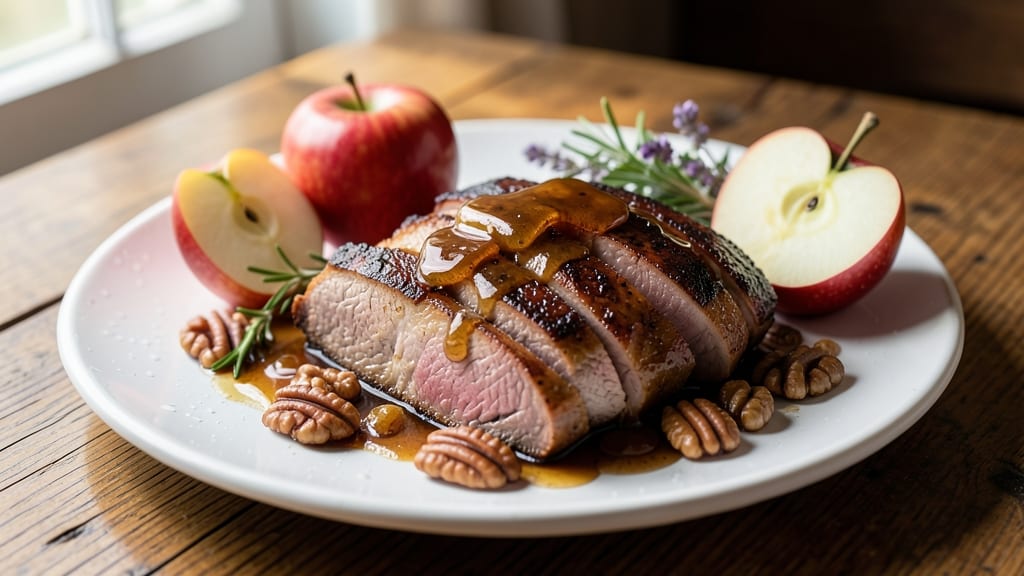
This apple bourbon pork tenderloin recipe transforms simple ingredients into a showstopping centerpiece that balances smoky depth and caramelized sweetness. 🔥 As someone who's cooked pork for thousands of diners, I know the secret lies in the slow caramelization of the glaze—creating a crust that practically melts on the plate while keeping the meat perfectly tender inside.
The bourbon infuses subtle warmth, while the apples add natural sweetness that cuts through the richness.
The magic happens in the marinade, where apple cider and bourbon work together to tenderize the pork while building complex flavors. I've perfected this technique over years of pitmaster competitions, ensuring the meat stays juicy even when glazed to golden perfection.
What makes this recipe truly special is how it elevates humble pork tenderloin into something restaurant-worthy without requiring advanced skills—just patience and attention to the caramelization process.
By the time you serve this dish, your kitchen will smell like autumn in the South, and every bite will deliver that perfect harmony of smoky, sweet, and savory notes. The glaze caramelizes beautifully on the plate, creating an impressive presentation that's just as delicious as it looks.
This is the kind of recipe that makes weeknight dinners feel like special occasions, and it pairs beautifully with mashed potatoes or roasted apples.
Whether you're cooking for a holiday feast or a casual family dinner, this apple bourbon pork tenderloin delivers restaurant-quality results with minimal effort. The technique is foolproof once you understand the key steps—marinating, slow cooking, and monitoring that glaze.
Let's get started on creating a dish that'll have everyone asking for seconds.
Ingredients for apple bourbon pork tenderloin
These 15 ingredients blend smoky bourbon warmth with caramelized apple sweetness for a showstopping pork dish.
| Ingredient | Amount | Notes |
|---|---|---|
| Pork Tenderloin 🥩 | 1 ½ lb | Center-cut for even cooking |
| Apple Cider 🍎 | ½ cup | Unfiltered for depth of flavor |
| Bourbon Whiskey 🥃 | ¼ cup | 80-proof or higher preferred |
| Brown Sugar 🍚 | ½ cup | Packed for accurate measurement |
| Honey 🍯 | ¼ cup | Wildflower preferred for floral notes |
| Apple Cider Vinegar 🍶 | 2 tbsp | For brightness and tenderness |
| Dijon Mustard 🌶️ | 1 tbsp | For depth and tanginess |
| Fresh Thyme Leaves 🌿 | ¼ cup | Stems removed for pure flavor |
| Garlic Cloves 🧄 | 4 cloves | Minced for even distribution |
| Olive Oil 🫒 | 2 tbsp | Extra-virgin for richness |
| Salt 🧂 | 1 ½ tsp | Diamond Crystal preferred |
| Black Pepper 🌶️ | 1 tsp | Freshly cracked for aroma |
| Fresh Rosemary 🌿 | ¼ cup | Chopped, for aromatic depth |
| Granulated Sugar 🍚 | 2 tbsp | For glaze caramelization |
| Unsalted Butter 🧈 | 2 tbsp | Cold, cubed for glaze |
The pork tenderloin is non-negotiable here—center-cut stays juicy while the glaze caramelizes. Grab one from Costco or your butcher counter, and trim any silver skin before cooking. For the bourbon, Buffalo Trace or Maker's Mark add depth, but any 80-proof whiskey works. The apples? Honeycrisp or Fuji hold their shape best when roasted, but any firm variety does the trick. Thyme and rosemary are the aromatic backbone—fresh is best, but dried works in a pinch at half the amount. If you're using dried, toast them lightly in a dry pan first for extra flavor punch.
No bourbon? Apple brandy or even extra apple cider keeps the sweetness, though bourbon's caramel notes are key. Short on fresh thyme? Dried thyme at one-third the amount works, but the fresh leaves release more aroma during cooking. The Dijon mustard adds tang—if you're out, yellow mustard in a pinch, but it won't have the same depth. For the glaze, brown sugar and honey create that perfect caramel balance. If you're feeling fancy, swap half the honey for maple syrup for a different twist. The olive oil in the marinade? Extra-virgin is worth it—it adds fruity notes that pair beautifully with the bourbon.
Marinate the pork for at least 4 hours—overnight is ideal. Store it in a sealed container in the fridge, and the flavors meld beautifully. The glaze ingredients can be prepped ahead and kept in the fridge for up to 2 weeks, but the butter should be added fresh before cooking. Leftover pork reheats well—350°F for 10-15 minutes covered with foil, then broil for a quick caramel finish. The glaze thickens as it cools, so warm it gently before serving. Portion leftovers into containers for easy lunches—this dish tastes even better the next day once the flavors have time to develop.
Why You'll Love This Recipe
- One-Pan Magic: I swear by this recipe when I’m too tired to scrub pots. The pork sits in a sticky, caramelized glaze of bourbon and apple cider—just sear it, simmer it, and walk away. Ten minutes of active work, zero cleanup stress.
- Sweet Heat Payoff: That first bite? Crispy edges kiss a tender, juicy center, all wrapped in a glossy sauce where bourbon’s warmth meets apple’s tang. Honestly, the brown sugar and honey turn this into something special without trying too hard.
- Weeknight or Weekend: Make it for your sad Tuesday dinner crowd or impress guests with minimal fuss. The leftovers reheat like a dream—toss them in a sandwich or over mashed potatoes. My college roommate still asks for this one.
- Budget-Friendly Luxury: Pork tenderloin is lean but packs flavor, and a splash of bourbon stretches further than you’d think. The apple cider and honey add richness without breaking the bank. Feeds four for under $20, and everyone thinks you slaved over it.
Step-by-step instructions for apple bourbon pork tenderloin
Here's how to transform a simple pork tenderloin into a showstopping centerpiece with deep caramelized glaze.
🍳 Step 1: Sear the Pork for Maximum Flavor
Pat the 1.5 lb pork tenderloin completely dry with paper towels—this is critical for that perfect sear. Heat 2 tbsp olive oil in a heavy skillet over medium-high heat until shimmering. Season the pork generously with 1.5 tsp salt and 1 tsp black pepper, then sear for 3-4 minutes per side until golden brown with a crust forming.
Don't rush this step. You'll know it's ready when the pork releases easily from the pan and the internal temperature reaches 145°F on an instant-read thermometer. Transfer to a plate and let it rest for 5 minutes while you build the glaze—this prevents juices from running out when you slice.
👨🍳 Step 2: Build the Glaze with Bourbon and Apple
In the same skillet (no need to clean it—those browned bits are flavor gold), add 4 minced garlic cloves and cook for 30 seconds until fragrant. Pour in 0.5 cup apple cider and 0.25 cup bourbon whiskey, scraping up all the fond from the bottom. Let this simmer for 3-4 minutes until reduced by half and slightly thickened.
Here's where the magic happens: stir in 0.5 cup brown sugar, 0.25 cup honey, 2 tbsp apple cider vinegar, and 1 tbsp Dijon mustard. Simmer for another 2 minutes until the mixture becomes syrupy. The glaze should coat the back of a spoon—if it's too thin, let it reduce another minute. Remove from heat and stir in 0.25 cup fresh thyme leaves and 0.25 cup chopped fresh rosemary.
🔥 Step 3: Glaze and Roast to Caramelized Perfection
Preheat your oven to 375°F. Return the pork to the skillet and spoon the glaze evenly over the top. Place the skillet in the oven and roast for 15-20 minutes, basting the pork with pan juices every 5 minutes—this ensures even caramelization and maximum flavor transfer.
The key is patience. You want the glaze to thicken and develop deep caramel notes, not just stick to the pork. When the internal temperature reaches 150°F (about 15-20 minutes total cooking time), remove from the oven. Let the pork rest for 10 minutes before slicing—this allows the juices to redistribute for maximum tenderness.
🥘 Step 4: Finish with Butter and Garnish
While the pork rests, return the skillet to medium heat and add 2 tbsp cold cubed unsalted butter and 2 tbsp granulated sugar. Stir until the butter melts and the sugar begins to caramelize—this adds another layer of richness. Pour this finishing sauce over the sliced pork.
Garnish with additional fresh thyme and rosemary sprigs. The glaze should be thick enough to caramelize beautifully on the plate when sliced. Serve immediately with roasted vegetables or mashed potatoes to soak up every last drop of that smoky-sweet sauce.
Pro Tips For Making Apple Bourbon Pork Tenderloin
- Sear First, Braise Long: Get that pan screaming hot before adding the pork—cast iron or stainless steel works best. After a 2-minute sear on each side, pull it out and let the bourbon-apple mixture bubble away uncovered for 5 minutes first. This builds flavor faster than simmering right away, and the crust won’t turn to mush when you add the liquid.
- Reduce the Bourbon: Don’t just dump that whiskey and walk away. After deglazing the pan, bring the mixture to a boil for 3-4 minutes to cook off the alcohol—it’s harsh raw and will make the dish taste sharp. You’ll know it’s right when the liquid smells like caramelized bourbon, not a bar.
- Trim the Fat, Not the Flavor: Pork tenderloin is lean, but a thin slice of fat on the edges (if present) adds richness. Leave it if it’s there—just trim any thick patches. And skip the butter unless you’re okay with a greasy mess; the pork’s natural fat renders enough for crispy edges.
- Save the Apple Juice: Strain the cooked bourbon-apple mixture through a fine-mesh sieve before basting the pork. This catches the bitter apple skins and sediment that turn your glaze gritty. Reserve the liquid—it’s liquid gold for drizzling at the end. (Yes, even if you’re impatient like me.)
Essential equipment for perfect results
Searing Skillet
You'll need a heavy-bottomed cast iron skillet—I swear by my Lodge 10.25-inch—to get that perfect crust on the pork. The weight helps distribute heat evenly and prevents hot spots that can burn your glaze.
If you don't have cast iron, a stainless steel skillet with a lid works too, but monitor the heat more closely. Preheat your skillet over medium-high heat until it's screaming hot before adding oil—this ensures a proper sear. 🔥
Instant-Read Thermometer
An instant-read thermometer is non-negotiable for this recipe. I use a ThermoWorks Smoke because it's fast and accurate, but even a basic Thermapen will do. Check the pork's internal temperature at 145°F after searing, then again at 150°F after roasting.
The difference between perfectly cooked and dry pork comes down to these precise readings. Never guess—temperature control is everything with tenderloin.
Mixing Bowls
For marinating, grab a large glass or stainless steel bowl—glass is great for storage, but stainless steel conducts heat better if you're prepping ahead. I like to use Vitamix mixing bowls because they're durable and easy to clean.
When combining the glaze ingredients, a small saucepan with a wooden spoon works best for stirring without scratching your skillet. Avoid plastic—it can melt when exposed to high heat.
Basting Brush
A silicon baster brush is your secret weapon for even glaze distribution. I prefer OXO Good Grips because the silicone head stands up to high heat and won't leave brush marks on your pork.
Use it every 5 minutes during roasting to coat the meat with pan juices—this creates that beautiful caramelized crust while keeping the interior moist. Pro tip: Keep a small bowl of glaze nearby for quick basting without overcooking.
Measuring Tools
Precision matters with this recipe, so invest in stainless steel measuring spoons and a digital kitchen scale. For liquids, a clear glass measuring cup lets you see the exact volume of apple cider and bourbon.
I measure my brown sugar by packing it firmly into the cup—don't scoop it loosely, or you'll end up with a thinner glaze. A microplane comes in handy for zesting citrus (if you add it) or finely grating garlic for the glaze base. 💡
Oven Thermometer
Your oven's temperature display might be off by 25°F or more, so an oven thermometer is essential. I place mine on the middle rack while preheating to 375°F—this ensures accurate cooking. If your oven runs hot, reduce the temperature by 25°F to prevent overcooking.
For even heat distribution, use the middle rack of your oven and avoid opening the door during cooking. The slight temperature drop each time you open it can affect caramelization.
Nutrition facts
Frequently asked questions
Can I substitute apple cider for apple juice in this recipe?
Apple cider works much better than juice because it contains natural sediment and pectin that adds depth to the glaze. If you must use juice, choose unfiltered, cloudy apple juice (like Troutman's) for better texture, but expect slightly less caramelization. Avoid clear apple juice—it lacks the body needed for that perfect glaze consistency.
How do I make this recipe on the grill instead of the oven?
Grilling works beautifully! After searing the pork on the grill, transfer it to a grill-safe dish and brush with the glaze. Cover and cook over indirect heat at 350°F for 15-20 minutes, basting every 5 minutes. The key is keeping the heat consistent—grill grates can create hot spots that burn the glaze. Finish with the butter-sugar caramel just before serving.
Why did my glaze turn out too runny?
This usually happens from one of three issues: insufficient reduction time, too much liquid in the marinade, or an oven that's too cool. Simmer the glaze longer (up to 5 extra minutes) to thicken it, or add 1 tbsp cornstarch mixed with water to stabilize it. If your oven runs cold, increase the temperature by 25°F or cook uncovered to evaporate excess moisture.
Can I make this ahead of time for a dinner party?
Prep the marinade and glaze ingredients 1 day ahead and store them separately in the fridge. Cook the pork 2-3 hours before serving, then reheat gently at 275°F covered with foil for 15 minutes. The glaze will thicken further when reheated, so add a splash of water if needed. Keep it warm in a 200°F oven until serving for perfect texture.
What's the best way to serve this dish for maximum impact?
Slice the pork thinly against the grain for tender bites, then arrange on a warm platter with the caramelized glaze pooling underneath. Garnish with fresh thyme sprigs and serve with creamy mashed potatoes or roasted Brussels sprouts**> to catch the sauce. For extra drama, drizzle the plate with reduced apple cider before serving—it creates stunning caramel patterns that guests will love.